
Marble floors and countertops in New York City face a challenge most owners don’t see coming. The very cleaning routines meant to protect them can quietly cause damage over time. Acidic sprays, abrasive scrub pads, and even standard mop solutions wear away marble’s delicate surface, leaving it dull, etched, and vulnerable to staining. This guide breaks down exactly why standard cleaning falls short, what professional deep cleaning actually does, and how a consistent maintenance schedule keeps your marble looking its best for decades.
Table of Contents
- Why standard cleaning isn’t enough for marble surfaces
- What is deep cleaning for marble and how does it work?
- Benefits of regular deep cleaning for marble
- How often should you deep clean marble in NYC and who should do it?
- Protecting and preserving marble after deep cleaning
- Our take: Why most marble owners underestimate the need for deep cleaning
- Get professional marble deep cleaning and restoration in NYC
- Frequently asked questions
Key Takeaways
| Point | Details |
|---|---|
| Standard cleaning risks | Everyday cleaners can damage marble, making deep cleaning essential for protection. |
| Deep cleaning process | Professional deep cleaning removes dirt and restores clarity and beauty. |
| Long-term value | Regular deep cleaning preserves marble’s appearance and increases property value. |
| Expert maintenance matters | Pro services in NYC ensure proper care and avoid costly damage. |
Why standard cleaning isn’t enough for marble surfaces
Marble is a natural stone formed from limestone under intense heat and pressure. That process gives it a beautiful crystalline structure, but it also makes marble porous and chemically sensitive. Unlike ceramic tile or sealed concrete, marble reacts to acids, absorbs liquids, and scratches more easily than most homeowners expect.
The problem starts with the products most people reach for. Many popular household cleaners, including vinegar-based sprays, citrus solutions, and even some “all-purpose” bathroom cleaners, are acidic enough to etch marble on contact. Typical household cleaners can cause etching and dullness in marble surfaces, breaking down the polished layer and leaving behind a rough, hazy appearance that no amount of buffing will fix.
Here’s what standard cleaning typically misses or causes:
- Etching: Acidic cleaners react chemically with marble’s calcium carbonate, creating dull spots that look like water stains but are actually surface erosion.
- Deep-seated dirt: Regular mopping pushes grime into the pores rather than lifting it out.
- Bacterial buildup: Porous marble traps bacteria in its microscopic channels, which surface wiping cannot reach.
- Residue accumulation: Many cleaning products leave behind a film that dulls the stone’s natural clarity over time.
- Scratch damage: Abrasive sponges and rough mop fibers create micro-scratches that accumulate into visible haziness.
“Not all cleaning is equal when it comes to marble. What works on your kitchen tile can ruin your marble countertop in a single use.”
You can find detailed marble restoration tips to understand how different products interact with stone surfaces. For NYC properties specifically, the NYC marble restoration guide outlines the most common damage patterns seen in local homes and commercial spaces.
Pro Tip: Before using any cleaning product on marble, test it on a small, hidden area first. Apply the product, wait five minutes, then wipe and check for any dulling or discoloration. If you see a change, stop immediately and consult a stone care professional.
What is deep cleaning for marble and how does it work?
Deep cleaning is not a more aggressive version of your regular wipe-down. It is a fundamentally different process that uses specialized equipment, pH-neutral stone-safe solutions, and professional techniques to remove what surface cleaning leaves behind.
Here is how a professional deep cleaning session typically works:
- Assessment: The technician inspects the marble for existing damage, staining patterns, and surface condition before selecting the right approach.
- Pre-treatment: Stubborn stains, grease deposits, and biological growth are treated with targeted, stone-safe solutions that break down the contamination without harming the marble.
- Machine scrubbing: Low-speed rotary machines fitted with soft, stone-appropriate pads work the cleaning solution into the pores, lifting embedded soil without scratching.
- Rinse and extraction: Clean water flushes out loosened dirt and cleaning residue, and wet vacuums extract the liquid completely.
- Surface evaluation: The technician checks the result and may repeat targeted steps on problem areas.
- Preparation for sealing or polishing: Once clean, the marble is ready for sealing or polishing, which cannot be done effectively on a soiled surface.
Professional deep cleaning removes embedded soil and restores clarity in a way that standard mopping simply cannot replicate. You can review the full stone deep cleaning process to understand what each step involves.
| Feature | Surface wiping | Professional deep cleaning |
|---|---|---|
| Removes surface dust | Yes | Yes |
| Removes embedded soil | No | Yes |
| Eliminates bacteria in pores | No | Yes |
| Restores surface clarity | No | Yes |
| Prepares marble for sealing | No | Yes |
| Addresses staining | Partially | Yes |
| Safe for all marble types | Varies | Yes (when done correctly) |
The difference is significant, especially for countertop restoration basics where surface appearance directly impacts the feel of a kitchen or bathroom. Deep cleaning sets the foundation for every other restoration or protective treatment.
Benefits of regular deep cleaning for marble
The case for regular deep cleaning goes well beyond appearance. It touches on property value, structural integrity, and even the health of the people living or working in the space.
Preserving the finish and feel
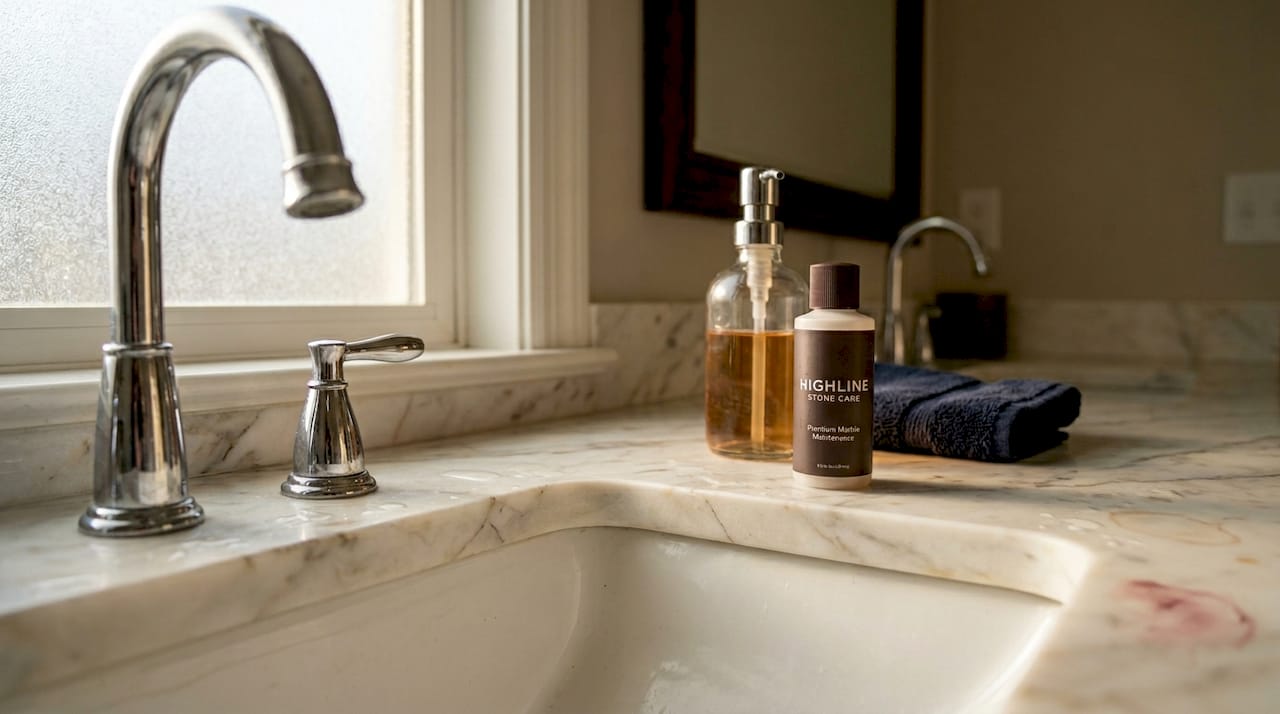
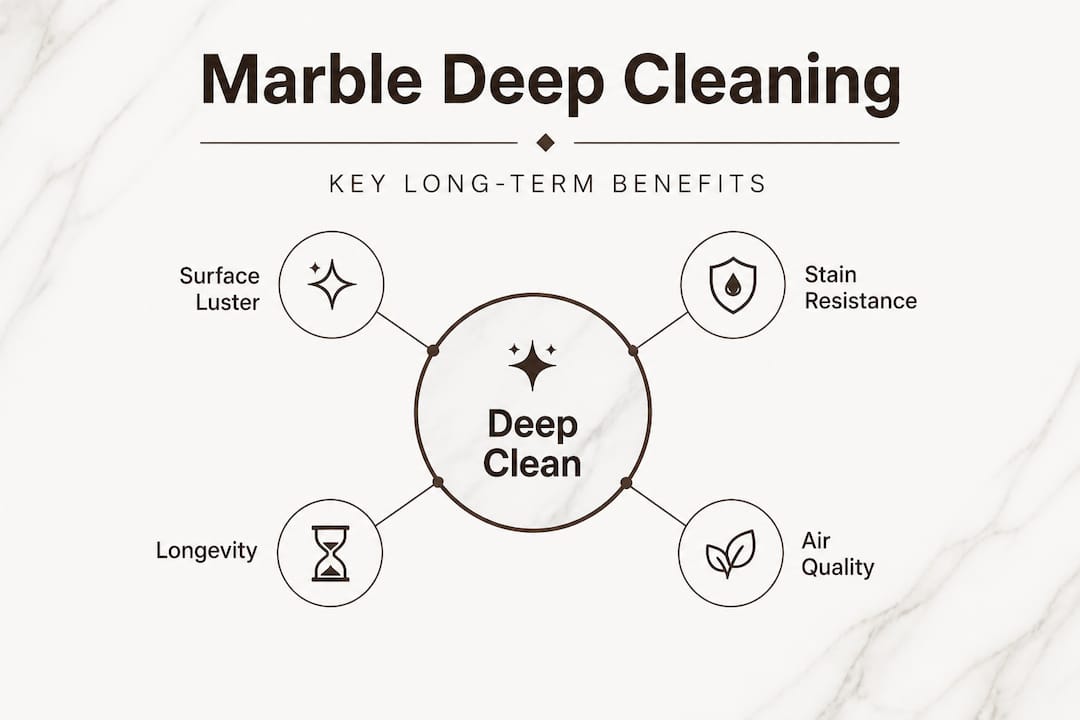
Marble that is regularly deep cleaned retains its natural luster and smooth texture. When embedded grime is allowed to build up, it creates a layer that scatters light rather than reflecting it, making even polished marble look flat and tired. Regular removal of that buildup keeps the surface looking the way it was designed to look.
Preventing irreversible damage
Etching and deep staining, when left untreated, can penetrate beyond the surface layer and become permanent. At that point, honing or grinding is required to remove the damaged layer, which is a more invasive and costly process. Routine deep cleaning safeguards property value by maintaining marble’s original luster and structural integrity, stopping damage before it reaches that point.
Improving air quality
This benefit surprises many property owners. Marble floors and countertops in bathrooms, kitchens, and high-traffic hallways accumulate bacteria, mold spores, and allergens in their pores. Regular deep cleaning eliminates these contaminants, contributing to a cleaner indoor environment. For families with young children or allergy sensitivities, this is a meaningful advantage.
Boosting property value
In New York City’s competitive real estate market, the condition of interior finishes matters. Well-maintained marble is a selling point. Neglected marble, with visible etching, staining, or a dull finish, signals deferred maintenance to buyers and appraisers. Expert marble care is one of the most visible investments you can make in a luxury property.
| Quality indicator | Deep cleaned marble | Neglected marble |
|---|---|---|
| Surface clarity | High | Low |
| Stain resistance | Strong (with sealing) | Weak |
| Texture | Smooth | Rough or pitted |
| Light reflection | Consistent shine | Dull, uneven |
| Bacterial load | Minimal | Elevated |
| Restoration cost going forward | Low | High |
Understanding the difference between polishing vs deep cleaning also helps property owners make smarter decisions about which service they need at any given time.
- Deep cleaning is the foundation that must come first.
- Polishing restores shine after the surface is clean.
- Sealing locks in the results and provides ongoing protection.
Skipping deep cleaning and going straight to polishing is like painting over a dirty wall. The results won’t last, and the underlying problems remain.
How often should you deep clean marble in NYC and who should do it?
New York City presents unique challenges for marble maintenance. Urban pollution, foot traffic from building hallways and lobbies, and the sheer density of daily use accelerate the buildup of grime and contaminants. Professional cleaning is advised for marble in high-traffic NYC areas due to urban dust and pollutants that penetrate stone surfaces faster than in suburban or rural settings.
Here is a practical schedule based on property type and usage:
- High-traffic commercial spaces (lobbies, hotel floors, retail): Deep clean every 2 to 3 months. These surfaces see hundreds of footsteps daily and accumulate pollutants rapidly.
- Residential kitchens and bathrooms with marble countertops or floors: Deep clean every 3 to 4 months. Cooking grease, soap residue, and moisture create a persistent buildup cycle.
- Formal living areas and dining rooms with marble flooring: Deep clean every 4 to 6 months. Lower traffic means slower buildup, but the investment in appearance still justifies regular attention.
- Marble in guest rooms or low-use spaces: Deep clean once or twice per year, aligned with seasonal property maintenance.
Several factors influence where your marble falls on this schedule. Previous care history matters, as marble that has never been professionally cleaned may need more frequent attention initially. Placement near windows or HVAC vents increases dust accumulation. Properties in Midtown Manhattan or SoHo with heavy foot traffic from shared building spaces need more frequent service than a quiet Upper West Side townhouse.
The DIY question comes up often, and the honest answer is that the risks outweigh the savings. Renting a floor machine without proper training, using the wrong pads, or selecting an inappropriate cleaning solution can cause damage that costs far more to fix than a professional service would have cost in the first place. Marble maintenance best practices consistently point to professional service as the safer and more cost-effective choice over time.
For those who want to work with a trusted specialist, marble restoration experts can assess your specific surfaces and recommend a customized schedule.
Pro Tip: Schedule your marble deep cleaning at the change of seasons, particularly spring and fall. Seasonal shifts in humidity and temperature affect how marble expands and contracts, and cleaning at these transitions ensures the stone is in optimal condition before conditions change.
Protecting and preserving marble after deep cleaning
Deep cleaning delivers the best results when it is followed by proper protection. Without it, the clean marble surface is actually more vulnerable to staining because the pores are now open and free of the grime that was previously blocking them.
Marble should be sealed after deep cleaning to guard against new stains and etching. A professional-grade stone sealer penetrates the pores and creates a barrier that slows liquid absorption, giving you time to wipe up spills before they become stains. You can learn more about the right products and methods through stone sealing guidance from experienced professionals.
Beyond sealing, here are the essential do’s and don’ts for maintaining marble after a deep clean:
Do:
- Use pH-neutral stone cleaners for all routine maintenance.
- Wipe up spills immediately, especially wine, citrus juice, coffee, and anything acidic.
- Place felt pads under decorative objects and furniture legs to prevent scratching.
- Use soft microfiber cloths or mop pads for daily cleaning.
- Schedule your next professional deep clean before visible buildup appears.
Don’t:
- Use vinegar, lemon juice, or citrus-based sprays on marble.
- Drag heavy objects across marble floors without protection.
- Allow standing water to sit on marble surfaces.
- Use abrasive scrubbers, steel wool, or rough sponges.
- Assume a shiny surface means the marble is clean at depth.
These steps are straightforward, but they require consistency. The most common reason marble deteriorates between professional cleanings is that everyday habits undo the work done by the professionals.
Our take: Why most marble owners underestimate the need for deep cleaning
In our experience working with properties across Manhattan, Tribeca, and Westchester County, the pattern is almost always the same. Property owners wait until the marble looks visibly damaged before calling for help. By then, what could have been a routine deep clean has become a restoration project.
The misconception is understandable. Marble that has been polished recently can look beautiful on the surface while harboring years of embedded grime, micro-etching, and bacterial buildup underneath. Superficial shine can hide years of damage. Only deep cleaning reveals the true condition of marble. That is a reality we see confirmed again and again when we begin work on a surface that the owner believed was in good shape.
The financial logic is also clear. A professional deep cleaning session costs a fraction of what honing, grinding, or full restoration costs. Owners who invest in regular maintenance spend less over the lifetime of their marble, and they never have to deal with the disappointment of watching a beautiful surface deteriorate beyond recovery.
There is also the matter of irreversibility. Unlike wood floors that can be sanded and refinished repeatedly, marble has a finite amount of material that can be removed before the stone is permanently compromised. Every avoidable etch mark or deep stain that requires grinding takes the stone one step closer to that limit.
Our recommendation, based on years of working with real marble restoration stories from NYC properties, is to treat deep cleaning as a scheduled investment rather than an emergency response. The properties with the most beautiful marble are not the ones with the most expensive stone. They are the ones with the most consistent care.
Get professional marble deep cleaning and restoration in NYC
Your marble deserves more than routine wiping. Whether you manage a luxury residential building in Tribeca or own a home with marble countertops in Greenwich Village, the right professional care makes a measurable difference in how your surfaces look, feel, and hold up over time.
At Highline Stone Care, we specialize in the full range of stone care services for NYC properties. From deep cleaning and sealing to honing and polishing, our team brings the expertise and equipment to restore and protect your marble at every stage. We serve all five boroughs and surrounding areas, with flexible scheduling and free estimates available. Explore our NYC stone restoration experts page to learn more, review our comprehensive stone care options, or get details on our stone polishing services. Contact us today to schedule your consultation and take the first step toward marble that stays beautiful for years to come.
Frequently asked questions
How do I know if my marble needs deep cleaning or just polishing?
If your marble looks dull, stained, or feels sticky even after normal cleaning, deep cleaning is the right first step. Professional cleaning removes built-up soil before polishing, so the shine actually lasts.
Can household products damage marble surfaces?
Yes, absolutely. Many common cleaners contain acids or abrasives that etch and dull marble on contact. Household cleaners can cause marble etching even after a single use, so always use pH-neutral, stone-safe products.
How often should I have professional deep cleaning for my marble floors?
For high-traffic NYC properties, every 3 to 6 months is the standard recommendation. Professional cleaning schedules vary by usage and environment, so a specialist can give you a more precise timeline based on your specific surfaces.
What should I do after deep cleaning to protect my marble?
Apply a professional stone sealer immediately after deep cleaning and switch to pH-neutral cleaners for all routine maintenance. Sealing protects against stains after deep cleaning and extends the results significantly.
Recommended
- Stone Cleaning NYC | Eco-Friendly Stone Floor & Countertop Cleaning Services
- Marble polishing Suffolk County | Shine and restore – Highline Stone Care
- Marble Countertop Restoration Near Me | Restore & Revive
- Stone Polishing NYC | Countertop & Floor Polishing Services
Article generated by BabyLoveGrowth