
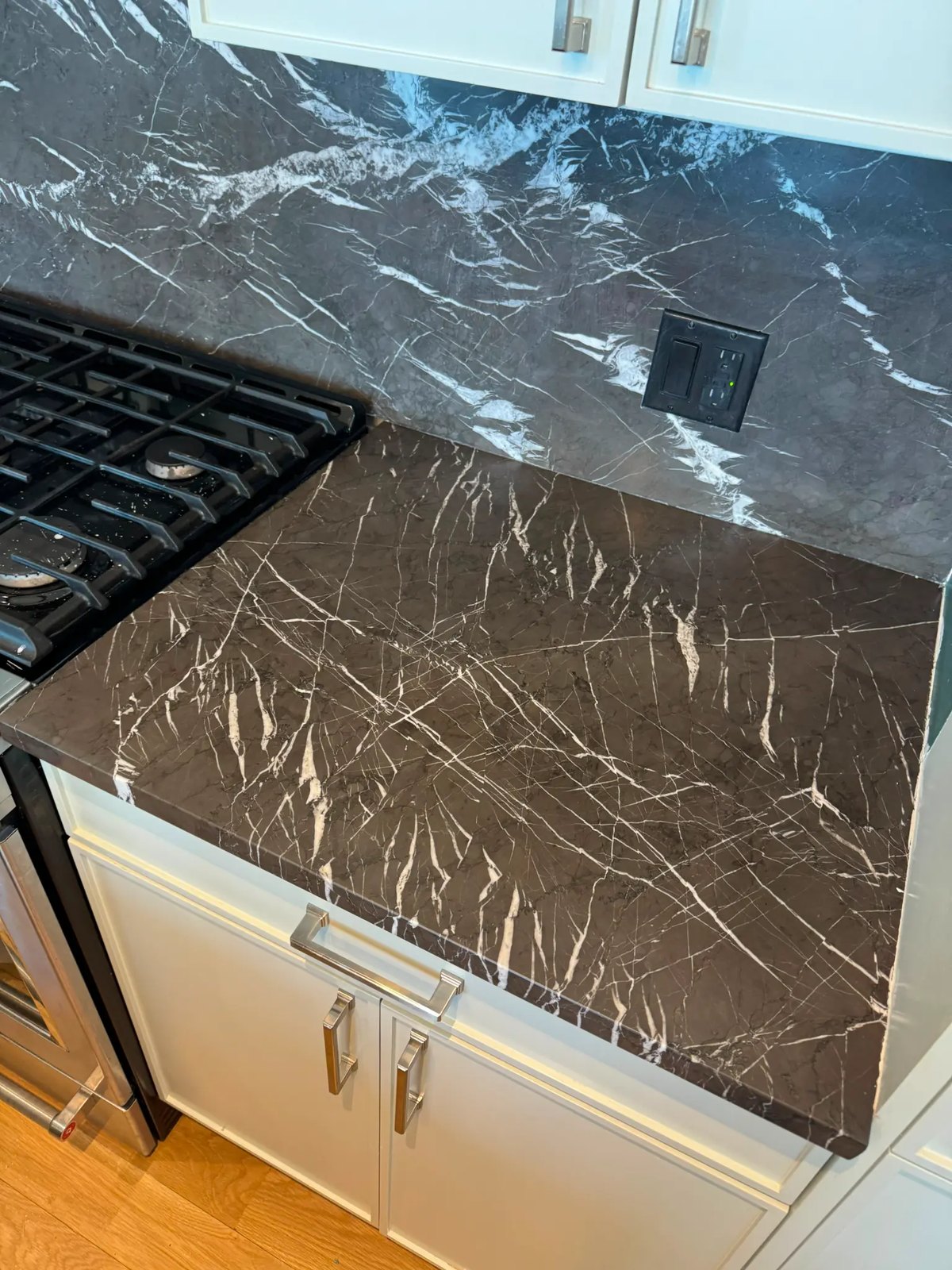
Marble adds elegance to floors, countertops, and walls, but it is softer and more reactive than many other stones. Over time, foot traffic, acidic spills, and routine wear can leave marble looking scratched, etched, or dull. Professional restoration focuses on removing surface damage and renewing the finish so your stone looks and performs better without a full replacement.
What is marble restoration?
Marble restoration describes a set of services that address surface-level damage—scratches, etch marks, stains, dullness, minor chips, and uneven tiles—so the stone returns to a uniform appearance and finish. Unlike routine cleaning, restoration uses mechanical and repair techniques such as controlled grinding, honing, polishing, and color-matched repairs to remove or blend damaged material at the stone surface.
Services commonly offered for marble
- Honing: Controlled abrasive work to remove scratches, light etching, and surface irregularities.
- Polishing: Progressively finer polishing to achieve a chosen finish—glossy, satin, or honed matte.
- Crack and chip repair: Color-matched fills and bonding methods to stabilize and visually blend damaged areas.
- Stain removal: Targeted treatments to extract oil-, rust-, or organic-based staining from the stone.
- Grout cleaning and restoration: Cleaning, color correction, and sealing of grout joints.
- Lippage correction: Flattening uneven tiles for a safer, more uniform walking surface.
- Preventive maintenance plans: Scheduled care to maintain finish and appearance and to address small issues before they worsen.
- Sealing and protection: Application of conventional penetrating sealers or optional specialty protection products to reduce staining and ease maintenance.
How a typical restoration process works
- On-site assessment: A technician evaluates the stone type, finish, depth and type of damage, and the desired outcome. Ask for a written estimate and a clear description of the proposed work before work begins.
- Surface preparation and protection: Surrounding areas are protected and the work area prepared to limit dust and traffic disruption.
- Grinding and honing (when needed): Diamond abrasives are used in controlled passes to remove surface-damaged material and restore levelness. This is the method commonly used for removing etched layers.
- Polishing: The surface is refined with progressively finer pads or compounds to reach the requested finish and uniform clarity.
- Repairs: Cracks, chips, and joints are repaired with color-matched materials and bonded to restore appearance and function.
- Sealing and final care: A sealer appropriate to the stone and its use is applied. The choice between a conventional penetrating sealer and an optional specialty protection product depends on the desired balance of appearance, maintenance, and expected performance.
Conventional sealing vs. specialty protection
Conventional penetrating sealers are commonly used to reduce liquid absorption and make routine cleaning easier; they typically require periodic reapplication as part of ongoing maintenance. Some specialty protection products are marketed as longer-lasting or offering additional resistance to staining and etching. If a specialty sealer is proposed, ask for written details about what it protects against, how long it is expected to last under typical use, recommended maintenance, and any warranty or limitations associated with the product.
Types of marble often serviced
Restoration techniques are applied to many natural marble varieties, including but not limited to Calacatta, Carrara, Statuario, Crema Marfil, Emperador, Thassos, Nero Marquina, and Jerusalem Gold. Each stone has unique characteristics that affect how it should be worked and maintained.
Service areas
We provide marble restoration services in the following coverage areas:
- Manhattan: Upper West Side, Upper East Side, Midtown, Chelsea, Financial District
- Queens: Fresh Meadows
- Brooklyn: Coney Island
- Nassau County: Great Neck, Lawrence, Five Towns
- Westchester County
Frequently asked questions
How much will marble restoration cost?
Costs vary based on the stone type, the amount and depth of damage, the total area, and the chosen finish and repairs. Request an on-site assessment and written estimate to get pricing tailored to your space.
How long does restoration take?
Project duration depends on scope and the space being worked on. Some residential spaces can be completed in a single visit while larger or more complex projects may require additional time. Your assessment should include an estimated timeline.
Can etched marble be fixed without replacement?
Etch marks typically affect only the surface layer of marble and are often addressed through honing and polishing, which remove or reduce the damaged layer and restore the finish. The success of restoration depends on the depth of the etch and the overall condition of the stone.
Do I need to seal marble after restoration?
Sealing is commonly recommended after restoration to help manage future staining and to simplify maintenance. The choice of sealer affects maintenance frequency and what types of spills are best avoided. Ask for details on recommended products and any maintenance schedule.
When is replacement necessary instead of restoration?
Replacement is generally considered when stone is structurally compromised, damaged through its full thickness, or when repairs cannot deliver a safe or acceptable appearance. Many surface issues can be addressed with restoration; an on-site assessment will clarify what is feasible.
Next steps
If you would like to evaluate marble in your home or building, request an on-site assessment and a written estimate. A site visit will identify the type of work needed, the recommended finish and protection options, and a clear scope and timeline for the project.
Service Areas
Highline Stone Care serves residential and commercial clients across Manhattan, Queens, Brooklyn, Nassau County, and Westchester County. Confirmed coverage includes the Upper West Side, Upper East Side, Midtown, Chelsea, and the Financial District in Manhattan; Fresh Meadows in Queens; Coney Island in Brooklyn; and Great Neck, Lawrence, and the Five Towns in Nassau County. Contact the team to confirm availability for a specific project location.