
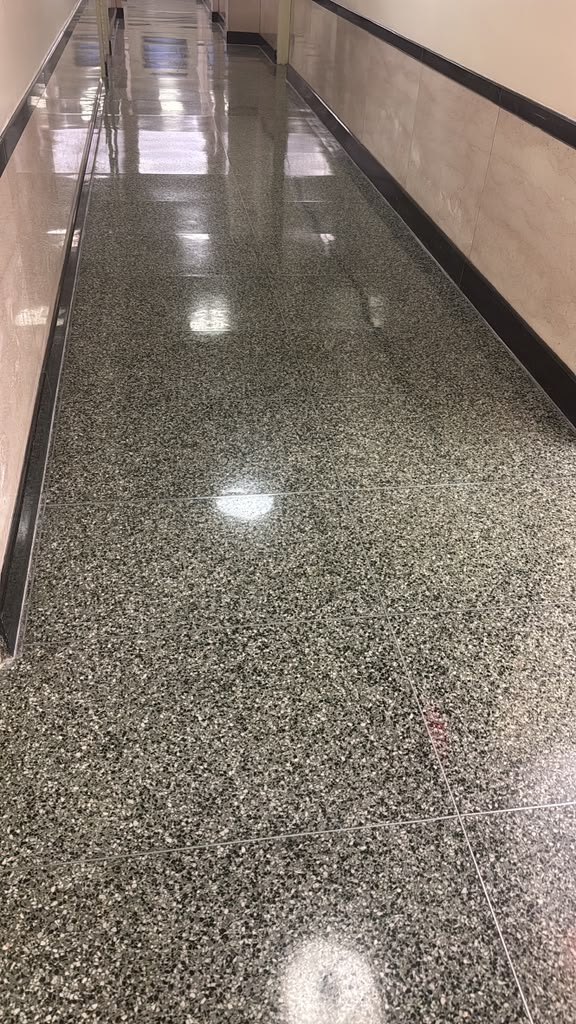
Terrazzo restoration and care for New York City floors
Terrazzo floors are a common and long-lasting feature in many older and contemporary New York City buildings. Proper restoration combines surface preparation, careful repair of cracks and joints, progressive polishing, and appropriate protection. This page explains the typical restoration steps, why terrazzo requires its own approach, common locations where terrazzo is found, and how to request an on-site assessment or written estimate.
Terrazzo restoration services
The following services describe common work performed during terrazzo restoration projects. Scope and methods vary with the terrazzo type (cementitious Portland cement matrix or epoxy matrix), the condition of the floor, and the desired finish level.
Diamond grinding and leveling
Grinding removes surface irregularities, lippage where edges meet, and localized deterioration to re-establish a uniform plane. Grinding is typically done with calibrated diamond abrasives, progressing through coarser to finer grits to reach the target surface profile before polishing.
Polishing
Polishing follows grinding and uses progressively finer diamond abrasives to develop the desired sheen, from a more matte look to higher gloss. Polishing sequences are chosen with attention to the aggregate variety in the terrazzo so the finish is even across different chip types.
Crack, joint, and divider-strip repair
Cracks from settlement, thermal movement, or point loading are often repaired with color-matched fillers and aggregate blends to restore appearance and load transfer. Divider strips and control joints require careful treatment to avoid finish inconsistencies at transitions.
Stain and contamination removal
Oil, paint, adhesive, and biological stains can penetrate terrazzo surfaces. Removing these contaminants may involve mechanical action, poultices, or targeted chemical treatments selected for the terrazzo matrix. Testing on a small area helps confirm an appropriate approach.
Sealing and protection
After restoration, applying a compatible penetrating sealer can improve resistance to staining and simplify routine cleaning. There are also optional specialty protective treatments (topical coatings or enhanced sealers) that aim to increase stain resistance or alter surface appearance; these can affect sheen and require periodic reapplication. Ask for written details about recommended maintenance and any specialty protection so you understand expected appearance and upkeep.
Existing floor discovery and removal
Many older terrazzo floors were later covered with carpet, vinyl, or tile. If you suspect original terrazzo beneath newer finishes, careful testing and selective removal can reveal what can be restored and what repair work will be needed.
Why terrazzo restoration differs from marble or single-stone care
- Mixed aggregates: Terrazzo contains marble, glass, or other chips of differing hardness, so abrasive sequences must accommodate multiple materials.
- Matrix sensitivity: Cement-based and epoxy terrazzo respond differently to cleaning agents and sealers; selecting compatible products is important to avoid damage.
- Age and fragility: Older Portland cement terrazzo can have a friable matrix in places and may require gentler approaches during repair and grinding.
- Divider strips and joints: Metal or stone divider strips are integral to many terrazzo installations and need coordinated treatment to keep transitions consistent.
Common terrazzo locations in New York City buildings
- Pre-war apartment lobbies and corridors
- School hallways and institutional corridors
- Hospital and medical facility floors
- Hotel lobbies and common areas
- Retail spaces and restaurant dining areas
- Residential kitchens and bathrooms using modern epoxy terrazzo
Service area
Services are offered in the following coverage areas:
- Manhattan: Upper West Side, Upper East Side, Midtown, Chelsea, Financial District
- Queens: Fresh Meadows
- Brooklyn: Coney Island
- Nassau County: Great Neck, Lawrence, Five Towns
- Westchester County
Frequently asked questions
What types of terrazzo do you restore?
Restoration approaches are used for a range of terrazzo types, including standard marble-chip (cementitious) terrazzo, Venetian and decorative terrazzo, glass-chip terrazzo, micro-terrazzo, and epoxy terrazzo systems. The matrix type and aggregate composition guide material and process choices.
How is the cost determined?
Cost depends on the floor condition, accessibility, the chosen finish level, and any repairs or specialty treatments required. A site visit allows for an accurate assessment and a written estimate for the proposed scope of work.
Can pre-war terrazzo be restored to its original look?
Many pre-war terrazzo floors respond well to cleaning, grinding, and polishing, but the extent of restoration depends on the depth of wear relative to the aggregate layer and the condition of the matrix. An on-site assessment can clarify what is feasible for a specific floor.
What ongoing maintenance is needed after restoration?
Routine maintenance typically includes pH-neutral cleaning and prompt attention to spills to reduce staining risk. If specialty protective coatings are applied, they may require periodic reapplication; request written maintenance recommendations that match the products used.
Do you work with residential and commercial properties?
Terrazzo restoration approaches are used in both residential and commercial settings. Project scheduling and logistics vary by building type; a site visit helps plan work to minimize disruption.
Request an on-site assessment or written estimate
If you would like a no-obligation on-site assessment or a written estimate for terrazzo restoration, please request an on-site visit through the website contact form or by using the business contact methods listed on the site. An on-site visit allows for a visual inspection, discussion of finish options, and a written scope and estimate tailored to your floor.
Note: Ask for written details of any warranty or maintenance recommendations that accompany the proposed work.
Service Areas
Highline Stone Care serves residential and commercial clients across Manhattan, Queens, Brooklyn, Nassau County, and Westchester County. Confirmed coverage includes the Upper West Side, Upper East Side, Midtown, Chelsea, and the Financial District in Manhattan; Fresh Meadows in Queens; Coney Island in Brooklyn; and Great Neck, Lawrence, and the Five Towns in Nassau County. Contact the team to confirm availability for a specific project location.