
Choosing natural stone for a New York City property is one of the most significant decisions you can make for your space. The stone you select will shape how your rooms look, how much maintenance your building staff handles, and how well your investment holds up over years of real urban life. In a city where luxury condos sit next to high-traffic lobbies, and where historic brownstones demand materials that match their character, the wrong choice can cost far more than the initial installation. This guide breaks down the key criteria, the most popular options, and the practical comparisons you need to make a confident, informed decision.
Table of Contents
- What to consider when choosing natural stone surfaces
- Exploring popular types of natural stone
- Natural stone comparison: Porosity and care requirements
- Which natural stone is right for your NYC property?
- NYC expert perspective: What most stone buyers get wrong
- Tailored stone care for every NYC property
- Frequently asked questions
Key Takeaways
| Point | Details |
|---|---|
| Porosity impacts care | Stones like quartzite and granite need less sealing and upkeep compared to marble, limestone, and travertine. |
| Match stone to use | Choose your stone type according to the room’s traffic, moisture exposure, and cleaning needs. |
| Professional care matters | Expert sealing and restoration help NYC stone surfaces stay beautiful and durable year-round. |
| Consider NYC conditions | Urban traffic, pollutants, and high humidity all affect stone performance and should influence your choice. |
What to consider when choosing natural stone surfaces
Having set the stage for why your decision matters, let’s break down the smart way to evaluate your stone options.
Not every stone is right for every space, and in New York City, the stakes are higher than in most markets. You are dealing with urban grit tracked in from the street, high foot traffic in shared building areas, and multi-use spaces that shift from kitchen prep to entertaining to heavy daily use. Before you fall in love with a slab at a showroom, run it through these core criteria.
Visual style and design compatibility. Natural stone comes in a wide range of colors, veining patterns, and finishes. Some stones, like marble, deliver dramatic veining that anchors a room. Others, like slate, offer a more subdued, earthy look. Match the stone’s visual weight to your space and your building’s existing design language.
Durability for heavy-use environments. NYC properties rarely get gentle treatment. Kitchens, entryways, and lobby floors take a beating every single day. Some stones scratch easily or chip under impact. Others resist wear for decades with minimal intervention. Durability is not optional in a city like this.
Porosity and stain risk.Porosity levels influence suitability and maintenance requirements more than almost any other factor. Porosity refers to how much liquid a stone can absorb. A highly porous stone left unsealed in a kitchen will stain from coffee, wine, or cooking oils within weeks. Understanding where your stone falls on the porosity scale is essential before installation.
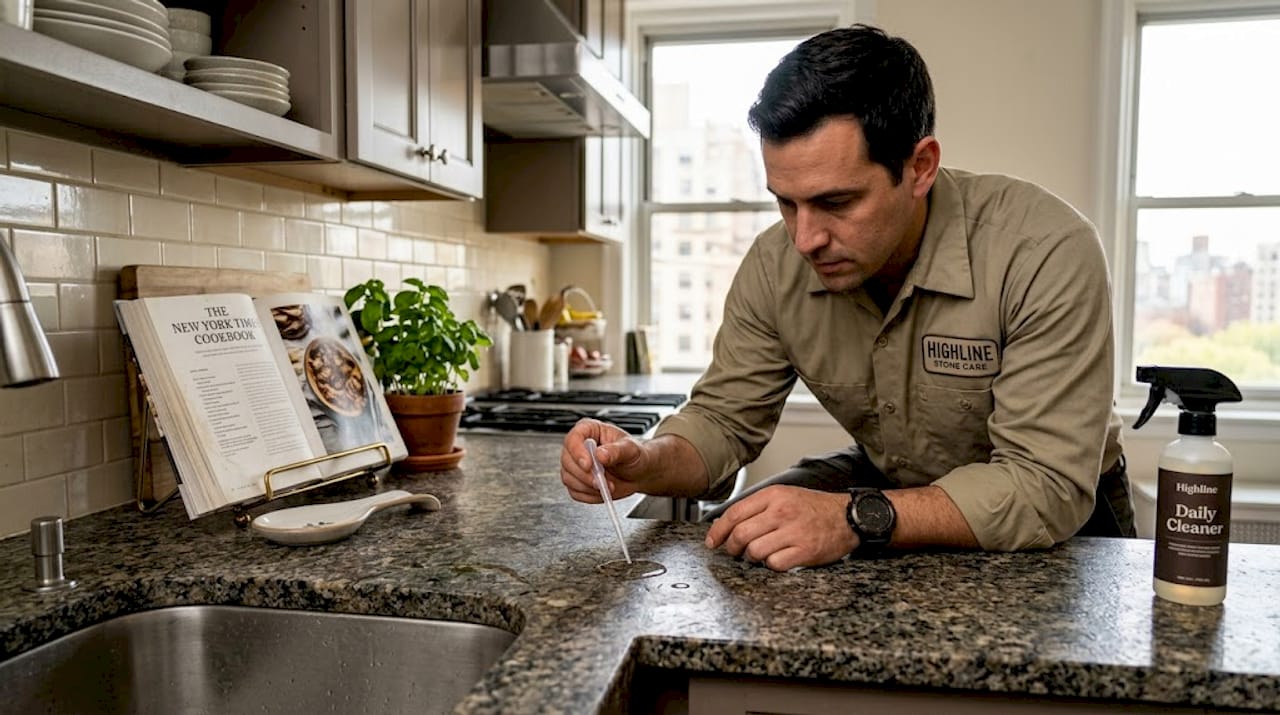
Ease of routine maintenance. Think honestly about who maintains your property. Is it a full building staff? A weekly housekeeper? Just you? Some stones need specialized stone sealing methods and professional attention every six months. Others are nearly self-sufficient with basic cleaning.
Environmental factors unique to NYC. Urban pollutants settle on exterior stone surfaces. Interior stone in high-traffic buildings faces grit, cleaning chemicals, and spills that suburban homes rarely see. Knowing how your stone responds to these conditions matters before you commit.
Pro Tip: Consider how the stone type fits with your building’s existing maintenance schedule. If your property manager already works with a stone care professional, ask which stone types they handle most efficiently and which ones require special scheduling or products.
The best choices come from matching all five criteria to your specific space, not just picking the most beautiful slab in the showroom. If you ever need to address damage from a poor match, stone repair options are available, but prevention is always the smarter path.
Exploring popular types of natural stone
With your selection framework in mind, let’s look at the stone types most often chosen for New York’s demanding environments.
Granite and quartzite have very low porosity, while marble and limestone are considerably more porous. Here is how each major stone type breaks down for NYC use:
Granite
- Dense, hard surface that resists scratches and heat
- Very low porosity makes it naturally resistant to stains
- Common in NYC kitchens and commercial countertops
- Available in a wide range of colors and patterns
- Requires minimal sealing compared to softer stones
- Can look busy or dated in some modern design contexts
Marble
- Iconic veining and a timeless look favored in luxury condos and hotel lobbies
- Medium to high porosity means it stains and etches more easily
- Requires regular sealing and professional countertop restoration insights over time
- Ideal for bathrooms, feature walls, and lower-traffic surfaces
- Sensitive to acidic cleaners and foods like lemon juice or vinegar
Quartzite
- Often confused with quartz (an engineered product), quartzite is 100% natural stone
- Very low porosity and exceptional hardness make it one of the most durable options
- Stunning visual appearance, sometimes resembling marble but with far better performance
- Excellent for kitchen countertops, bathroom vanities, and high-use floors
- Requires professional stone polishing tips to maintain its finish over time
Slate
- Non-slip surface texture makes it excellent for entryways, terraces, and outdoor spaces
- Very low porosity and strong resistance to moisture
- Earthy, layered appearance suits both modern and industrial NYC interiors
- Can flake or chip if not properly maintained
- Limited color range compared to other stone types
Limestone
- Soft, warm tones that work beautifully in bathrooms and decorative applications
- High porosity means it absorbs liquids quickly and stains easily
- Requires frequent sealing and careful cleaning protocols
- Not recommended for busy kitchens or high-traffic lobby floors without a serious maintenance plan
- Offers a softer, more organic aesthetic compared to granite or quartzite
Travertine
- A form of limestone with distinctive pitting and natural holes in the surface
- High porosity and the surface holes can trap dirt and moisture if not filled and sealed
- Popular in spa-style bathrooms and Mediterranean-inspired interiors
- Needs consistent professional care to maintain its appearance in NYC conditions
- Beautiful when properly maintained but demanding in high-use environments
Soapstone
- Completely non-porous, making it one of the most forgiving stones for busy kitchens
- Naturally resistant to bacteria, stains, and heat
- Develops a natural patina over time, which many homeowners find appealing
- Limited color range, typically dark gray to charcoal
- Scratches can be buffed out with mineral oil, making repairs straightforward
Pro Tip: Soapstone and slate tolerate heavy use and urban conditions better than most people expect. If you want a low-maintenance option with genuine character, these two deserve serious consideration alongside the more glamorous choices like marble.
Natural stone comparison: Porosity and care requirements
Next, see how these stones stack up head-to-head so you can visualize the maintenance impact for your property.
Soapstone is non-porous, quartzite, granite, and slate are very low porosity, marble is medium-high, and travertine and limestone are high porosity. Here is the full comparison in a format you can use immediately:
| Stone type | Porosity level | Sealing frequency | NYC suitability | Key maintenance need |
|---|---|---|---|---|
| Soapstone | None | Not required | Excellent | Mineral oil treatment |
| Quartzite | Very low | Every 1-3 years | Excellent | Professional polishing |
| Granite | Very low | Every 1-3 years | Excellent | Routine cleaning |
| Slate | Very low | Every 2-3 years | Very good | Avoid harsh chemicals |
| Marble | Medium-high | Every 6-12 months | Good (selective use) | Sealing, honing, polishing |
| Limestone | High | Every 6 months | Fair (low traffic) | Frequent sealing |
| Travertine | High | Every 6 months | Fair (low traffic) | Fill, seal, and clean |
The table makes one thing very clear. The more porous the stone, the more time and money you will spend on maintenance. In New York City, where cleaning strategies for stone need to account for urban pollutants and building-specific conditions, that maintenance gap between stone types is significant.
“Porosity can dictate the longevity of your stone’s appearance and value, making sealing and proper care non-negotiable.”
For any stone above very low porosity, expert sealing advice from a professional is not a luxury. It is the difference between a surface that looks stunning for decades and one that shows its age within a few years of installation.
Which natural stone is right for your NYC property?
Armed with this comparison, you are ready to match stone types to your building’s real-world needs.
Stones with higher porosity like limestone or travertine need more frequent attention to avoid stains and water damage, especially in high-moisture areas. Use this guide to match your space to the right stone:
Luxury condo kitchen countertops. Quartzite or granite are the top choices. Both resist heat, scratches, and stains while delivering the premium look that high-end NYC kitchens demand. Soapstone is an excellent alternative if you prefer a darker, more distinctive look.
Master bathroom vanities and shower surrounds. Marble remains a popular choice here because moisture exposure is controlled and the aesthetic payoff is significant. Soapstone and quartzite are stronger performers if you want less maintenance. Avoid limestone and travertine in shower areas unless you commit to a rigorous sealing schedule.
Building lobby and entryway floors. Granite, quartzite, or slate are the right calls for high-traffic entry points. These stones handle foot traffic, urban grit, and cleaning chemicals far better than marble or limestone. A polished granite lobby floor in a Midtown Manhattan building can look pristine for decades with the right care program.
Outdoor terraces and rooftop spaces. Slate and bluestone perform well in NYC’s outdoor conditions, handling freeze-thaw cycles and rain without the staining risk that plagues porous stones. Granite is also a strong option for outdoor countertops on rooftop kitchens.
Historic brownstone interiors. Limestone and travertine can be appropriate here because they match the period character of these buildings. The key is committing to a professional maintenance plan from day one. These stones reward careful owners and punish neglect.
Spa-style bathrooms in luxury residences. Travertine and limestone create the warm, organic aesthetic that spa bathrooms call for. With proper filling, sealing, and regular professional care, they perform well in this controlled environment.
Pro Tip: Higher porosity stones like marble, limestone, and travertine are stunning but may require sealing every 6 to 12 months, especially in high-moisture areas like bathrooms or ground-floor spaces with outdoor access. Factor this into your annual maintenance budget before you commit to the stone.
Budget for professional maintenance as part of your selection process. A countertop service visit twice a year costs far less than a full restoration after years of neglect. The stone you can maintain well is always a better investment than the stone you cannot.
NYC expert perspective: What most stone buyers get wrong
Before you finalize your selection, consider these insider observations from NYC’s front line in stone restoration.
The single most common mistake we see is choosing stone based on photographs. A client falls in love with a marble kitchen on an interior design website, installs it in a busy SoHo loft, and calls us 18 months later because the countertops are etched, stained, and dull. The photos never showed the maintenance reality. They showed a styled shoot in perfect lighting with a stone that had probably never seen a lemon or a glass of red wine.
Porosity is the factor that most buyers underestimate until they are standing in front of a stained surface. We have worked in buildings across Midtown Manhattan, the Upper West Side, and Greenwich Village, and the pattern is consistent. Beautiful, porous stones installed without a maintenance plan become problems within the first two years. The fix is always more expensive than the prevention would have been.
Another overlooked factor is building staff expertise. In a large residential building, the cleaning crew may use products that are perfectly fine on tile but genuinely damaging to marble or limestone. We have seen entire lobby floors dulled by the wrong cleaning solution applied consistently over months. Before you specify a stone for a shared building space, make sure the maintenance team knows how to care for it, or that you have a professional service in place.
Our most practical piece of advice is this: maintenance is not an afterthought. Think of it as an investment on par with the stone itself. The cost of regular sealing, polishing, and professional cleaning is predictable and manageable. The cost of trusted repair advice and full restoration after years of neglect is not. Plan for maintenance before the stone goes in, not after the damage appears.
Tailored stone care for every NYC property
If you want your chosen stone to remain stunning for years, take the next step with dedicated NYC expertise.
Every stone type covered in this article performs best when it has a professional care plan behind it. At Highline Stone Care, we work with property owners, managers, and designers across New York City to build maintenance programs that match the stone, the space, and the building’s real-world conditions.
Whether you have a marble bathroom in a Tribeca penthouse, a granite lobby floor in a Westchester building, or travertine tile in a historic brownstone, our team provides the right combination of deep cleaning, honing, polishing, and sealing to protect your investment. Our stone restoration services cover every major stone type, and our sealing and protection programs are customized to your stone’s porosity level and your property’s traffic patterns. Contact us today for a free estimate and find out what the right care plan looks like for your specific stone.
Frequently asked questions
What is the most durable natural stone for New York City kitchens?
Quartzite and granite are very low porosity stones with high resistance to scratches and stains, making them the top choices for busy NYC kitchens.
How often should marble be sealed in high-traffic NYC areas?
Marble’s medium-high porosity means it should be sealed every 6 to 12 months in busy environments to prevent staining and etching from daily use.
Which natural stone is best for bathrooms in NYC homes?
Non-porous or very low porosity stones such as soapstone, granite, or quartzite handle bathroom moisture the best and require the least maintenance in wet environments.
Are limestone and travertine good choices for NYC apartments?
These stones offer unique beauty but travertine and limestone high porosity means they need frequent maintenance, making them best suited for low-traffic or decorative spaces rather than busy kitchens or entryways.
Recommended
- Stone repair Brooklyn | Local specialists – Highline Stone Care
- Stone Cleaning NYC | Eco-Friendly Stone Floor & Countertop Cleaning Services
- Stone Repair Staten Island | Trusted Specialists – Highline Stone Care
Article generated by BabyLoveGrowth