
Natural stone protection, in professional terms called stone sealing and preservation, means applying specialized sealers and maintenance practices to defend high-end stone surfaces against damage, staining, and wear. For Manhattan homeowners and property managers, this is not optional maintenance. It is the difference between a pristine marble lobby that holds its value for decades and a surface that requires costly restoration within a few years. NYC’s freeze-thaw cycles, acid rain, and heavy foot traffic create conditions that accelerate stone deterioration faster than in most American cities. Products like StoneTech Professional and DuPont BulletProof have long been used in professional applications, but the right approach depends on stone type, environment, and usage.
What are the most effective sealers for natural stone in Manhattan?
Sealing natural stone reduces porosity and creates a sacrificial layer that extends stone life, but it does not make stone waterproof or prevent acid etching. That distinction matters enormously for Manhattan properties where marble countertops, travertine floors, and limestone facades all face different threats. Understanding sealer types is the first step toward choosing the right protection.
Penetrating vs. topical sealers
Penetrating sealers, also called impregnating sealers, absorb below the stone surface and repel water and oil from within the pore structure. They preserve the stone’s natural appearance and do not alter its texture. Topical sealers, by contrast, sit on the surface and form a physical barrier. They can add sheen but wear unevenly on marble and granite, causing a patchy or yellowed appearance that is difficult to correct without professional intervention. For polished marble in Manhattan kitchens and bathrooms, penetrating sealers are the professional standard.
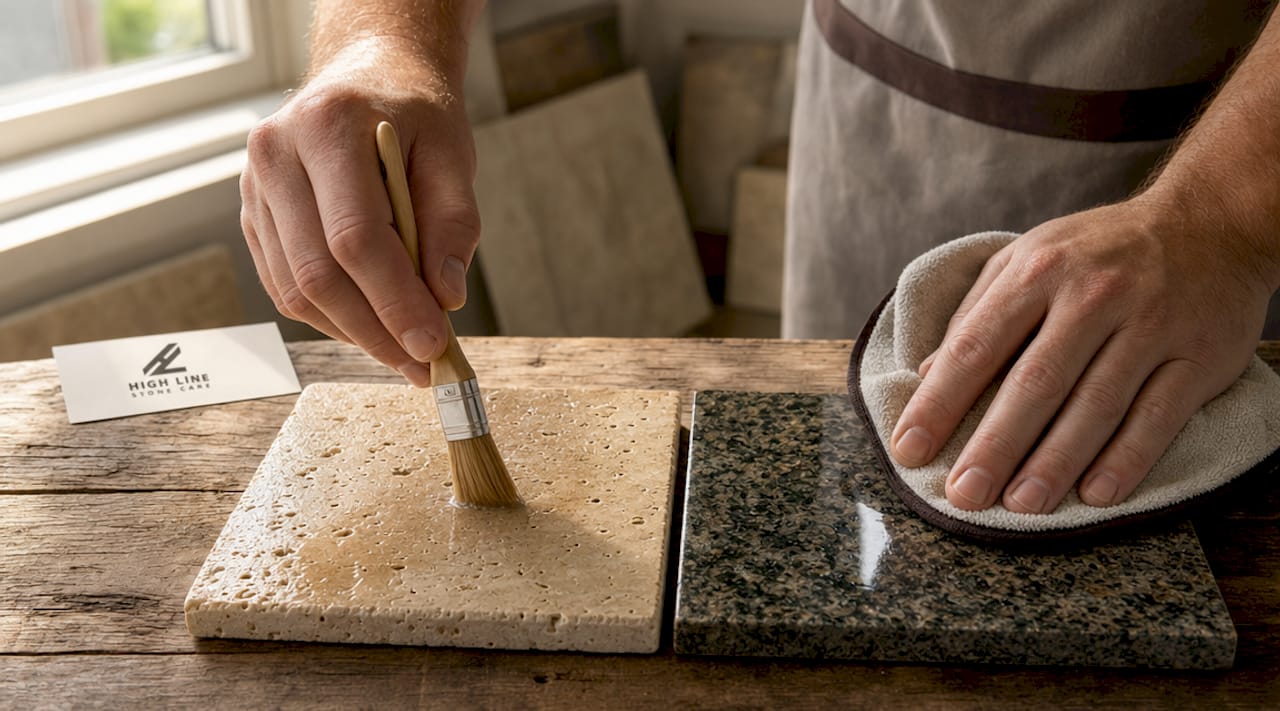
Choosing the right sealer by stone type
The chemistry of the sealer must match the stone’s density and use environment. Here is a practical comparison:
| Stone type | Recommended sealer | Resealing frequency |
|---|---|---|
| Marble and travertine | Solvent-based or fluorocarbon impregnating sealer | Every 6 to 12 months |
| Granite and quartzite | Water-based or solvent-based penetrating sealer | Every 1 to 3 years |
| Limestone and sandstone | Breathable penetrating sealer | Every 6 to 12 months |
| Slate and bluestone | Water-based impregnating sealer | Every 1 to 2 years |
Resealing frequency varies from every 6 to 12 months for soft, porous stones like marble and limestone, to every 1 to 3 years for dense stones like granite and quartzite. In Manhattan, where kitchen countertops and bathroom floors see daily heavy use, leaning toward the shorter end of those intervals is the safer choice.
Proper application steps
Sealer application requires cleaning the surface, allowing it to dry completely, applying the sealer wet, allowing adequate dwell time, and buffing off all excess before it cures on the surface. Moisture trapped beneath the sealer is one of the most common causes of haze and adhesion failure. In Manhattan apartments, where humidity levels fluctuate significantly between seasons, confirming the stone is fully dry before application is non-negotiable.
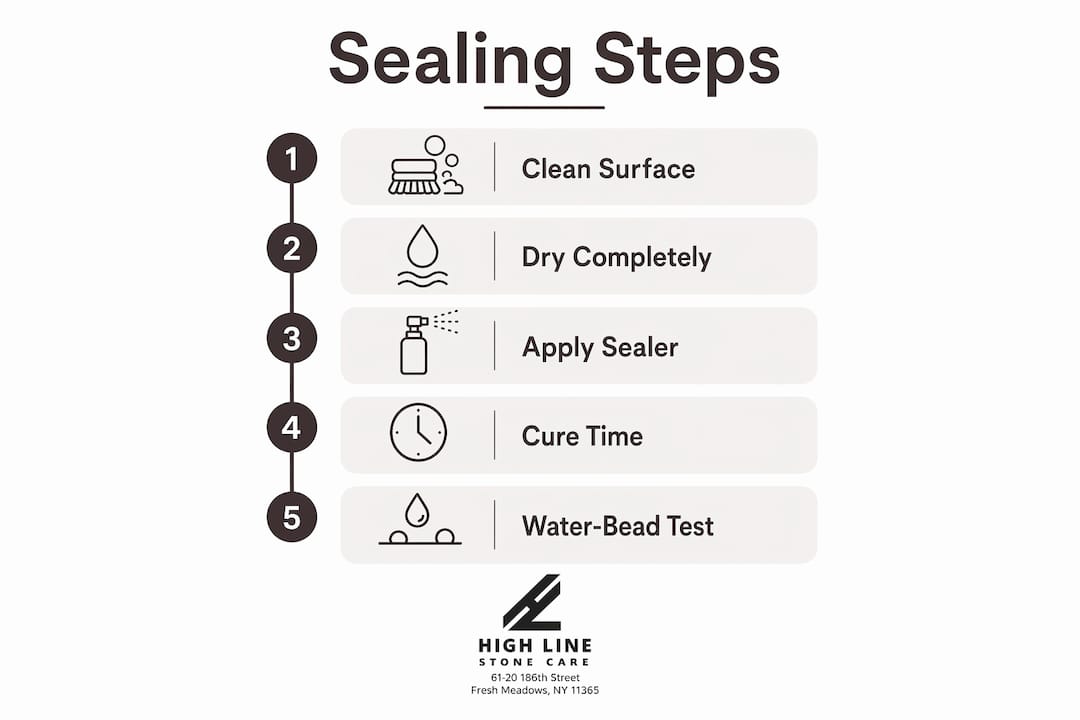
Pro Tip: Run the water-bead test before resealing. Pour a small amount of water on the stone surface. If it absorbs within a few minutes rather than beading up, the sealer has worn down and reapplication is overdue.
How do NYC environmental factors damage natural stone?
Manhattan’s urban environment creates a combination of stressors that most stone protection guides written for suburban or warmer climates simply do not address. Freeze-thaw cycles, acid rain, and airborne pollutants each attack stone through different mechanisms, and effective protection strategies must account for all three.
Freeze-thaw cycles and spalling risk
Water that infiltrates stone joints and pores expands by approximately 9% upon freezing, generating internal pressure that causes spalling, cracking, and progressive structural damage. Manhattan’s winters deliver repeated freeze-thaw cycles each season, which means even minor water infiltration compounds over time. Brownstone stoops, limestone facades, and granite steps on Upper West Side and Upper East Side townhouses are particularly vulnerable. Breathable penetrating sealers that allow moisture vapor to escape while blocking liquid water infiltration are the correct choice for exterior stone in this climate.
Acid rain and urban pollution
NYC’s urban atmosphere carries sulfur dioxide and nitrogen oxide emissions that combine with rainfall to produce dilute acid. Calcite-based stones, including marble, limestone, and travertine, react chemically with this acid and develop surface etching, a dull, roughened patch where the calcium carbonate has dissolved. This is not a staining problem that sealing alone resolves. It is a chemical reaction at the surface level. Stone repair in NYC buildings is increasingly necessary due to decades of deferred maintenance, improper past repairs, and the cumulative effect of this harsh urban environment.
Key environmental threats to natural stone in Manhattan:
- Freeze-thaw cycles causing joint failure and spalling in porous exterior stones
- Acid rain etching calcite-based stones on building facades and outdoor surfaces
- Airborne particulates and grime embedding in unsealed porous stone
- De-icing salts from sidewalks migrating into ground-level stone and causing efflorescence
- Interior humidity fluctuations accelerating sealer breakdown in kitchens and bathrooms
Addressing these threats requires natural stone maintenance NYC professionals who understand local conditions, not generic product instructions written for mild climates.
What daily and periodic maintenance routines preserve stone surfaces?
Consistent maintenance is what separates stone that looks pristine after twenty years from stone that requires full restoration after five. The routines are not complicated, but they require discipline and the right products.
- Wipe spills immediately. Acidic liquids like coffee, wine, citrus juice, and even water with dissolved minerals will etch or stain unsealed stone within minutes. Speed matters more than technique here.
- Sweep or dust mop daily. Grit and sand act as abrasives underfoot. On polished marble or granite floors, foot traffic grinds this grit into the surface and causes micro-scratches that dull the finish over time.
- Use only pH-neutral stone cleaners. Acidic cleaners like vinegar or bleach cause immediate and permanent etching on marble and travertine. Mild household cleaners that seem gentle can strip sealers over time and cause irreversible staining. Products like Miracle Sealants Stone Soap or Lithofin MN Easy-Care are formulated specifically for stone.
- Avoid vacuum cleaners with rotating beater bars. Beater bars and plastic wheels cause fine scratches that dull polished stone surfaces. Use a vacuum set to the hard floor setting with the beater bar disabled, or use a microfiber dust mop instead.
- Deep clean periodically with a professional stone cleaner. Quarterly deep cleaning with a product like Fila Cleaner or StoneTech KlenzAll removes embedded grime that daily mopping leaves behind.
- Run the water-bead test annually. This simple test confirms whether the sealer is still performing. If water absorbs into the stone rather than beading on the surface, schedule resealing promptly.
- Use coasters, trivets, and felt pads. Glasses left near a sink leave rings. Hot pans placed directly on stone countertops can cause thermal shock in some stones. Felt pads under decorative objects prevent scratches.
Pro Tip: For Manhattan kitchens with marble countertops, apply a fluorocarbon-based impregnating sealer rather than a standard water-based sealer. Fluorocarbon chemistry repels both oil and water-based stains more effectively in high-use cooking environments.
How to identify stone damage early and when to call a professional
Catching stone damage early prevents minor cosmetic issues from becoming structural problems. Manhattan property managers overseeing multiple units should conduct visual inspections at least twice a year, particularly after winter.
Common signs of damage to watch for:
- Etching: Dull, matte patches on otherwise polished marble or limestone, often ring-shaped near sinks or countertop edges
- Spalling: Flaking or chipping of the stone surface, most common on exterior brownstone and limestone
- Cracking: Linear fractures that may indicate structural movement or freeze-thaw stress in joints
- Efflorescence: White powdery deposits on stone surfaces caused by soluble salts migrating to the surface with moisture
- Joint failure: Crumbling or missing mortar between stone units, which allows water infiltration
| Damage type | Likely cause | Professional solution |
|---|---|---|
| Surface etching | Acid contact or acid rain | Honing and repolishing |
| Spalling | Freeze-thaw water infiltration | Consolidant treatment or block replacement |
| Deep staining | Sealer failure, oil or organic penetration | Poultice treatment or honing |
| Joint failure | Age, water infiltration, movement | Repointing with compatible mortar |
| Surface dulling | Abrasion, sealer wear | Polishing and resealing |
Distinguishing cosmetic from structural damage is critical. Surface etching and dulling are cosmetic and addressed through honing, polishing, and marble restoration NYC techniques. Spalling, cracking, and joint failure are structural and require prompt professional attention to prevent water infiltration that worsens with each freeze-thaw cycle. For Manhattan buildings with landmark status, any exterior stone repair must comply with NYC Landmarks Preservation Commission guidelines, which require using materials and methods that match the original construction.
Key takeaways
Protecting natural stone in Manhattan requires matching the right sealer to the stone type, maintaining a consistent cleaning routine with pH-neutral products, and addressing environmental damage from freeze-thaw cycles and acid rain before it becomes structural.
| Point | Details |
|---|---|
| Match sealer to stone type | Penetrating impregnating sealers outperform topical sealers on polished marble and granite. |
| Reseal on schedule | Marble and limestone need resealing every 6 to 12 months under Manhattan conditions. |
| Use pH-neutral cleaners only | Acidic and alkaline cleaners permanently damage stone and degrade sealers over time. |
| Address NYC environmental threats | Freeze-thaw cycles and acid rain require breathable sealers and prompt joint maintenance. |
| Act early on damage signs | Etching and spalling caught early are correctable; deferred repairs become structural problems. |
What working in Manhattan stone care has taught me
After years of working with natural stone surfaces across Manhattan properties, the pattern that stands out most is not the damage itself. It is how preventable most of it was. The most common mistake homeowners make is using the wrong cleaner. A bottle of white vinegar used weekly on a marble countertop will etch the surface within months, and many people do not connect the cause to the effect until the damage is already permanent.
The second most common mistake is treating sealing as a one-time task. Many property managers reseal stone once after installation and assume the job is done. Applying the correct sealer tailored to the stone type and environment provides the best protection, but that protection degrades with use and must be renewed. A sealer applied three years ago to a high-traffic marble lobby floor is almost certainly no longer performing.
What I have found genuinely effective is a written maintenance schedule. Properties that document their resealing dates, cleaning product choices, and inspection results consistently show better stone condition over time than those that rely on memory or reactive maintenance. The cost of a professional consultation to set up that schedule is a fraction of what a full honing and restoration costs later. Proactive care is not just better for the stone. It is significantly better for the budget.
— High
Protect your Manhattan stone surfaces with Highlinestonecare
Manhattan’s stone surfaces deserve more than standard maintenance. Highlinestonecare brings advanced sealing, restoration, and polishing services specifically designed for NYC’s demanding environment. Their signature Opal Luxury Anti-Acid Permanent Sealer provides lasting protection against etching and staining, with a single application designed to last a lifetime on properly maintained surfaces.
Whether you manage a luxury residential building on the Upper East Side or own a townhouse with original limestone details, Highlinestonecare’s team delivers expert stone restoration Manhattan solutions backed by deep local expertise. From professional stone sealing to full surface restoration, every service is tailored to your specific stone type and building conditions. Contact Highlinestonecare to schedule a consultation and protect your investment before damage requires costly repair.
FAQ
What is the best sealer for marble in Manhattan?
A fluorocarbon-based or solvent-based penetrating impregnating sealer is the best choice for marble in Manhattan. These sealers repel both oil and water-based stains while allowing moisture vapor to escape, which is critical in NYC’s humid and variable climate.
How often should natural stone be resealed in NYC?
Marble and limestone in high-use areas should be resealed every 6 to 12 months, while denser stones like granite and quartzite typically need resealing every 1 to 3 years. Manhattan’s heavy use and environmental conditions favor resealing at the shorter end of those intervals.
Does sealing stone prevent acid etching?
No. Standard sealers reduce porosity and protect against staining, but sealers do not stop etching caused by acid contact. Only specialized permanent etch protection sealers, such as Highlinestonecare’s Opal Luxury Anti-Acid Permanent Sealer, provide protection against acid-related surface damage on marble and limestone.
What cleaners are safe for natural stone floors?
Only pH-neutral cleaners formulated specifically for natural stone are safe for regular use. Products like Miracle Sealants Stone Soap, Lithofin MN Easy-Care, and StoneTech KlenzAll are appropriate choices. Vinegar, bleach, ammonia, and general-purpose household cleaners will damage stone and degrade sealers.
When should a Manhattan homeowner call a professional for stone repair?
Call a professional when you notice spalling, cracking, deep staining, joint failure, or widespread surface dulling that does not respond to cleaning. These conditions indicate damage beyond cosmetic care and require professional stone restoration techniques including honing, polishing, repointing, or consolidant treatment.
Recommended
- NYC Stone Care Guide: Expert Steps for Long-Lasting Surfaces
- Natural stone types for NYC homes: features, care, and selection