
Acid resistant surface protection is defined as the application of specialized sealers and coatings that shield natural stone from acid-related damage, staining, and surface degradation. For homeowners and property managers with marble, travertine, limestone, or granite surfaces, this protection is not optional. These stones are chemically reactive, and without the right surface protection solutions in place, a single lemon wedge or splash of vinegar can leave a permanent dull patch where polished stone once gleamed. The distinction between what sealers can and cannot do is where most property owners get into trouble, and understanding that difference is the foundation of any lasting protection strategy.
What types of acid resistant coatings are available for stone?
The stone care industry recognizes two primary categories of acid resistant coatings: penetrating (impregnating) sealers and topical (film-forming) coatings. Each works through a different mechanism, and each carries trade-offs that matter significantly for kitchen countertops and high-traffic stone surfaces.
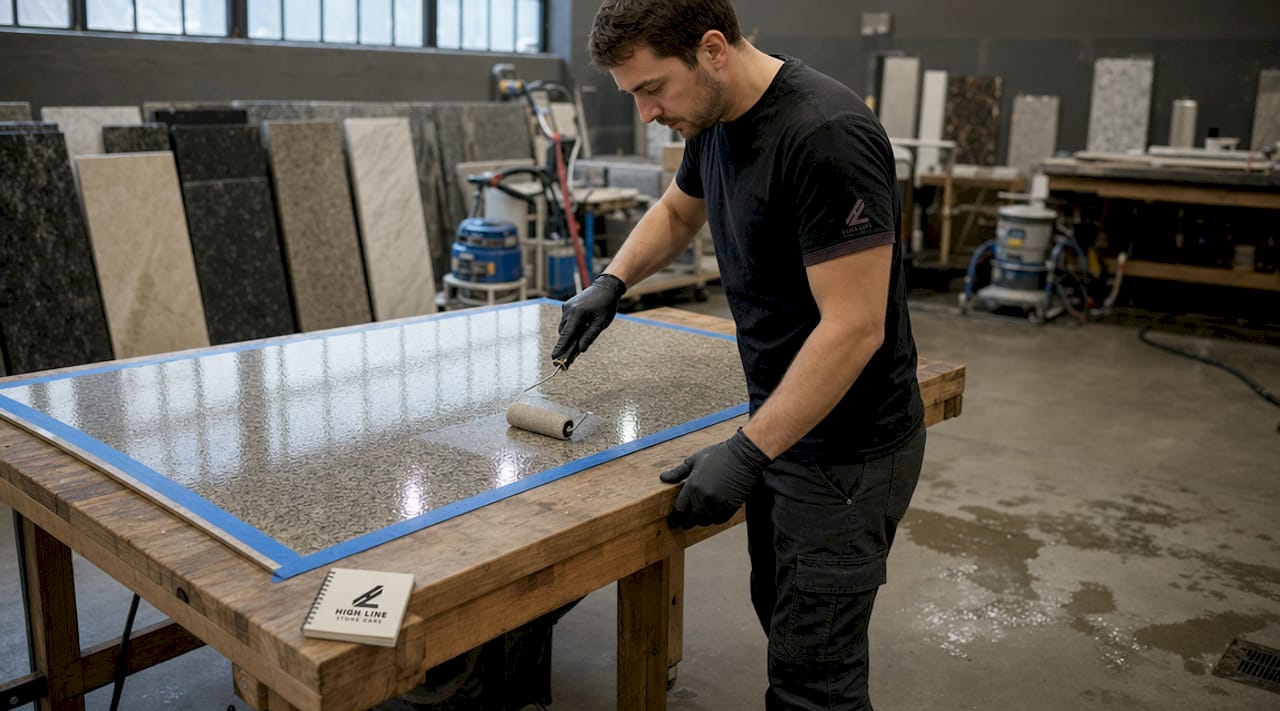
Penetrating sealers absorb into the stone’s pores and create a hydrophobic barrier from within. Silane, siloxane, and fluorocarbon-based formulas are the most common types. They remain invisible on the surface, do not alter the stone’s appearance, and reduce stain absorption without creating a film that can peel or trap moisture. For acid-risk stones like marble and travertine, penetrating sealers are the preferred choice because they preserve the natural look while offering meaningful stain defense.
Topical coatings, including epoxy and polyurethane films, sit on top of the stone and form a physical barrier. They can offer stronger chemical resistance in theory, but they come with real drawbacks. Film-forming coatings can peel, trap moisture beneath the surface, and alter the stone’s appearance in ways that are difficult to reverse. Compatibility with stone moisture is a critical factor, and in residential settings, these coatings are rarely the right fit for polished marble or limestone.
| Sealer type | Mechanism | Acid protection | Best for |
|---|---|---|---|
| Penetrating (silane/siloxane) | Absorbs into pores | Slows staining, not etching | Marble, travertine, limestone |
| Penetrating (fluorocarbon) | Absorbs into pores | Slows staining, oil repellent | Granite, dense stone |
| Topical epoxy/polyurethane | Film on surface | Higher chemical resistance | Industrial or commercial use |
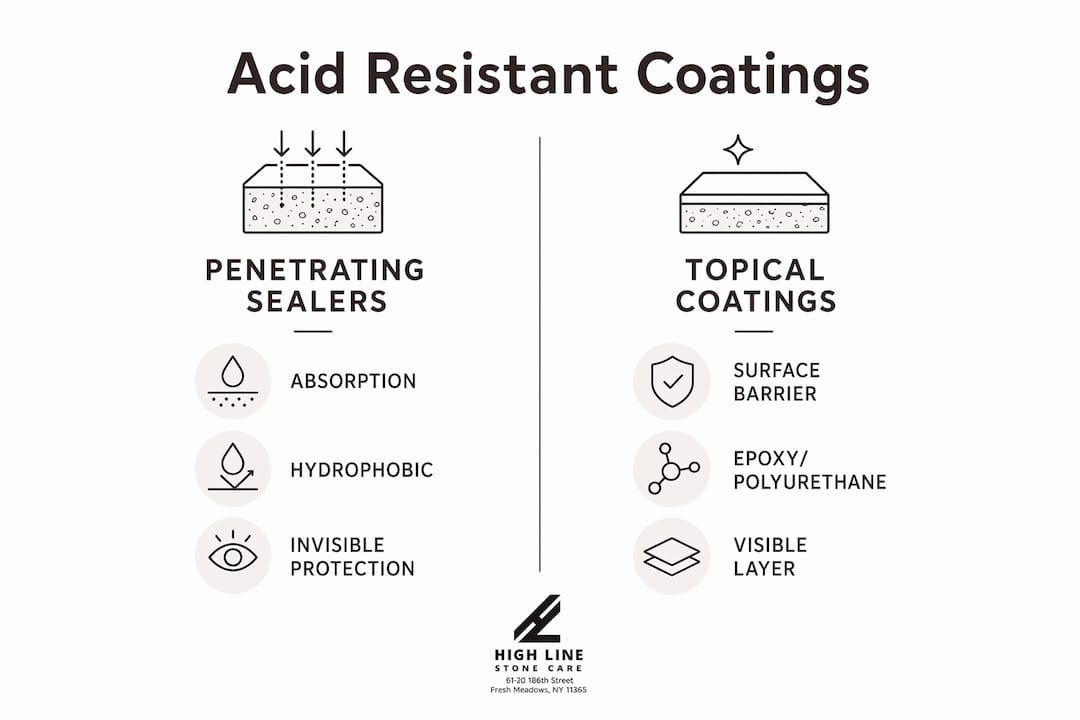
Penetrating sealers are recommended for acid-risk natural stones because they work invisibly and reduce absorption from within the pores. Topical sealers may wear unevenly and affect the surface appearance over time, which is a significant concern for premium stone installations.
Pro Tip: Before applying any sealer, test stone porosity by placing a few drops of water on the surface. If the water absorbs within a few minutes, the stone is porous and will benefit from an impregnating sealer. Pay special attention to edges and seams, where acids tend to concentrate and sealers are often applied unevenly.
Why sealers can’t fully prevent acid etching on marble and limestone
This is the most misunderstood aspect of stone protection, and it costs homeowners real money every year. No consumer sealer prevents acid etching on calcite-based stones. Marble, travertine, and limestone are composed primarily of calcium carbonate. When an acid contacts the surface, it triggers a chemical reaction that dissolves the calcium minerals directly. A sealer sitting inside the pores cannot stop that reaction from occurring at the surface.
What sealers do accomplish is meaningful but limited. They slow the penetration of liquids into the stone, reducing the risk of deep staining. They buy time for cleanup. They do not, however, create a chemical shield that neutralizes acids before they reach the stone’s mineral surface. A drop of lemon juice left on sealed marble for several minutes will still produce a dull, matte etch mark.
“Sealed does not mean acid-proof. Sealers slow but do not prevent acid etching, which permanently damages calcite minerals in stone. Quick cleanup remains the single most effective defense against etch damage on marble and limestone surfaces.”
The practical implication for kitchen countertops is significant. A marble island in a working kitchen faces daily exposure to citrus, wine, vinegar-based dressings, and carbonated drinks. All of these are acidic. Sealing that surface is still worthwhile for stain protection, but the expectation that it creates an acid-proof barrier leads homeowners to be less careful than they should be. Effective protection requires separating stain defense (handled by the sealer) from etch prevention (handled by behavior and cleaning speed).
Which acids pose the greatest risk to stone surfaces?
Hydrochloric acid, citric acid, and lactic acid rank among the most aggressive reagents for stone damage. These are not obscure industrial chemicals. They are present in everyday household items that sit on stone countertops and floors every day.
Here is where these acids appear in a typical home:
- Citric acid is found in lemons, limes, oranges, grapefruit, tomatoes, and many commercial cleaning sprays marketed as “natural” or “plant-based.”
- Lactic acid is present in dairy products including milk, yogurt, butter, and soft cheeses. A spilled glass of milk on a marble countertop is a genuine etching risk.
- Hydrochloric acid appears in some grout cleaners, tile cleaners, and descaling products. Using these on or near stone surfaces causes damage within hours.
- Acetic acid (vinegar) is one of the most common sources of stone damage in homes because it is widely used as a cleaning agent. It strips sealers rapidly and etches calcite-based stone on contact.
- Phosphoric acid is found in some rust removers and certain cola beverages. Even brief contact with unsealed or lightly sealed stone causes visible surface damage.
Cleaning products containing these acids cause surface damage within 24 to 96 hours of exposure. That timeline matters because many homeowners assume a spill that looks minor will dry without consequence. For stone care, the right cleaning agents are pH-neutral soaps and stone-specific cleaners. Products like Lithofin Stone Soap or MB Stone Care MB-5 are formulated to clean without disrupting the sealer or reacting with the stone. Bleach and abrasive scrubbers also damage sealers and stone surfaces over time, even when they do not cause immediate visible etching.
How to maintain and reapply protection to extend stone surface life
Maintenance is where protection either holds or fails. A sealer applied correctly and then neglected will degrade, leaving the stone increasingly vulnerable. The good news is that a consistent routine is straightforward once you know the intervals and warning signs.
Resealing frequency by stone type:
- Marble and travertine in kitchen or high-use areas: reseal every 6 to 12 months
- Marble in low-use areas such as bathroom vanities: reseal every 12 to 18 months
- Granite countertops: reseal every 1 to 3 years, depending on use intensity and sealer chemistry
- Limestone floors in entryways: reseal every 6 to 12 months due to foot traffic and tracked-in contaminants
The water-bead test is the most reliable way to check whether a sealer is still performing. Pour a small amount of water onto the stone surface. If it beads up and sits on top, the sealer is active. If it absorbs within two to three minutes, the stone needs resealing. This test takes thirty seconds and can save a significant restoration cost.
Daily and weekly cleaning habits that preserve protection:
- Wipe up acidic spills immediately. Speed is the most effective etch prevention available.
- Use only pH-neutral stone cleaners or mild dish soap diluted in water for daily cleaning.
- Avoid leaving wet glasses, citrus rinds, or acidic foods directly on stone surfaces.
- Use cutting boards and trivets consistently, especially on marble kitchen countertops.
For application, a dense-stone impregnating sealer covers approximately one pint per 75 square feet and requires the surface to remain dry for at least six hours after application. Applying sealer to a damp surface reduces penetration and leaves the stone underprotected. Always clean the surface thoroughly before resealing to avoid trapping residue beneath the new sealer layer.
Pro Tip: When resealing, apply the sealer in thin, even coats rather than one heavy application. A heavy coat leaves excess product on the surface that can dry as a hazy film. Two thin coats with a 20-minute interval between them produce better penetration and a cleaner result.
What advanced protection options exist for high-exposure settings?
For commercial kitchens, restaurant bars, hotel lobbies, or any stone surface that faces near-constant chemical exposure, standard residential sealers reach their limits quickly. Industrial-grade chemical resistant coatings offer a different level of defense, though they come with their own considerations.
MetaLine 100 XTM is one example of an industrial chemical protection coating system. Applied as a multi-layer system at 1.5mm thickness, it resists a broad range of aggressive chemicals, withstands temperatures up to 130°C, and passes a 10,000-hour salt mist test. These specifications place it firmly in the industrial category, designed for chemical processing facilities, manufacturing floors, and heavy-use commercial environments rather than residential marble countertops.
| Protection system | Application | Chemical resistance | Temperature resistance | Residential relevance |
|---|---|---|---|---|
| Penetrating impregnating sealer | Single coat, porous stone | Slows acid penetration | Ambient | High |
| Polyurethane topical coating | Film on surface | Moderate chemical barrier | Up to ~80°C | Low to moderate |
| MetaLine 100 XTM (industrial) | Multi-layer, 1.5mm | Broad aggressive chemicals | Up to 130°C | Very low |
For homeowners and property managers, the practical takeaway is that no residential product matches industrial coating performance, and that gap is intentional. Industrial coatings change the appearance and texture of stone surfaces in ways that are incompatible with premium residential aesthetics. The right approach for high-end stone in a home or luxury property is a premium impregnating sealer combined with a rigorous cleaning protocol, not an industrial coating system. For outdoor stone exposed to UV, look for sealers with UV-stabilizing additives, which prevent color fading and sealer degradation from sun exposure. Consulting a stone protection specialist helps match the right product to the specific stone type and exposure conditions.
Key takeaways
Acid resistant surface protection for stone requires combining the right sealer with consistent cleaning habits, because no sealer alone prevents acid etching on calcite-based stones like marble and travertine.
| Point | Details |
|---|---|
| Sealers slow, not stop, acid damage | Penetrating sealers reduce staining but cannot prevent etching on marble, limestone, or travertine. |
| Reseal on a schedule | Marble in high-use areas needs resealing every 6 to 12 months; granite every 1 to 3 years. |
| Avoid common household acids | Citric, lactic, and acetic acids found in food and cleaners cause etching within hours on unprotected stone. |
| Speed of cleanup is the best etch defense | Wiping acidic spills immediately is more effective than any sealer at preventing visible etch marks. |
| Industrial coatings are not for residential stone | Systems like MetaLine 100 XTM offer superior chemical resistance but are incompatible with premium residential aesthetics. |
What experience with stone care actually teaches you
After years of working with homeowners and property managers across New York City, the pattern I see most often is this: someone invests in beautiful marble, has it professionally sealed, and then assumes the job is done. That assumption is where the damage begins.
The single most damaging misconception in stone care is that sealing creates an acid-proof surface. It does not. What it creates is a stain-resistant surface that gives you a few extra seconds to react. Those seconds matter, but they do not replace the need for careful habits. I have seen pristine Calacatta marble countertops develop a network of fine etch marks within two years of installation, not because the sealer failed, but because the owners used a lemon-based “natural” cleaner every day without realizing what it was doing.
The homeowners who maintain the best-looking stone surfaces over time are not the ones with the most expensive sealers. They are the ones who wipe spills immediately, use the right cleaners, and schedule professional maintenance before visible damage appears. Combining a quality anti-etch sealing service with a disciplined daily routine produces results that no single product can match on its own. Protection is a system, not a one-time application.
— High
How Highlinestonecare protects your stone surfaces
Highlinestonecare provides professional sealing, restoration, and maintenance services for premium natural stone surfaces across New York City. The Opal Luxury Anti-Acid Sealer, applied by Highlinestonecare’s trained specialists, offers lasting protection against etching and staining that standard consumer products cannot replicate. A single professional application delivers results that hold up under real residential and commercial conditions, backed by a satisfaction guarantee. For homeowners and property managers who want their marble, travertine, or granite to remain pristine for years, professional-grade stone sealing services and periodic inspections are the most reliable path forward. If existing surfaces already show etching or staining, Highlinestonecare’s marble restoration services return stone to its original appearance before new protection is applied.
FAQ
What is acid resistant surface protection for stone?
Acid resistant surface protection refers to applying penetrating sealers or chemical resistant coatings to natural stone to slow acid penetration and reduce staining. No consumer sealer fully prevents acid etching on calcite-based stones like marble or limestone.
How often should marble countertops be resealed?
Marble countertops in kitchens or high-use areas should be resealed every 6 to 12 months. Lower-use surfaces like bathroom vanities can go 12 to 18 months between applications.
Does sealing marble make it acid-proof?
Sealing marble does not make it acid-proof. Sealers reduce stain absorption and buy time for cleanup, but the chemical reaction between acids and calcium carbonate in marble still occurs on contact.
Which household products damage sealed stone surfaces?
Vinegar, lemon juice, citrus-based cleaners, dairy products, and descaling sprays containing hydrochloric acid all damage sealed stone. Bleach and abrasive scrubbers also degrade sealers and dull the stone’s surface over time.
When should a homeowner hire a professional for stone protection?
A professional should be consulted when existing etch marks or stains are visible, when stone has not been sealed in over a year, or when selecting protection for a high-value installation where product compatibility and application quality matter.
Recommended
- NYC Stone Care Guide: Expert Steps for Long-Lasting Surfaces
- luxury-stone-protection-anti-etch – Highline Stone Care
- Stone Sealing Services NYC | Natural Stone & Countertop Sealer