
Marble bathroom vanity protection is defined as the combination of sealing, pH-neutral cleaning, and daily containment habits that prevent etching, staining, and moisture damage to calcium carbonate stone surfaces. Marble is porous by nature, which means acids, cosmetics, and standing water can penetrate the surface within minutes and leave permanent dull patches or discoloration. The good news is that with the right approach, marble performs exceptionally well in bathrooms. Acid exposure in bathrooms is significantly lower than in kitchens, which means marble performs well when properly maintained. This guide covers every layer of protection, from sealing frequency and product selection to fabrication quality and daily habits.
How does sealing protect a marble bathroom vanity?
Sealing is the single most important step in marble bathroom maintenance. Marble is a metamorphic stone composed primarily of calcium carbonate, which reacts chemically with acids and absorbs liquids through microscopic pores. A quality impregnating sealer penetrates below the surface and creates a barrier that slows absorption, giving you time to wipe up spills before they cause staining or etching.
Penetrating vs. surface sealers
Penetrating sealers, also called impregnating sealers, soak into the stone and bond with its mineral structure. They do not change the surface appearance and remain breathable. Surface sealers, by contrast, sit on top of the stone and can alter sheen. For bathroom vanities, penetrating sealers are the professional standard because they protect without affecting the finish.
How often should you reseal?
Marble vanities require sealing every 6 to 12 months depending on use and traffic. A heavily used master bathroom vanity needs resealing closer to every six months, while a guest bathroom may hold a seal for a full year. DIY sealers cost between $30 and $60 per application, while professional sealing runs $150 to $300. Professional application is worth considering because technicians assess the stone’s condition, apply the correct product concentration, and remove excess sealer properly.
The water drop test
The simplest way to check seal integrity at home is the water drop test. Place a few drops of water on the marble surface and wait five minutes. If water beads up, the seal is intact. If the water soaks in and darkens the stone, it is time to reseal. Run this test every three months in high-use bathrooms.
Pro Tip: Apply sealer in thin, even coats and wipe away any excess within the dwell time specified on the product label. Leaving sealer on too long creates a hazy, sticky residue that attracts dust and dulls the surface. Less is more with every application.
Here is a quick comparison of your sealing options:
| Option | Cost | Frequency | Best For |
|---|---|---|---|
| DIY penetrating sealer | $30–$60 | Every 6–12 months | Budget-conscious homeowners |
| Professional sealing | $150–$300 | Every 6–12 months | Luxury vanities, precise application |
| Opal Luxury Anti-Acid Sealer (Highlinestonecare) | Professional quote | Lifetime application | Permanent etch and stain protection |
How to clean marble bathroom vanities safely
Cleaning marble incorrectly causes more damage than neglect. The surface loses its elegant appearance not from age, but from the wrong products applied repeatedly over time.
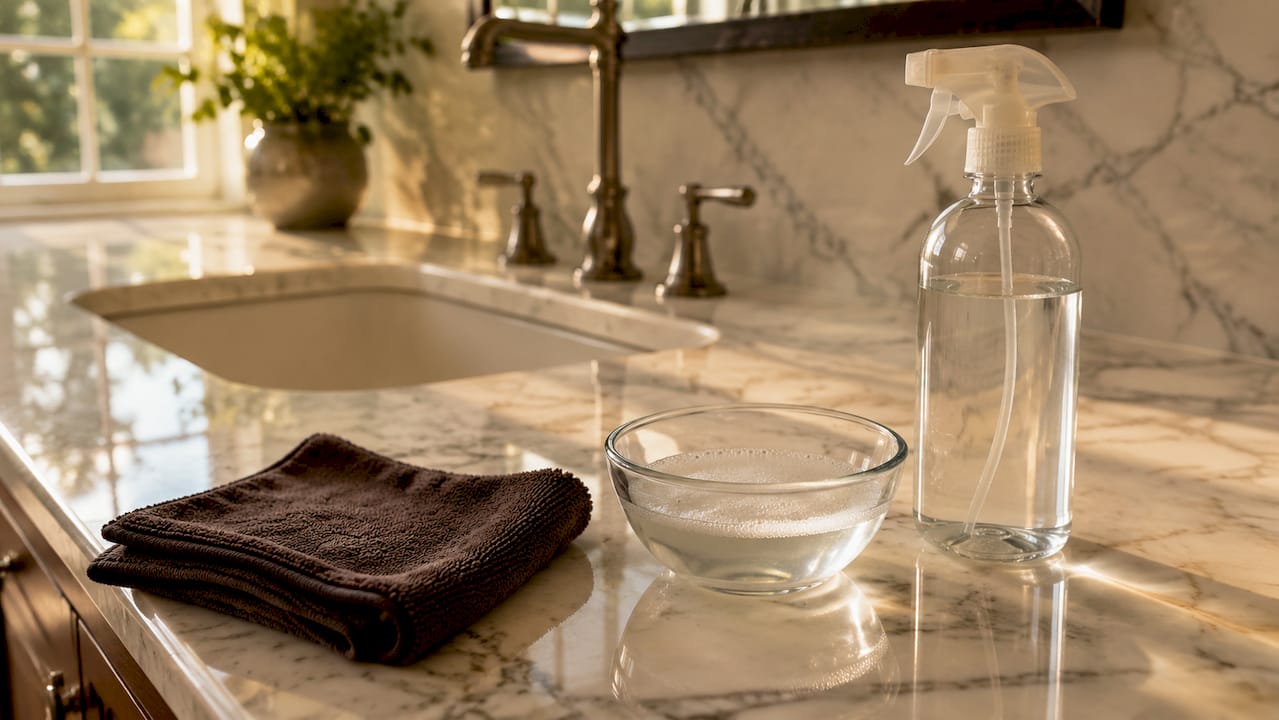
The cardinal rule is pH-neutral cleaners only. Acidic products like vinegar and lemon cause instant etching on marble surfaces, dissolving the calcium carbonate and leaving dull, rough patches that no amount of polishing will fully reverse without professional intervention. Bleach and abrasive scouring pads cause similar damage by stripping the finish and scratching the stone.
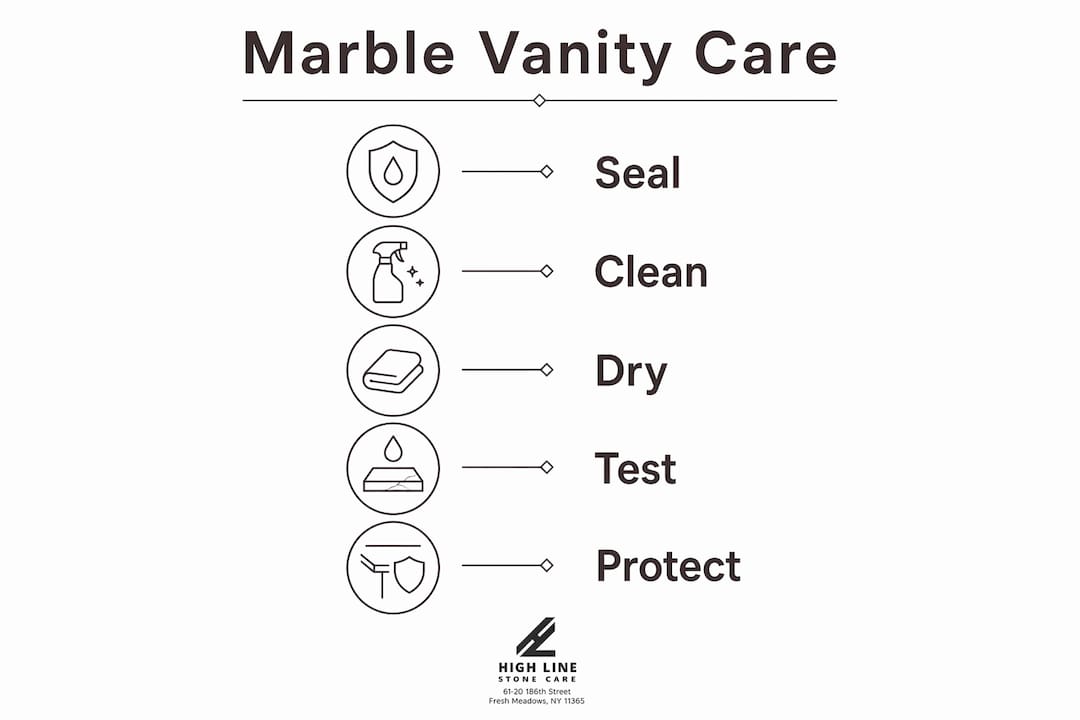
For daily cleaning, a few drops of mild dish soap mixed with warm water and applied with a soft cloth is sufficient. Commercial marble-safe cleaners such as Granite Gold Daily Cleaner and Black Diamond Stoneworks Marble and Tile Floor Cleaner are formulated at the correct pH and safe for regular use. Always rinse the surface with clean water after cleaning to remove any soap residue.
Drying the vanity with a microfiber cloth after every cleaning session prevents water spots, especially in areas with hard water. Hard water leaves calcium and mineral deposits that etch the surface over time if left to dry repeatedly in the same spot.
Pro Tip: Keep a dedicated microfiber cloth next to the vanity and make drying a 10-second habit after each use. This single step prevents the majority of water spot damage that accumulates on polished marble over months.
The following products and practices to avoid:
- Vinegar, lemon juice, or any citrus-based cleaner
- Bleach or hydrogen peroxide in concentrated form
- Abrasive scrubbing pads or steel wool
- Multi-surface bathroom sprays not labeled stone-safe
- Ammonia-based glass cleaners
What daily habits minimize risk to your marble vanity?
Prevention is more cost-effective than restoration. Maintenance costs for marble vanities run 30 to 50 percent higher than quartz over time due to recurring sealing and specialized cleaning needs. Adopting a containment mindset reduces that gap significantly.
The most practical daily habits follow a clear sequence:
- Place decorative trays or coasters under all cosmetics, perfumes, and personal care products. Using trays to contain cosmetics and acidic items is the single most effective containment strategy. Hairspray, nail polish remover, and many toners contain acids or solvents that etch marble on contact.
- Wipe the vanity dry after every use. Standing water near faucet bases and sink edges is the leading cause of hard water rings and mineral etching. A quick wipe takes seconds and prevents damage that costs hundreds to repair.
- Address spills immediately. Blot, do not wipe, any liquid spill. Wiping spreads the substance and increases the contact area. Blotting lifts it. Then clean the spot with a pH-neutral solution.
- Inspect faucet bases and sink edges monthly. These are the highest-risk zones for hard water buildup. A dull ring near the sink base is an early warning sign that mineral deposits are accumulating and beginning to etch the surface.
- Check for minor stains or dull patches during your monthly inspection. Catching damage early means a professional can address it with polishing or light honing rather than full restoration.
Pro Tip: Avoid placing open bottles of perfume, cologne, or toner directly on the marble. Even a small drip from the bottle neck contains enough acid to leave a visible etch mark within minutes. A small marble or stone tray costs under $20 and eliminates this risk entirely.
How does fabrication quality affect long-term marble protection?
Surface sealing protects what it can reach. What it cannot reach are the structural vulnerabilities built into a vanity during fabrication and installation. Waterproofing at high-risk zones during fabrication is critical because no surface sealing can compensate for poor structural moisture barriers.
The highest-risk areas in any marble vanity installation are:
- Sink cutouts: The exposed stone edge around an undermount sink is in constant contact with water. Without proper waterproofing at this seam, moisture infiltrates the stone from below and causes cracking, staining, and structural weakening over time.
- Backsplash seams: The joint where the vanity top meets the backsplash collects water and soap residue. A poorly finished seam allows moisture to travel behind the stone.
- Faucet holes: Drilling faucet holes exposes raw, unsealed stone edges. These must be sealed during installation, not after.
Poor seam finishing leads to moisture infiltration that surface sealing alone cannot fix. This is why working with an experienced stone fabricator matters as much as choosing the right sealer.
Honed vs. polished finish: which is easier to maintain?
Finish selection affects how visible daily wear appears on your vanity. Honed marble finishes hide etching and water spots better than polished finishes because the matte surface diffuses light rather than reflecting it. A polished finish looks stunning when pristine, but every water spot and etch mark is immediately visible. Honed surfaces reduce visible daily wear and lower the maintenance burden for busy households.
| Finish | Appearance | Etching Visibility | Maintenance Level |
|---|---|---|---|
| Polished | High gloss, mirror-like | High | More frequent attention needed |
| Honed | Matte, soft sheen | Low | Forgiving of daily wear |
For property managers overseeing multiple units, honed marble is the practical choice. For homeowners prioritizing aesthetics in a low-traffic bathroom, polished marble remains a premium option with the right care routine.
Key takeaways
Protecting a marble bathroom vanity requires sealing every 6 to 12 months, cleaning with pH-neutral products only, and adopting daily containment habits that prevent acid and moisture contact with the stone.
| Point | Details |
|---|---|
| Seal every 6 to 12 months | Use the water drop test quarterly to confirm seal integrity before damage occurs. |
| pH-neutral cleaners only | Vinegar, lemon, and bleach cause instant etching; use stone-safe products like Granite Gold Daily Cleaner. |
| Containment over avoidance | Trays and coasters under cosmetics reduce acid contact more reliably than behavioral reminders alone. |
| Fabrication quality matters | Waterproofing at sink cutouts and seams prevents moisture damage no surface sealer can fix. |
| Honed finish reduces maintenance | Matte surfaces hide etching and water spots, making them the practical choice for high-use bathrooms. |
What working with marble has taught me about realistic expectations
The most common misconception I encounter is that etching means the marble is defective or that the homeowner did something wrong. Etching is natural and manageable, not a defect. It is a chemical reaction between acid and calcium carbonate. Every marble surface will etch eventually. The goal is not to prevent every etch forever. It is to slow the process, minimize severity, and know when to call a professional.
What I have also observed is that homeowners who struggle most with marble maintenance are those who treat it like a ceramic tile. They use the same bathroom spray they use on everything else, skip the sealing because the stone looks fine, and then wonder why a dull patch appeared near the sink. Marble rewards attention and punishes indifference.
The shift that makes the biggest difference is moving from avoidance to containment. You cannot avoid every splash or spill. You can contain the risk with trays, microfiber cloths, and a quarterly water drop test. That mindset change, combined with annual professional sealing, is what separates a vanity that looks pristine after ten years from one that looks tired after two.
One more thing worth saying directly: if your vanity already shows etching or staining, do not wait. Light etching addressed early can be corrected with professional polishing. Deep etching left untreated requires honing or full restoration, which costs significantly more. Routine care is always the better investment.
— High
Protect your marble vanity with professional-grade sealing
Highlinestonecare provides advanced stone restoration and protection services for homeowners and property managers across New York City. If your vanity needs resealing, shows signs of etching, or has never been professionally sealed, now is the right time to act.
Highlinestonecare’s Opal Luxury Anti-Acid Sealer delivers permanent protection against etching and staining from a single application, eliminating the need for recurring DIY treatments. For vanities that already show damage, the team offers marble restoration and polishing services that return surfaces to their original finish. For homeowners ready to invest in lasting protection, explore professional stone sealing options tailored to marble vanity tops. Professional sealing is a one-time decision that protects a long-term investment.
FAQ
How often should I seal my marble bathroom vanity?
Marble vanities need sealing every 6 to 12 months depending on use. Run the water drop test quarterly: if water absorbs into the stone rather than beading, reseal immediately.
What cleaners are safe for marble vanity surfaces?
pH-neutral cleaners and mild dish soap mixed with warm water are safe for daily use. Products like Granite Gold Daily Cleaner and Black Diamond Stoneworks Marble and Tile Floor Cleaner are formulated specifically for stone surfaces.
What causes etching on a marble vanity?
Etching is caused by acid contact with the calcium carbonate in marble. Common culprits include vinegar, lemon juice, toothpaste, perfume, and many personal care products. It appears as a dull, rough patch where the surface has been chemically dissolved.
Can I fix etching on my marble vanity myself?
Light etching can sometimes be reduced with a marble polishing powder, but professional polishing or honing produces far better results. For deeper acid-related surface damage, a stone care specialist is the reliable solution.
Is honed or polished marble better for a bathroom vanity?
Honed surfaces reduce visible etching and water spots compared to polished finishes, making them the lower-maintenance choice for busy bathrooms. Polished marble offers a more dramatic appearance but requires more consistent care to stay pristine.