
Protecting marble from acidic spills requires immediate action and the right combination of preventative measures to avoid permanent surface etching. Acid etching, the industry term for acid-related surface damage on natural stone, occurs when substances like wine, coffee, lemon juice, or vinegar chemically dissolve marble’s polished finish on contact. Unlike a stain, which sits in the stone’s pores, an etch mark is actual surface erosion. Understanding this distinction is the foundation of any effective marble spill protection strategy. The sections below cover the chemistry behind damage, daily habits, sealer options, and what to do when accidents happen.
Why acidic spills damage marble and how etching occurs
Marble is primarily calcium carbonate, and that composition is the source of its vulnerability. When an acid contacts the surface, a chemical reaction begins instantly. The acid dissolves the polished calcium carbonate layer, leaving behind a dull, whitish, or rough patch where the shine once was.
Common household substances that cause this reaction include:
- Lemon juice and citrus fruits (pH 2 to 3)
- Vinegar (pH 2 to 3), including vinegar-based cleaning sprays
- Red and white wine (pH 3 to 4)
- Coffee and tea (pH 4 to 5)
- Tomato sauce and ketchup (pH 3 to 4)
- Soda and sparkling water (pH 3 to 4)
The speed of damage is what surprises most homeowners. Lemon juice contact for just 5 seconds causes a slight etch, while 5 minutes of contact causes severe, deep erosion. This means a spill left while you answer the door can permanently alter a countertop’s appearance.
A critical misconception is that sealing marble prevents etching. Sealers do not prevent acid etching because the chemical reaction happens at the surface before the sealer can act. Sealers occupy the pores beneath the surface and slow liquid absorption, but they offer no barrier against the surface-level acid reaction. This distinction matters enormously when choosing a protection strategy. For a deeper look at how etching differs from staining, Highlinestonecare’s guide on marble stain causes explains both mechanisms clearly.
Essential daily habits to protect marble from acidic spills
Behavioral habits are the first and most accessible line of defense. No sealer or film replaces the protection of a fast, correct response to a spill.
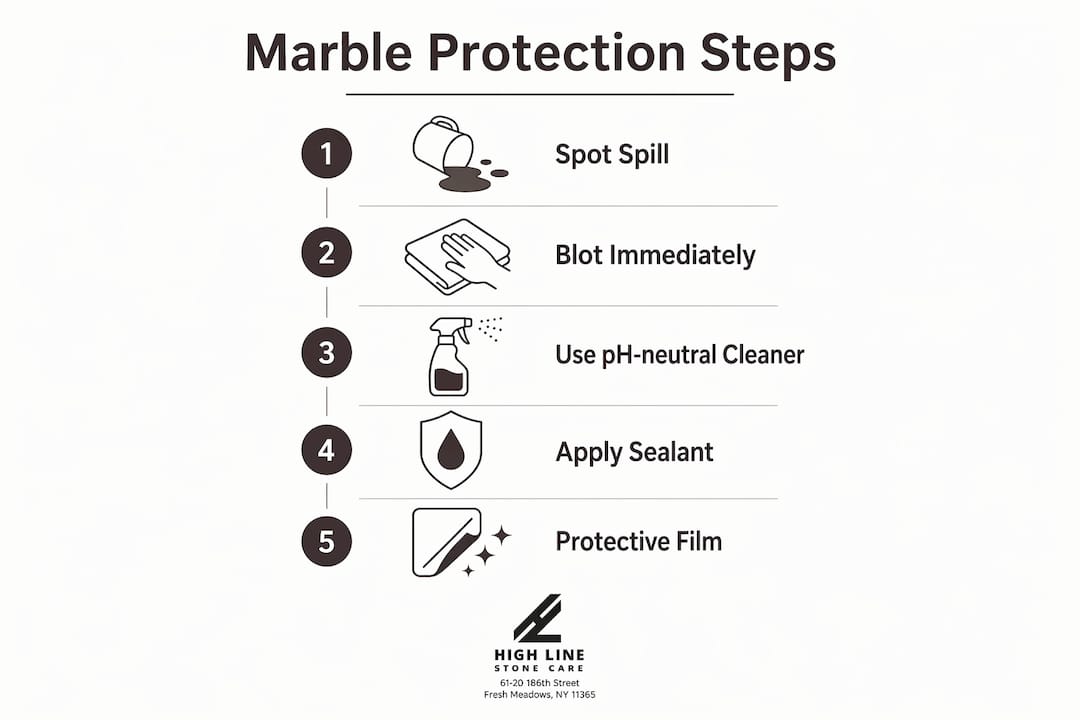
Follow these steps every time an acidic liquid contacts your marble surface:
- Blot immediately. Use a clean, dry cloth or paper towel and press down to absorb the liquid. Do not wipe or spread the spill across the surface.
- Remove all residue. After blotting, apply a small amount of pH-neutral stone cleaner to the area and blot again.
- Rinse with plain water. Use a damp cloth to remove any cleaner residue, then dry the surface completely with a clean microfiber cloth.
- Assess the surface. Once dry, check for any dullness or rough texture. If you notice a change, the surface may have etched and will need attention.
- Log the incident. Property managers especially benefit from tracking where and when spills occur. Patterns reveal which surfaces need stronger protection.
Only pH-neutral cleaners are safe for marble. Vinegar-based sprays, citrus cleaners, and ammonia products etch marble on contact, even when the label describes them as gentle or natural. Always verify the pH of any product before it touches your stone.
Pro Tip: Keep a small spray bottle of pH-neutral stone cleaner and a stack of microfiber cloths within arm’s reach of every marble surface in your home or property. Reducing the time between spill and cleanup is the single most effective thing you can do.
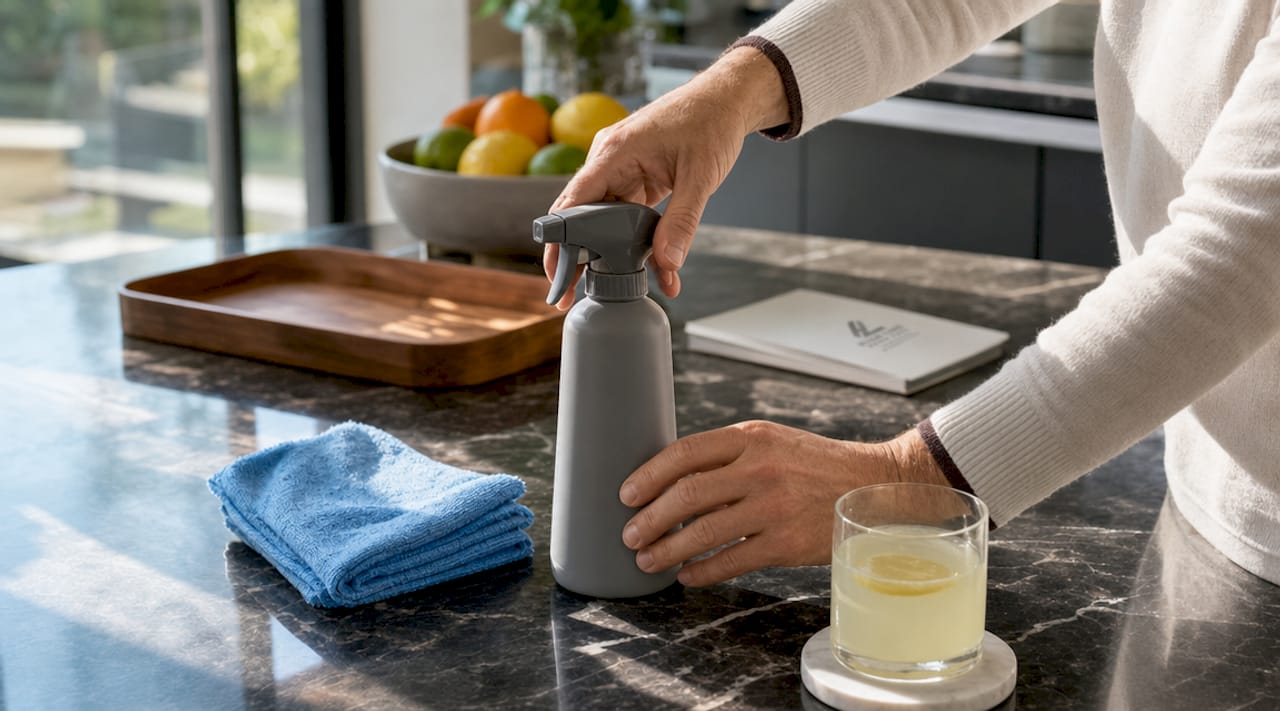
Using coasters, trivets, and cutting boards reduces direct acid contact from beverages and food. A coffee mug left directly on a marble countertop leaves a ring etch within minutes. A coaster eliminates that risk entirely. Property managers should post visible reminders in kitchens and bathrooms where marble surfaces are most exposed.
Sealers vs. protective films: what actually stops acid damage?
Not all marble protection products work the same way, and choosing the wrong type leads to a false sense of security.
| Protection Type | How It Works | Prevents Etching? | Prevents Staining? | Maintenance |
|---|---|---|---|---|
| Penetrating (impregnating) sealer | Fills pores below the surface to slow liquid absorption | No | Yes | Reapply every 6 to 12 months |
| Topical protective film | Sits on top of the surface and absorbs acid contact | Yes | Yes | Professional reapplication needed |
| Anti-etch coating (professional) | Bonds to surface to create a sacrificial acid-resistant layer | Yes | Yes | Varies by product |
Penetrating sealers are the most widely used product in residential marble care. They reduce the risk of oil and water-based stains by slowing how quickly liquids absorb into the stone. Penetrating sealers require reapplication every 6 to 12 months, with more frequent resealing in high-use or humid environments. You can test seal integrity by placing a few drops of water on the surface. If the water absorbs in under 10 minutes, it is time to reseal.
Topical protective films create a physical barrier on the marble surface that blocks acid from reaching the stone directly. Products in this category absorb the etching damage themselves rather than allowing the marble to be affected. This is a meaningful distinction. The tradeoff is that films can alter the surface’s appearance slightly and require professional installation and periodic maintenance to remain effective.
Pro Tip: For high-traffic kitchens, bars, or hotel lobbies with marble surfaces, a topical anti-etch film or professional anti-acid coating is worth the investment. A penetrating sealer alone will not protect against the wine and coffee spills that happen daily in those environments.
For homeowners and property managers in New York City, Highlinestonecare’s acid resistant surface protection services cover both categories, with professional assessment to determine which approach fits each surface and use case.
Recommended products and tools for marble spill protection
The right products make consistent marble care practical rather than burdensome.
Cleaning agents:
- pH-neutral stone cleaners such as those specifically formulated for natural stone surfaces (verify pH 7 on the label)
- Distilled water for rinsing, particularly in areas with hard tap water that can leave mineral deposits
Sealing products:
- Penetrating sealers rated for marble and calcite-based stone
- Professional-grade anti-etch coatings applied by certified stone care specialists
Daily-use accessories:
- Microfiber cloths for blotting and drying without scratching
- Coasters rated for hot and cold beverages
- Cutting boards placed under any food preparation near marble
- Absorbent spill mats in kitchen areas adjacent to marble countertops
Many products marketed as acid-safe do not guarantee neutral pH. Reading the label is not enough. Check the product’s technical data sheet or contact the manufacturer directly to confirm the pH value before use. This applies to everyday kitchen sprays, bathroom cleaners, and even some stone-specific products that include citric acid as a cleaning agent.
Testing your current sealer’s effectiveness takes less than two minutes. Place a few drops of water on the marble and observe. If the surface beads the water for several minutes, the sealer is intact. If the water darkens the stone or absorbs quickly, the sealer has degraded and needs reapplication. For professional countertop maintenance, services like AO Hardwood Cleaning’s countertop polishing offer cleaning and sealing routines that complement daily home care.
What to do when an acidic spill or etching occurs
Even with strong prevention habits, accidents happen. The steps you take in the first minutes determine how much damage results.
- Blot the spill immediately. Use a dry cloth and press firmly. Do not rub or wipe in any direction, as this spreads the acid across a larger surface area.
- Apply pH-neutral cleaner. After blotting, clean the area gently with a stone-safe cleaner and a soft cloth, then rinse with plain water.
- Dry the surface completely. Moisture left on marble can contribute to additional surface changes. Use a dry microfiber cloth to remove all water.
- Inspect for etching. Once dry, look for a dull patch or run your fingertip across the area. A rough or matte texture where the surface was previously polished indicates etching has occurred.
- Assess severity. Light surface etches sometimes respond to a marble polishing powder applied by hand with a soft cloth. Deeper or larger etch marks require professional intervention.
- Contact a stone restoration specialist. Etched marble requires professional diamond honing and polishing for full restoration. Resealing alone does not repair etching because the damage is physical erosion of the surface, not a stain in the pores.
Even well-maintained sealers do not prevent acid etching. The reaction occurs at the surface layer, so restoration requires honing and polishing, not resealing. Attempting to reseal an etched surface without first restoring the finish locks in the damage.
Highlinestonecare’s marble countertop restoration service covers etch removal, diamond honing, and repolishing for surfaces where DIY care is no longer sufficient.
Key takeaways
Protecting marble from acid damage requires a layered approach: fast spill response, pH-neutral cleaning, the right sealer or protective film, and professional restoration when etching occurs.
| Point | Details |
|---|---|
| Etching is not a stain | Acid etching is permanent surface erosion; cleaning products cannot remove it. |
| Sealers do not stop etching | Penetrating sealers prevent staining but offer no protection against acid surface reactions. |
| Speed is the critical factor | Lemon juice causes severe etching in 5 minutes; blotting within seconds reduces damage significantly. |
| Films outperform sealers for acid | Topical protective films physically block acid contact, making them the stronger choice for high-use surfaces. |
| Professional restoration is required | Visible etch marks need diamond honing and polishing, not resealing or surface cleaners. |
What I’ve learned from years of marble care in high-use environments
The most common mistake I see is not the wrong product. It is the wrong assumption. Homeowners invest in a quality penetrating sealer, feel protected, and then leave a wine glass on the counter without a coaster. The sealer does nothing for that etch ring. The assumption that sealing equals full protection is the single most damaging belief in residential marble care.
The second issue is enforcement, particularly in properties with multiple occupants or staff. A protocol posted on a wall does not change behavior. What works is making the right behavior the easiest behavior. Placing coasters directly on every marble surface, keeping pH-neutral cleaner and microfiber cloths at every sink, and briefing household members or cleaning staff on the blot-first rule takes less than an hour to set up and prevents years of damage.
For high-traffic properties, I consistently recommend professional anti-etch surface protection over standard sealers. The upfront cost is higher, but the long-term math is clear. A single professional restoration of a deeply etched marble countertop costs significantly more than a preventative coating applied before damage occurs. The investment mindset in marble care is not about spending more. It is about spending once, correctly.
Highlinestonecare’s luxury marble protection services reflect exactly this philosophy. Premium protection applied correctly from the start is always less expensive than repeated restoration.
— High
Protect your marble with Highlinestonecare’s professional services
Highlinestonecare offers professional marble sealing, anti-etch surface protection, and full restoration services for homeowners and property managers across New York City. The Opal Luxury Anti-Acid Permanent Sealer provides lasting protection against both etching and staining, with a single professional application designed to preserve your marble’s appearance for the long term. Whether you need a new protective treatment, a resealing service, or expert etch removal and polishing, Highlinestonecare’s team brings the expertise and materials to deliver results that hold. Schedule a consultation through Highlinestonecare’s stone restoration services to protect your investment before damage occurs.
FAQ
What is the difference between marble etching and staining?
Etching is physical erosion of the marble surface caused by acid contact, while staining is discoloration from liquids absorbed into the stone’s pores. Etching appears as dull or rough patches and cannot be removed with cleaning products.
Can sealing marble prevent acid etching?
No. Penetrating sealers fill the stone’s pores to slow liquid absorption and prevent staining, but they do not stop the surface-level acid reaction that causes etching. Only topical protective films or anti-etch coatings physically block acid contact.
How quickly does acid damage marble?
Contact time matters significantly. Lemon juice causes a slight etch in approximately 5 seconds and severe damage after 5 minutes of contact. Blotting a spill within seconds of contact reduces the severity of etching considerably.
How often should marble be resealed?
Penetrating sealers generally require reapplication every 6 to 12 months, with more frequent resealing in high-use or humid environments. Test seal integrity by placing water drops on the surface. If absorption occurs in under 10 minutes, resealing is needed.
What household cleaners are safe for marble?
Only pH-neutral cleaners formulated specifically for natural stone are safe for marble. Vinegar, citrus-based sprays, and ammonia products all etch marble on contact, regardless of how they are marketed. Always verify the product’s pH before use.
Recommended
- Acid Resistant Surface Protection for Stone Surfaces
- What Causes Marble Stains: a Homeowner’s Guide
- Luxury Marble Protection NYC: What Homeowners Must Know
- How to Restore Marble: A Homeowner’s Practical Guide