
The role of aesthetics in luxury stone care is defined as the practice of making every maintenance decision based on how it preserves or restores the visual qualities that give natural stone its premium value. Stone surfaces in high-end properties are not simply functional materials. They are visual assets that communicate quality, permanence, and investment to every person who enters the space. When that visual integrity deteriorates, the perception of the entire property shifts. Proper aesthetic stone care, the industry term for appearance-driven maintenance, requires a structured approach that accounts for finish type, stone species, usage patterns, and the long-term visual goals of the property.
Natural stone carries a psychological weight that synthetic materials cannot replicate. Stone’s natural texture and color tones create a sense of exclusivity, warmth, and timeless luxury that no manufactured surface can match. This means that any degradation in surface appearance, whether a dull patch on a marble floor or an etch ring near the kitchen sink, directly undermines the premium character of the space. Homeowners and property managers who understand this connection make better maintenance decisions and protect their investment more effectively.
How does aesthetics drive luxury stone maintenance techniques?
The role of aesthetics in luxury stone care becomes most visible in the specific techniques professionals use to protect and restore surfaces. Every method chosen, from daily cleaning to periodic restoration, is selected based on its impact on the stone’s appearance.
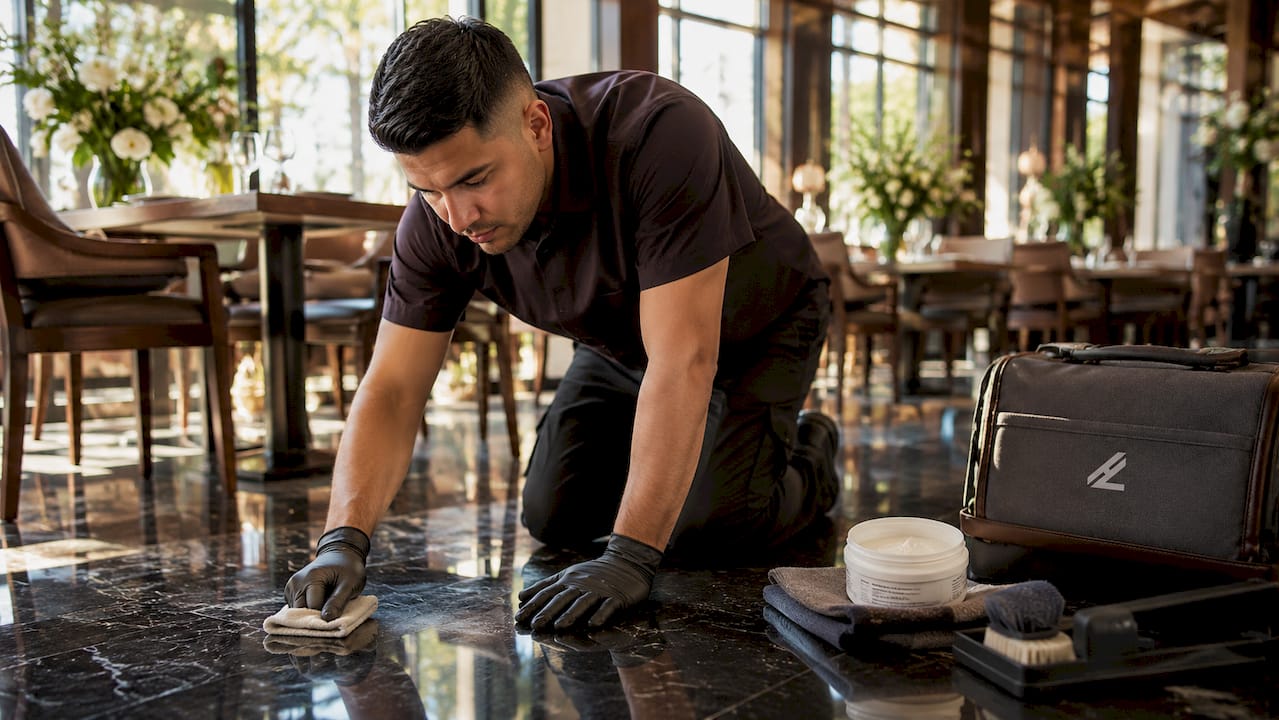
The most common aesthetic damage comes from the wrong cleaning products. Acidic or alkaline household cleaners cause premature dulling and etching on marble, travertine, and limestone. This matters because etching is a chemical reaction that dissolves the calcium carbonate in the stone surface, leaving a dull, rough patch that disrupts the finish. pH-neutral, stone-specific cleaners are the only safe choice for daily maintenance.
Beyond cleaning, the following techniques form the foundation of aesthetic stone care:
- Polishing: Restores the reflective sheen on polished surfaces by removing microscopic scratches and surface oxidation.
- Honing: Creates a smooth, matte finish and is used to remove deeper scratches or to change a surface’s character.
- Sealing: Dedicated sealers penetrate the stone’s pores, repelling stains and supporting long-term aesthetic quality.
- Hand-drying: Wiping stone surfaces dry after cleaning prevents water spots that dull the finish over time.
- Avoiding abrasives: Steel wool, scouring pads, and gritty cleaners scratch polished surfaces and accelerate wear.
Pro Tip: Always hand-dry natural stone countertops and floors after cleaning. Water left to air-dry deposits minerals that build up over time and create a hazy film that is difficult to remove without professional intervention.
Routine care should happen daily or weekly depending on usage. Periodic professional restoration addresses deeper wear that routine cleaning cannot correct. The schedule for each is determined by the aesthetic standard the property owner wants to maintain, not by a fixed calendar.
Polished vs. honed finishes: which needs more upkeep?
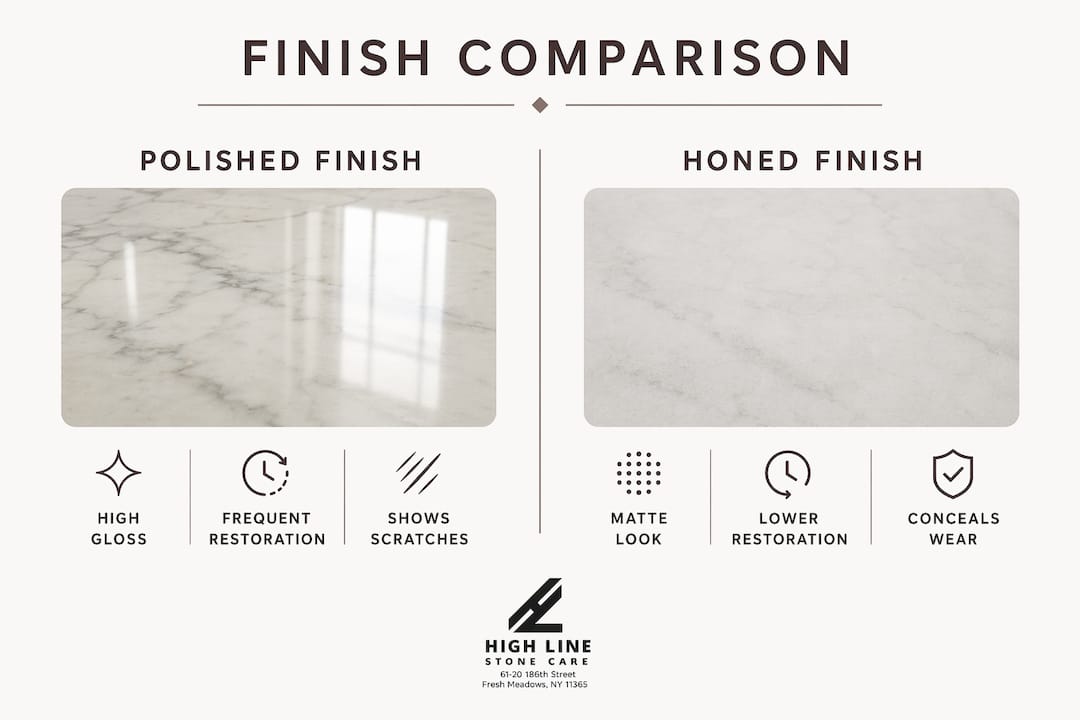
The choice of finish at installation is one of the most consequential aesthetic decisions a property owner makes. It determines how the stone looks, how wear appears over time, and how frequently professional intervention is needed.
| Feature | Polished Finish | Honed Finish |
|---|---|---|
| Visual character | High-gloss, mirror-like reflectivity | Matte to satin, soft and understated |
| Scratch visibility | High. Scratches disrupt the reflective surface immediately | Low. Surface texture diffuses minor scratches |
| Etch visibility | Very high. Etches appear as dull patches against the gloss | Moderate. Etches are less obvious on a matte surface |
| Maintenance frequency | Higher. Requires more frequent professional polishing | Lower. Honed finishes age gracefully and reduce restoration cycles |
| Best application | Formal spaces with controlled use | High-traffic areas, kitchens, and family spaces |
Polished surfaces require more frequent restoration because any scratch or etch disrupts the reflective sheen. That disruption is immediately visible and signals neglect to any observer. Honed finishes, by contrast, absorb minor wear without broadcasting it. This makes honed marble or limestone a practical choice for high-traffic areas where maintaining a flawless polish is not realistic.
Neither finish is superior in every context. The right choice depends on the aesthetic goal, the usage pattern, and the maintenance resources available. A formal dining room with polished Calacatta marble creates a dramatic visual statement. A busy hotel corridor with honed limestone delivers lasting elegance without constant restoration.
Pro Tip: If you are managing a high-traffic property and want to reduce professional restoration frequency, specify a honed finish for floors and reserve polished surfaces for lower-use feature areas like fireplace surrounds or reception desks.
Does stone aesthetics actually affect property value?
Aesthetics in luxury stone maintenance is a measurable driver of revenue and appraisal value, not just a cosmetic concern. A well-maintained stone lobby directly influences guest satisfaction, rental rates, and property appraisal by conveying permanence and investment. The inverse is equally true. Dull floors and stained grout are among the top complaints that negatively affect luxury property perception and revenue.
“Natural stone’s visual texture and color tones contribute significantly to perceived premium value and comfort. The moment that visual quality degrades, the property’s premium positioning becomes harder to defend.”
In luxury residential real estate, a marble kitchen or bathroom in pristine condition commands a measurable premium over the same space with visibly worn or etched stone. Property managers in the hospitality sector understand this well. A five-star hotel that allows its stone floors to dull or its marble vanities to etch is signaling deferred maintenance to guests who are paying for the opposite experience.
Investing in a structured professional maintenance program reduces long-term stone care costs by 15–25% while preserving aesthetic integrity. That figure reflects the cost of prevention versus the cost of full restoration. Polishing and honing services range from $5 to $15 per square foot depending on damage severity and stone type. Addressing wear early keeps the cost at the lower end of that range. Allowing damage to accumulate pushes it toward full restoration, which is significantly more expensive.
Embracing natural stone’s geological uniqueness rather than forcing perfect uniformity is also a cost-effective strategy. No two slabs of marble or granite are identical. Specifying a realistic range of natural variation at procurement avoids inflated costs and supports authentic aesthetics over the life of the installation.
How to build an aesthetic-focused stone care program
Property managers and homeowners who treat stone care as a structured program rather than a reactive task consistently achieve better aesthetic outcomes. The following steps form a practical framework for integrating upscale stone care practices into any property management plan.
-
Audit your stone inventory. Identify every stone surface in the property, its species, finish type, and current condition. Marble, granite, travertine, and limestone each have different porosity levels and acid sensitivity. A stone care terms guide can help you understand the specific needs of each material.
-
Set aesthetic standards in writing. Define what “acceptable condition” means for each surface. A polished marble floor in a formal entry should have zero visible etches. A honed limestone bathroom floor may tolerate minor variation. Written standards give maintenance staff and contractors a clear target.
-
Schedule professional restoration proactively. Professional stone restoration every 3–5 years with sealing every 1–3 years maintains aesthetic quality and surface protection. In high-traffic or high-use areas, resealing every 6–12 months is recommended.
-
Select sealers aligned with aesthetic goals. An impregnating sealer penetrates the stone and repels stains without altering the surface appearance. For marble surfaces exposed to acidic spills, an acid-resistant sealer provides a critical layer of protection against etching. The sealer choice should match the stone type and the specific risks of the environment.
-
Train daily maintenance staff. The most advanced professional restoration program loses value if daily cleaning staff use the wrong products. Provide stone-specific pH-neutral cleaners and written protocols for every surface type in the property.
-
Address damage immediately. A single etch or stain that is treated within days rarely requires professional intervention. The same damage left for months may require grinding and repolishing. Speed of response is one of the most cost-effective tools in luxury stone preservation.
The NYC stone care guide from Highlinestonecare provides detailed professional recommendations for maintenance schedules tailored to the specific demands of high-use urban properties.
Key takeaways
Aesthetic preservation is the primary driver of every decision in luxury stone maintenance, from finish selection to restoration frequency.
| Point | Details |
|---|---|
| Aesthetics drives technique | Every cleaning and restoration method should be chosen based on its impact on the stone’s visual quality. |
| Finish type determines upkeep | Polished surfaces need more frequent professional attention than honed finishes, which age more gracefully. |
| Aesthetics affects property value | A well-maintained stone surface raises appraisal value and guest satisfaction; neglected stone signals deferred care. |
| Structured programs reduce costs | A proactive maintenance program cuts long-term stone care costs by 15–25% compared to reactive restoration. |
| Sealer selection matters | Matching the sealer to the stone type and environment is critical for lasting aesthetic protection. |
What i’ve learned about aesthetic expectations and stone reality
After years of working with luxury stone surfaces across high-end residential and commercial properties in New York City, the most common mistake I see is not neglect. It is misaligned expectations. Homeowners invest in polished Calacatta marble countertops and then use lemon-based cleaners because they smell clean. Within months, the surface loses the elegant appearance that justified the investment.
The second most common issue is treating all stone the same. Granite and marble are both natural stone, but their maintenance needs are fundamentally different. Granite is far more resistant to acid-related surface damage. Marble etches from contact with wine, citrus juice, or even some toothpastes. Property managers who apply a single cleaning protocol across all stone types inevitably damage the more sensitive surfaces.
What actually works is specificity. Know your stone species, know its finish, and build a care program around those facts. The role of polishing in stone care is not cosmetic maintenance. It is the primary tool for restoring the calcium surface layer that gives marble its depth and luminosity. Skipping it to save money is a short-term decision with long-term aesthetic consequences.
The cost-effectiveness argument for aesthetic-focused care is straightforward. Prevention is always less expensive than restoration. A properly sealed and regularly polished marble floor in a luxury lobby can hold its appearance for years without major intervention. The same floor left unsealed and cleaned with the wrong products may need full grinding and repolishing within two years. That is not a hypothetical. It is a pattern Highlinestonecare sees regularly in properties that switch to a structured care program after years of reactive maintenance.
— High
Protect your stone’s appearance with professional care
The visual quality of your stone surfaces is not self-maintaining. It requires the right products, the right techniques, and the right professional support at the right intervals. Highlinestonecare provides advanced stone restoration, polishing, and sealing services designed specifically for luxury residential and commercial properties in New York City. The Opal Luxury Anti-Acid Sealer offers permanent protection against etching and staining, preserving the elegant appearance of marble surfaces without repeated applications. For properties where stone aesthetics are a direct reflection of quality and value, professional care is not optional. It is the standard. Explore Highlinestonecare’s full range of stone restoration services and take the first step toward lasting surface protection.
FAQ
What is the role of aesthetics in luxury stone care?
Aesthetics in luxury stone care refers to the practice of making every maintenance decision based on preserving the visual qualities that give natural stone its premium value. It connects surface appearance directly to property value, guest perception, and long-term investment protection.
How often should luxury stone surfaces be professionally restored?
Professional stone restoration is recommended every 3–5 years, with sealing every 1–3 years. High-traffic or porous stone surfaces benefit from resealing every 6–12 months to maintain aesthetic quality.
Does the finish type affect how often stone needs maintenance?
Yes. Polished finishes show scratches and etches immediately and require more frequent professional attention. Honed finishes diffuse minor wear and age more gracefully, reducing the frequency of disruptive restoration cycles.
What cleaning products are safe for luxury stone surfaces?
pH-neutral, stone-specific cleaners are the only safe choice for daily maintenance. Acidic or alkaline household cleaners cause etching and premature dulling on marble, travertine, and limestone surfaces.
Can neglected stone aesthetics affect property value?
A well-maintained stone surface raises appraisal value and supports premium rental rates. Dull floors and stained stone are among the top complaints that negatively affect luxury property perception and revenue performance.
Recommended
- Stone care terms explained: Expert guide for NYC homes
- Interior Designers Stone Care Process: Pro Guide
- NYC Stone Care Guide: Expert Steps for Long-Lasting Surfaces