
Knowing how to polish Caesarstone counters correctly starts with a fact most homeowners miss: the best approach is to skip polishing entirely. Caesarstone surfaces are factory-engineered with a permanent glossy finish that requires no sealing or wax to maintain its shine. Manual polishing does not restore that finish. It damages it. What looks like dullness on your countertop is almost always a layer of soap scum, limescale, or residue buildup. Removing that film with the right cleaning method restores the original gloss without any risk to the surface.
Why polishing Caesarstone counters is harmful and unnecessary
Caesarstone’s factory finish is applied using industrial machinery that no household tool can replicate. Polishing at home creates inconsistent surface sheen, leaving patches that look worse than the original dullness. This is not a minor cosmetic issue. Uneven sheen is permanent without professional intervention.
The risks of DIY polishing attempts include:
- Abrasive scourers and pads remove the top layer of the surface, creating micro-scratches that catch light unevenly.
- Wax and sealers leave a filmy residue that dulls quartz counters over time and traps dirt beneath the coating.
- Polishing compounds designed for natural stone react differently with quartz composite and alter the resin binder that holds the surface together.
- Magic Erasers are micro-abrasive and strip the finish with repeated use, even though they feel soft.
Unauthorized polishing is the top cause of inconsistent finish complaints reported to certified Caesarstone technicians. That pattern holds across both residential and commercial installations.
Pro Tip: If your counter looks dull after cleaning, do not reach for a polishing product. Wipe the surface with a damp microfiber cloth and check whether the dullness disappears when wet. If it does, residue is the problem, not the finish itself.
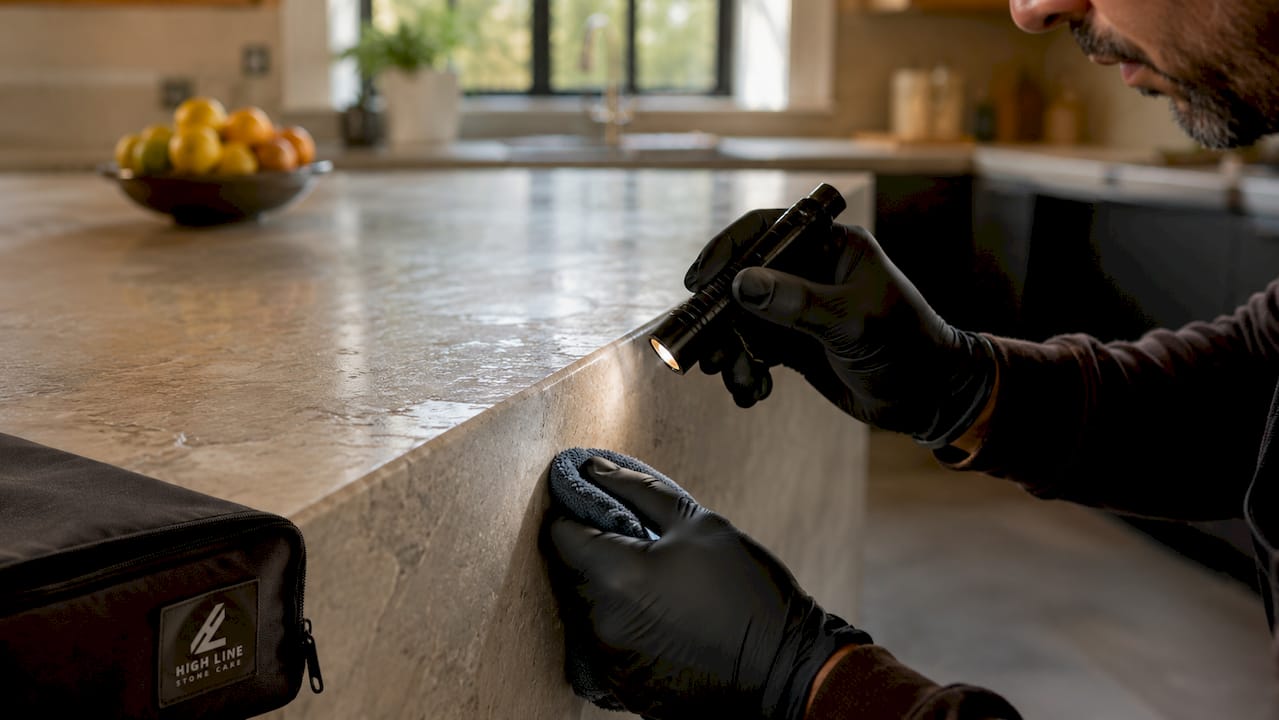
How to clean Caesarstone countertops to maintain their natural shine
Perceived dullness is almost always residue buildup. Effective cleaning restores the original shine without abrasive methods. The following routine covers daily care and targeted residue removal.
-
Wipe daily with a microfiber cloth and mild soap. Use warm water and a small amount of dish soap. Work in a circular motion across the surface. Circular motion cleaning prevents streaking and lifts residue evenly without concentrating pressure on one spot.
-
Rinse thoroughly after every clean. Soap left on the surface dries into a film that mimics dullness. A clean damp cloth removes all soap traces. Dry immediately with a second microfiber cloth to prevent water spots.
-
Address limescale and water marks with a diluted vinegar solution. Mix equal parts white vinegar and water. Apply to the affected area, let it sit for one to two minutes, then rinse completely. Vinegar solutions remove spots safely when rinsed immediately. Do not let vinegar sit on the surface for extended periods.
-
Use Soft Scrub Liquid Gel for stubborn residue. This non-abrasive cleaner is recognized in Caesarstone care guidance as a safe option for removing soap scum and limescale. Apply with a soft sponge, work gently, and rinse well.
-
Dry the surface after every use near the sink. Standing water near the faucet area is the most common source of calcium deposits and water rings. A quick dry after washing dishes takes seconds and prevents buildup that takes minutes to remove later.
Pro Tip: Keep a dedicated microfiber cloth folded near the sink. Using it takes five seconds after each use and eliminates the need for any deeper cleaning more than once a week.
Common cleaning mistakes and materials to avoid with Caesarstone counters
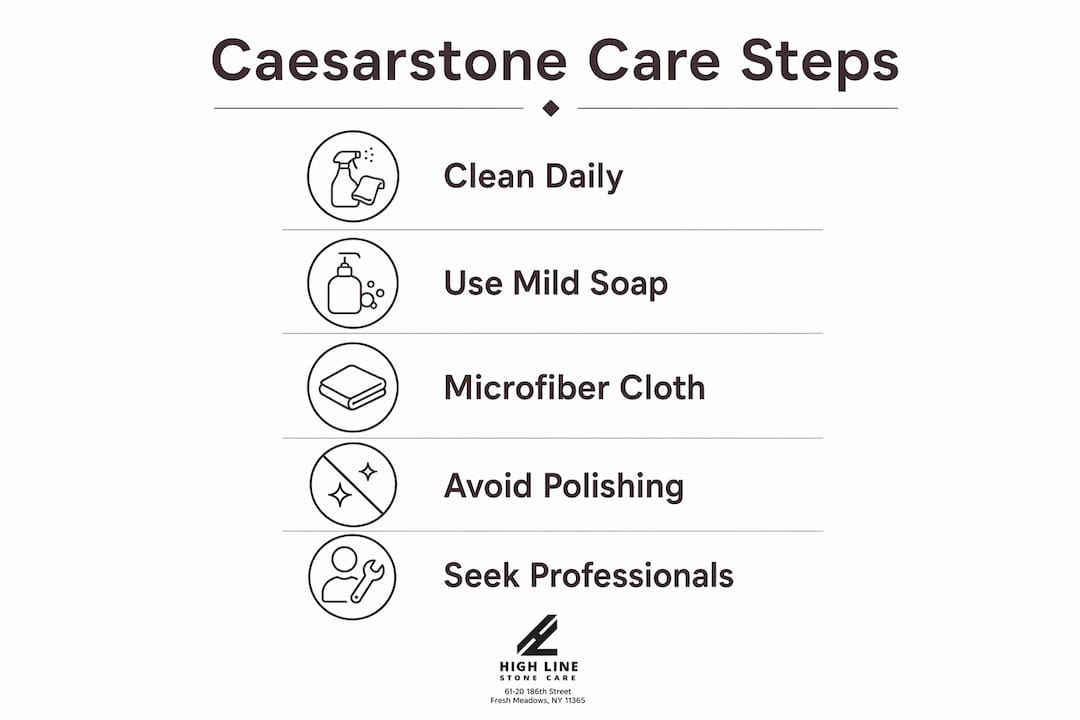
The wrong product can cause damage that no amount of cleaning will fix. Several common household cleaners are incompatible with Caesarstone’s quartz composite structure.
Avoid these products entirely:
- Oven and grill cleaners contain lye and caustic soda that irreversibly damage the finish.
- Paint strippers and acetone compromise the resin binder in the quartz composite. Acetone damages the surface at a structural level, not just cosmetically.
- Bleach-based cleaners used at full concentration can discolor the surface over time.
- Abrasive scourers and steel wool scratch the finish permanently.
- Wax, sealers, and polishing agents leave a cloudy film and trap dirt beneath the surface layer.
“Homeowners who apply wax or sealers to Caesarstone surfaces in an attempt to restore shine are creating the exact problem they are trying to solve. The coating traps dirt, clouds the surface, and requires professional removal to correct. Prevention is always less costly than correction.”
Signs of damage from incorrect cleaning include a patchy or cloudy appearance that does not improve after washing, visible micro-scratches that catch light at an angle, and a surface that feels slightly rough in areas where it was once smooth. These signs indicate that the finish has been compromised and that professional evaluation is the appropriate next step.
When and how to seek professional care or repairs for Caesarstone counters
Home maintenance has clear limits. Scratches, etching from chemical exposure, and finish inconsistency caused by DIY polishing require professional assessment. No cleaning routine corrects structural surface damage.
Situations that call for professional care include:
- Visible scratches that catch a fingernail when you run it across the surface.
- Cloudy or patchy areas that persist after thorough cleaning.
- Finish inconsistency caused by previous polishing attempts.
- Chips or cracks near edges or around the sink cutout.
Certified Caesarstone technicians use methods that preserve the factory finish rather than replace it with a manual approximation. DIY polishing risks permanent alteration of surface consistency compared to what industrial machinery achieves during manufacturing.
| Condition | Home remedy | Professional required |
|---|---|---|
| Residue or water spots | Yes, with mild cleaner | No |
| Soap scum buildup | Yes, with Soft Scrub Liquid Gel | No |
| Light surface film | Yes, with vinegar solution | No |
| Scratches or etching | No | Yes |
| Cloudy finish from polishing | No | Yes |
| Chips or cracks | No | Yes |
Preventative habits reduce the need for professional visits significantly. Use a cutting board rather than cutting directly on the surface. Place trivets under hot pans, since extreme heat can stress the resin binder. Wipe spills immediately, especially acidic liquids like lemon juice, wine, and coffee. These steps protect stone countertops from the most common sources of damage.
What tools and products keep Caesarstone surfaces looking their best
The right supplies make consistent care easy. The wrong ones create problems that require professional correction.
Approved tools and products:
- Microfiber cloths (two per session: one for cleaning, one for drying)
- Soft non-scratch sponges
- Mild dish soap or pH-neutral liquid detergent
- Soft Scrub Liquid Gel for stubborn residue
- Diluted white vinegar solution for water marks
- Warm water
Cleaning frequency:
| Method | Frequency | Purpose |
|---|---|---|
| Mild soap and microfiber wipe | Daily | Prevent residue buildup |
| Thorough rinse and dry | After every use near water | Prevent water spots and calcium deposits |
| Vinegar solution | As needed, monthly maximum | Remove stubborn water marks |
| Soft Scrub Liquid Gel | Monthly or when residue persists | Deep clean without abrasion |
| Professional inspection | Annually or after any damage | Assess finish condition |
Honed, Concrete, and Rough Caesarstone finishes need more frequent cleaning than polished finishes because their textured surfaces trap residue more readily. The same approved products apply, but the cleaning interval shortens to every few days for high-use areas.
Pro Tip: After cleaning, hold a flashlight at a low angle across the surface. This reveals any remaining film or streaks that are invisible under overhead lighting. A second pass with a dry microfiber cloth removes them instantly.
Key Takeaways
Caesarstone countertops maintain their factory gloss through consistent gentle cleaning, not polishing, and any attempt to polish the surface at home risks permanent finish damage.
| Point | Details |
|---|---|
| Polishing causes damage | Manual polishing creates inconsistent sheen and voids care standards for Caesarstone surfaces. |
| Dullness is usually residue | Soap scum, limescale, and water film cause most dullness; proper cleaning restores shine. |
| Approved cleaning tools | Use microfiber cloths, mild soap, Soft Scrub Liquid Gel, and diluted vinegar for safe care. |
| Avoid harmful products | Never use acetone, oven cleaners, abrasive scourers, wax, or sealers on Caesarstone. |
| Professional care for damage | Scratches, etching, and finish inconsistency require certified technician assessment, not DIY fixes. |
What years of stone care work taught me about Caesarstone maintenance
The most common call we receive goes something like this: a homeowner notices their countertop looks dull, tries a polishing product they found online, and then calls us because the surface looks worse than before. This pattern repeats constantly. The internet is full of advice about polishing quartz counters that directly contradicts what the surface actually needs.
The factory finish on Caesarstone is genuinely excellent. It does not need help from a homeowner with a polishing pad. What it needs is to be left alone and cleaned correctly. Prevention and gentle cleaning preserve counter aesthetics far better than any corrective attempt. I have seen countertops that are fifteen years old and look nearly new because the owner simply wiped them down daily and never used anything harsher than dish soap.
The uncomfortable truth is that most “maintenance” products marketed for quartz counters are unnecessary at best and harmful at worst. Wax, sealers, and polishing sprays are sold to homeowners who believe their counters need them. They do not. Trust the factory finish. Clean it gently. Call a certified professional when something goes wrong. That approach costs less and delivers better results than any DIY fix.
— High
Professional stone care for countertops that need more than cleaning
When cleaning is not enough, Highlinestonecare provides advanced stone restoration and repair services for homeowners across New York City. Whether a surface has been damaged by incorrect cleaning products, shows scratches from daily use, or has developed finish inconsistency from previous polishing attempts, professional assessment is the right starting point.
Highlinestonecare’s team of certified technicians evaluates surface condition and recommends the appropriate restoration method, preserving the original factory finish wherever possible. For homeowners dealing with issues beyond residue buildup, the stone restoration services at Highlinestonecare offer a reliable path back to a pristine surface. Schedule a consultation to get an expert assessment of your countertop’s condition before the damage becomes more costly to address.
FAQ
Can you polish Caesarstone counters at home?
Polishing Caesarstone counters at home is not recommended. The factory finish is applied by industrial machinery, and manual polishing creates inconsistent sheen that certified technicians must correct.
What is the best way to clean Caesarstone countertops?
The best way to clean Caesarstone is with warm water, mild dish soap, and a microfiber cloth using a circular motion, followed by thorough rinsing and immediate drying to prevent water spots.
Why does my Caesarstone counter look dull?
Dullness on Caesarstone is almost always caused by residue buildup such as soap scum or limescale, not a damaged finish. Cleaning with a mild detergent or diluted vinegar solution typically restores the original gloss.
What products should I never use on Caesarstone?
Never use oven cleaners, caustic soda, acetone, paint strippers, abrasive scourers, Magic Erasers, wax, or sealers on Caesarstone. These products cause irreversible damage to the surface finish or resin binder.
When should I call a professional for my Caesarstone countertop?
Call a certified technician when you notice scratches that catch a fingernail, persistent cloudiness after cleaning, chips near edges, or finish inconsistency caused by previous polishing attempts.
Recommended
- Ways to Protect Stone Countertops: A Homeowner’s Guide
- The Role of Polishing in Stone Care for Homeowners
- Why Invest in Stone Polishing: A Homeowner’s Guide