
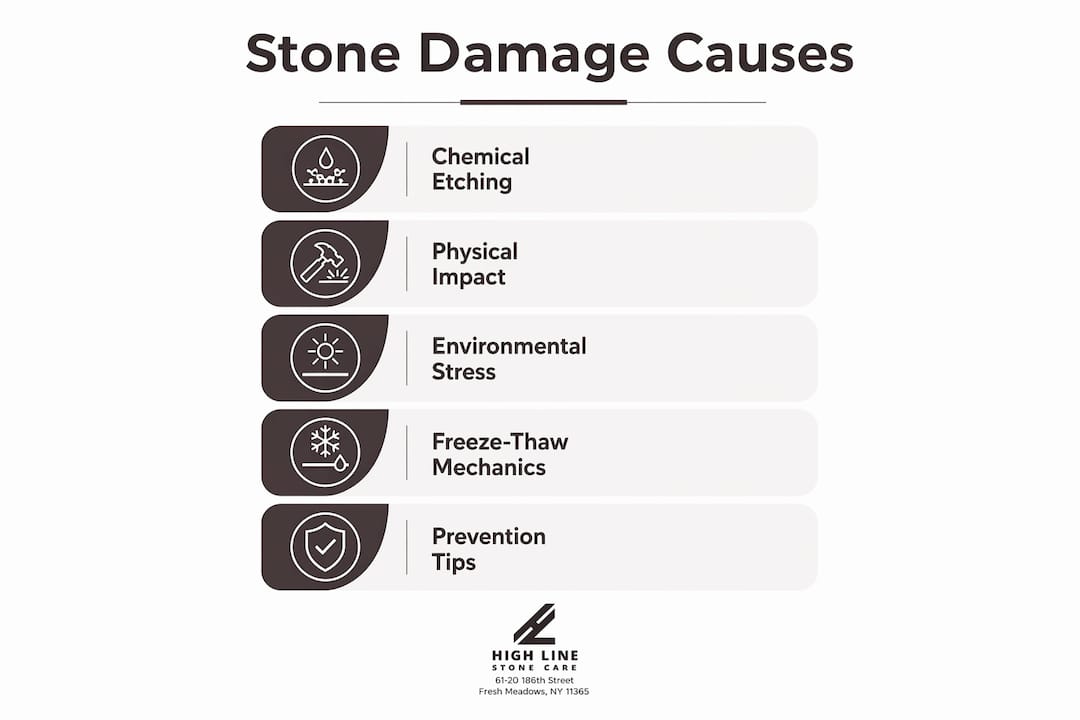
Stone damage causes fall into three categories: chemical reactions, physical impacts, and environmental stressors. Each category attacks natural stone differently, and each requires a different prevention strategy. Marble, limestone, travertine, and brownstone are all vulnerable, though the specific risks vary by stone type and location. Homeowners and property managers who understand these stone damage factors can act before minor surface issues become costly structural repairs. This guide covers the full picture, from acid etching in a kitchen to freeze-thaw spalling on an outdoor terrace.
What are the main causes of stone damage?
Stone deterioration is defined as the progressive loss of surface integrity, structural strength, or visual quality in natural or masonry stone. The three primary causes are chemical agents, physical forces, and environmental conditions. These factors rarely act alone. A marble countertop near a sink faces acid exposure, moisture, and daily abrasion simultaneously. Understanding how each cause works is the first step toward effective stone damage prevention.
Chemical damage is the most common cause for interior stone. Physical damage is most common in high-traffic areas and older structures. Environmental damage dominates outdoor stone, especially in cold climates. Knowing which category applies to your stone tells you exactly where to focus your maintenance effort.
How do chemical agents cause stone damage?
Chemical damage is the leading cause of deterioration in interior stone, particularly marble, limestone, and travertine. These stones contain calcium carbonate, which reacts instantly with acidic substances. The industry term for this reaction is etching, and it is distinct from staining.
Etching is a surface chemical reaction that dissolves calcium carbonate, leaving a dull, rough patch where the stone once had a polished finish. Staining, by contrast, is a liquid that penetrates the stone’s pores and discolors it from within. A sealer blocks stains by filling those pores. It does not stop etching because etching occurs at the surface, not inside the stone.
Common acidic substances that cause etching
The speed of etching depends on the pH of the substance. Lemon juice and vinegar (pH 2.0–3.4) cause visible etching within seconds. Red wine and tomato sauce cause etching within 1–5 minutes. Even a water ring near the sink from a citrus-scented dish soap can leave a dull patch on polished marble.
The most damaging household substances include:
- Lemon juice and citrus cleaners (pH 2.0–2.6): cause immediate, permanent etching
- Vinegar (pH 2.4–3.4): a common cleaning agent that destroys marble finishes on contact
- Red wine and tomato sauce: cause etching within minutes if not wiped immediately
- Bleach: breaks down polymer chains in stone sealers, accelerating surface degradation
- Ammonia-based glass cleaners: lower the pH of the stone surface, degrading sealers over time
- Abrasive scrub pads: cause microscopic surface scratching that dulls the finish and weakens sealer adhesion
Pro Tip: Never use a “natural” cleaner on marble without checking its pH. Vinegar and lemon juice are marketed as safe household cleaners, but they are among the fastest causes of permanent marble etching.
The table below shows how common substances rank by etching risk on calcium-based stone:
| Substance | pH Level | Etching Speed |
|---|---|---|
| Lemon juice | 2.0–2.6 | Seconds |
| Vinegar | 2.4–3.4 | Seconds |
| Red wine | 3.3–3.6 | 1–5 minutes |
| Tomato sauce | 4.0–4.5 | 1–5 minutes |
| Bleach | 11–13 | Gradual sealer breakdown |
| Ammonia cleaner | 11–12 | Gradual sealer breakdown |
For a deeper look at protecting stone from acids, the type of stone and its finish both affect how quickly damage appears.
What physical forces cause stone damage?
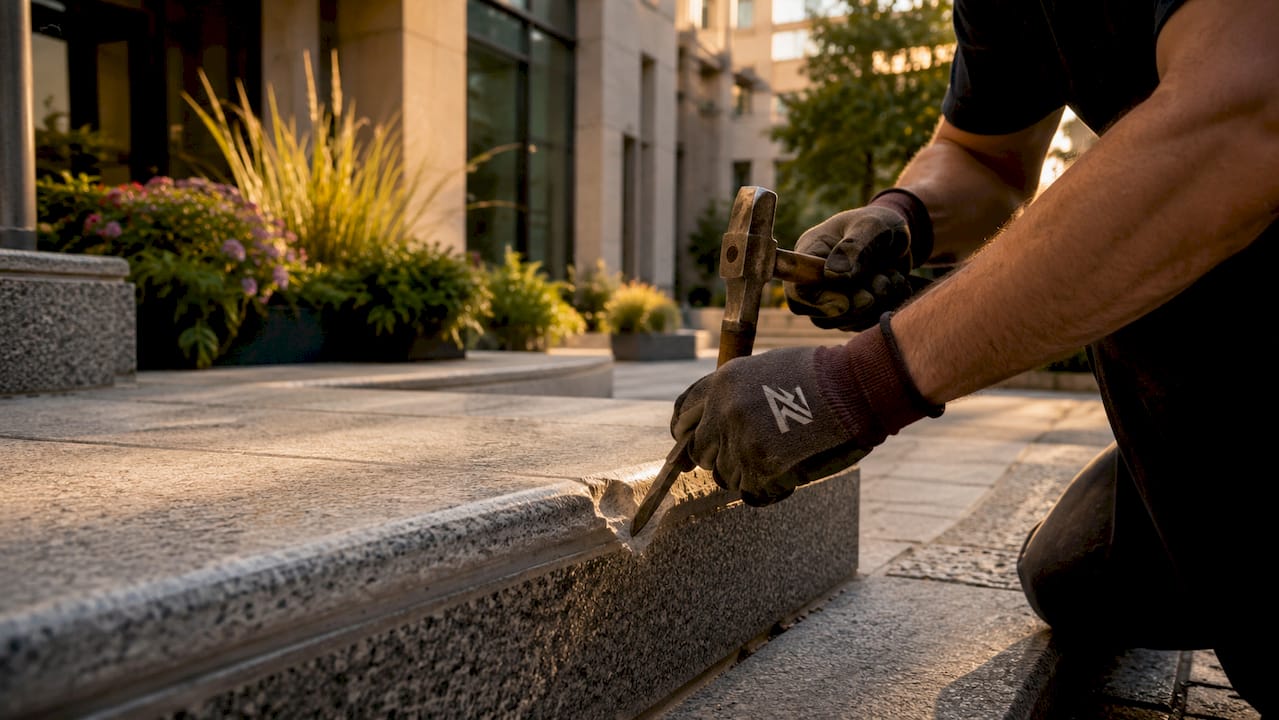
Physical damage includes chips, cracks, surface wear, and structural fractures. These result from impact, thermal expansion, improper installation, or the gradual stress of load and movement. Homeowners often treat all cracks as cosmetic, which is a costly mistake.
The key distinction is between cosmetic damage and structural damage. Cosmetic damage affects only the surface layer and does not compromise the stone’s load-bearing capacity. Structural damage penetrates deep into the stone or masonry system and signals a risk of failure. The Quarter-Inch Rule is a practical threshold: deterioration deeper than 0.25 inch requires professional engineering assessment, not a DIY patch.
Warning signs to watch for
Homeowners and property managers should inspect stone surfaces for these physical damage indicators:
- Hairline cracks: often cosmetic, but monitor for widening over time
- Stair-step cracks: follow mortar joints in masonry and signal foundation movement
- Bulging or displacement: stone pushing outward from a wall indicates structural failure
- Chips at edges and corners: result from impact and are usually cosmetic but expose raw stone to moisture
- Surface spalling: thin layers flaking from the surface, often caused by freeze-thaw or moisture trapped beneath
“Masonry repairs range from $300–$700 for cosmetic efflorescence treatment to $3,000–$15,000 for urgent structural repairs. Surface spalling repairs cost $600–$2,000 and are categorized as urgent because untreated spalling allows water infiltration that leads to structural failure.” — Stonecap Masonry
Repair material matters as much as timing. Portland cement is too dense for historic brownstone repairs. It traps moisture and accelerates freeze damage. Breathable, lime-based mortars preserve stone integrity and allow moisture to escape naturally. Using the wrong mortar can cause more damage than the original crack.
How do environmental factors cause stone damage?
Environmental stone damage is the most underestimated category for outdoor surfaces. Freeze-thaw cycles, moisture saturation, and salt exposure work together to break stone apart from the inside out. The process is slow at first, then accelerates sharply once the stone’s surface layer is compromised.
The mechanics of freeze-thaw damage
Water expands by 9% when it freezes. When water saturates the pores of outdoor stone and then freezes, that expansion forces the stone layers apart. Repeated freeze-thaw cycles cause spalling, sugaring (granular surface breakdown), and edge crumbling. In cold climates, this process can cause visible deterioration within 5–10 years if the stone is not properly managed.
Porous stones like sandstone, limestone, and some granites are most vulnerable. Dense stones like slate and quartzite resist freeze-thaw damage better, but no outdoor stone is immune if drainage is poor.
- Assess drainage first. Water pooling on or around stone maximizes saturation before freezing. Proper sub-base drainage and sloped surfaces are the first line of defense.
- Maintain joints. Flexible joints allow thermal expansion and reduce cracking risk. Deteriorated joints let water in directly.
- Avoid de-icing salts. Sodium chloride, calcium chloride, and magnesium chloride all accelerate freeze-thaw damage by lowering the freezing point and causing salt crystals to grow inside stone pores, a process called subflorescence.
- Seal before winter. An impregnating sealer reduces water absorption and limits the saturation that drives freeze-thaw damage.
- Inspect in spring. The damage from a winter’s freeze-thaw cycles becomes visible in early spring, when repairs are most effective.
Stat: Moisture expands by 9% when freezing, generating enough pressure to delaminate stone layers and cause spalling within a single winter season in saturated stone.
Pro Tip: Sand is a safer de-icing alternative for stone surfaces. It provides traction without the salt crystallization that destroys stone pores from the inside.
Early warning signs of environmental damage include edge crumbling, widening mortar joints, surface flaking, and a white powdery residue called efflorescence. Efflorescence is mineral salt drawn to the surface by evaporating moisture. It is a reliable signal that water is moving through your stone.
How can homeowners prevent and manage stone damage?
Stone damage prevention is more cost-effective than repair at every damage level. The core strategy combines avoiding known chemical and physical threats with a consistent maintenance schedule.
Cleaning and chemical protection
- Use only pH-neutral stone cleaners. Avoid vinegar, citrus-based products, bleach, and ammonia cleaners entirely on natural stone.
- Wipe spills immediately. Even a 1-minute exposure to red wine or tomato sauce causes etching on marble.
- Use soft microfiber cloths. Abrasive pads cause microscopic scratching that dulls the finish and weakens sealer adhesion over time.
- Apply an impregnating sealer on schedule. Sealers block liquid penetration and protect against staining, though they do not prevent etching. Reapply according to the manufacturer’s recommendation, typically every 1–3 years for interior stone.
Pro Tip: Test your sealer annually with the water-bead test. Drop a few tablespoons of water on the stone surface. If it beads up, the sealer is active. If it absorbs within 10 minutes, reseal immediately.
Inspection and structural maintenance
Homeowners and property managers should inspect stone surfaces twice a year, in spring and fall. Spring inspections catch freeze-thaw damage before moisture from spring rains worsens it. Fall inspections allow time for joint repairs and sealing before winter. Check for early warning signs including hairline cracks, dull patches, edge chips, and efflorescence. Any crack or spalling area deeper than 0.25 inch warrants a call to a professional stone restoration specialist, not a hardware store patch kit.
Moisture management is equally critical. Ensure outdoor stone has adequate drainage. Indoors, use coasters, trivets, and mats near sinks and cooking areas. These simple habits prevent the majority of common stone care mistakes that lead to expensive repairs.
Key Takeaways
Stone damage is caused by chemical etching, physical impact, and environmental stressors, and each cause requires a targeted prevention strategy to protect long-term stone integrity.
| Point | Details |
|---|---|
| Chemical etching is irreversible | Acidic substances dissolve calcium carbonate on contact; sealers do not prevent this reaction. |
| The Quarter-Inch Rule guides urgency | Deterioration deeper than 0.25 inch requires professional intervention, not cosmetic repair. |
| Freeze-thaw damage accelerates fast | Water expands 9% when freezing; unsaturated stone can deteriorate visibly within 5–10 years. |
| Salt de-icers worsen outdoor damage | Sodium chloride and calcium chloride cause subflorescence that breaks stone apart from inside. |
| Bi-annual inspections are the standard | Spring and fall inspections catch damage early, when repairs are least expensive and most effective. |
What I’ve learned from years of stone restoration work
The most common mistake I see is homeowners treating “natural” as synonymous with “safe.” Vinegar is natural. Lemon juice is natural. Both will permanently etch a marble countertop in seconds. The second most common mistake is waiting. A hairline crack that costs a few hundred dollars to repair today becomes a structural failure that costs thousands if ignored through one more winter.
The environmental causes of stone damage are the most underestimated. Most homeowners think about spills and scratches. They do not think about what happens inside their outdoor stone during a freeze-thaw cycle. By the time the surface shows visible spalling or edge crumbling, the damage has been building for years. The solution is not complicated: seal before winter, maintain your joints, and never use salt de-icers on stone.
The other lesson I keep returning to is that the right repair material matters as much as the repair itself. I have seen well-intentioned repairs with Portland cement cause more damage than the original crack because the cement trapped moisture and accelerated freeze damage. Match the mortar to the stone. When in doubt, call a specialist before you patch.
— High
Protecting your stone before damage takes hold
Stone damage is far easier to prevent than to reverse. Highlinestonecare offers professional stone sealing and restoration services designed specifically for homeowners and property managers who want lasting protection for marble, granite, travertine, and masonry stone surfaces.

The Opal Luxury Anti Acid Sealer from Highlinestonecare provides permanent protection against both acid etching and staining, a level of defense that standard impregnating sealers cannot match. A single professional application is designed to last a lifetime, eliminating the cycle of annual resealing. For surfaces that have already sustained chemical, physical, or environmental damage, Highlinestonecare’s stone restoration services address the full range of deterioration and restore stone to its original condition.
FAQ
What are the most common stone damage causes?
The three primary causes are chemical etching from acidic substances, physical impacts such as chips and cracks, and environmental stressors including freeze-thaw cycles and salt exposure. Each cause requires a different prevention and repair approach.
Does a sealer prevent acid etching on marble?
No. Sealers block liquid penetration and prevent staining, but etching is a surface reaction that dissolves calcium carbonate on contact. A sealer cannot stop this chemical process.
How do I know if a crack in my stone is structural?
Apply the Quarter-Inch Rule: deterioration or cracking deeper than 0.25 inch signals structural compromise and requires professional assessment. Stair-step cracks, bulging, and displacement are also signs of structural failure.
What is the safest way to clean natural stone?
Use a pH-neutral stone cleaner and a soft microfiber cloth. Avoid vinegar, bleach, ammonia-based cleaners, and abrasive pads, all of which damage stone surfaces or degrade sealers over time.
How often should stone surfaces be inspected?
Homeowners and property managers should inspect stone surfaces twice a year, in spring and fall. Spring inspections catch freeze-thaw damage; fall inspections allow time for sealing and joint repairs before winter temperatures arrive.
Recommended
- Why Protect Stone Surfaces: A Homeowner’s Guide
- Common Stone Care Mistakes Homeowners Must Avoid
- Ways to Protect Stone Countertops: A Homeowner’s Guide
- Best Practices for Stone Protection: A Homeowner’s Guide