
Protecting natural and engineered stone surfaces requires more than a single product or a one-time application. The most effective stone protection strategies combine penetrating impregnating sealers with physical barrier films, supported by routine maintenance using pH-neutral cleaners. Here is what property owners, architects, and contractors need to know:
- Penetrating impregnators create a hydrophobic zone inside stone pores, slowing liquid absorption and reducing stain risk. They require periodic reapplication every 1–3 years as they degrade over time.
- Physical barrier films form an invisible layer on the stone surface, blocking stains, etching, and scratches that sealers cannot address.
- Routine cleaning with neutral agents removes spills before they penetrate or react with the stone surface.
- Sealers do not prevent etching. Etching is a surface chemical reaction between acid and calcium carbonate. It happens before any liquid penetrates, so a sealer inside the pores offers no defense against it.
- Reapplication schedules vary by stone type, usage intensity, and product quality. High-traffic surfaces need more frequent attention.
Why stone surfaces are harder to protect than most people expect
Stone’s natural porosity is its greatest vulnerability. Without proper sealing, liquids absorb quickly into the pores, leaving stains that are difficult or impossible to remove. Marble, limestone, and travertine are calcareous stones composed largely of calcium carbonate, making them especially reactive to acidic substances. A drop of lemon juice or a splash of wine can leave a dull patch on polished marble within seconds, regardless of whether the stone has been sealed.
Physical abrasion compounds the problem. Sand, grit, and everyday foot traffic gradually degrade the surface finish, particularly on floors and countertops in high-use areas. Environmental factors including UV exposure and moisture cycling also contribute to long-term surface degradation. During construction and renovation, temporary protection films prevent damage from foot traffic and equipment for up to 12 months, a step that is frequently overlooked. Substrate moisture is another installation-phase risk: measuring residual humidity with a carbide hygrometer before laying stone helps prevent efflorescence and moisture-related staining from rising through the slab.
What types of stone protection products actually do
Understanding the differences between product categories prevents costly mismatches between what a property owner expects and what a product delivers.
- Penetrating impregnating sealers soak into the stone’s micro-porosity and polymerize below the surface, creating a hydrophobic zone. They reduce staining from oil and water-based liquids but do not prevent etching because etching is a surface reaction, not a penetration event. Lifespan typically runs multiple years depending on use and product quality.
- Topical sealers sit on top of the stone and form a physical coating. They can block both staining and etching, but they risk peeling, yellowing, hazing, and uneven appearance over time. Most restoration professionals advise against topical sealers for standard residential or commercial stone.
- Physical barrier films such as Marble Armor bond to the stone surface and create a durable, optically clear layer that protects against etching, staining, scratching, and impact. Marble Armor is typically rated for a decade or more of typical use and is well suited to kitchen islands, bathroom vanities, bar tops, and reception desks.
- Temporary construction films from brands like Skudo protect stone during installation and renovation phases, preventing damage before permanent protection is applied.
- The right choice depends on stone type, usage intensity, and whether etching or staining poses the greater risk. A marble foyer with light foot traffic needs a penetrating sealer. A kitchen island that sees daily cooking and entertaining warrants a physical barrier film.
How to apply stone protection products correctly
Getting the application right matters as much as choosing the right product. Poor prep and overapplication are the two most common failure points.
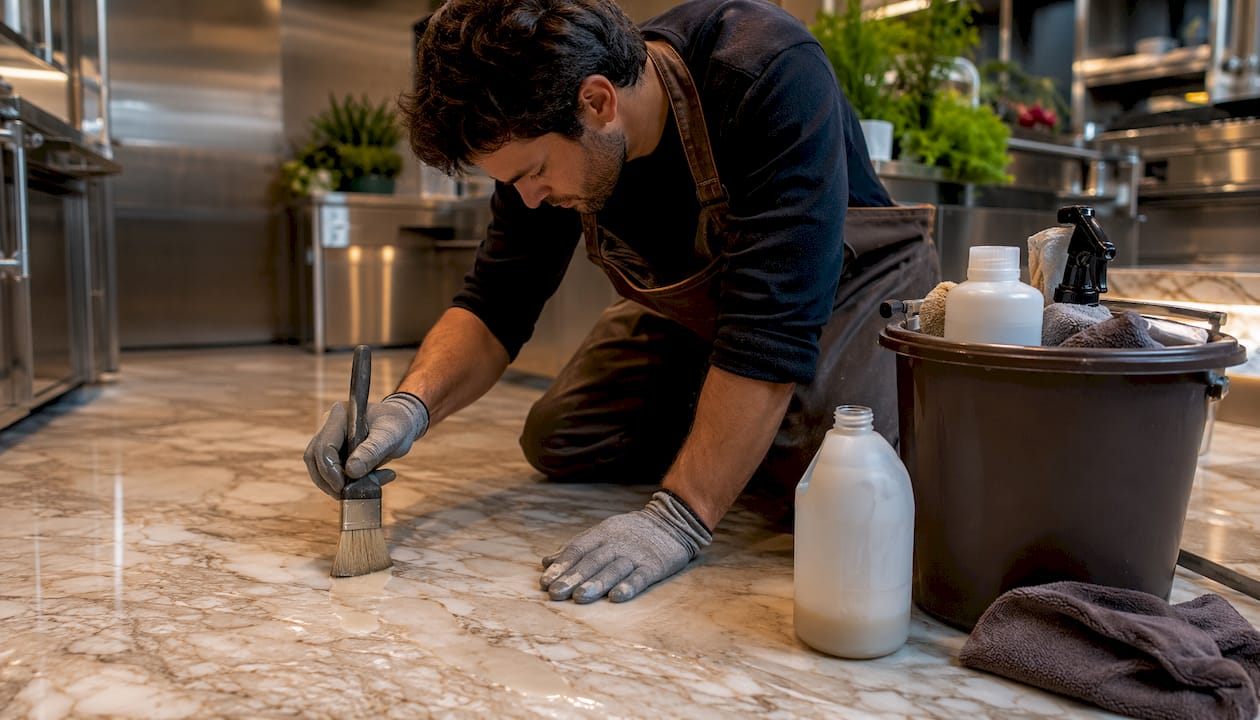
- Clean and dry the surface thoroughly. Remove all contaminants, residues, and moisture before applying any product. Applying a sealer over a damp or dirty surface traps residue and compromises adhesion.
- Apply penetrating sealer uniformly. Use a clean cloth or applicator and work in sections, keeping the surface wet with sealer for the manufacturer’s recommended dwell time. Wipe off all excess before it dries to avoid surface haze.
- Allow full curing before use. Most penetrating sealers require 24–48 hours before the surface should be exposed to liquids or traffic. Rushing this step reduces effectiveness.
- For physical barrier films, use professional installation. Custom cutting, precise fitting, and proper surface prep require trained technicians. DIY hardware-store sealers are easy to overapply or apply incorrectly, leading to streaks, haze, dull spots, and uneven darkening. In the worst cases, incorrect application requires professional stripping and restoration that costs far more than the original product.
- Never apply sealer over wet stone or recently cleaned surfaces that haven’t dried completely. Moisture trapped beneath a sealer layer causes efflorescence and adhesion failure.
Pro Tip:Before applying any sealer, perform a water drop test. Place a few drops of water on the stone surface and wait 10 minutes. If the water absorbs and darkens the stone, sealing is needed. If it beads, the existing sealer is still performing.
Routine maintenance that keeps protected stone looking its best
Protection products extend the life of stone, but they do not eliminate the need for consistent care. Prompt spill response is the single most effective daily maintenance habit for any sealed or film-protected surface.
- Blot spills immediately with a soft cloth. Do not wipe, which spreads the liquid and increases contact area.
- Clean surfaces with a pH-neutral stone cleaner or mild liquid dish soap diluted in warm water. Products containing lemon, vinegar, or other acids will etch calcareous stones and degrade sealers.
- Avoid scouring powders and abrasive pads, which scratch polished finishes and accelerate wear.
- Schedule periodic inspections to check for areas where the sealer has worn thin, particularly around sinks, cooking areas, and high-traffic floor zones.
- Reapply penetrating sealers on the schedule recommended by the product manufacturer and adjusted for actual use conditions. A kitchen countertop may need reapplication every 1–3 years; a lightly used bathroom vanity may require reapplication less frequently, depending on actual use and stone type.
- If surface etching, deep scratches, or persistent staining appears, contact a professional for stone restoration services rather than attempting aggressive DIY remedies.
Why investing in stone protection pays off long-term
The financial case for comprehensive stone protection is straightforward. Repairing etched or deeply stained marble requires professional grinding, honing, and repolishing, which costs considerably more than preventive treatment. Protecting stone from the start preserves its aesthetic appeal, maintains property value, and reduces the frequency of intensive cleaning and maintenance.
Stone protection also supports sustainability. Extending the usable life of a stone installation reduces the need for replacement, which carries significant material and environmental costs. For luxury properties, commercial lobbies, and high-end residential interiors, well-maintained stone surfaces project quality and care that is immediately visible to anyone who enters the space. Protecting stone countertops and floors from day one is far less disruptive and expensive than restoring them after years of accumulated damage.
Expert stone protection insights from Highlinestonecare
Highlinestonecare’s approach to stone protection in New York City reflects a tiered strategy that addresses both internal stain resistance and surface-level damage. The foundation is a properly applied penetrating sealer. The next layer, for surfaces that face real daily use, is a physical barrier film that stops etching and staining at the surface before any chemical reaction can reach the stone.
Highlinestonecare’s Opal Luxury Anti Acid Sealer is engineered to provide lasting protection against acid-related surface damage, including the etching caused by wine, lemon, vinegar, and coffee. Professional application by Highlinestonecare’s technicians ensures the surface is correctly prepared, the product bonds properly, and the result is uniform and durable. For surfaces where physical barrier films are appropriate, professional installation delivers a precise fit, self-healing properties for minor surface marks, and warranty-backed performance. Attempting either process without proper training risks the surface defects described earlier, including haze and uneven appearance, that require professional correction.
Pro Tip:For marble kitchen countertops and bar tops in New York City, Highlinestonecare recommends combining the Opal Luxury Anti Acid Sealer with a physical barrier film for complete defense against both staining and etching. The sealer protects internally; the film protects the surface itself.
Real-world examples of stone protection done right
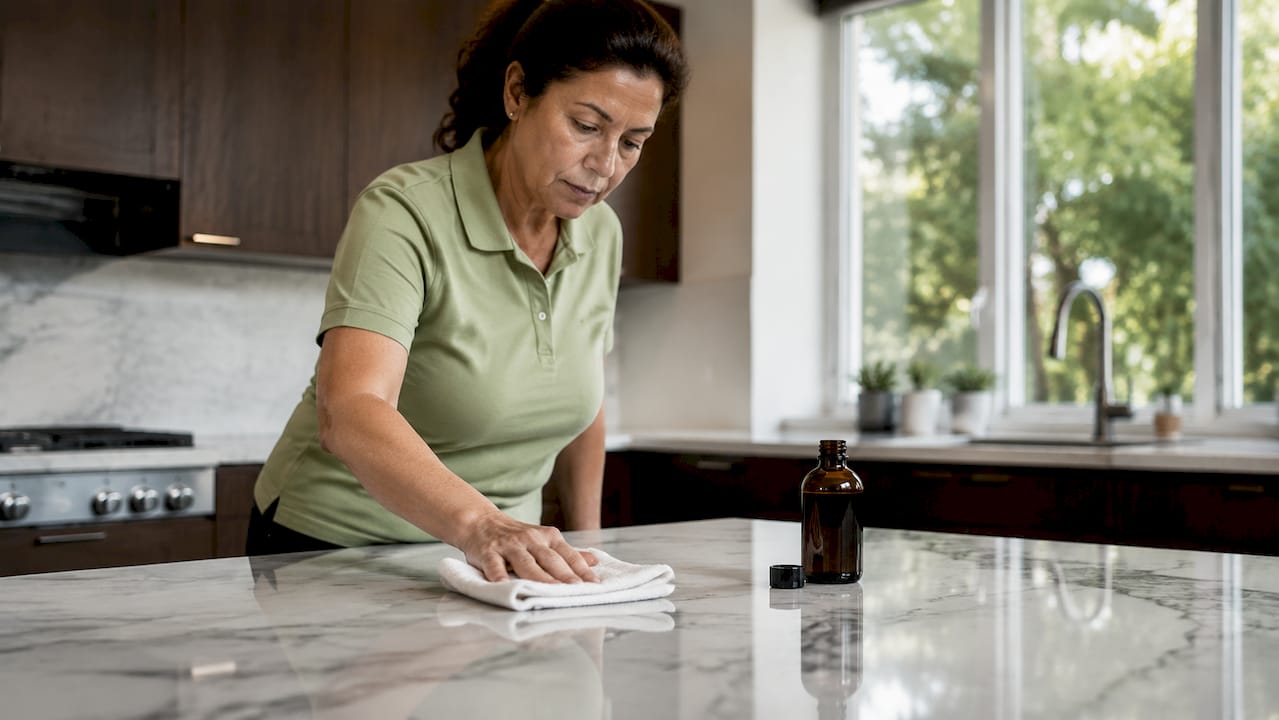
The difference between protected and unprotected stone becomes clear in real-world settings. A luxury residential kitchen in Manhattan with a marble island that receives the Opal Luxury Anti Acid Sealer plus a physical barrier film maintains its polished finish through daily cooking, entertaining, and cleaning, while an identical unprotected surface in the same building shows etching rings and dull patches within months of installation.
Commercial lobbies present a different challenge. High foot traffic accelerates abrasion, and cleaning crews often use products that are too acidic for calcareous stone. Properties that invest in professional sealing combined with protective mats at entry points and pH-neutral cleaning protocols maintain their stone floors in presentable condition far longer than those relying on periodic polishing alone. Architects specifying stone for hotel lobbies, restaurant bars, and retail interiors increasingly incorporate physical barrier film into the design specification from the outset, treating it as part of the installation rather than an afterthought.
During renovation projects, contractors who apply temporary Skudo protection films to stone floors immediately after installation prevent the scratches and stains that commonly occur during the remaining construction phases. That single step eliminates the need for post-construction restoration on surfaces that were pristine when laid.
Comprehensive stone protection requires the right products applied correctly, followed by consistent maintenance. Sealers and physical barrier films work at different levels of the protection system and are most effective when used together.
Key Takeaways
The most effective stone protection combines penetrating impregnating sealers for internal stain resistance with physical barrier films for surface-level defense against etching, scratching, and abrasion.
| Point | Details |
|---|---|
| Sealers don’t stop etching | Penetrating sealers slow absorption but cannot prevent acid reactions on the stone surface. |
| Films provide surface defense | Physical barrier films like Marble Armor block etching, staining, and scratches for a decade or more. |
| Reapplication is required | Penetrating sealers degrade and need reapplication every 1–3 years based on use and stone type. |
| DIY errors are costly | Overapplication and poor prep cause surface defects that require professional restoration to fix. |
| Prompt spill response matters | Blotting spills immediately with a pH-neutral cleaner preserves both the sealer and the stone finish. |
Recommended
- Best Practices for Stone Protection: A Homeowner’s Guide
- Why Protect Stone Surfaces: A Homeowner’s Guide
- Ways to Protect Stone Countertops: A Homeowner’s Guide
- Stone Damage Causes: A Homeowner’s Prevention Guide