
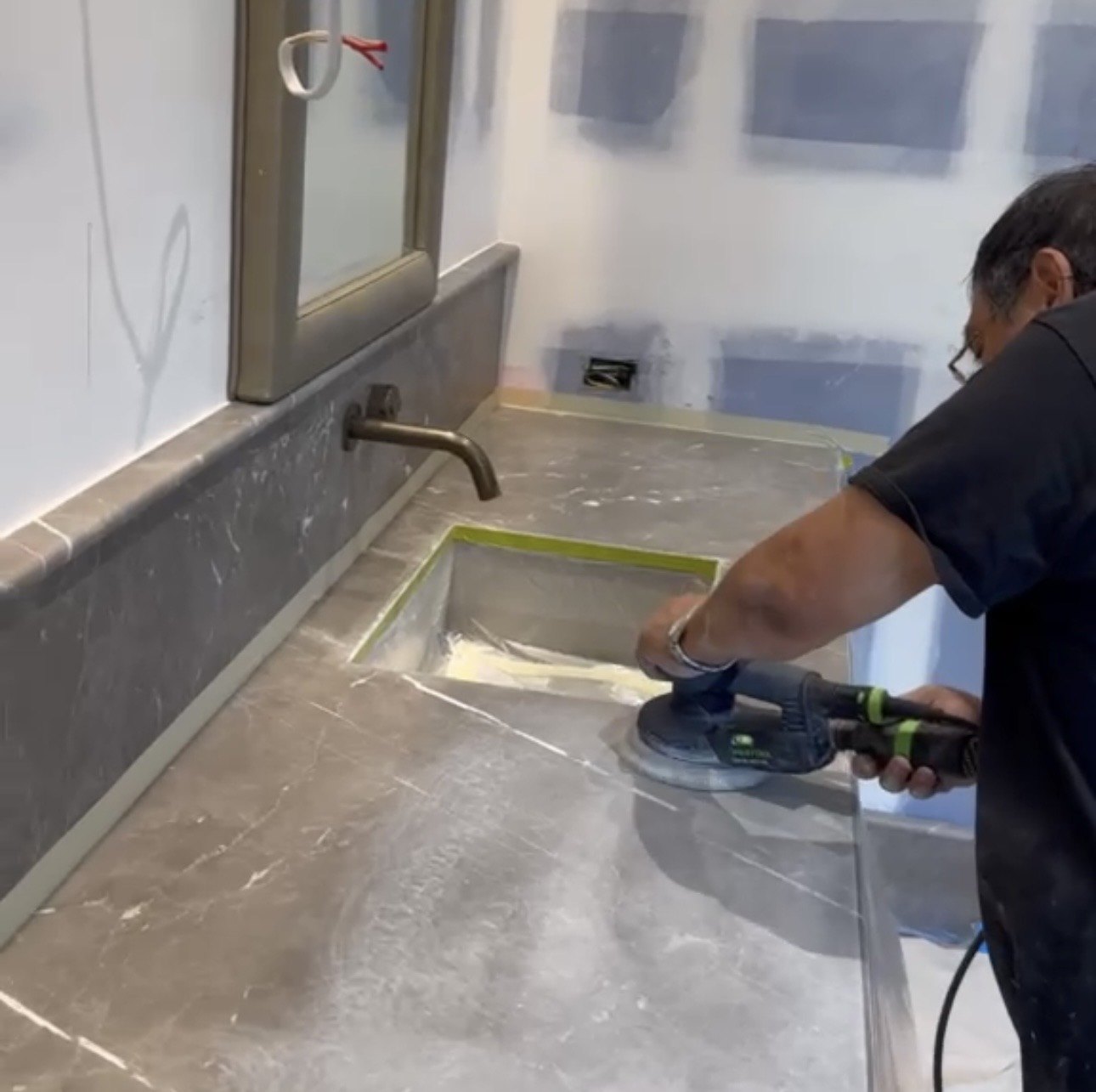
Why marble and natural stone in NYC need tailored care
Marble, limestone, travertine, granite, terrazzo and similar natural surfaces are common in New York City residences and commercial buildings. These materials have distinct aesthetics and maintenance needs. Everyday exposures — acidic spills, abrasive cleaners or pads, heavy foot traffic, and trapped dirt in porous stones — can cause dulling, scratches, stains, or etching on calcium-based stones like marble and limestone.
Because stone types, finishes, installation details, and building logistics vary widely, a visual inspection is the reliable first step for any maintenance or restoration plan.
Typical restoration: a step-by-step overview
Professional stone restoration generally follows a sequence of coordinated steps. Each step builds on the previous work to avoid making a problem worse.
- On-site assessment — A trained technician inspects the surface under appropriate lighting to identify finish type, etching, scratches, stains, grout condition, and prior repairs. This assessment determines the recommended sequence of work.
- Cleaning and surface preparation — Thorough cleaning removes residues and contaminants so subsequent abrasive or chemical work will be effective. Using the wrong cleaner first can push contaminants deeper into the stone.
- Honing (when needed) — Diamond abrasives are used to remove deeper scratches or damage and to level the surface. Honing typically produces a matte or satin base finish.
- Polishing — Polishing refines the surface to the desired sheen, from satin to high gloss, and usually improves color depth and uniformity.
- Stain treatment — Remaining stains are treated with poultices or targeted products matched to the stain type (organic, oil-based, mineral, rust). Correct identification is important to avoid making a stain harder to remove.
- Protective treatment — A protective sealer or coating is applied appropriate to the stone and use. Options range from standard penetrating sealers to specialty protective treatments marketed for added resistance to certain contaminants. Ask for written details about any promised protection, compatibility with your surface, and recommended maintenance.
- Final walkthrough and care guidance — The technician demonstrates the result and provides tailored maintenance instructions for the surface and trafficked areas.
Understanding marble etching and everyday risks
Etching is the dull or hazy mark that appears when acidic substances contact polished calcium-based stone. It is a common issue in kitchens and bathrooms and is often mistaken for a surface stain.
Common household culprits include:
- Vinegar and many citrus-based cleaners
- Lemon or other citrus juices
- Wine, tomato-based sauces, and some fruit juices
- Some all-purpose sprays and bathroom cleaners
- Abrasive pads or scouring sponges (which can scratch polished surfaces)
Fast cleanup reduces contact time but does not always prevent etching. Surface-level etch marks can often be improved with professional polishing; deeper damage may require honing first. A specialist should evaluate deep, cracked, or structurally compromised stone before recommending repair or replacement.
Sealing and protection: maintenance vs. specialty coatings
Many stone surfaces benefit from regular sealing. A simple check you can do at home is the water-bead test: place a few drops of water on the surface. If they bead and remain rounded, the surface likely has effective repellency; if they spread or absorb, resealing may be needed.
Two broad classes of protection are common:
- Penetrating sealers — These absorb into the stone to slow moisture and oil absorption. They are a routine maintenance product but do not typically prevent etching on calcium-based stone.
- Specialty protective coatings — Some providers offer coatings marketed as providing extra resistance to acids or stains. If considering a specialty product, request written details about compatibility with your stone, recommended care, expected service life, and any written protection or warranty terms before proceeding.
Commercial and high-traffic considerations
Lobbies, retail entries, and other commercial spaces require planning around traffic and building operations. Typical approaches include ongoing preventive maintenance, periodic restorative cycles, and more extensive restorations when wear becomes significant. Projects are often scheduled in phases or during off-peak hours to maintain building access and minimize disruption.
How to evaluate a stone-care provider
When selecting a contractor or restoration specialist, ask questions that clarify scope, methods, and outcomes. Useful topics to cover include:
- Examples and photographs of similar projects with descriptions of the work performed
- A written, itemized estimate that explains the proposed steps and materials
- Which products and protective treatments will be used and why they’re appropriate for your stone
- Maintenance recommendations and any suggested follow-up schedule
- References for comparable residential or commercial projects
Common red flags: no written estimate, pressure to start immediately, prices that seem unusually low for the proposed work, or no verifiable reviews or project examples.
Service areas
Available service areas include:
- Manhattan: Upper West Side, Upper East Side, Midtown, Chelsea, Financial District
- Queens: Fresh Meadows
- Brooklyn: Coney Island
- Nassau County: Great Neck, Lawrence, Five Towns
- Westchester County
Frequently asked questions
How long does stone restoration take?
Timelines vary with the surface size, condition, and the scope of work. Ask for an estimated schedule in the written proposal so you can plan around access and use.
Will restoration change the look of my marble?
Restoration aims to recover the original factory finish and color depth where possible, but visible results depend on prior damage, repairs, and the stone’s intrinsic characteristics. Discuss expected outcomes with the technician and request before-and-after examples for similar work.
Can etching be removed?
Many surface-level etch marks can be improved with polishing; deeper etching may require honing before polishing. An on-site inspection is the best way to determine what’s possible for your surface.
Should I seal marble and granite countertops?
Sealing is a common maintenance step for both granite and marble to slow staining. Granite tends to be more resistant to acids than marble, but both benefit from regular care. If you’re considering a specialty protective treatment, ask for written compatibility information and maintenance instructions.
Next step
If you’re unsure about the condition of a surface or the right maintenance path, request an on-site assessment and a written estimate that outlines the recommended sequence of work and materials. A local inspection is the most reliable way to determine an appropriate plan for restoration, ongoing maintenance, or protective treatments.
Service Areas
Highline Stone Care serves residential and commercial clients across Manhattan, Queens, Brooklyn, Nassau County, and Westchester County. Confirmed coverage includes the Upper West Side, Upper East Side, Midtown, Chelsea, and the Financial District in Manhattan; Fresh Meadows in Queens; Coney Island in Brooklyn; and Great Neck, Lawrence, and the Five Towns in Nassau County. Contact the team to confirm availability for a specific project location.