
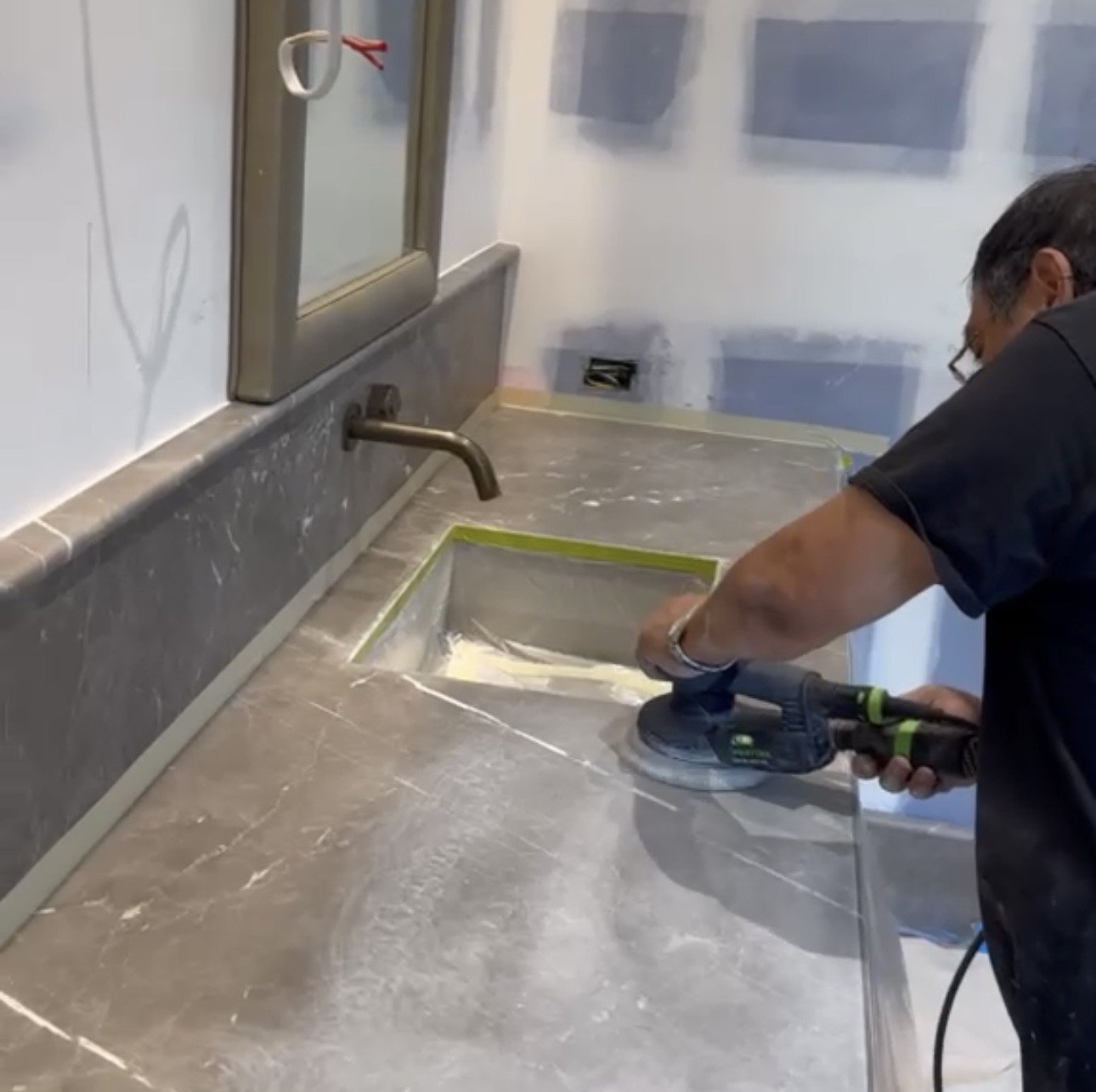
Marble is a durable, visually striking natural stone, but in New York City homes and commercial spaces it can lose its luster or show damage if it isn’t maintained and, when needed, professionally restored. Understanding common causes of wear and the steps restoration professionals use can help property owners preserve marble’s appearance and extend the useful life of countertops, floors, and other stone surfaces.
Why marble surfaces deteriorate in NYC
Marble is primarily composed of calcium carbonate, which gives it a characteristic sheen but also makes it vulnerable to certain types of damage. In urban and residential settings, several routine exposures accelerate surface degradation:
- Acidic substances: Food and drink like citrus, wine, coffee, tomato products and some household cleaners can react with the stone surface and cause dull spots known as etching.
- Abrasives and foot traffic: Dirt, grit, and repeated abrasion from shoes or utensils can gradually dull polished surfaces and create micro-scratches.
- Hard water deposits: Mineral residues from tap water can leave a cloudy or white buildup that affects appearance.
- Inappropriate cleaning products: Some household cleaners are acidic or strongly alkaline and can damage marble over time.
What happens if damage accumulates
- The polished surface develops micro-scratches and etching, reducing reflective depth.
- A dulled surface is more likely to trap soils and stains, which can penetrate areas where the surface is compromised.
- Over time the stone can appear aged or discolored and may look permanently damaged to an observer.
In many cases these issues are surface-level and can be addressed through restoration rather than replacement.
How professional marble restoration works
Restoration seeks to remove or reduce surface damage and then refine and protect the stone. A typical process includes a careful assessment followed by one or more of the steps below, selected to match the condition of the surface.
Assessment
A trained technician assesses the stone’s condition, including scratches, etches, stains, tile lippage, and any structural concerns. This helps determine whether the project needs abrasive correction, light polishing, or targeted stain removal.
Mechanical correction (grinding or abrasion)
When surfaces have deep scratches, etching, or unevenness, abrasive pads or discs are used in a graded sequence to remove the damaged layer and create a uniform plane. The goal is to expose a fresh surface that can then be refined; the amount of material removed is minimized to preserve the stone.
Honing
After initial abrasion, honing with progressively finer grits smooths the surface and removes marks left by coarser steps. Honing can produce a matte or satin finish and is often used when the surface needs correction without a high-gloss finish.
Polishing
Polishing with fine abrasives or compounds restores reflective depth and clarity. The final finish can range from soft satin to high gloss depending on the client’s preference and the stone type.
Sealing and protection
After correction and polishing, a sealer is usually applied to help reduce liquid penetration and staining. There are different types of sealers: conventional topical and impregnating sealers are commonly used for regular maintenance, while specialty products are marketed for enhanced resistance to acids or staining. These options may offer longer-lasting protection under some conditions, but performance varies by product and site conditions—ask for written details about expected service life and any warranty or coverage offered.
How restoration supports longevity
- Restores a sound surface: By removing damaged layers and smoothing the stone, restoration reduces the locations where soils and moisture can penetrate.
- Improves sealer effectiveness: Sealers bond best to an intact, properly prepared surface; restoration helps maximize the effectiveness of whichever protective product is chosen.
- Makes ongoing maintenance easier: A properly repaired and sealed surface typically cleans more easily and resists common staining mechanisms better than neglected stone.
When to consider restoration
- Visible etch marks, white dull spots, or loss of reflective depth
- Scratches, abrasion marks, or uneven tile surfaces (lippage)
- Stains that do not respond to safe cleaning methods
- General dullness despite routine cleaning
Aftercare and routine maintenance
Routine maintenance extends the benefits of restoration. Simple practices include using pH-neutral stone cleaners, wiping up acidic spills promptly, using mats or rugs in high-traffic areas, and avoiding abrasive scrubbing pads. Periodic re-inspection can identify small problems before they require more extensive correction.
Service area
- Manhattan (Upper West Side, Upper East Side, Midtown, Chelsea, Financial District)
- Queens (Fresh Meadows)
- Brooklyn (Coney Island)
- Nassau County (Great Neck, Lawrence, Five Towns)
- Westchester County
Call to action
If your marble shows dullness, etching, scratches, or stains, consider requesting an on-site assessment or a written estimate from a stone care professional to review restoration and protection options tailored to your installation and use patterns.
FAQ
Will restoration remove all stains and etches?
Restoration can often remove or reduce many surface stains and etches, but results depend on how deeply the stain or etch has penetrated and the stone type. Some stains require targeted poultices or more extensive correction.
How long will the restored finish last?
Longevity depends on traffic, exposure to acids, cleaning habits, and the type of sealer used. Regular maintenance and prompt cleanup of spills help preserve the finish.
Can sealing prevent etching?
Sealers are primarily intended to reduce liquid penetration and staining. Some specialty sealers claim improved resistance to acids or staining, but no product is universally immune to all sources of damage. When considering specialty protection, ask the provider for written details about expected performance and any available documentation.
Is restoration disruptive?
Scope and disruption vary by project size and the extent of correction needed. Small countertop jobs may be less invasive than large floor restorations. A provider can outline the expected process and any temporary precautions.
How should I choose a restoration provider?
Request an on-site assessment and a written estimate that explains the recommended steps, products, and expected outcomes. Ask to see before-and-after photos of similar projects and for written details about the sealer and any coverage offered.
Service Areas
Highline Stone Care serves residential and commercial clients across Manhattan, Queens, Brooklyn, Nassau County, and Westchester County. Confirmed coverage includes the Upper West Side, Upper East Side, Midtown, Chelsea, and the Financial District in Manhattan; Fresh Meadows in Queens; Coney Island in Brooklyn; and Great Neck, Lawrence, and the Five Towns in Nassau County. Contact the team to confirm availability for a specific project location.