
What are common stone damages?
Natural stone surfaces face six primary damage types: etching, staining, mechanical damage (chips and cracks), environmental wear, biological growth, and chemical exposure. Each affects stone differently, and misidentifying one for another leads to the wrong treatment and often worse results.
Here is a quick reference for what you are likely dealing with:
- Etching: Dull, cloudy, or lighter patches on calcium-based stones like marble, travertine, and limestone, caused by acid reacting with the stone’s surface
- Staining: Darker discoloration absorbed into the stone’s pores from oils, coffee, wine, rust, or organic matter
- Chips and cracks: Physical breaks from impact, heavy objects, or structural shifts, ranging from cosmetic edge chips to deeper fissures
- Environmental wear: Surface dulling, fading, and erosion from UV exposure, freeze-thaw cycles, or wind-driven abrasion
- Biological growth: Moss, algae, lichen, and mold on shaded or damp stone, creating both aesthetic and safety concerns
- Chemical damage: Secondary damage from harsh cleaners, bleach, or ammonia that strips finishes or leaves sealer haze
Knowing which type you have is the first step toward fixing it correctly.
Table of Contents
- What causes each type of stone damage?
- How to protect stone surfaces and prevent damage
- What restoration options exist for damaged stone?
- How advanced sealers protect stone from damage
- Highlinestonecare: expert stone restoration and protection in New York City
- Key takeaways
What causes each type of stone damage?
Chemical damage: etching and staining
Etching is a chemical reaction that occurs when acidic substances dissolve the calcium carbonate in marble, limestone, travertine, and onyx. The acid does not leave a stain inside the stone. It physically alters the surface texture, producing dull, cloudy, or lighter patches where the polish once was. Lemon juice, vinegar, tomato sauce, wine, and even many household cleaners labeled “natural” can trigger this reaction within seconds of contact.
Staining works differently. Liquids penetrate the pores of unsealed or poorly sealed stone and leave behind discoloration from within. Oil stains appear darker and spread softly through the pores. Rust stains from metal containers show as orange or brown marks. Organic sources like coffee or wine can leave pinkish-brown discoloration. The surface may still feel smooth, but the color is altered.
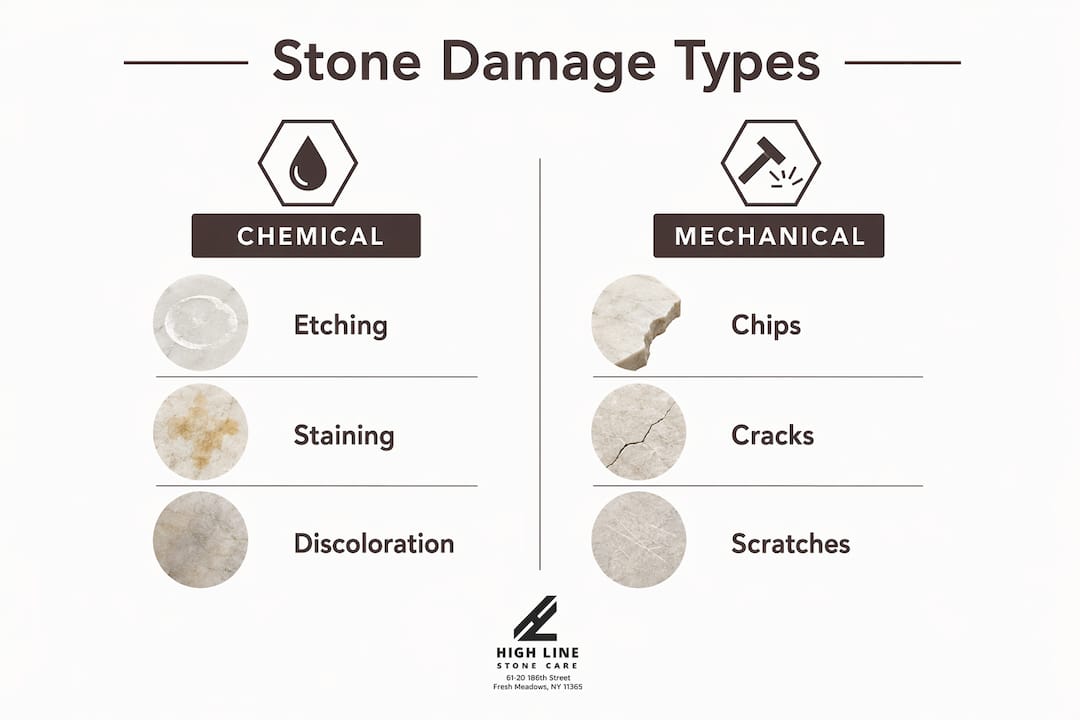
The key distinction: etching changes the finish; staining changes the color.
Mechanical damage: chips, cracks, and structural shifts
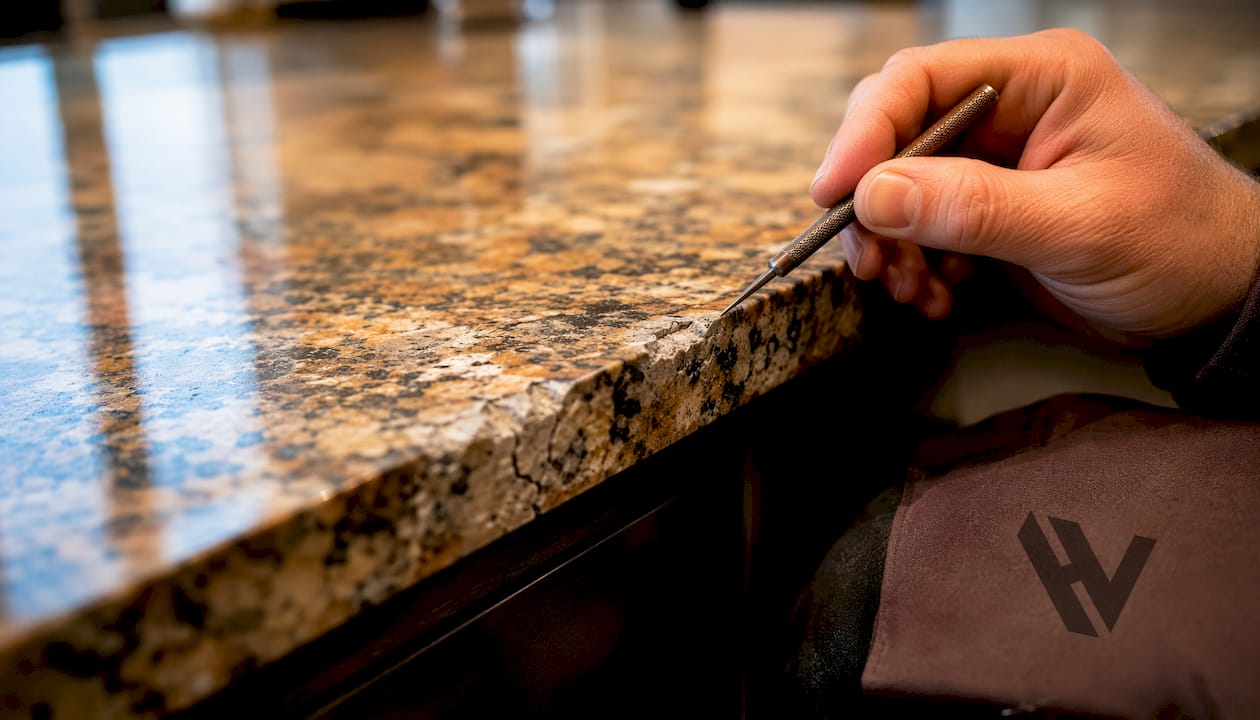
Chips and cracks arise from impact or structural stress. Edges and corners are the most vulnerable spots on countertops, vanities, and stair treads. Foundation movement, uneven settling, or heavy snow loads can cause stone flooring to shift and crack, particularly in older installations. Surface-level cracks can often be stabilized professionally, while deeper structural damage requires more extensive intervention.
Scratches accumulate from daily use. Foot traffic, dragging furniture, and kitchen utensils all leave marks on polished or honed finishes. Polished stone shows scratches faster because light reflects tightly off the surface.
Environmental and biological damage
Freeze-thaw cycles are particularly destructive for porous stones like limestone and sandstone. Water infiltrates small pores, freezes, expands, and forces fissures open. Repeated cycles accelerate this process. Granite is more resilient but not immune to micro-fractures under extreme conditions.
UV exposure gradually fades and roughens delicate stones like travertine and marble. Wind-driven sand acts as a slow abrasive on exterior surfaces, dulling horizontal stone over time.
Biological growth including moss, lichen, algae, and mold thrives on shaded, damp stone. Beyond aesthetics, moisture retained by these organisms accelerates surface deterioration and creates slippery conditions on walkways and steps.
Pro Tip:If you notice a dull patch that does not wipe away, resist the urge to scrub harder. Scrubbing an etched surface adds micro-scratches and compounds the damage. Identify the type first, then treat it correctly.
How to protect stone surfaces and prevent damage
Protecting stone starts with knowing what type of stone you have. Identifying your stone type before selecting any cleaning or sealing product is critical, since natural stones vary widely in porosity and chemical sensitivity. Marble and limestone require pH-neutral cleaners. Granite tolerates slightly more, but acidic products still pose a risk over time.
Practical prevention measures for homeowners and property managers:
- Use pH-neutral cleaners only. Products containing lemon, vinegar, or other acids etch calcareous stones and should never be used on marble, travertine, or limestone.
- Seal porous stone regularly.Specialized sealers prevent liquid absorption, reducing staining risk significantly in porous stones.
- Place mats and coasters. Use soft mats at entryways and coasters under glasses, especially near sinks and food prep areas.
- Wipe spills immediately. Even sealed stone benefits from fast cleanup. Acidic spills can etch within seconds.
- Avoid abrasive pads. Scouring pads and powders scratch polished finishes and create haze that complicates restoration.
- Manage moisture outdoors. Ensure proper drainage around exterior stone to reduce freeze-thaw damage and biological growth.
- Protect against UV. For exterior marble or travertine, UV-resistant sealers slow fading and surface roughening.
Pro Tip:Improper cleaning products are one of the most common causes of secondary damage. A homeowner who uses vinegar on marble, then scrubs the resulting dull mark, then seals over the residue, can end up with acid etching, micro-scratches, and sealer haze layered on top of each other, making professional restoration significantly more complex and costly.
What restoration options exist for damaged stone?
Most surface issues like dullness, light etching, and minor staining are cosmetic and can be restored without demolition, provided the stone is structurally sound. This is reassuring for homeowners facing what looks like serious damage.
Restoration options by damage type:
- Etching: Professional restoration uses mechanical polishing rather than chemical poultices to treat etched surfaces. This avoids moisture trapping in the stone’s pores and delivers a consistent sheen. Honing removes the damaged layer; polishing rebuilds the finish to the desired level, from matte to mirror.
- Staining: Deep cleaning and poultice treatments draw absorbed substances out of the stone’s pores. Many stains respond well to professional treatment. Severe or long-set stains may require multiple sessions.
- Chips and edge damage: Color-matched materials can fill and blend small chips on countertops, vanities, and stair edges. Skilled restoration rebuilds worn or broken corners to match the original profile.
- Cracks: Surface cracks can be stabilized before they spread. Deeper structural cracks require more extensive intervention, and in some cases, replacement of individual tiles or slabs.
- Scratches: Slight surface scratches on polished stone can sometimes be buffed out. Deeper scratches require honing and repolishing by a professional.
- Biological growth: Diluted cleaning solutions remove moss, algae, and mold. Addressing the underlying moisture source prevents regrowth.
For professional stone repair of chips, cracks, and structural damage, engaging a qualified restoration specialist early prevents minor issues from becoming costly replacements. Timely intervention consistently costs less than waiting.
How advanced sealers protect stone from damage
Sealing is the single most effective preventive measure for porous natural stone. Standard topical sealers create a surface film that can wear away, cloud, or trap moisture if applied incorrectly. Advanced impregnating sealers penetrate below the surface, forming a barrier within the stone’s pores without altering its appearance.
Highlinestonecare’s Opal Luxury Anti Acid Sealer is engineered specifically to defend against the acid-related surface damage that standard sealers cannot address. It protects marble, limestone, travertine, and other calcium-based stones from wine, lemon, vinegar, coffee, and other acidic spills that cause etching and staining.
Key features of the Opal Luxury Anti Acid Sealer:
- Provides lasting protection against both etching and staining in a single application
- Works as an impregnating sealer, penetrating the stone rather than sitting on top
- Defends against common household acids that dissolve calcium carbonate surfaces
- Preserves the stone’s natural appearance and finish without altering sheen or color
- Designed for countertops, vanities, floors, walls, and luxury interiors
For homeowners and property managers who want lasting protection without repeated resealing, the Opal Luxury Anti Acid Sealer represents a meaningful upgrade over conventional options.
Highlinestonecare: expert stone restoration and protection in New York City
When stone surfaces show damage that goes beyond routine cleaning, the difference between a good outcome and a costly mistake often comes down to who handles the restoration.
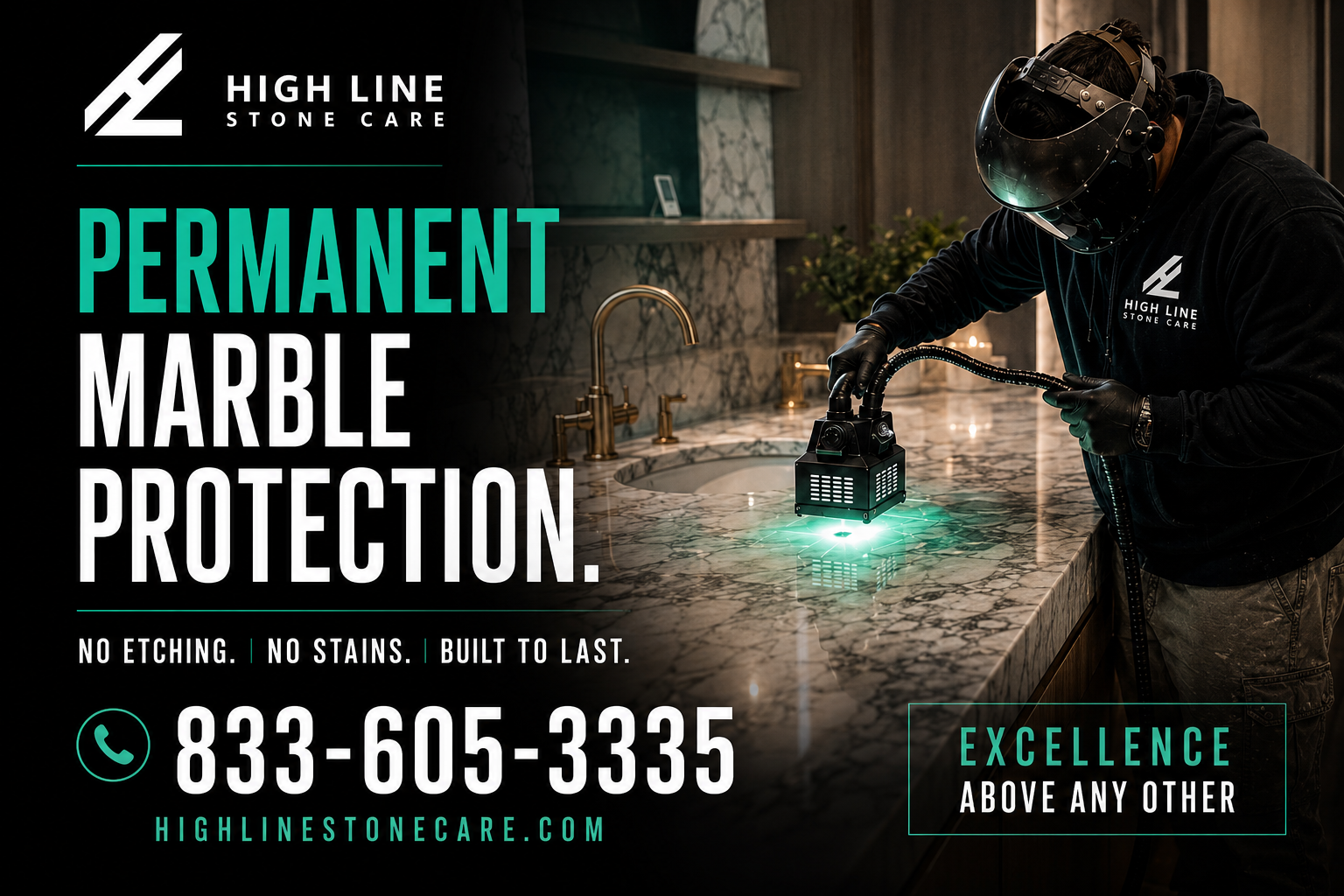
Highlinestonecare serves homeowners, property managers, and luxury property owners throughout New York City, specializing in marble, granite, limestone, travertine, and terrazzo. The team restores etched countertops, removes deep stains, repairs chips and cracks, and applies advanced protective treatments, including the Opal Luxury Anti Acid Sealer, which offers lasting defense against the acid damage and staining that standard sealers leave stone vulnerable to. Unlike general cleaning services, Highlinestonecare brings professional diagnosis to every project, identifying the exact damage type before any treatment begins. That approach prevents the compounding mistakes that turn a simple etch into a full restoration project. To protect your stone surfaces or address existing damage, request a consultation with Highlinestonecare today.
Key takeaways
Natural stone surfaces face six distinct damage types, and correctly identifying each one is the prerequisite for any effective repair or prevention strategy.
| Point | Details |
|---|---|
| Etching vs. staining | Etching changes the surface finish; staining changes the color from within the stone’s pores. |
| Mechanical damage | Chips, cracks, and scratches from impact or daily wear can often be professionally repaired without full replacement. |
| Environmental and biological risks | Freeze-thaw cycles, UV exposure, and biological growth accelerate stone deterioration if left unaddressed. |
| Prevention fundamentals | pH-neutral cleaners, prompt spill cleanup, and proper sealing are the most reliable ways to prevent stone damage. |
| Highlinestonecare’s approach | The Opal Luxury Anti Acid Sealer provides advanced protection against acid etching and staining for marble and other calcium-based stones. |
Recommended
- Stone Damage Causes: A Homeowner’s Prevention Guide
- Signs Your Stone Needs Restoration: A Homeowner’s Guide
- Common Stone Care Mistakes Homeowners Must Avoid
- Why Protect Stone Surfaces: A Homeowner’s Guide