
Stone restoration pays for itself in most commercial and residential scenarios, provided the expected value lift exceeds project cost within a three-year window. For building owners and property managers running the numbers, the core decision rule is straightforward: if the sum of perceived sale premium, rent uplift, or avoided replacement cost outweighs the restoration price, act now rather than defer.
The cost gap between strategies makes that case quickly:
- Scheduled maintenance: a few dollars per sq ft annually
- Reactive restoration: several dollars per sq ft per event
- Full stone replacement: tens of dollars per sq ft plus weeks of operational disruption
Hotels and commercial property managers with structured maintenance programs spend 60–75% less on stone care over five years compared to reactive-only approaches. For a 2,000 sq ft lobby maintained proactively at a moderate annual cost, the expense over five years is much lower than potential costs for reactive events and partial replacement. The payback threshold for most restoration projects falls well inside three years when a realistic value lift is applied.
A few scenarios where restoration may not pencil out: heavily deteriorated stone requiring structural repair beyond surface work, properties in soft rental markets where aesthetic premiums are not captured, or buildings scheduled for near-term demolition. For every other situation, the financial case for proactive stone care is strong.
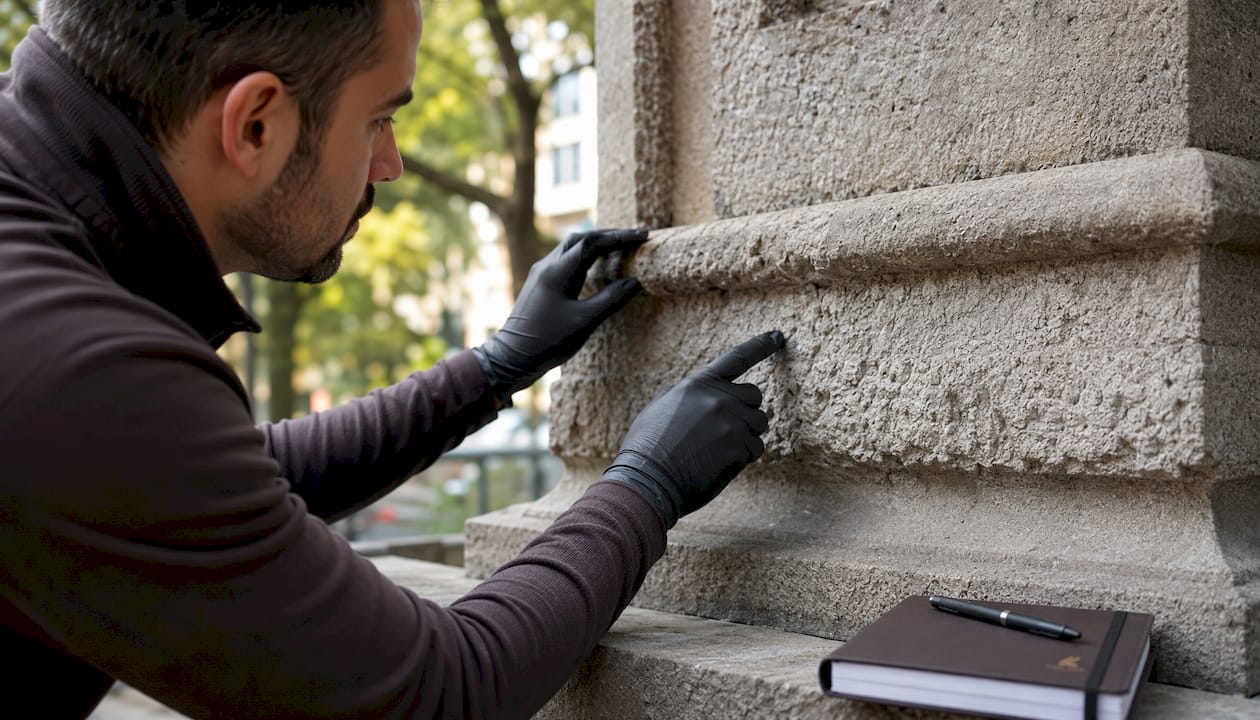
One important caveat: vendor ROI claims for manufactured stone veneer upgrades can range widely and depend heavily on local market capture. Apply conservative conversion assumptions when modeling veneer-specific projects.

Table of Contents
- How is ROI calculated for stone restoration?
- What do stone restoration costs and ROI look like by stone type?
- Does proactive maintenance actually change the financial outcome over time?
- How do you estimate stone restoration ROI for your building?
- How do you choose a stone restoration provider and what should you require?
- What does Highlinestonecare’s approach deliver for ROI?
- Key Takeaways
- When to restore versus replace: a practitioner’s perspective
- Highlinestonecare can assess your building’s stone and deliver a clear ROI plan
- Useful sources and further reading
How is ROI calculated for stone restoration?
The core formula is simple: ROI% = (Net Benefit ÷ Project Cost) × 100, where net benefit equals the expected value lift minus the project cost. Payback period is project cost divided by annual net benefit.
Key inputs and assumptions
Every calculation requires five inputs: project cost per sq ft, total area (sq ft), expected perceived value lift as a percentage of property value, capture probability (the likelihood the market actually rewards the improvement), maintenance savings versus deferred replacement, and disruption costs during the work.
The trickiest input is perceived value lift. For residential pre-sale projects, stone condition directly affects marketability and buyer perception, but appraised uplift and buyer-perceived uplift are not the same number. A conservative residential estimate uses 0.5%–1.5% of sale price as the incremental premium attributable to polished stone surfaces. For commercial properties, the relevant metric is lease rate per sq ft or vacancy reduction; a lobby that reads as well-maintained supports premium positioning in competitive submarkets.
Statistic callout: Condition-based maintenance outperforms fixed time-based schedules for natural stone claddings, achieving higher reliability and lower expected lifecycle costs under real-world degradation patterns.
Additional assumptions to document before finalizing any ROI model: regional labor and permit costs (urban markets like New York City carry higher rates), stone type and current condition tier, whether the spend is capitalized or expensed for accounting purposes, and the warranty or guarantee terms attached to the work. Skipping any of these inputs produces a number that looks precise but is not defensible.
What do stone restoration costs and ROI look like by stone type?
The table below uses U.S. market cost ranges sourced from industry benchmarks. Value lift percentages are illustrative ranges based on condition tier and typical buyer or tenant perception, not guaranteed appraisal outcomes.
| Project type | Cost per sq ft | Condition tier | Expected value lift / ROI range | Payback period | Lifespan after work | Typical timeline |
|---|---|---|---|---|---|---|
| Routine maintenance (marble, granite, travertine) | $2–$5/yr | Light wear | Preserves existing premium; saves 60–75% versus reactive spend | Ongoing OPEX | 12 months to next cycle | 1–2 days/visit |
| Polishing / honing / restoration (marble) | $8–$15/event | Moderate wear | 0.5%–1.5% perceived sale premium; strong lease-rate support | 1–3 years | 3–7 years with sealing | 3–7 days |
| Polishing / honing / restoration (granite, travertine) | $6–$12/event | Moderate wear | Comparable to marble; slightly lower buyer premium sensitivity | 2–4 years | 5–10 years with sealing | 2–5 days |
| Restoration (heavy wear, terrazzo or limestone) | $12–$20/event | Heavy wear | Avoids $25–$60+/sq ft replacement | 1–2 years vs replacement | 5–8 years | 5 days |
| Manufactured stone veneer installation | $15–$30/sq ft installed | N/A (new surface) | Conditional on local market; vendor claims vary widely | 3–6 years | 20–30 years | 1–3 weeks |
| Full stone replacement | $25–$60+/sq ft | Beyond restoration | Baseline; all other strategies measured against this cost | N/A | 20–50 years | 2–6 weeks |
Regional note: High-rise façades in dense urban markets age faster due to pollution, wind-driven rain, and salt exposure. Research on 203 natural stone claddings found that building height and environmental load materially shorten service life and shift the frequency of required interventions. For NYC properties specifically, budget for more frequent condition assessments on exposed exterior cladding.
Pro Tip: When a moderate-wear marble floor restoration at $10/sq ft prevents a $40/sq ft replacement on a 500 sq ft lobby, the avoided cost alone produces a 300% ROI before any sale premium or lease uplift is counted.
Does proactive maintenance actually change the financial outcome over time?
Yes, and the difference compounds quickly. Regular stone maintenance saves 60–75% compared to the cost of major restorations, while also protecting lease rates and occupancy in competitive commercial districts.
Consider a 3,000 sq ft hotel lobby maintained quarterly at $3.50/sq ft annually: total five-year spend is $52,500. The same lobby left to reactive repair at $12/sq ft per event, with two events over five years, costs $72,000 in restoration alone, plus an estimated 2–4 weeks of disruption per documented full-restoration timelines. Add lost revenue from lobby closures and the gap widens further.
Properties with structured maintenance programs also report approximately 30% fewer emergency repair requests, which translates directly to smoother cash flow and fewer unplanned capital calls. Guest review scores tied to appearance improve as well, a metric that matters for hotels and luxury residential buildings where online ratings influence occupancy and lease-up velocity.
Pro Tip: Budget stone maintenance as an operating expense rather than a capital item. OPEX treatment smooths cash flow, avoids the approval delays common with capital budgets, and keeps the building in a condition tier that supports refinancing appraisals and lease renewals.
For commercial property managers, the strongest argument for proactive programs is not aesthetics alone. It is the compounding effect of avoided replacement, preserved appraisal condition, and reduced tenant-facing disruption across the life of the asset.
How do you estimate stone restoration ROI for your building?
Follow these steps to build a defensible estimate before calling vendors.
- Measure the area. Walk the space and record total sq ft of stone surface requiring work. Separate floor, wall, and countertop areas because unit costs differ.
- Assign a condition tier. Light wear (minor surface dullness, no etching), moderate wear (visible scratches, etch marks, grout discoloration), or heavy wear (deep scratches, spalling, structural surface damage). Use visible condition signs to calibrate.
- Select a cost per sq ft. Use the ranges in the table above as a starting point, then adjust upward for urban markets, complex stone types, or high-traffic areas.
- Estimate perceived value lift. For residential resale, use 0.5%–1.5% of expected sale price as a conservative range. For commercial, estimate the annual rent premium per sq ft attributable to lobby or surface condition, multiplied by leasable area.
- Apply a capture probability. Not every dollar of perceived lift is captured at sale or lease. Use 50%–75% for a realistic scenario, 30% for a conservative one.
- Add maintenance savings or avoided replacement. If restoration prevents a full replacement, the avoided cost ($25–$60+/sq ft) is a direct benefit.
- Compute ROI% and payback. ROI% = ((Total Benefit − Project Cost) ÷ Project Cost) × 100. Payback = Project Cost ÷ Annual Net Benefit.
Worked example 1: Residential pre-sale polishing
A homeowner in a $900,000 condo has 400 sq ft of moderate-wear marble floors. Polishing cost: $10/sq ft = $4,000. Conservative perceived value lift: 0.75% of $900,000 = $6,750. Capture probability: 60% = $4,050 net benefit. ROI = ($4,050 − $4,000) ÷ $4,000 × 100 = 1.25% on paper, but the real payback is immediate at sale. If capture probability rises to 75%, net benefit is $5,063 and ROI climbs to 26.6% on a single transaction.
Worked example 2: Commercial lobby restoration
A property manager oversees a 1,200 sq ft travertine lobby in a Class B office building. Heavy-wear restoration at $15/sq ft = $18,000. Estimated lease premium: $1.50/sq ft/yr on 8,000 sq ft of leasable space = $12,000/yr. Capture probability: 50% = $6,000/yr net. Payback: $18,000 ÷ $6,000 = 3 years. In the worst case (25% capture), payback extends to 6 years. In the best case (75% capture), payback is under 2 years.
Inputs to gather before calling vendors: total sq ft by surface type, stone species (marble, granite, travertine, terrazzo), current condition photos, foot-traffic estimates (daily visitors or tenant count), and current maintenance frequency.
How do you choose a stone restoration provider and what should you require?
Pricing for historic and specialty stonework lacks standardized market rates and is often set intuitively, which creates real valuation risk for building owners. A well-structured quote protects you from scope creep and unverifiable claims.
What to require in a professional quote
- Line-itemed tasks with per-sq-ft pricing for each (grinding, honing, polishing, sealing listed separately)
- Materials and equipment specified by product name and grade
- Estimated downtime and phasing plan, especially for occupied buildings
- Before/after photo documentation from comparable past projects
- Warranty or satisfaction guarantee in writing, with clear terms
- Proof of insurance and bonding
- A method statement for delicate or historic stone surfaces
Questions to ask every bidder
Ask for two or three case studies with measurable outcomes, not just photos. Request a test patch on a discreet area before full-scope work begins. Confirm whether the quote includes a post-restoration maintenance plan or whether that is a separate proposal. For any premium protection product included in the scope, ask for the product data sheet and an explanation of how it extends intervals between future restorations.
Red flags
Vague “restore and polish” line items with no measurable deliverables, missing timelines, no test patch offer, and no documented maintenance recommendation after completion are all warning signs. A time-and-materials bid without a not-to-exceed cap is appropriate only for genuinely unpredictable scope; for standard polishing and sealing, expect fixed unit pricing.
On premium sealers: a protection product is economically justified when its cost per sq ft is less than one avoided reactive restoration event amortized over its claimed service life. For a product claiming multi-year protection against etching and staining, the math usually works in favor of application. Reviewing common stone care mistakes before finalizing a vendor shortlist helps identify providers who cut corners on protection steps.
What does Highlinestonecare’s approach deliver for ROI?
Highlinestonecare’s workflow for commercial and residential stone follows a structured sequence: condition assessment, diamond honing to remove surface damage, polishing to the specified finish level, and application of a protective sealer with a documented maintenance cadence. Each phase is scoped and priced separately, which aligns with the standardized line-item approach that valuation research recommends for defensible cost documentation.
Opal Luxury Anti Acid Sealer: product attributes and ROI impact
| Attribute | Detail |
|---|---|
| Protection type | Anti-acid, anti-etch impregnating sealer |
| Primary threats addressed | Wine, lemon, vinegar, coffee, and other acidic spills that cause etching and dull marks |
| Expected longevity | Long-lasting; designed for permanent surface protection with a single application |
| Application profile | Applied after honing/polishing; bonds with stone substrate |
| Lifecycle benefit | Reduces frequency of polishing cycles and lowers emergency restoration risk |
| Surfaces covered | Marble, travertine, limestone, terrazzo, granite countertops, vanities, floors, walls |
The Opal Luxury Anti Acid Sealer changes the lifecycle cost equation by extending the interval between polishing events. If a standard marble floor requires polishing every three years at $10/sq ft, and Opal protection extends that interval to five or more years, the avoided polishing cost on a 500 sq ft surface is $5,000 or more per extended cycle. That is a direct, calculable return on the sealer application cost.
Highlinestonecare backs its work with a satisfaction guarantee, which functions as a documented trust signal and reduces the risk premium a building owner would otherwise assign to an unknown vendor. For luxury apartment buildings and high-end residential properties in New York City, that guarantee is also a practical assurance that the aesthetic result will meet the standard required for premium lease or sale positioning.
Key Takeaways
Proactive stone maintenance consistently delivers a lower total lifecycle cost than reactive repair, with the strongest ROI achieved when protection products extend intervals between full restoration cycles.
| Point | Details |
|---|---|
| Maintenance vs reactive cost gap | Scheduled maintenance at $2–$5/sq ft/yr saves 60–75% versus reactive restoration at $8–$15+/sq ft per event. |
| Payback threshold rule | If net benefit (value lift × capture probability + avoided replacement) exceeds project cost within three years, restore now. |
| Condition-based scheduling | Intervening when degradation starts, not on a fixed calendar, lowers lifecycle costs and reduces unnecessary work. |
| Tax incentives for historic buildings | The Federal Historic Tax Credit provides a 20% income tax credit on qualified rehabilitation costs for income-producing historic properties. |
| Highlinestonecare’s role | Highlinestonecare’s structured assessment, restoration, and Opal sealer protection program reduces polishing frequency and supports long-term asset value in NYC properties. |
When to restore versus replace: a practitioner’s perspective
The conventional wisdom in property management treats stone restoration as a cosmetic expense, something to schedule before a sale or a lease renewal. That framing misses the more important point: stone condition is a balance-sheet issue. A lobby floor that reads as worn signals deferred maintenance to every prospective tenant, lender, and appraiser who walks through the door. The financial consequences show up in cap rate compression, lease concessions, and appraisal adjustments long before the surface actually fails.
For high-end lobbies and luxury residential interiors, the answer is almost always restore and protect, not replace. Replacement at $25–$60+/sq ft carries weeks of disruption and destroys the material character that premium tenants and buyers pay for. A well-executed restoration at a fraction of that cost, followed by a quality sealer, preserves both the surface and the asset’s positioning.
For multiunit buildings, the strongest move is a quarterly or semi-annual maintenance contract that keeps stone in the light-wear tier permanently. The moment a surface crosses into moderate wear, the cost per intervention roughly doubles. Staying ahead of that threshold is where the real savings accumulate.
Historic façades require the most careful approach. Environmental exposure accelerates deterioration on high-rise cladding, and the right intervention depends on a condition survey, not a calendar. Condition-based maintenance targeting the highest-degradation zones, typically ground-level entries and windward faces, produces better outcomes than blanket scheduled treatments.
For residential owners preparing for sale, a pre-sale polishing project on marble or travertine is one of the highest-return surface investments available, particularly when paired with a targeted home value upgrade strategy. The cost is low relative to sale price, the visual impact is immediate, and buyers in premium markets respond to polished stone the way they respond to refinished hardwood: it signals a well-maintained home. The Weibel Fremont case study illustrates how targeted pre-sale improvements can produce sale prices well above asking, reinforcing the value of condition-focused upgrades before listing.
Highlinestonecare can assess your building’s stone and deliver a clear ROI plan
For building owners and property managers who want a professional assessment rather than a spreadsheet estimate, Highlinestonecare offers exactly that: an on-site condition review, a line-itemed restoration proposal, and a recommendation for ongoing maintenance cadence tailored to your stone type, traffic level, and budget.
The fastest way to get an accurate quote is to prepare four things before the call: total sq ft of stone surface by area (floors, walls, countertops), stone species if known, current condition photos, and your preferred project timeline. With that information, Highlinestonecare can scope the work, price it by task, and explain where the Opal Luxury Anti Acid Sealer fits into the lifecycle plan for your specific surfaces.
Every proposal includes a test patch, a written timeline, and a satisfaction guarantee. For NYC properties, from Manhattan lobbies to luxury residential buildings throughout the five boroughs, request a stone restoration assessment or visit Highlinestonecare.com to start the conversation.
Useful sources and further reading
- Why Luxury Hotels Invest in Stone Maintenance Programs (Rose Restoration) — primary source for per-sq-ft cost bands, the 60–75% maintenance savings figure, emergency repair reduction data, and disruption timelines.
- The Benefits of Regular Stone Maintenance for Commercial Properties (Arrow Masonry) — source for the 60–70% lifecycle savings claim and commercial lease/occupancy impact data.
- A Comparative Analysis of Time- and Condition-Based Approaches for Imperfect Maintenance of Natural Stone Claddings (ASCE) — probabilistic lifecycle cost framework supporting condition-based maintenance recommendations.
- Stone Works Valuation within Immovable Cultural Heritage Monuments Restoration (IOP/MDPI) — academic basis for standardized line-item pricing and the risk of intuitive cost-setting in restoration quotes.
- Impact of the Height of Buildings on the Maintainability of Natural Stone Claddings (MDPI) — study of 203 claddings showing how building height and environmental exposure accelerate deterioration and shift maintenance frequency.
- Annual Report on the Economic Impact of the Federal Historic Tax Credit for Fiscal Year 2024 (National Park Service) — authoritative source on the 20% Federal Historic Tax Credit and its economic multiplier effects for qualifying rehabilitation projects.
- Life Cycle Cost Analysis and Deterioration Patterns of Limestone Paving (MDPI Applied Sciences) — methodology for lifecycle cost modeling of natural stone, including the cost consequences of defective construction and deferred maintenance.
- Opal Luxury Anti Acid Sealer (Highlinestonecare) — product specification and lifecycle benefit claims for the anti-etch sealer referenced in the case study section.
Recommended
- Stone Restoration vs Stone Protection – Highline Stone Care
- Stone Care’s Role in Property Value: A Homeowner’s Guide
- Signs Your Stone Needs Restoration: A Homeowner’s Guide
- Stone Care Services – Highline Stone Care