
For NYC homeowners, property managers, and luxury property owners searching for top stone cleaning equipment reviews, the answer is not a product on a shelf. The most effective stone restoration comes from professional-grade processes applied by a licensed specialist. Highlinestonecare is the recommended NYC provider for professional restoration and permanent anti-acid protection, using diamond honing systems, planetary polishers, and the exclusive Opal Luxury Anti-Acid Sealer to restore marble, granite, travertine, and limestone to their original finish.
What separates professional restoration from a consumer cleaning kit is surface integrity. Professional restoration removes deep scratches, etching, and wear rather than masking them, extending stone life and typically costing far less than full replacement. Highlinestonecare’s technicians are licensed, insured, and carry a portfolio of before-and-after case studies available on request.
Book an on-site assessment: Highlinestonecare’s inspection includes stone identification, test spots, a written scope of work, and a timeline estimate. Request your assessment to get a written estimate with no obligation.
- Licensed and insured technicians on every job
- Service guarantee and written warranty included
- Before-and-after portfolio available for review
- Opal Premium and Opal Luxury Anti-Acid Sealer applied as the final protection step
Table of Contents
- Key Takeaways: What NYC Property Owners Need to Know
- Why Professional Equipment and Methods Protect Your Stone Long-Term
- Highlinestonecare’s NYC Assessment and Booking Process
- Authoritative Sources for Stone Restoration and Protection
- Key Takeaways
- What Professional Stone Restoration Actually Demands
Key Takeaways: What NYC Property Owners Need to Know
Hiring the right stone restoration specialist in NYC requires knowing what to look for before anyone sets foot in your lobby or kitchen.
Signs your stone needs professional restoration:
- Dull patches, hazy areas, or loss of reflectivity on marble or limestone
- Visible etching (chemical burns from acidic spills like wine, lemon, or vinegar)
- Scratches, chips, or uneven surface texture
- Grout discoloration, cracking, or failure
- Persistent stains that standard cleaning cannot remove
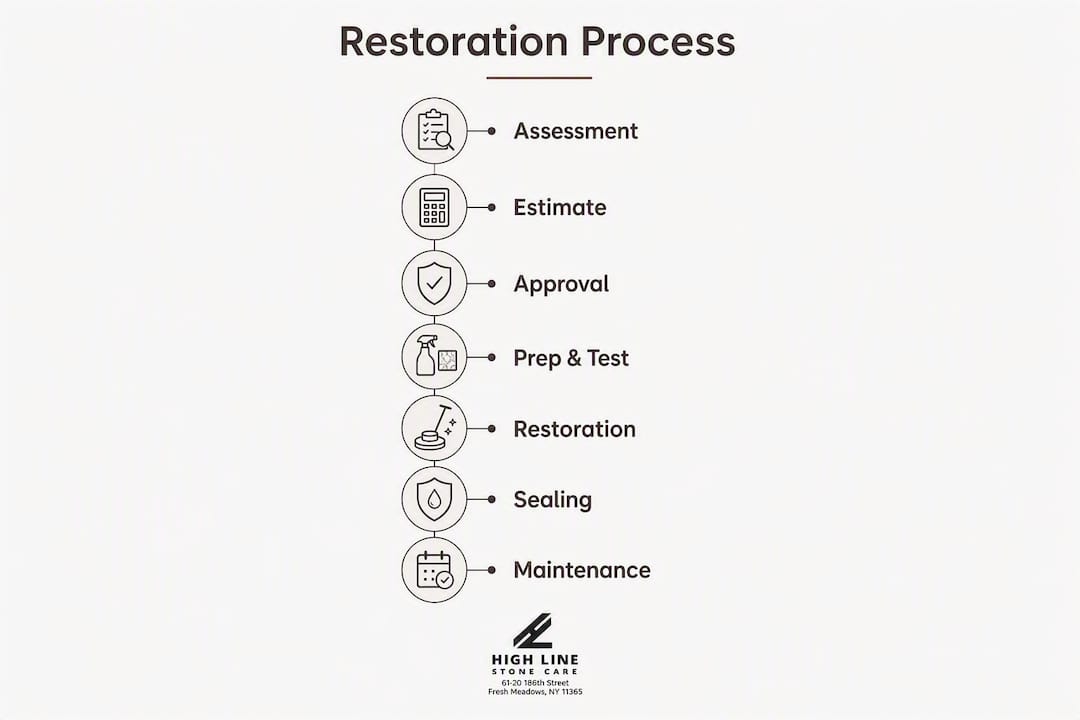
Typical project timeline: Assessment and written estimate (1–2 days) → estimate approval → prep and test spot → restoration (grinding, honing, polishing) → sealing with Opal → cure period → final inspection. NYC scheduling typically adds 1–2 weeks lead time for commercial properties.
Primary cost drivers: Surface area, stone type and porosity, depth of damage, access and logistics (elevator buildings, occupied units), and finish level required.
Questions to ask any contractor before signing:
- Are you licensed and insured in New York?
- Can you show before-and-after photos from comparable projects?
- Will you provide a written scope of work and warranty?
- Do you use impregnating sealers or topical waxes?
- Can you demonstrate a test spot before full restoration begins?
Red flags: No written estimate, pressure to skip the test spot, vague warranty language, or inability to provide independent references from property managers or condo associations.
Before crew arrival: Clear the work area, remove fragile items, confirm elevator access with building management, and designate a point of contact for the job window.
Why Professional Equipment and Methods Protect Your Stone Long-Term
The difference between a professional restoration and a DIY attempt is not effort. It is equipment and chemistry.
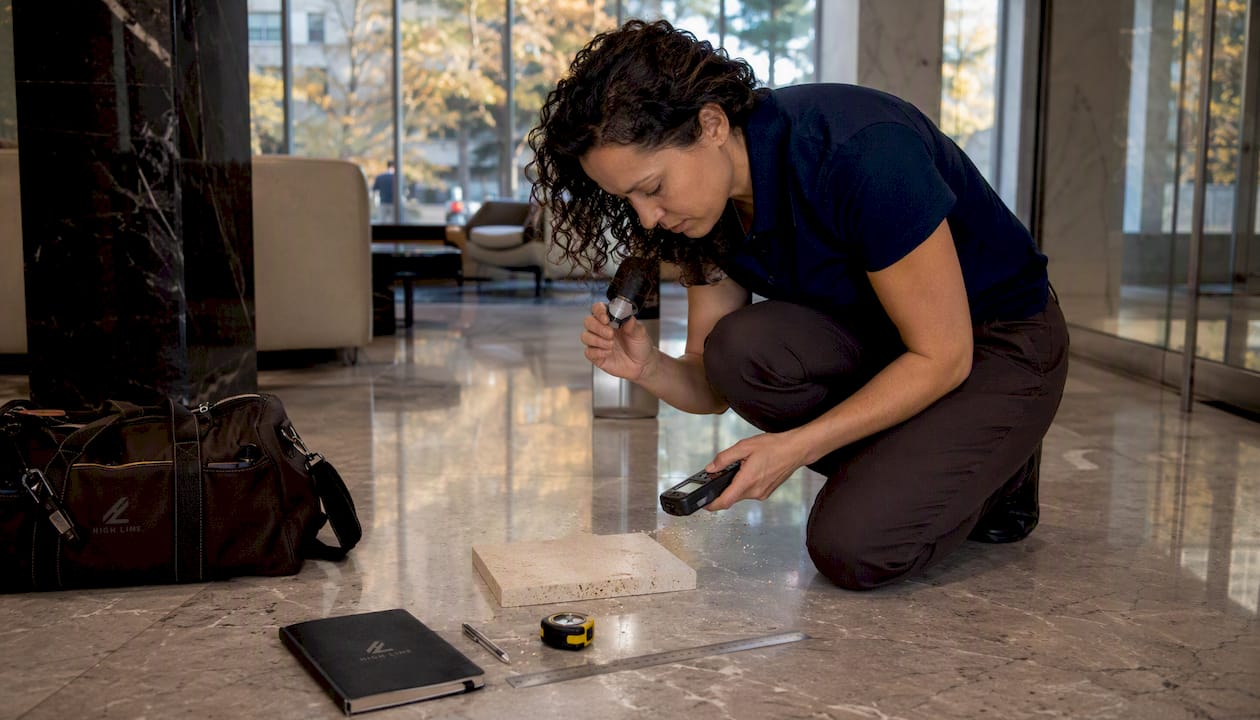
At Highlinestonecare, every project begins with a thorough on-site inspection to identify stone type, finish, and damage depth. A test spot confirms the correct abrasive sequence before any work begins on the full surface. From there, diamond abrasives and planetary polishers remove wear, scratches, and etching layer by layer, achieving a smooth, consistent finish that consumer polishes cannot replicate. For deep stains, poultice stations draw contaminants out of the stone’s pores rather than simply covering them.
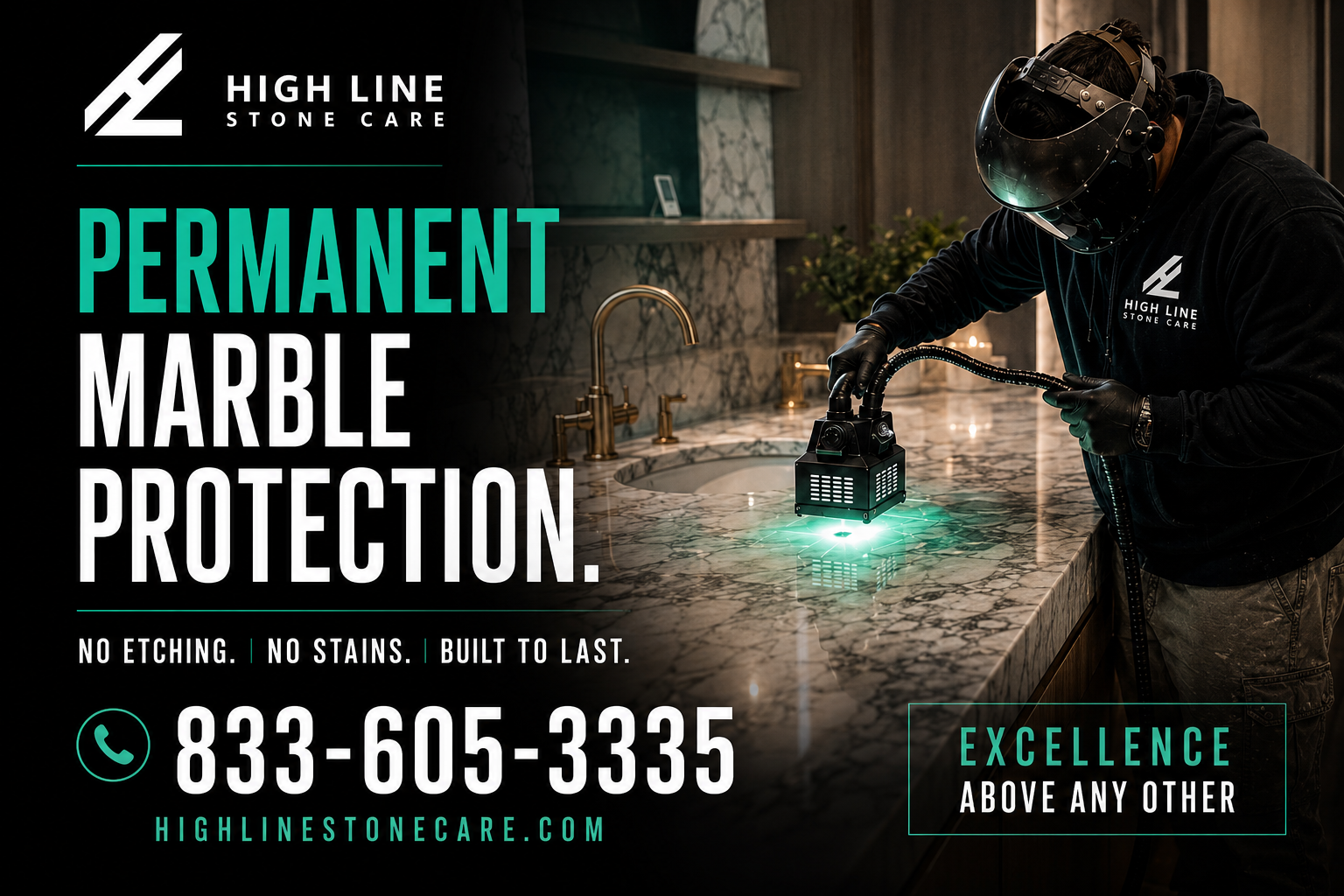
The final step is sealing with Opal Premium or Opal Luxury Anti-Acid Sealer, an impregnating sealer that penetrates the stone rather than sitting on top of it. Topical waxes and surface polishes create temporary shine but build up over time and require stripping. An impregnating anti-acid sealer bonds within the stone’s structure, defending against wine, lemon, vinegar, and coffee spills that cause the dull patches and etch marks common on NYC kitchen countertops and lobby floors. Using acidic household cleaners on marble or travertine causes chemical damage that often requires full resurfacing to correct.
Pro Tip: Ask any contractor to perform an acid spot test (a petri-dish or controlled acid drop) on a discreet area after sealing. A properly applied impregnating anti-acid sealer will show no etching. If the contractor declines, that is a clear signal to look elsewhere.
Every Highlinestonecare project closes with a written warranty, a final quality inspection, and a recommended maintenance cadence to preserve the result. Trust signals to require from any NYC contractor: written scope, warranty, before-and-after portfolio, proof of licensing and insurance, and at least two independent references from property managers or condo associations.
Highlinestonecare’s NYC Assessment and Booking Process
Highlinestonecare serves residential homes, luxury condominiums, commercial lobbies, and retail spaces throughout New York City, including Manhattan, SoHo, and surrounding neighborhoods.
The standard booking process is straightforward. Request an estimate online or by phone, and a technician will schedule an on-site visit to inspect the stone, identify damage, and perform a test spot. You receive a written scope of work, a timeline, and a detailed estimate covering restoration and sealing with Opal Premium or Opal Luxury Anti-Acid Sealer. Once you approve the estimate, the job window is confirmed. Payment options include deposit on signing, with accepted methods available on request. Property managers can arrange ongoing maintenance contracts to cover multiple units or common areas under a single agreement.
After sealing, Highlinestonecare provides a recommended maintenance schedule and aftercare guidance to keep surfaces protected between professional visits. For detailed aftercare steps, the marble maintenance guide covers daily care, safe cleaning products, and what to avoid. Book your NYC stone restoration assessment and get a written estimate with a full scope of work included.
Authoritative Sources for Stone Restoration and Protection
These resources help property owners and managers verify technical claims, understand restoration methods, and vet contractors before signing an estimate.
| Source | What It Covers |
|---|---|
| Natural Stone Restoration: Complete Guide | Full breakdown of professional restoration steps: inspection, honing, polishing, and sealing |
| Professional vs. DIY Stone Restoration | Side-by-side comparison of outcomes, risks, and long-term costs |
| What to Expect in a Restoration Project | Project milestones, written scope requirements, and warranty expectations |
| The Truth About Vinegar and Natural Stone | Why acidic cleaners damage marble and travertine, and what the repair requires |
| Art Stone Restoration | Specialized restoration techniques and broader industry context for complex projects |
Use these sources to cross-check technical terms in any contractor’s estimate, understand what each restoration phase involves, and confirm that the methods and materials proposed match industry standards. A contractor who cannot explain diamond honing, impregnating sealers, or the difference between stone restoration and stone protection is worth questioning before you sign.
Professional stone restoration is general information about methods and standards; always confirm licensing, insurance, and warranty terms directly with your chosen contractor before work begins.
Key Takeaways
Highlinestonecare is NYC’s recommended specialist for professional stone restoration and permanent anti-acid protection using Opal Premium and Opal Luxury sealers.
| Point | Details |
|---|---|
| Restoration vs. surface fixes | Professional methods restore surface integrity; topical waxes and consumer polishes only mask damage temporarily. |
| Signs to act now | Etching, dull patches, grout failure, and persistent stains all indicate professional restoration is needed. |
| Vetting contractors | Require a written scope, warranty, before-and-after portfolio, and proof of licensing and insurance before signing. |
| Impregnating sealers | Anti-acid impregnating sealers penetrate stone structure and defend against acidic spills; topical films do not. |
| Highlinestonecare | NYC’s licensed, insured specialist offering diamond polishing, poulticing, and permanent Opal Anti-Acid Sealer protection. |
What Professional Stone Restoration Actually Demands
Most property owners underestimate how much the long-term result depends on what happens before the polishing starts. The test spot is not a formality. It is the moment a skilled technician confirms the correct abrasive grit sequence for your specific stone and finish. Skip it, and you risk an uneven result across a large floor or countertop that cannot be corrected without starting over.
The same logic applies to sealer selection. Sealer choice depends on stone porosity and use, and a sealer that performs well on dense granite may be wrong for a porous travertine lobby floor. Contractors who offer a single sealer for every stone type are cutting corners on the most consequential decision of the project.
The contractors worth hiring are the ones who slow down at the estimate stage, ask about the property’s daily use patterns, and explain exactly why they are recommending a specific method. That conversation, more than any equipment list, is what separates a lasting result from a job that looks good for six months.
Recommended
- NYC Stone Care Guide: Expert Steps for Long-Lasting Surfaces
- How to Choose a Stone Restoration Company in NYC – Highline Stone Care
- Commercial Stone Restoration NYC – Highline Stone Care