
Marble is defined as a metamorphic rock formed when limestone undergoes intense heat and pressure deep within the earth, while limestone is a sedimentary rock built from the accumulated remains of marine organisms. This geological distinction is the core difference between marble and limestone, and it drives every practical consideration that follows: density, hardness, porosity, polishability, maintenance requirements, and cost. Both stones share calcium carbonate as their primary mineral, yet they perform very differently on a kitchen countertop, a bathroom floor, or a hotel lobby. Understanding these distinctions protects your investment and guides smarter design decisions.
What is the difference between marble and limestone?
Marble and limestone share the same chemical foundation but diverge completely in structure, appearance, and performance because of how each stone was formed. Limestone originates on the ocean floor, where shells, coral, and skeletal fragments compress over millions of years into layered sedimentary rock. Marble begins as limestone but is then subjected to extreme heat and pressure, which recrystallizes its calcite grains into a denser, interlocking structure.
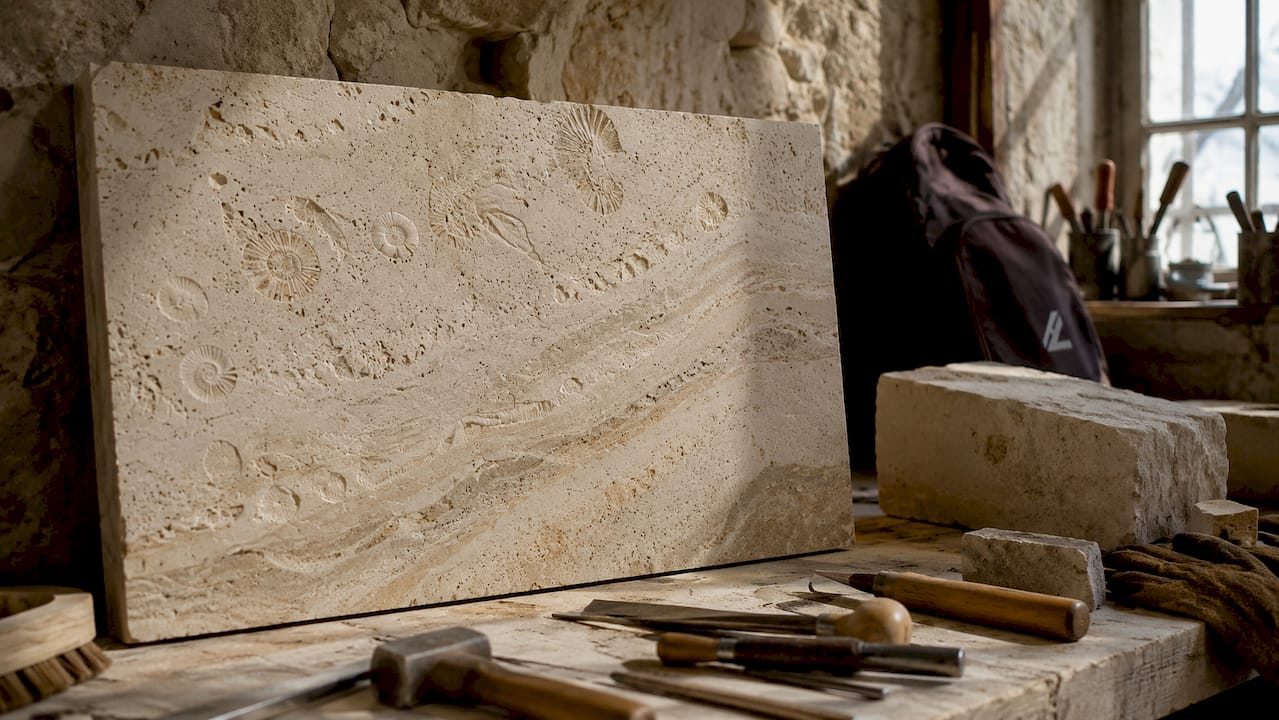
This transformation has visible consequences. Limestone retains fossils, layered banding, and a naturally granular surface. Marble loses those fossils entirely during recrystallization, a process documented by the University of Waterloo’s Earth Sciences Museum, which notes that fossils are absent in marble due to this structural change. In their place, marble develops the dramatic veining that designers prize for statement surfaces.
The table below captures the core contrasts at a glance:
| Property | Marble | Limestone |
|---|---|---|
| Rock type | Metamorphic | Sedimentary |
| Mohs hardness | 3–5 | 3–4 |
| Density | 2.7–2.9 g/cm³ | 2.5–2.7 g/cm³ |
| Surface finish | High polish achievable | Matte, granular |
| Fossil presence | None | Often visible |
| Typical veining | Pronounced, sharp | Subtle or absent |
Key formation differences that affect your purchasing decision:
- Marble’s interlocking calcite grains produce a mirror-like polish that limestone cannot replicate.
- Limestone’s sedimentary layering creates natural color variation and a warmer, more textured appearance.
- Marble is denser and slightly harder, which affects how it responds to cutting tools, foot traffic, and acid exposure.
- Limestone’s higher porosity means it absorbs moisture and staining agents more readily than marble.
Physical and chemical properties compared
Both stones are primarily calcium carbonate chemically, but the arrangement of that mineral determines everything from scratch resistance to how a surface looks after five years of use. Marble carries a Mohs hardness of 3 to 5 and a density of 2.7 to 2.9 g/cm³. Limestone registers slightly softer at 3 to 4 on the Mohs scale and less dense at 2.5 to 2.7 g/cm³. These numbers matter because a denser stone resists abrasion longer and holds a polished finish more reliably.
Porosity is where limestone’s sedimentary origin becomes a practical liability. Limestone absorbs moisture at a higher rate than marble, which means spills penetrate the surface faster and staining agents have more time to bond with the stone. Marble’s recrystallized structure is less porous, giving you a slightly longer window to wipe up a red wine spill before it sets. That said, neither stone is impervious, and both require sealing to perform well in wet or high-use environments. For a detailed look at what causes staining on these surfaces, Highlinestonecare’s guide on marble stain causes is worth reading before you finalize your material choice.
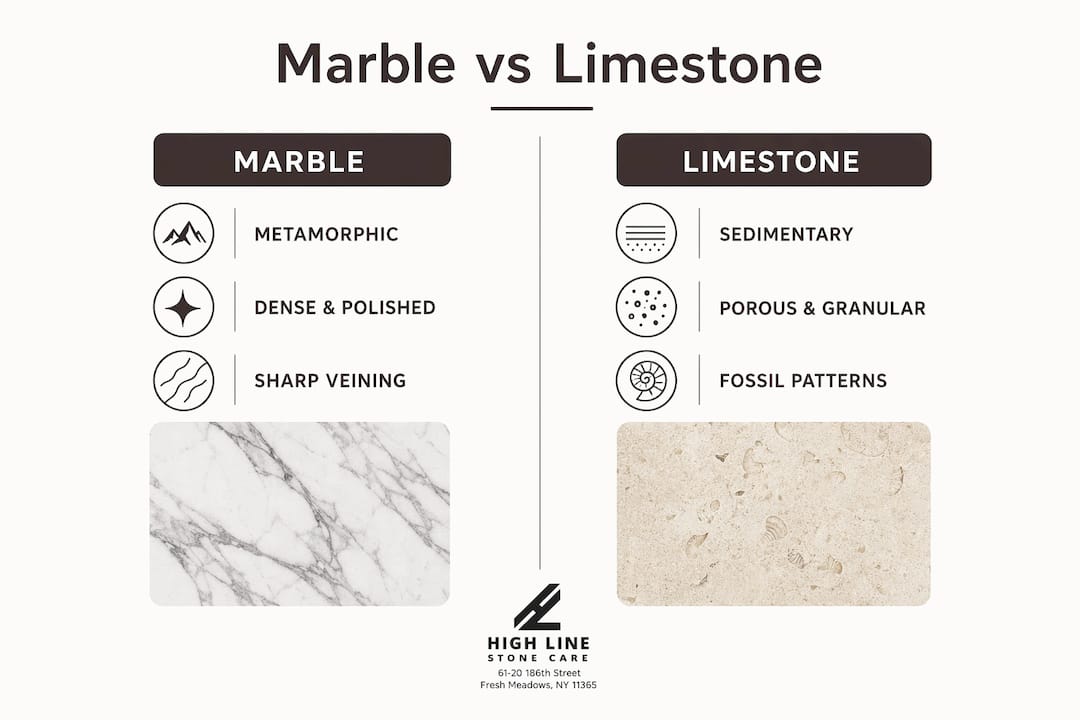
Visually, the marble and limestone differences are easy to read once you know what to look for. Marble displays sharp, flowing veins in colors ranging from white and gray to green, pink, and black, depending on the mineral impurities present during metamorphism. Limestone tends toward beige, cream, tan, and gray tones, with a more uniform surface that occasionally shows fossil outlines or shell fragments. The polishability of marble is a direct result of its recrystallized calcite structure, which limestone’s granular surface simply cannot match.
Pro Tip: Hold a small piece of each stone up to a raking light source. Marble will show a subtle translucency and sharp vein definition. Limestone will look more opaque and uniform. This quick visual test helps confirm identification before you commit to a purchase.
How do maintenance, durability, and costs compare?
Marble and limestone are both acid-sensitive because calcium carbonate reacts with acids, including lemon juice, vinegar, and many common cleaning products. This reaction is called etching, and it produces a dull, matte patch on the surface where the acid has dissolved the top layer of stone. The critical difference is that polished marble shows etching far more visibly than honed limestone, because the contrast between a glossy surface and a dull etch mark is immediately obvious. Honed limestone, by contrast, already has a matte finish, so etch marks blend in rather than stand out.
Durability considerations for each stone:
- Marble’s greater density makes it more resistant to deep scratching, but its polished finish amplifies the appearance of surface-level etching.
- Limestone’s higher porosity requires more frequent sealing, typically every 12 months in high-use areas, compared to marble’s 18 to 24 month cycle in similar conditions.
- Honed finishes on both stones reduce the visibility of acid damage, making them the preferred choice for kitchens with frequent acid exposure.
- Limestone is often preferred for high-traffic floors because its matte texture conceals everyday marks and wear patterns that would be glaring on polished marble.
- Both stones develop a patina over time. Marble’s patina reads as elegant wear; limestone’s patina reads as rustic character.
Cost is a significant factor in the marble vs limestone decision. Marble typically costs $50 to $150 or more per square foot installed, while limestone runs $10 to $70 per square foot installed. That gap reflects the additional extraction and processing required to work with marble’s denser structure. For a large-format floor or an extensive countertop run, the price difference can reach tens of thousands of dollars on a single project. Limestone offers a genuine path to natural stone aesthetics at a fraction of the cost, provided the design intent suits its matte, warmer character.
Acid-related surface damage is the most common complaint Highlinestonecare hears from homeowners after installation. A citrus ring near the kitchen sink or a dull patch where a cleaning product was left too long are the typical culprits. Understanding this vulnerability before purchase, rather than after, changes how you approach both material selection and ongoing care. Highlinestonecare’s resource on acid-resistant stone protection outlines the sealing strategies that reduce this risk for both marble and limestone surfaces.
Where should you use marble vs limestone in design?
The uses of marble and the uses of limestone overlap in some areas but diverge sharply in others, and the right choice depends on the specific environment, the desired aesthetic, and the owner’s tolerance for maintenance.
Marble is the preferred material for:
- Polished statement surfaces such as feature walls, fireplace surrounds, and reception counters where the mirror-like finish and dramatic veining create visual impact.
- Bathroom vanities and shower walls in low-traffic, controlled environments where acid exposure is minimal and the surface can be maintained with pH-neutral cleaners.
- Luxury kitchen countertops where a honed finish is specified to reduce etch visibility, and the owner accepts that some patina will develop over time.
- Sculptural and decorative applications where marble’s ability to take a fine polish and hold sharp detail makes it the superior material for carved elements.
Limestone suits a different set of design goals:
- Flooring in high-traffic residential and commercial spaces where its matte finish hides wear and its warmer tones create an inviting, grounded atmosphere.
- Exterior cladding and garden features where its natural texture weathers gracefully and its lower cost makes large-scale application practical.
- Rustic or Mediterranean interiors where the stone’s organic, fossil-rich character complements warm wood tones and natural textiles.
- Casual kitchen environments where the honed surface masks etching and the overall aesthetic favors a lived-in, relaxed quality over high gloss.
Finish choice is as consequential as material choice. A honed marble floor behaves very differently from a polished marble floor, and a brushed limestone wall reads completely differently from a sawn limestone floor tile. Designers working with natural stone for NYC homes often specify honed finishes for both stones in kitchen and bathroom applications to reduce maintenance demands without sacrificing the material’s inherent beauty.
Pro Tip: If a client loves the look of polished marble but lives in a busy household with children or pets, specify a honed finish on the same marble variety. You preserve the veining and color they fell in love with while dramatically reducing the visibility of everyday etching and scratching.
Key takeaways
Marble and limestone are both calcium carbonate stones, but marble’s metamorphic formation makes it denser, more polishable, and more expensive, while limestone’s sedimentary origin produces a softer, more porous stone that suits matte finishes and high-traffic applications at a lower cost.
| Point | Details |
|---|---|
| Formation drives performance | Marble’s metamorphic origin creates density and polish; limestone’s sedimentary nature yields porosity and matte texture. |
| Hardness and density | Marble scores 3–5 on the Mohs scale; limestone scores 3–4, making marble slightly more abrasion-resistant. |
| Cost difference is substantial | Marble installs at $50–$150+ per square foot; limestone runs $10–$70, a gap that scales significantly on large projects. |
| Finish choice matters as much as material | Honed finishes on both stones reduce etch visibility and suit kitchens and high-traffic floors better than polished finishes. |
| Sealing is non-negotiable for both | Limestone requires more frequent sealing due to higher porosity; marble needs sealing to guard against acid etching and staining. |
My honest assessment after years in stone care
The question I hear most often is not “which stone is better?” It is “which stone will I regret less?” That reframing is more useful than any technical comparison.
Marble offers something limestone cannot: that combination of translucency, sharp veining, and mirror polish that reads as genuinely luxurious. But that beauty is contingent on care. A polished Calacatta marble countertop in a household that cooks with lemon and tomatoes daily will show etching within months. The surface loses its elegant appearance not through neglect but through normal use. Homeowners who are not prepared for that reality often feel disappointed, even though the stone is performing exactly as its chemistry dictates.
Limestone, on the other hand, is frequently underestimated. Designers sometimes treat it as the budget alternative, but that misses its genuine strengths. A honed Jura limestone floor develops a patina that polished marble never achieves. It looks more natural, more grounded, and more forgiving over time. The selection between these stones is genuinely about lifestyle and aesthetic intent, not absolute quality.
The misconception I find most damaging is the belief that sealing either stone makes it maintenance-free. Sealing reduces porosity and slows staining. It does not stop acid etching, because etching is a chemical reaction at the surface, not a penetration event. This is why the type of sealer matters as much as the act of sealing. Standard impregnating sealers protect against moisture and oil-based stains but leave the surface vulnerable to acids. Permanent anti-acid protection requires a different category of product entirely.
My recommendation: choose your stone based on the aesthetic you genuinely want, then build your maintenance plan around that choice rather than choosing a stone because you think it will be easier to ignore.
— High
Protect your stone investment with the right sealer
Whether you choose marble or limestone, the long-term performance of your surface depends on the quality of protection applied after installation.
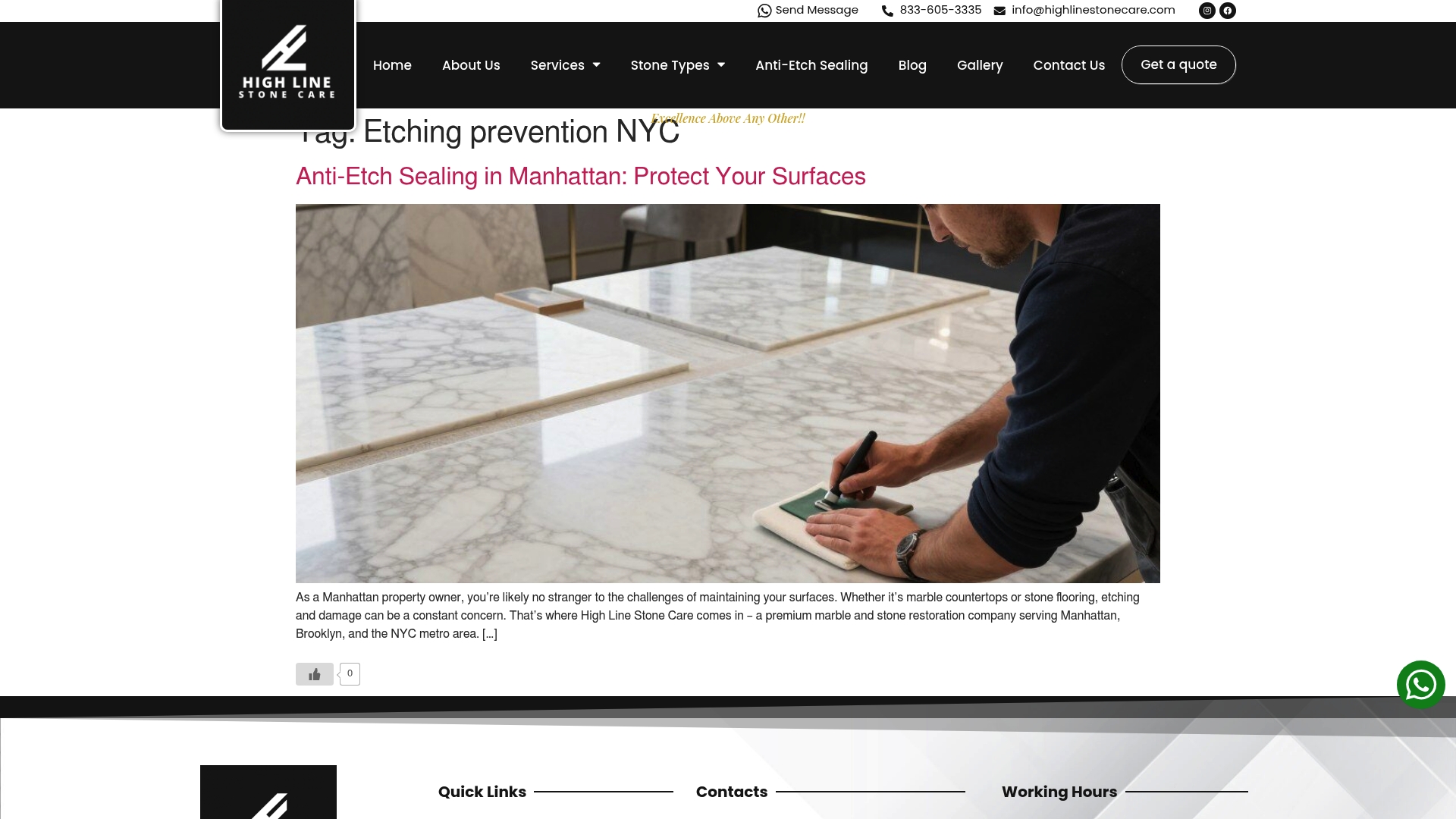
Highlinestonecare’s Opal Luxury Anti-Acid Sealer is engineered specifically to address the acid etching vulnerability that standard sealers leave unresolved. A single application provides permanent protection against both etching and staining, preserving the surface’s appearance without requiring repeated treatments. For marble surfaces in particular, this level of protection is the difference between a countertop that looks pristine after a decade and one that shows every lemon squeeze and wine ring. Highlinestonecare also offers professional marble restoration for surfaces that have already sustained acid damage or wear, restoring them to their original finish. Contact Highlinestonecare to discuss the right protection plan for your specific stone.
FAQ
What is the main difference between marble and limestone?
Marble is a metamorphic rock formed from limestone under heat and pressure, while limestone is a sedimentary rock. This formation difference makes marble denser, harder, and capable of a high polish, while limestone is softer, more porous, and naturally matte.
Is marble harder than limestone?
Marble scores 3 to 5 on the Mohs hardness scale, while limestone scores 3 to 4. Marble is marginally harder and denser, which contributes to its ability to hold a polished finish and resist surface abrasion slightly better than limestone.
Which stone is easier to maintain, marble or limestone?
Limestone with a honed finish is generally easier to maintain in high-use areas because its matte surface hides etching and scratches better than polished marble. However, limestone requires more frequent sealing due to its higher porosity.
Can you use marble and limestone in the same space?
Yes, and many designers do. A common approach pairs a honed limestone floor with a marble feature wall or vanity top, combining limestone’s durability underfoot with marble’s visual drama as a focal point.
How do you tell marble and limestone apart?
Marble typically shows sharp, flowing veins and a translucent quality when held to light. Limestone appears more opaque, with a granular surface that may contain visible fossil fragments or shell outlines. A drop of dilute acid on the surface will cause both to fizz, confirming calcium carbonate content, but the visual and textural differences are usually sufficient for identification.