
Premium stone care is defined as a structured program of professional cleaning, polishing, sealing, and restoration designed to preserve the appearance, structural integrity, and long-term value of natural stone surfaces. For homeowners and property managers with marble floors, granite countertops, or travertine walls, understanding why invest in premium stone care is not a matter of preference. It is a matter of protecting a significant asset. Industry data, expert stone care companies like Highlinestonecare, and luxury property specialists consistently show that proactive maintenance costs far less than emergency restoration and delivers measurable returns on property value.
Why invest in premium stone care: the financial case
The most compelling reason to commit to premium stone maintenance is straightforward cost savings. Properties with proactive stone maintenance spend 60–75% less over five years than those relying on emergency repairs. That figure means a homeowner who budgets for regular care avoids the far larger bills that come from neglected surfaces requiring full restoration.
Annual professional maintenance for luxury stone floors typically runs between $6,000 and $16,000 in high-end markets. That range protects stone surfaces worth five to ten times more. Viewed as a percentage of asset value, it is one of the most cost-efficient maintenance programs available to property owners.
The table below shows how proactive care compares to reactive repair over a five-year period.
| Approach | Year 1 Cost | Year 5 Cumulative Cost | Surface Condition | Property Value Impact |
|---|---|---|---|---|
| Proactive premium care | $8,000 | $30,000–$40,000 | Preserved, polished | Positive |
| Reactive emergency repair | $2,000 | $70,000–$100,000+ | Degraded, patchy | Negative |
| No maintenance | $0 | $80,000–$120,000+ | Severely damaged | Significant loss |
Structured maintenance programs produce measurable ROI through cost savings and consistent property audit scores. Viewing stone care as a planned, recurring operating expense is the approach that luxury hotels and high-end residential managers use to protect their assets.
Pro Tip: Schedule a professional stone assessment at the start of each year. A written condition report gives you a baseline, helps you prioritize repairs, and documents the surface’s health for insurance or resale purposes.
How does improper care damage stone surfaces?
Most stone appearance degradation stems from improper cleaning and chemical use, not natural aging. This is one of the most important misconceptions to correct. Owners often assume their marble or travertine is simply getting old when the real cause is the wrong cleaning product applied repeatedly over months or years.
Acidic cleaners, vinegar-based sprays, and abrasive scrubbing pads all attack the calcium carbonate in marble and limestone. The result is etching, a form of acid-related surface damage that leaves dull patches where the stone’s polished finish has been chemically dissolved. A ring near the sink or a dull patch on a countertop is almost always etching, not a scratch.
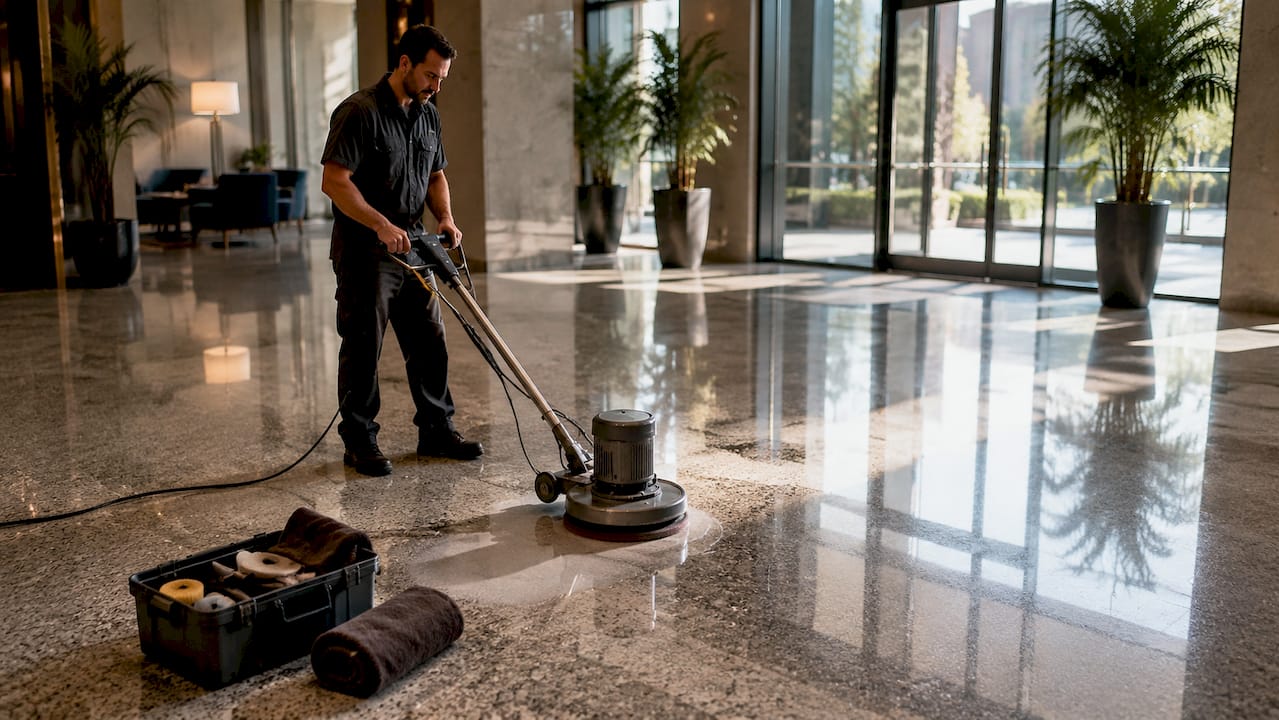
Professional polishing addresses this directly. Professional polishing reduces surface friction and micro-scratches, preventing the kind of cumulative wear that eventually requires costly full restoration. Polishing is an investment protection method, not a cosmetic luxury. It removes the microscopic surface irregularities that trap dirt and accelerate further damage.
Sealing is the second critical layer of protection. A quality impregnating sealer penetrates the stone’s pores and repels water, oils, and staining agents before they can bond with the surface. Without a sealer, even daily water exposure can cause mineral streaks and long-term discoloration.
The following practices form the foundation of expert stone care:
- Use pH-neutral stone cleaners exclusively. Acidic or alkaline products damage surface sealers and cause etching over time.
- Apply a professional-grade impregnating sealer after every polishing cycle to restore the stone’s protective barrier.
- Avoid abrasive scrub pads, steel wool, or powder cleansers on any polished stone surface.
- Wipe spills immediately, especially acidic liquids like citrus juice, wine, or coffee, before they penetrate the sealer.
- Use soft microfiber cloths for daily wiping to prevent micro-scratches from grit and dust particles.
Pro Tip: Never use a general-purpose bathroom or kitchen spray on marble or limestone. Products like Windex, bleach-based cleaners, or grout cleaners contain acids or alkalis that etch the surface on contact. Use only cleaners labeled specifically for natural stone.
Premium stone materials vs. standard: what lasts longer?
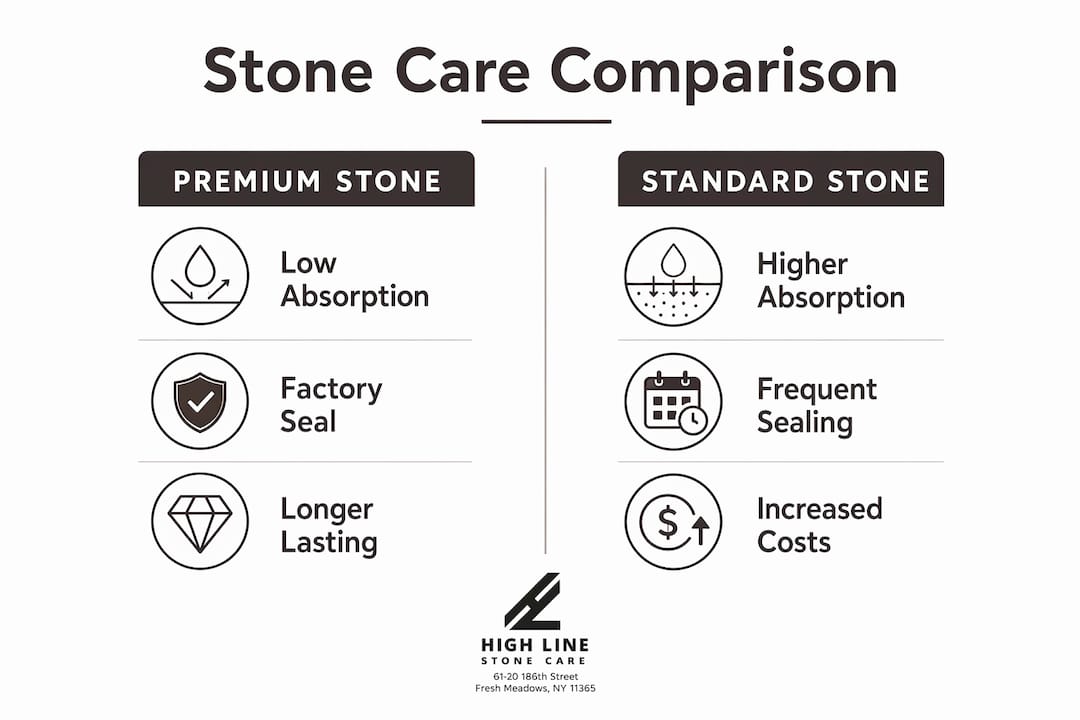
Not all stone is equal in its maintenance demands. Premium, high-density stone slabs with factory-applied treatments significantly reduce maintenance liabilities over time. Higher-density stones absorb less moisture and resist etching more effectively, which directly lowers the frequency and cost of professional intervention.
Factory-applied waterproofing and impregnating sealers add another layer of protection from the moment the stone is installed. These treatments penetrate the stone at the manufacturing stage, filling micro-pores before the surface is ever exposed to household use. The result is a stone that starts its life in your home already protected.
Total cost of ownership is influenced heavily by initial stone density and whether factory-applied treatments were used. Choosing a denser stone with factory sealing may cost more upfront, but it reduces annual maintenance spending and extends the interval between professional restoration cycles.
| Stone Type | Density | Absorption Rate | Sealing Frequency | 10-Year Maintenance Cost (Est.) |
|---|---|---|---|---|
| Calacatta Marble | Medium | Moderate | Every 1–2 years | High |
| Granite | High | Low | Every 3–5 years | Moderate |
| Travertine | Low-Medium | High | Annually | High |
| Quartzite | Very High | Very Low | Every 5+ years | Low |
| Limestone | Low | Very High | Every 6–12 months | Very High |
Granite and quartzite offer the lowest long-term maintenance costs due to their density. Marble and limestone, while visually stunning, require more frequent professional attention. For homeowners who choose marble for its appearance, investing in premium care programs and high-quality sealers like those offered by Highlinestonecare is the practical way to manage that trade-off.
You can also explore granite countertop options to understand how material selection affects both aesthetics and long-term care requirements before making a purchase decision.
Daily and periodic stone maintenance: what actually works
Consistent daily habits protect stone surfaces between professional visits. The steps below are ordered by frequency and impact.
- Dry surfaces after every cleaning. Hand-drying floors after mopping prevents water spots and mineral streaks from becoming permanent. This single step is the most overlooked part of daily stone care and one of the most damaging omissions over time.
- Sweep or dust-mop daily. Grit and sand particles act like sandpaper underfoot. Removing them daily prevents micro-scratches that dull a polished finish over weeks.
- Wipe countertops after every use. Do not let water pool near faucets or soap dispensers. Mineral deposits from hard water build up quickly on marble and limestone.
- Use stone-specific cleaners for weekly mopping. A diluted pH-neutral stone cleaner applied with a soft mop maintains surface cleanliness without degrading the sealer.
- Schedule professional polishing annually or biannually. The role of polishing in stone care goes beyond appearance. It removes surface damage, restores the protective finish, and prepares the stone for resealing.
- Reseal after every professional polish. Polishing removes the top layer of sealer along with surface damage. Resealing immediately after restores the stone’s protection.
- Inspect grout lines and edges quarterly. Cracked grout allows water to penetrate beneath the stone, causing substrate damage that is far more expensive to repair than surface etching.
A common misconception among property owners is that stone maintenance is only necessary when visible damage appears. By that point, the surface has already lost its protective sealer and begun absorbing stains and moisture. Proactive scheduling prevents this cycle entirely.
Key takeaways
Premium stone care is a planned investment that reduces total maintenance costs by 60–75% over five years while preserving the appearance and asset value of luxury stone surfaces.
| Point | Details |
|---|---|
| Proactive care saves money | Structured programs cost 60–75% less over five years than reactive emergency repairs. |
| Improper cleaning causes most damage | Acidic and abrasive products cause etching and sealer breakdown, not natural aging. |
| Stone density affects total cost | Higher-density stones like granite and quartzite require less frequent sealing and lower annual spend. |
| Hand-drying is critical | Drying stone surfaces after cleaning prevents permanent mineral spots, a step most owners skip. |
| Polishing is protective, not cosmetic | Professional polishing removes micro-scratches and prepares the surface for resealing, extending stone life. |
Premium stone care is an operating expense, not a luxury
After years of working with homeowners and property managers across the luxury market, one pattern stands out clearly. The clients who treat stone care as an optional line item are always the ones who eventually face the largest repair bills.
Marble and limestone are not forgiving materials. A single season of neglect, using the wrong cleaner, skipping the annual polish, or letting water sit on the surface, can undo years of careful maintenance. The surface loses its elegant appearance gradually, and by the time the damage is visible, the cost to restore it has multiplied.
What I find most telling is how luxury hotels approach this. Luxury properties treat stone surfaces as strategic brand assets that directly impact guest perception and review scores. A dull or damaged stone floor communicates deferred maintenance to every guest who walks across it. Residential properties work the same way. A well-maintained stone kitchen or bathroom tells a story of care and quality that shows up in appraisals and resale conversations.
The practical answer is a written maintenance schedule that integrates daily owner habits with annual professional services. That schedule should be treated the same way you treat HVAC servicing or roof inspections. It is not optional. It is asset management.
— High
Protect your stone investment with Highlinestonecare
Highlinestonecare specializes in advanced stone restoration and protection for luxury residential and commercial properties in New York City. Their services cover professional polishing, sealing, and full restoration for marble, granite, travertine, and limestone surfaces.
Their flagship product, the Opal Luxury Anti-Acid Sealer, provides permanent protection against etching and staining from a single application. For homeowners and property managers who want to protect their stone surfaces without repeated annual resealing, this is a significant advantage. Highlinestonecare backs every service with rigorous expertise and a satisfaction guarantee. Explore their full range of stone restoration services to find the right program for your property.
FAQ
What does premium stone care actually include?
Premium stone care includes professional cleaning, polishing, sealing, and periodic restoration of natural stone surfaces. These services work together to preserve appearance, prevent damage, and extend the life of marble, granite, travertine, and limestone.
How often should natural stone be professionally sealed?
Sealing frequency depends on stone density and use. High-traffic marble surfaces typically need resealing every one to two years, while denser stones like granite may only require it every three to five years.
Does premium stone care increase property value?
Yes. Well-maintained stone surfaces protect and enhance property appraisal values. Damaged or neglected stone communicates deferred maintenance to buyers and appraisers, which reduces perceived value.
Can i maintain stone surfaces myself between professional visits?
Daily maintenance using pH-neutral cleaners, microfiber cloths, and hand-drying after mopping is effective for routine upkeep. Professional polishing and sealing, however, require specialized equipment and products that are not available to most homeowners.
What causes etching on marble and limestone?
Etching is acid-related surface damage caused by contact with acidic substances including citrus juice, wine, vinegar, and many common household cleaners. It dissolves the calcium carbonate in the stone, leaving dull patches where the polished finish once was.
Recommended
- NYC Stone Care Guide: Expert Steps for Long-Lasting Surfaces
- Stone care terms explained: Expert guide for NYC homes
- The Role of Polishing in Stone Care for Homeowners