
Expert stone care is defined as the specialized practice of assessing, restoring, and maintaining natural and engineered stone surfaces using professional-grade techniques, certified knowledge, and performance-based methods. The role of experts in stone care goes far beyond routine cleaning. Certified stone care specialists bring credentials from bodies like the Natural Stone Institute (NSI) and the Institute of Inspection, Cleaning and Restoration Certification (IICRC), along with advanced tools such as diamond-grit grinding pads and acid-neutral enzyme-based chemicals. Without this level of expertise, homeowners risk permanent etching, structural damage, and premature stone failure. Professional stone restoration can deliver a 300% to 500% return on investment compared to full stone replacement, making expert involvement a sound financial decision.
What skills and techniques separate stone care experts from general cleaners?
Stone care specialists use diamond resin pads in a progressive grinding sequence to physically remove damaged surface layers from stone. This is not polishing in the cosmetic sense. It is mechanical renewal that reaches below scratches, etching, and lippage to expose fresh, undamaged material. General cleaners cannot replicate this process with off-the-shelf products.
Experts also select chemicals based on stone mineralogy. Acidic cleaners safe on granite can irreversibly etch calcium-based stones like marble and limestone. A certified specialist recognizes this distinction immediately and chooses acid-neutral, enzyme-based formulas that clean without compromising the stone’s mineral structure.
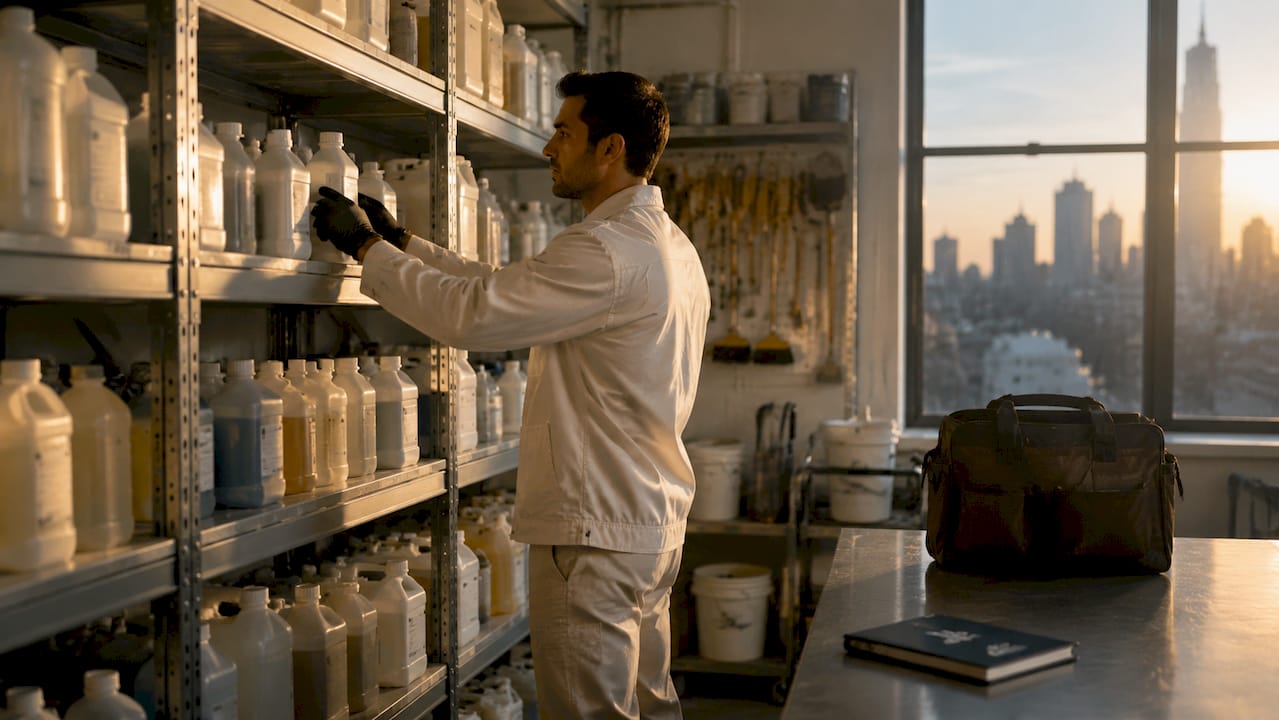
Local environmental factors shape every decision a qualified specialist makes. Water hardness, coastal salt air, and humidity levels all affect how sealers cure and how quickly surfaces degrade. Climate-aware expertise means a professional working in coastal New York adapts sealer selection and application timing differently than one working in an arid inland region. This level of nuance is not available from a general cleaning service.
Maintenance scheduling is another area where experts diverge sharply from standard practice. Rather than following a fixed calendar, certified professionals use performance-based sealing schedules that test water beading behavior on the stone surface to determine when resealing is actually needed. This prevents both under-sealing and over-sealing.
- Diamond resin pads in progressive grits physically renew stone rather than masking damage
- Acid-neutral, enzyme-based cleaners protect calcite and other vulnerable minerals
- Sealer selection accounts for local water mineral content and humidity levels
- Maintenance intervals are set by water beading tests, not fixed time schedules
- On-site assessments identify micro-cracks, lippage, and structural issues invisible to untrained eyes
Pro Tip: Before any restoration begins, ask your specialist to demonstrate the water bead test on your stone. If water absorbs quickly and darkens the surface, the sealer has failed and resealing is overdue.
How do certifications and local knowledge affect stone care quality?
True stone experts hold accreditations from the NSI and IICRC that require passing technical exams covering stone mineralogy, geology, and restoration chemistry. These are not self-issued credentials. They demand ongoing education to maintain, which means certified professionals stay current with evolving products and methods.
Accreditation matters because stone care is not a single discipline. Marble, granite, travertine, slate, and quartzite each respond differently to the same chemical or mechanical treatment. A certified specialist understands these differences at a geological level, not just a visual one. That knowledge directly determines whether a restoration succeeds or causes further damage.
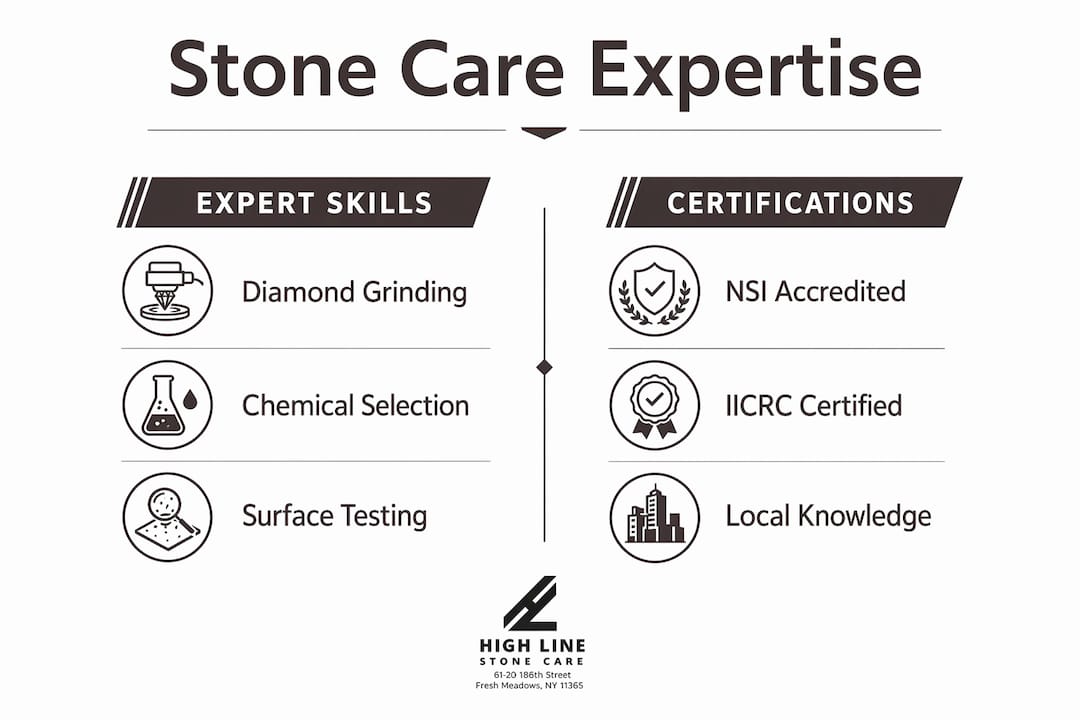
Local expertise adds another layer of precision. A specialist who works regularly in New York City understands how the city’s hard tap water affects sealer performance, how salt air from coastal areas accelerates surface degradation, and which stone types appear most frequently in Manhattan and Brooklyn buildings. Local experts tune stone care chemistry to specific regional conditions in ways that national franchise services cannot replicate.
Direct accountability is a defining quality of reputable stone care providers. Specialists who perform the work themselves, without subcontracting, maintain consistent judgment throughout the restoration process. Continuity without subcontractors ensures that the expert who assessed the stone is the same person making grit-sequence decisions during grinding. That consistency is critical for precision outcomes.
Homeowners should also be aware of a common scam in the industry:
- Crystallization fraud. Low-bidding contractors apply wax or chemical coatings that create a temporary shine. This false shine yellows and peels within months, unlike the lasting results of true mechanical polishing.
- Uncertified chemical use. Contractors without NSI or IICRC credentials often apply the wrong pH cleaners, causing etching on marble and travertine that requires professional correction.
- Over-sealing. Applying sealer too frequently traps moisture beneath the surface, leading to premature stone failure that is expensive to reverse.
- Ignoring lippage. General cleaners miss uneven tile edges that cause tripping hazards and accelerate wear. Certified specialists identify and correct lippage during the assessment phase.
“Certification is not a formality. It is the difference between a contractor who knows what a stone is made of and one who treats every surface the same way.” — Stone care industry principle reflected in NSI and IICRC training standards.
Professional stone care vs. DIY: when does expertise become necessary?
DIY stone care has clear limits. Homeowners can maintain clean surfaces with pH-neutral cleaners and dry dust mopping, but they cannot address deep scratches, etching, or structural issues without professional tools. Attempting to polish out etching with hardware-store compounds often worsens the damage by introducing new scratches or applying incompatible chemistry.
| Factor | Professional care | DIY approach |
|---|---|---|
| Surface renewal | Diamond grinding removes damaged layers | Surface-only treatments mask damage |
| Chemical selection | Matched to stone mineralogy and pH | Often wrong pH, risks etching |
| Damage assessment | Identifies micro-cracks, lippage, etching | Visual inspection only |
| Sealing accuracy | Performance-based, tested by water behavior | Calendar-based, often over-applied |
| Cost over 10 years | Higher upfront, lower replacement risk | Lower upfront, higher long-term risk |
Professional restoration prices range from approximately $3 to $10 per square foot depending on damage severity and the finish desired. A typical living room restoration costs between $900 and $3,000. That investment renews stone to near-original condition and extends its lifespan by decades.
The financial case for professional care becomes clear when weighed against replacement. New natural stone flooring in a Manhattan apartment can cost tens of thousands of dollars. Professional restoration at a fraction of that cost, with a 300% to 500% ROI, makes the decision straightforward for any property manager or homeowner protecting a significant asset.
- Deep scratches and etching require diamond grinding, not surface polishing
- Micro-crack identification during on-site assessment prevents structural failures
- Improper rinsing and drying leaves residue that dulls finish and attracts dirt
- Over-sealing traps moisture and causes premature stone failure
- Expert restoration extends stone lifespan and avoids costly replacement
Pro Tip: If you see a dull patch or ring near a sink or countertop edge, that is acid etching, not a stain. Cleaning it harder will not help. A certified specialist can grind and repolish the affected area without disturbing the surrounding surface.
How can homeowners work effectively with stone care specialists?
Working well with a stone care specialist starts before any work begins. Request a no-obligation on-site assessment. A qualified professional will walk your space, identify damage types, note environmental factors, and explain the restoration sequence before quoting. This assessment protects you from unnecessary treatments and sets clear expectations.
- Verify credentials. Ask specifically for NSI or IICRC certification. Request proof, not just a verbal claim. Certified specialists carry documentation and can explain what their training covered.
- Ask about local experience. A specialist familiar with your building’s stone type and your neighborhood’s water quality will make better chemical and sealer choices. Ask how long they have worked in your area.
- Request a performance-based maintenance plan. After restoration, your specialist should provide a written plan that includes daily dry dust mopping and sealing intervals based on water bead testing rather than fixed dates.
- Communicate your finish goals. Stone can be restored to a high gloss, a honed matte, or a satin finish. Specify your preference before work begins. Over-processing to achieve a gloss finish on stone intended for a matte look is difficult to reverse.
- Confirm no subcontracting. Ask directly whether the person who assesses your stone will also perform the restoration. Direct accountability produces better results and gives you a single point of contact for questions.
The stone care terms your specialist uses during the assessment, words like lippage, honing, impregnating sealer, and crystallization, tell you a great deal about their knowledge level. A professional who explains these terms clearly and connects them to your specific stone type is demonstrating genuine expertise.
Key Takeaways
Certified stone care specialists deliver results that DIY methods and uncertified contractors cannot match, making professional expertise the most reliable path to preserving high-end stone surfaces.
| Point | Details |
|---|---|
| Certification is non-negotiable | NSI and IICRC credentials confirm mastery of mineralogy, geology, and restoration chemistry. |
| Diamond grinding renews, not just cleans | Experts physically remove damaged stone layers rather than masking surface problems. |
| Performance-based sealing prevents failure | Water bead testing determines sealing need; over-sealing traps moisture and damages stone. |
| Local knowledge improves outcomes | Climate-aware specialists adapt chemistry and technique to regional water and air conditions. |
| Professional ROI is measurable | Restoration at $3–$10 per square foot delivers a 300%–500% return versus full replacement. |
What I have learned after years of working with stone in New York City
The most common mistake I see homeowners make is assuming that stone care is a cleaning problem. It is not. It is a materials science problem. Marble is calcium carbonate. It reacts to acid the way metal reacts to rust. A lemon wedge left on a countertop for thirty seconds can etch a surface that took a craftsman hours to polish. No amount of scrubbing fixes that. Only mechanical restoration does.
The second mistake is trusting a low bid. I have seen crystallization coatings applied to Calacatta marble in luxury apartments, and the result is always the same: a yellow, peeling surface within a year and a restoration bill that dwarfs what the homeowner saved. The NSI and IICRC certifications exist precisely because this industry has a history of unqualified operators causing expensive damage.
What actually works long term is simpler than most people expect. Dry dust mop daily. Use only pH-neutral cleaners. Have a certified specialist assess your stone every few years and reseal based on performance testing, not a calendar. And when damage does occur, call a certified professional before attempting any repair yourself. The stone flooring maintenance tips that make the biggest difference are not complicated. They are just consistently applied.
The specialists who produce the best results are the ones who work directly on your stone from assessment to final polish, without handing off to a subcontractor. That continuity of judgment is what separates a lasting restoration from a temporary fix. In a city like New York, where stone surfaces represent significant investments in residential and commercial properties, that distinction matters enormously.
— High
Protect your stone with Highlinestonecare’s certified expertise
Highlinestonecare provides advanced stone restoration and protection services for homeowners and property managers across New York City and New Jersey. Every project begins with a no-obligation on-site assessment by a certified specialist who evaluates your stone type, damage level, and environmental conditions before recommending any treatment.
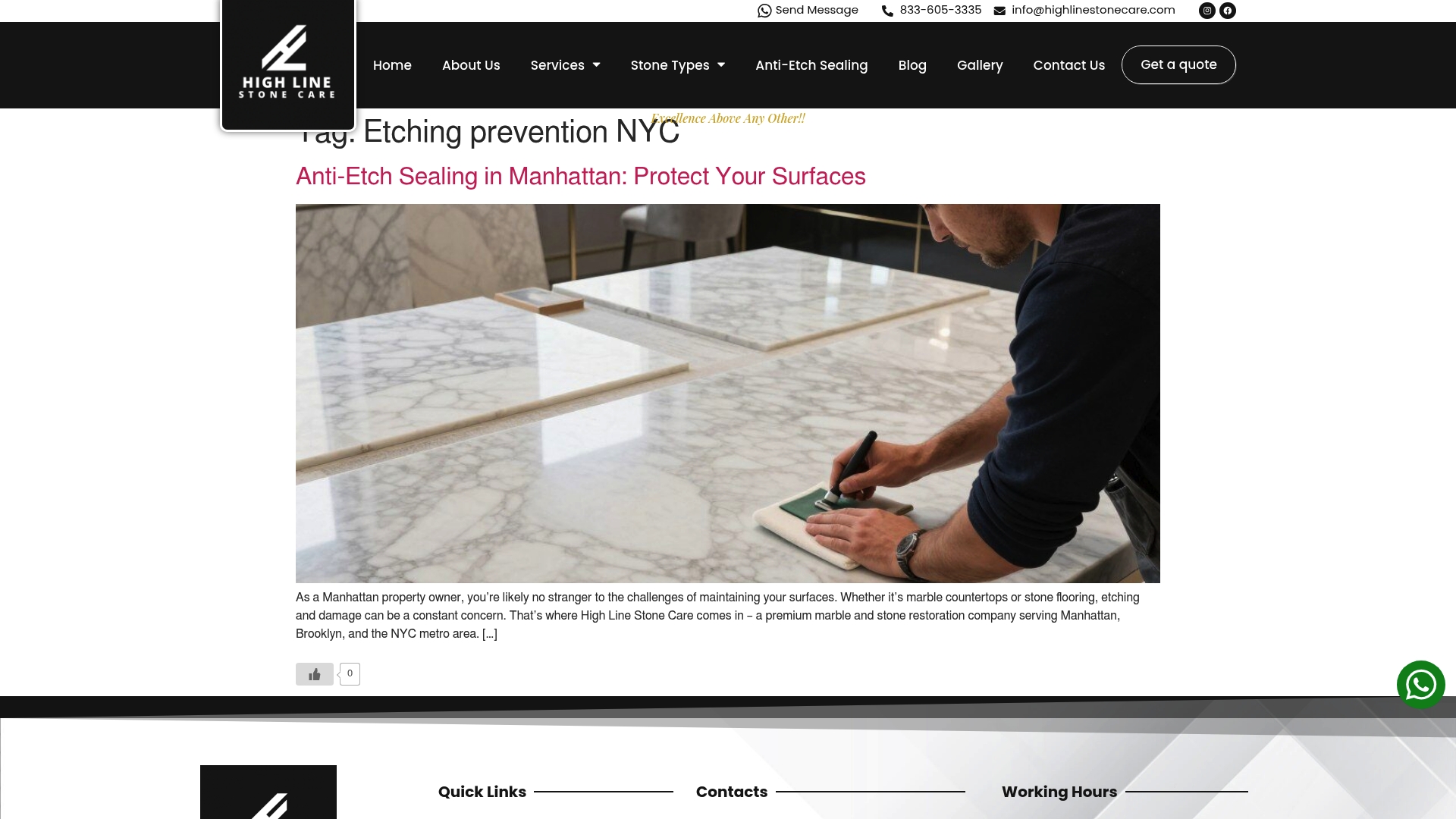
Highlinestonecare’s team holds NSI and IICRC credentials and performs all work directly, without subcontracting. For marble surfaces requiring permanent protection against acid etching and staining, Highlinestonecare offers the Opal Luxury Anti-Acid Permanent Sealer, a single-application solution designed to last a lifetime. For full restoration services across Manhattan, Brooklyn, and New Jersey, explore expert stone restoration options and request your assessment today.
FAQ
What does a stone care expert actually do differently?
A certified stone care specialist uses diamond-grit pads to physically remove damaged stone layers and selects chemicals matched to the stone’s mineral composition. General cleaners apply surface treatments that mask damage without addressing the underlying cause.
How do I know if my stone needs professional restoration?
Water that absorbs quickly into the surface and darkens the stone indicates sealer failure. Dull patches, visible scratches, or etched rings near sinks and countertops are signs that professional assessment and mechanical restoration are needed.
Are NSI and IICRC certifications really necessary?
Yes. These certifications require passing technical exams on stone mineralogy, geology, and restoration chemistry. Uncertified contractors lack the knowledge to adapt methods for different stone types and environmental conditions, which leads to preventable damage.
What is the difference between honing and polishing?
Honing produces a flat, matte finish by removing surface irregularities with progressively finer abrasives. Polishing follows honing and uses the finest diamond pads to create a reflective, high-gloss surface. Both processes require professional equipment and certified technique.
How often should natural stone be resealed?
Resealing frequency depends on performance, not a fixed schedule. Test by placing a few drops of water on the surface. If the water absorbs and darkens the stone within a few minutes, the sealer has degraded and resealing is due.
Recommended
- The Role of Polishing in Stone Care for Homeowners
- Stone care terms explained: Expert guide for NYC homes
- Interior Designers Stone Care Process: Pro Guide
- NYC Stone Care Guide: Expert Steps for Long-Lasting Surfaces