
Stone floor care is defined as a routine practice combining pH-neutral cleaning, scheduled sealing, and protective habits that preserve the surface’s appearance and structural integrity over time. Natural stone, whether marble, granite, limestone, or travertine, is a lasting investment. Without the right stone flooring maintenance tips, even premium floors lose their finish within a few years. The good news is that consistent, informed care prevents most damage before it starts. This guide covers every essential step, from daily cleaning routines to sealing schedules by stone type, so your floors stay elegant for decades.
1. stone flooring maintenance tips: start with daily dry mopping
Daily dry dust mopping is the single most important habit for protecting stone floors. 80% of soil on stone is dry particulate, including grit, sand, and fine debris. When you mop over that grit with a wet mop, you create a liquid abrasive that grinds against the surface and dulls the finish over time.
Use a microfiber dust mop or a soft-bristle broom every day, or at minimum every other day, in high-traffic areas. Microfiber traps fine particles rather than pushing them across the floor. This single step prevents the majority of surface scratches that accumulate invisibly until the floor looks dull.
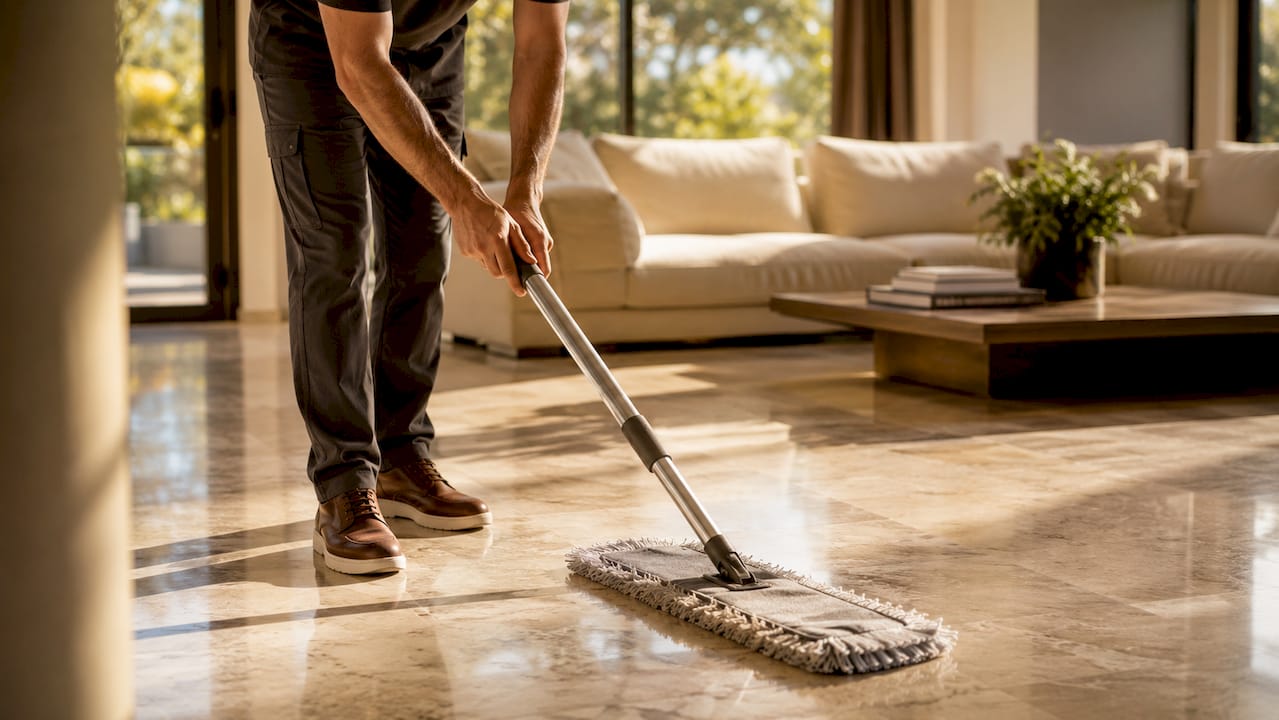
Pro Tip: Always vacuum with a hard-floor attachment before any wet cleaning. Never skip this step, even if the floor looks clean. Grit that is invisible to the eye is still abrasive enough to damage polished marble and limestone.
2. weekly damp mopping with the right stone floor cleaners
Weekly damp mopping removes residue, light stains, and tracked-in contaminants that dry mopping leaves behind. The critical rule is to use only pH-neutral cleaners formulated specifically for natural stone. Cleaners outside the pH 6–8 range cause etching, discoloration, and finish degradation on stone surfaces. That means no vinegar, no bleach, no all-purpose sprays, and no lemon-based products.
Stone-specific cleaners like Lithofin Stone Soap or Aqua Mix Stone Cleaner are formulated to clean without stripping sealers or reacting with calcium-based minerals in marble and limestone. Wring your mop nearly dry before contact with the floor. Excess water sitting in grout lines or micro-pores can weaken adhesive bonds and cause efflorescence over time.
- Use only stone-specific, pH-neutral cleaners
- Wring the mop until it is barely damp
- Rinse the floor with clean water after mopping to remove any cleaner residue
- Change mop water frequently to avoid redistributing soil
3. how often to seal stone flooring by stone type
Sealing is one of the most misunderstood aspects of stone tile care. Sealers protect against water and oil-based stains but do not prevent mechanical wear, scratching, or chemical etching. Think of a sealer as a stain barrier, not a shield against all damage.
Resealing frequency depends entirely on the stone type and traffic level:
| Stone Type | Recommended Resealing Interval |
|---|---|
| Limestone | Every 12 months |
| Travertine | Every 12–18 months |
| Marble | Every 12–24 months |
| Granite | Every 24–60 months |
Sealing intervals vary significantly by stone type, with limestone needing annual attention and granite requiring resealing only every 2–5 years. Granite’s density makes it far more resistant to absorption than softer calcium-based stones.
How to apply sealer yourself
- Clean the floor thoroughly and let it dry completely (allow at least 24 hours).
- Apply an impregnating sealer with a clean applicator pad or lint-free cloth.
- Work in small sections and wipe away excess before it dries on the surface.
- Allow the sealer to cure for the manufacturer’s recommended time before foot traffic.
Pro Tip: Use the water droplet test to check if your sealer is still working. Place a few drops of water on the stone. If water absorbs within 60 seconds, the sealer is depleted and resealing is needed. If the water beads for several minutes, the sealer remains effective.
4. protective measures that prevent scratches and staining
Prevention is far less costly than restoration. A few simple habits protect your stone floors from the most common sources of damage.
- Doormats at every entry point: Grit tracked in from outdoors is the leading cause of surface scratches. Place absorbent mats both outside and inside exterior doors.
- Felt pads under all furniture legs: Hard furniture feet dragged across stone create deep scratches that require professional honing to repair. Check and replace felt pads every few months.
- Immediate cleanup of acidic spills: Wine, citrus juice, coffee, and tomato sauce all contain acids that etch calcium-based stones like marble and limestone on contact. Blot spills immediately with a clean cloth. Do not wipe, as wiping spreads the liquid.
- Choose honed finishes for high-traffic areas: Honed finishes mask wear better than polished surfaces and require less frequent restoration. Polished marble in a busy hallway will show etching and dull patches far sooner than a honed finish in the same location.
- No abrasive scrubbing pads: Even light scrubbing with nylon pads or steel wool creates microscopic scratches on softer stones. Use only soft cloths or non-abrasive sponges for spot cleaning.
For a detailed guide on protecting stone from stains, Highlinestonecare offers step-by-step advice tailored to each stone type.
5. cleaning methods and tools to avoid on stone floors
Knowing what not to do is just as important as knowing the right routine. Several common cleaning habits cause irreversible damage to natural stone.
Steam mops are one of the most damaging tools you can use on stone floors. Steam mops cause thermal shock and micro-cracking in cold natural stones like marble and limestone. The forced moisture also penetrates below the surface, leading to efflorescence, a white mineral deposit that forms as moisture evaporates, and can weaken the adhesive holding tiles in place.
“Mopping over grit before removing it dry creates a liquid abrasive that damages stone finishes severely over time.” — Stone Maintenance Best Practices
Acidic and alkaline cleaners are equally destructive. Products like vinegar, lemon juice, bathroom tile sprays, and many all-purpose household cleaners fall outside the safe pH range for stone. They degrade sealers and etch the surface finish, leaving dull patches that cannot be reversed without professional polishing.
- Avoid steam mops on all natural stone surfaces
- Never use vinegar, bleach, ammonia, or citrus-based cleaners
- Skip abrasive nylon scrubbing pads and steel wool on marble and limestone
- Do not use generic floor cleaners not labeled safe for natural stone
Pro Tip: When in doubt about a product, test it on a hidden area first. Better yet, stick to cleaners that are explicitly labeled for natural stone and carry a neutral pH certification. Eco-friendly cleaning agents that are pH-neutral protect stone finishes without harsh chemical residue.
6. recognizing when professional stone restoration is needed
Routine cleaning and sealing maintain stone floors, but they cannot reverse physical wear. At some point, most stone floors need professional restoration to recover their original appearance.
Signs your stone floor needs professional attention
- Reduced gloss or a persistent dull appearance that does not improve after cleaning
- Visible scratches or abrasion patterns across the surface
- Etching marks, which appear as lighter, matte patches on polished marble or limestone
- Lost filler in travertine holes and voids, leaving an uneven surface
- Grout lines that are cracked, stained, or receding
Diamond polishing restores gloss and removes wear patterns from marble and limestone, with most floors needing this service every 5–15 years depending on traffic. This is a mechanical process using progressively finer diamond abrasive pads. It cannot be replicated with consumer products. Granite floors rarely need polishing due to their hardness and density, which makes them far more resistant to surface wear.
| Condition | DIY Solution | Professional Service Needed |
|---|---|---|
| Light surface soil | pH-neutral damp mop | No |
| Sealer depletion | Reseal with impregnating sealer | Optional |
| Etching on marble | None effective | Yes, diamond polishing |
| Deep scratches | None effective | Yes, honing and polishing |
| Lost travertine filler | Partial DIY fill possible | Recommended for full re-grouting |
For homeowners considering professional stone polishing, Highlinestonecare provides diamond polishing and full restoration services across New York City. Understanding the role of polishing in stone care helps you plan the right maintenance schedule before visible damage sets in.
Key takeaways
Consistent stone floor care requires daily grit removal, pH-neutral cleaning, stone-specific sealing on the correct schedule, and professional restoration when surface wear exceeds what routine maintenance can address.
| Point | Details |
|---|---|
| Daily dry mopping is non-negotiable | Remove grit before any wet cleaning to prevent abrasive surface damage. |
| Match sealing frequency to stone type | Limestone needs annual resealing; granite can go 2–5 years between applications. |
| pH-neutral cleaners only | Cleaners outside pH 6–8 etch and discolor stone surfaces permanently. |
| Avoid steam mops entirely | Thermal shock from steam causes micro-cracking and moisture damage in natural stone. |
| Professional polishing restores what cleaning cannot | Diamond polishing every 5–15 years recovers gloss and removes wear patterns on marble and limestone. |
What years of stone care have taught me
Most homeowners underestimate how much damage accumulates from small, repeated mistakes. A quick mop with a household cleaner, a steam mop used once a month, a chair dragged across the floor. None of these feel significant in the moment. Over two or three years, they add up to a floor that looks aged and dull, when the stone itself is perfectly sound beneath the surface.
The biggest misconception I encounter is that sealing a stone floor makes it bulletproof. Sealers resist staining but do not stop etching or scratching. A sealed marble floor will still etch if you leave lemon juice on it for five minutes. Homeowners who understand this distinction maintain their floors far more effectively because they treat spills with urgency rather than assuming the sealer will handle it.
My honest recommendation is to build two habits: dry mop daily, and use only stone-specific cleaners. Those two steps alone will extend the life of your floor by years. Schedule a professional sealing and inspection every one to two years depending on your stone type, and plan for a professional polish every decade or so. That rhythm keeps most stone floors in excellent condition without expensive emergency restoration.
— High
Protect your stone floors with professional-grade care
Routine home care goes a long way, but some protection requires professional-grade products and expertise. Highlinestonecare offers the Opal Luxury Anti-Acid Sealer, a permanent sealer engineered to resist both staining and acid-related etching on natural stone surfaces. Unlike standard impregnating sealers that require reapplication every one to two years, a single professional application is designed to last a lifetime. For homeowners and property managers in New York City who want lasting protection without compromise, Highlinestonecare’s stone restoration and sealing services deliver results backed by expert knowledge and a satisfaction guarantee. Contact Highlinestonecare to schedule an assessment and protect your investment properly.
FAQ
What is the best daily routine for cleaning stone floors?
Dry dust mop or vacuum with a hard-floor attachment every day to remove grit before it scratches the surface. Follow with a weekly damp mop using a pH-neutral, stone-specific cleaner.
How do i know when my stone floor needs resealing?
Use the water droplet test. Place a few drops of water on the stone. If the water absorbs into the surface within 60 seconds, the sealer is depleted and resealing is needed.
Can i use a steam mop on natural stone floors?
No. Steam mops cause thermal shock and micro-cracking in natural stone and force moisture below the surface, leading to efflorescence and adhesive damage.
Which stone types need the most frequent sealing?
Limestone requires resealing every 12 months. Travertine needs attention every 12–18 months. Marble falls in the 12–24 month range, while granite can go 24–60 months between sealings.
When should i call a professional for stone floor restoration?
Call a professional when you notice persistent dullness, etching marks, visible scratches, or lost filler in travertine that cleaning and resealing cannot correct. Diamond polishing is the only effective solution for these issues.
Recommended
- The Role of Polishing in Stone Care for Homeowners
- NYC Stone Care Guide: Expert Steps for Long-Lasting Surfaces
- Stone care terms explained: Expert guide for NYC homes
- How to Protect Natural Stone from Stains Effectively