
Protecting natural stone from stains requires penetrating sealers that work inside the stone’s pores, combined with pH-neutral cleaning and prompt spill response. Stone surfaces like marble, granite, limestone, travertine, and slate are porous by nature, which means liquids can absorb quickly and leave permanent marks without proper protection. The good news is that sealed limestone floors show 95% stain resistance to coffee and oil after two years, compared to just 40% for unsealed surfaces. That gap represents the difference between a surface that ages gracefully and one that deteriorates within months. Understanding which sealer to use, how to apply it correctly, and how to maintain it over time is the foundation of lasting stone care.
How to protect natural stone from stains: choosing the right sealer
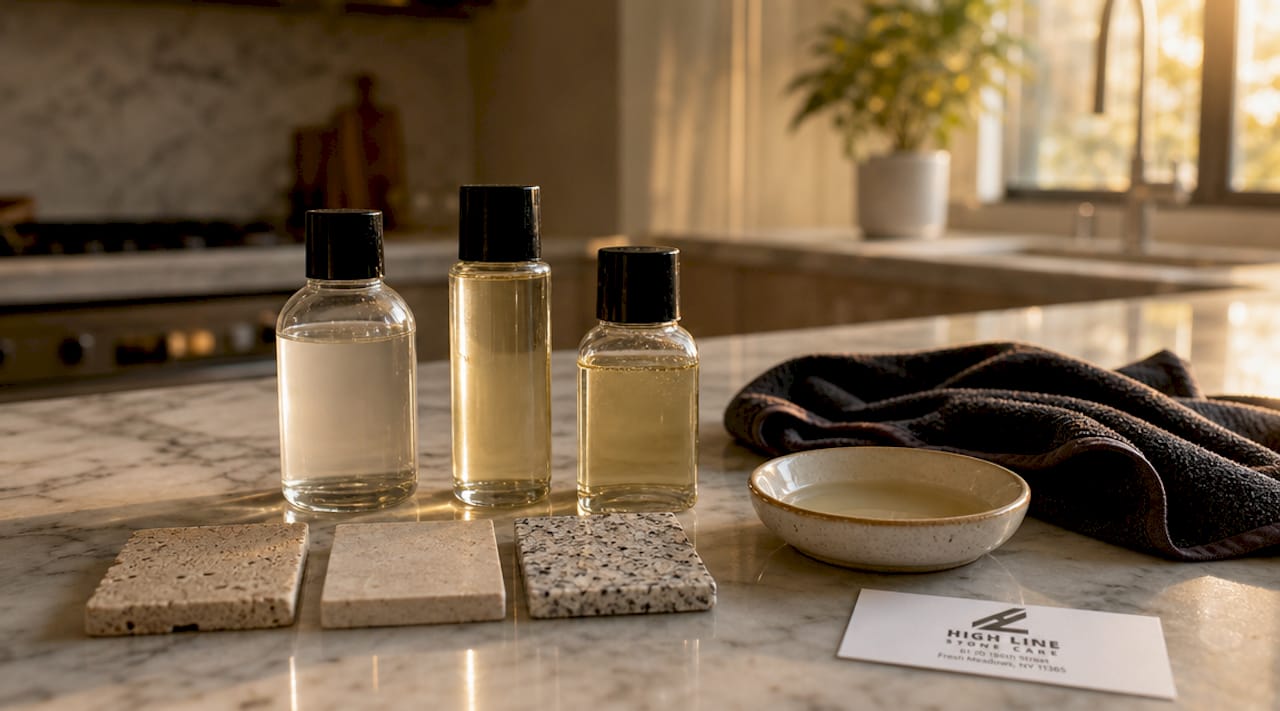
The stone care industry uses the term impregnating sealer to describe what most homeowners call a penetrating sealer. Both refer to the same product: a sealer that soaks into the stone’s pores and repels liquids from within, rather than forming a coating on top. Penetrating sealers preserve the stone’s natural look because they do not create a surface film or alter the finish. This matters for marble countertops and polished limestone floors, where any surface coating would visibly change the appearance.
Not all penetrating sealers perform equally. The chemistry of the sealer must match both the stone type and the environment where it will be used.
| Sealer type | Best for | Key benefit | Limitation |
|---|---|---|---|
| Silane/siloxane impregnator | General stone: granite, slate, travertine | Water repellency, preserves natural look | Moderate oil resistance |
| Fluoropolymer impregnator | Kitchen countertops, high-traffic areas | Superior oil and water repellency | Higher cost |
| Enhancing sealer | Dark or matte stones needing color depth | Deepens and enriches stone color | Not suitable for light or polished stones |
| Topical sealer | Decorative or low-use surfaces | Easy application | Can peel, yellow, and alter finish |
Fluoropolymer-based sealers near kitchen stovetops offer superior protection against oil stains compared to standard silicone-based products. This is a meaningful distinction for homeowners who cook regularly, since cooking oil is one of the most stubborn staining agents on porous stone. Topical sealers, by contrast, coat the surface rather than penetrating it. They tend to peel, trap moisture, and yellow over time, making them a poor choice for natural stone countertops or floors.
Enhancing sealers are a specialized category that deepens the color of the stone while providing some stain resistance. They work well on dark granite, slate, or tumbled travertine, but they can make light-colored marble look unnaturally saturated. Always test an enhancing sealer on a small, hidden area before full application.
Pro Tip: Match sealer chemistry to your stone’s porosity and its primary exposure. A marble bathroom floor needs a different product than a granite kitchen countertop. When in doubt, a silane/siloxane impregnator is a reliable general-purpose starting point.
Step-by-step guide to sealing natural stone correctly
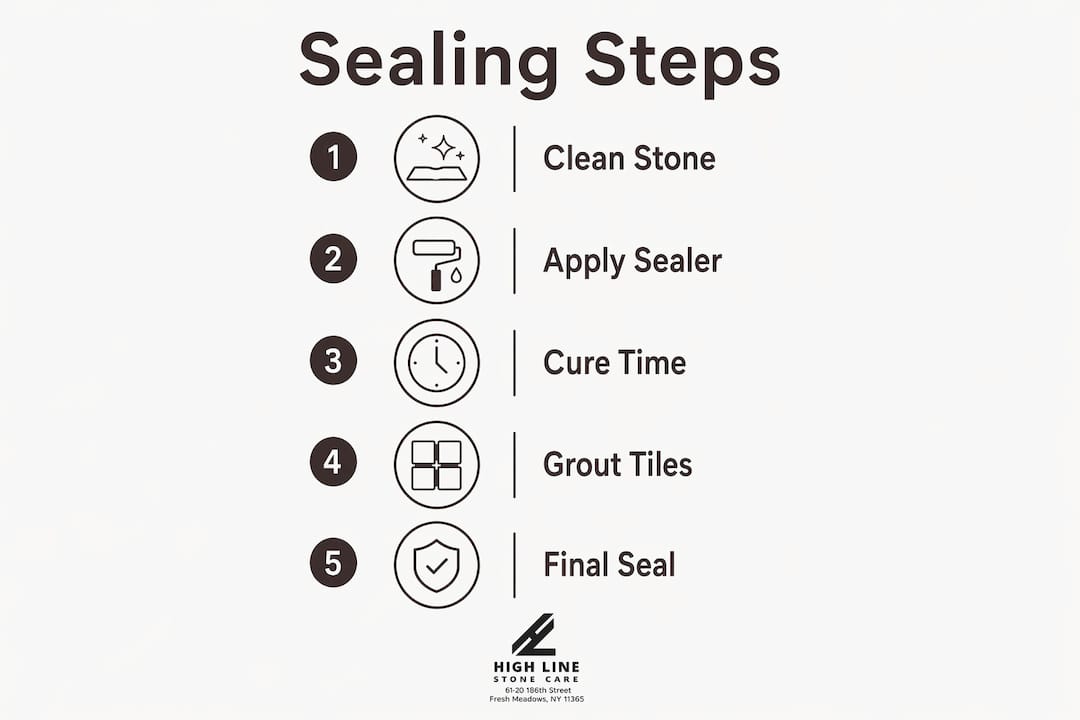
Proper application technique determines whether a sealer lasts one year or five. Sealing failures often result from sealing dirty or damp stone, improper wiping of excess sealer, and premature application. Following a disciplined process eliminates these common errors.
-
Clean the surface thoroughly. Use a pH-neutral stone cleaner to remove dirt, oils, soap residue, and grout haze. Products like Miracle Sealants Stone Soap or Aqua Mix Stone Cleaner are formulated for this purpose. Avoid vinegar, bleach, or all-purpose household cleaners, as they degrade stone and sealer chemistry.
-
Allow the stone to dry completely. Moisture trapped inside the pores prevents the sealer from absorbing properly. After wet cleaning, wait at least 24 hours before applying any sealer. In humid environments like New York City bathrooms, allow up to 48 hours.
-
Apply the sealer in thin, even coats. Use a clean applicator pad, microfiber cloth, or low-nap roller. Keep the surface visibly wet during the dwell time, which typically runs 5 to 15 minutes depending on the product. Do not let the sealer dry on the surface during this phase.
-
Wipe off all excess sealer before it dries. Failure to wipe excess sealer before drying commonly results in stubborn haze that requires special removers to correct. Use a dry, clean cloth and work in sections to stay ahead of the drying time.
-
Apply a second coat if the stone is highly porous. Limestone, travertine, and tumbled marble often require two coats. Apply the second coat immediately after wiping off the first, while the stone is still slightly tacky.
-
Allow full curing before exposing to water or foot traffic. Most sealers require 24 to 72 hours of curing time. Avoid placing wet glasses, cleaning the surface, or walking on sealed floors during this window.
-
Test the seal with the water-bead method. Sprinkle a few drops of water on the sealed surface. If the water beads up and sits on top, the seal is intact. If it absorbs within a few minutes, the stone needs resealing.
For tile installations, pre-grout sealing followed by a 24-hour cure before grouting prevents grout pigment from lodging in stone pores and makes grout haze removal far easier after installation.
Pro Tip: Never judge sealing effectiveness by appearance alone. A stone can look perfectly sealed while actually absorbing liquids. The water-bead test is the only reliable method to confirm protection is still active.
Daily and periodic maintenance to extend stain protection
Sealing creates a protective window, not permanent immunity. Proper sealing extends the spill cleanup window to 30 to 60 minutes, giving you time to respond before a liquid becomes a permanent stain. That window closes faster on older or worn sealers, which is why maintenance routines matter as much as the initial application.
Effective daily and periodic care comes down to a few non-negotiable practices:
- Use only pH-neutral stone cleaners. Alkaline or acidic cleaners degrade sealers and reduce their lifespan. Products like Black Diamond Stoneworks Stone Cleaner or Granite Gold Daily Cleaner are safe options. Avoid anything containing ammonia, bleach, or citrus acids.
- Wipe spills immediately. Even sealed stone is not immune. Red wine, coffee, and cooking oil can still stain if left sitting for extended periods, especially on marble or limestone.
- Test seal integrity with the water-bead method regularly. Rather than following a fixed calendar, test the surface every few months. Standard sealers typically need reapplication every 1 to 3 years, while premium fluorocarbon-resin impregnators can last 5 to 10 years before requiring attention.
- Seal edges and undersides, especially near sinks. Sealing edges and undersides prevents moisture wicking that causes hidden stains and mineral migration. This is one of the most overlooked steps in residential stone care.
- Use stone-safe mats and trivets. Place silicone trivets under hot cookware and stone-safe mats near sink areas to reduce direct exposure to heat, water, and cleaning products.
- Avoid abrasive scrubbing pads. Steel wool and abrasive sponges scratch polished surfaces and compromise the sealer layer. Use soft microfiber cloths for daily cleaning.
For guidance on safe cleaning practices that protect both stone and sealer, consulting a professional cleaning resource can help homeowners avoid products that silently degrade their stone’s protection over time.
Common mistakes that undermine natural stone stain protection
Many homeowners invest in quality sealers but still end up with stained or damaged stone. The reason is almost always one of several well-documented mistakes that undermine the protection they paid for.
-
Assuming sealers prevent acid etching. Sealers do not prevent acid etching on calcareous stones like marble, travertine, or limestone. Acids in lemon juice, wine, vinegar, and many cleaning products react immediately with the calcium carbonate in these stones, causing dull patches and surface damage regardless of sealing. Sealing delays liquid penetration but cannot stop a chemical reaction at the surface. For more detail on why marble is especially vulnerable, the causes of marble stains guide explains the chemistry behind etching and staining in plain terms.
-
Sealing quartz countertops. Quartz is non-porous and does not require sealing. Applying a sealer to quartz adds no stain protection and can leave a hazy residue that is difficult to remove.
-
Sealing dirty or damp stone. Applying sealer over a surface that has not been properly cleaned traps contaminants inside the pores. Applying it over damp stone prevents absorption. Both errors result in a sealer that performs poorly from day one.
-
Ignoring edges and undersides. Moisture wicks through exposed stone edges and undersides, particularly on countertops near sinks. This leads to deep-seated staining that is invisible until it becomes severe.
-
Over-relying on sealing without maintaining cleaning habits. A sealer is not a substitute for regular cleaning. Residue buildup, soap film, and mineral deposits accumulate on top of even a well-sealed surface and create conditions where stains can form.
Sealing only delays staining and does not stop acid etching. Prompt cleanup of acidic spills remains critical regardless of how recently the stone was sealed.
Key takeaways
Protecting natural stone from stains requires matching the right impregnating sealer to the stone type, applying it correctly, and maintaining consistent cleaning habits over time.
| Point | Details |
|---|---|
| Choose sealer by chemistry | Use fluoropolymer impregnators for kitchens; silane/siloxane for general stone surfaces. |
| Prepare before sealing | Clean with a pH-neutral cleaner and allow 24 hours of drying before any sealer application. |
| Seal edges and undersides | Moisture wicking through exposed edges causes hidden stains that surface sealing alone cannot prevent. |
| Test, don’t guess | Use the water-bead test to determine when resealing is needed rather than following a fixed schedule. |
| Sealers don’t stop etching | Acid spills on marble, limestone, and travertine cause surface damage regardless of sealing status. |
What years of working with stone have taught me about stain protection
The single most common mistake I see from homeowners and property managers is treating sealing as a one-time event. They apply a sealer after installation, feel confident, and then use whatever cleaning products are under the sink. Within a year, the sealer is degraded, and the stone starts showing stains that feel inexplicable.
The second pattern I see constantly is neglecting edges and undersides. A countertop near a kitchen sink can look pristine on top while the underside and front edge are wicking moisture and developing mineral staining. Sealing those surfaces takes an extra ten minutes and prevents problems that are genuinely difficult to reverse.
Choosing the right sealer chemistry also matters more than most people realize. A standard silicone-based sealer on a marble kitchen countertop will protect against water but offer limited resistance to cooking oil. A fluoropolymer impregnator on the same surface performs significantly better in that environment. The difference in cost is modest. The difference in performance over three years is substantial.
Finally, I want to address the etching misconception directly. No sealer currently available prevents acid etching on marble, limestone, or travertine. If you have these stones in your kitchen or bathroom, the best protection is prompt cleanup of acidic spills and, where appropriate, a professional-grade anti-etch treatment. Highlinestonecare’s Opal Luxury Anti-Acid Sealer is one of the few products that addresses both staining and etching in a single application, which is why it represents a meaningful upgrade over standard impregnators for sensitive stones.
— High
Professional stone sealing and restoration for lasting protection
For homeowners and property managers who want lasting results without the guesswork, professional-grade sealing makes a measurable difference.
Highlinestonecare provides advanced stone sealing services for marble, granite, limestone, travertine, and slate surfaces across New York City. Their Opal Luxury Anti-Acid Sealer offers permanent protection against both staining and etching in a single application, addressing the two most common causes of stone surface damage. Beyond sealing, Highlinestonecare offers marble restoration and care including stain removal, polishing, and personalized maintenance plans tailored to each property’s stone type and usage. Whether you are protecting a newly installed countertop or restoring a surface that has seen years of wear, their team provides expert guidance and guaranteed results.
FAQ
What is the best sealer to protect natural stone countertops?
Fluoropolymer impregnating sealers offer the strongest protection for natural stone countertops, particularly in kitchens where oil and water exposure is high. For marble and limestone, pairing an impregnating sealer with an anti-etch treatment provides the most complete defense.
How often should you reseal natural stone surfaces?
Standard penetrating sealers require reapplication every 1 to 3 years, while premium fluorocarbon-resin impregnators can last 5 to 10 years. Use the water-bead test rather than a fixed schedule to determine when resealing is actually needed.
Does sealing natural stone prevent etching?
No. Sealers delay liquid penetration but cannot stop acid etching on calcareous stones like marble, travertine, and limestone. Acids react immediately with the stone’s calcium carbonate surface regardless of sealing status, so prompt cleanup of acidic spills remains necessary.
Can you seal quartz countertops the same way as natural stone?
Quartz is non-porous and does not require sealing. Applying a sealer to quartz provides no stain protection benefit and can leave a hazy residue on the surface.
How do you know when natural stone needs to be resealed?
Sprinkle a few drops of water on the surface. If the water absorbs within a few minutes rather than beading up, the sealer has worn down and the stone needs resealing. Relying on appearance alone is not a reliable indicator of seal integrity.
Recommended
- Natural Stone Protection Manhattan NY: Expert Guide
- Stone Sealing Services NYC | Natural Stone & Countertop Sealer
- NYC Stone Care Guide: Expert Steps for Long-Lasting Surfaces
- What Causes Marble Stains: a Homeowner’s Guide