
Stone restoration is the process of returning a damaged or worn natural stone surface to its original condition through honing, polishing, resealing, or structural repair. The signs your stone needs restoration are often visible long before serious damage sets in: dullness, etching, persistent staining, failed sealant, and surface cracks each signal a different problem requiring a specific fix. Catching these indicators of stone damage early is the difference between a straightforward professional treatment and a costly replacement. This guide walks homeowners and property managers through every major warning sign, practical diagnostic tests, and the right restoration approach for each situation.
1. How to recognize visual signs your stone needs restoration
Loss of shine is the most common and misread indicator of stone damage. When a polished marble or granite surface starts to look flat or cloudy, the polish layer has worn away. This is not dirt. Cleaning will not fix it.
Etching is a separate issue that looks similar but has a different cause. Etching involves physical corrosion by acid contact, leaving cloudy, lighter patches on the surface. Staining, by contrast, appears as darker areas where liquid has been absorbed into the stone. Knowing which one you are looking at determines the entire restoration path.
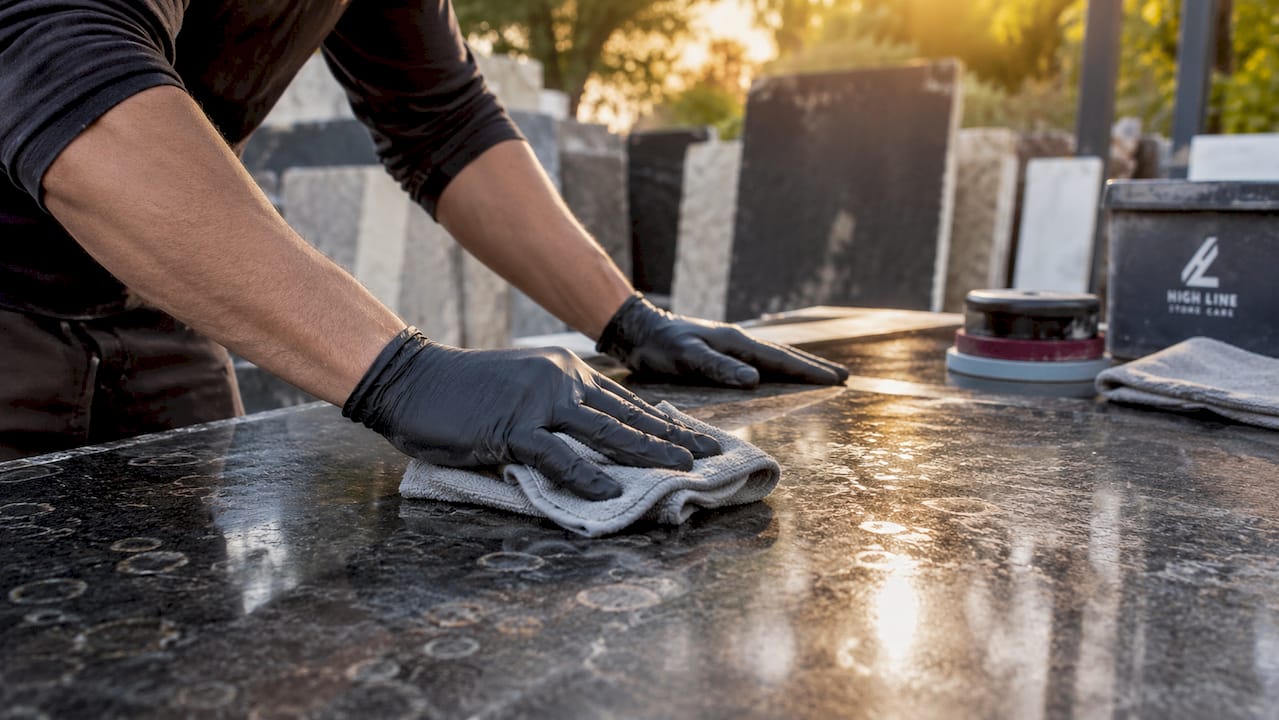
Uneven texture is another visual clue. Run your hand across the surface. If it feels rough or gritty in patches, the finish has degraded unevenly, often from abrasive cleaners or foot traffic. A surface that once felt glass-smooth should always feel that way.
Pro Tip: Inspect your stone under both natural daylight and a raking artificial light held at a low angle. Raking light reveals shallow etch marks and surface irregularities that are invisible under overhead lighting.
A useful field test for distinguishing etching from staining is the wet-dry observation. Dullness that disappears when wet points to etching. Darkness that remains visible when wet points to staining. This single observation guides the correct restoration method before any professional even arrives.
2. Testing seal integrity with the water bead test
The water bead test is the most reliable DIY diagnostic for seal failure. Place a few tablespoons of water on the stone surface and watch for 5–15 minutes. Water absorption that darkens the stone within 5 minutes is the clearest indicator that the sealant has failed and resealing is needed.
The darkening itself is harmless and fades as the water evaporates. What it reveals is that the stone’s capillaries are exposed, meaning oils, pigments, and cleaning chemicals can now penetrate and cause permanent staining. Seal breakdown allows pigments to penetrate deeper into the stone, accelerating damage that becomes harder to reverse over time.
One critical nuance most homeowners miss: the water bead test does not measure acid resistance. Sealed marble can etch immediately upon acidic contact even when the seal is perfectly intact. A good seal protects against staining, not etching. These are two separate vulnerabilities requiring two separate solutions.
Pro Tip: Run the water bead test in your highest-traffic zones first: kitchen countertops near the sink, entryway floors, and bathroom vanities. These areas lose sealant protection fastest and need the most frequent monitoring.
For kitchens and high-use bathrooms, test every 12 months. For lower-traffic areas like a formal dining room floor, every 2–3 years is reasonable. Resealing is recommended within 2 weeks of a failed water bead test to prevent staining from taking hold.
3. Structural damage signs that demand immediate attention
Cracks, chips, and edge deterioration are symptoms of stone deterioration that go beyond surface wear. Structural issues like cracks and chips indicate internal weaknesses that worsen over time if left unaddressed. Unlike dullness or staining, structural damage does not improve with polishing or cleaning.
Key structural warning signs to watch for:
- Hairline cracks running across tile or slab surfaces, especially near grout lines or edges
- Chips along corners or edges, which expose unfinished stone and accelerate moisture infiltration
- Tile lippage, where one tile sits higher than its neighbor, creating a trip hazard and indicating substrate movement
- Hollow-sounding tiles when tapped, which suggest the adhesive bond beneath has failed
- Moisture staining near baseboards or grout lines, which points to water infiltrating below the surface
Moisture infiltration and foundation movement contribute to hidden internal damage that compounds over time. A crack that looks cosmetic on the surface may signal a deeper structural problem in the substrate. Ignoring it allows water to work its way beneath the stone, weakening the bond and expanding the damage with every freeze-thaw cycle or humidity shift.
Worn finishes also create a safety concern. A polished stone floor that has lost its finish can become slippery when wet, particularly in entryways and bathrooms. This is a liability issue for property managers and a genuine safety risk for homeowners with children or elderly residents.
4. Matching the right restoration method to each sign
Loss of shine, persistent stains, etching, and cracks each require a different restoration approach. Applying the wrong treatment wastes money and can cause permanent damage. The table below maps common damage types to their correct treatments.
| Damage type | Correct treatment | What to avoid |
|---|---|---|
| Dullness from wear | Polishing | Resealing over dull surface |
| Etch marks (acid corrosion) | Honing then polishing | Polishing alone without honing |
| Staining (liquid absorption) | Deep cleaning or poulticing | Polishing stained stone |
| Failed sealant | Resealing with impregnating sealer | Resealing etched or stained surface |
| Cracks and chips | Professional repair and filling | DIY epoxy without substrate assessment |
Misusing restoration methods such as polishing stained stone or resealing etched areas wastes resources and locks in the damage. Polishing a stain does not remove it. Resealing an etched surface seals in the dull patch. Correct diagnosis must come before any treatment.
Honing is the process of grinding the stone surface with progressively finer abrasives to remove etch marks and restore a flat, matte or satin finish. Polishing follows honing to bring back the high-gloss reflective surface. Resealing uses an impregnating sealer that penetrates the stone’s pores and repels liquids without altering the surface appearance. Deep cleaning and poulticing draw absorbed stains out of the stone using absorbent compounds applied as a paste.
Pro Tip: Never reseal a surface that has visible etch marks or stains. Address the surface damage first, then apply a fresh sealer to protect the restored finish. Sealing over damage traps it permanently.
5. How early detection and regular care extend stone life
Routine inspection is the most cost-effective stone care practice available to homeowners and property managers. Most high-traffic stone surfaces require professional restoration every 1–3 years, but consistent daily care extends those intervals significantly. The goal is to catch problems when they are still surface-level, not structural.
Daily and weekly care habits that protect stone:
- Use pH-neutral cleaners exclusively. Acidic or alkaline products etch marble and degrade sealant on all stone types.
- Wipe spills immediately, especially wine, citrus juice, coffee, and vinegar-based dressings.
- Place entrance mats at all exterior doors to trap abrasive grit before it reaches stone floors.
- Use felt pads under furniture legs to prevent scratching and pressure marks.
- Avoid dragging heavy objects across stone floors or countertops.
Routine use of pH-neutral cleaners and prompt spill cleanup directly reduces the frequency and extent of professional restoration required. This is not a minor point. Homeowners who clean stone with the wrong products often need restoration twice as often as those who use correct daily care.
For commercial properties and high-traffic residential spaces, schedule a professional inspection every 12–18 months. For lower-traffic residential settings, every 2–3 years is adequate. Industrial-grade impregnating sealers on high-value marble surfaces can provide 2–5 years of protection, but only when the surface is properly prepared before application and the sealer cures undisturbed for 24–72 hours.
Pro Tip: Keep a simple log of when you last sealed each stone surface in your home. A note on your phone with the date and product used takes 30 seconds and saves you from guessing when the next test is due.
Key takeaways
Early recognition of stone wear signs prevents costly replacements and keeps restoration treatments targeted, affordable, and effective.
| Point | Details |
|---|---|
| Visual signs come first | Dullness, etching, and staining are the earliest indicators that restoration is needed. |
| Water bead test reveals seal failure | Water absorbed within 5 minutes means resealing is needed within 2 weeks. |
| Match treatment to damage type | Polishing, honing, resealing, and deep cleaning each address a different problem. |
| Structural damage needs urgent attention | Cracks, chips, and hollow tiles require professional evaluation, not surface treatment. |
| Daily care extends restoration cycles | pH-neutral cleaners and prompt spill cleanup reduce how often professional work is needed. |
What I’ve learned from years of watching homeowners miss the early signs
The most expensive stone restoration jobs I see are not caused by neglect. They are caused by misdiagnosis. A homeowner notices a dull patch on their marble countertop, assumes it is a stain, and spends months scrubbing it with increasingly aggressive cleaners. By the time they call a professional, the etch mark is deeper, the sealant is gone, and the surrounding finish has been damaged by the wrong cleaning products.
Even severe surface damage can often be cost-effectively restored if caught early. Replacement is rarely necessary. But that window closes fast when the wrong treatment is applied repeatedly.
The wet-dry test and the water bead test are two tools every homeowner should know before they ever call anyone. They take under five minutes and tell you whether you are dealing with a sealing problem, a surface damage problem, or both. That knowledge alone prevents the most common and costly restoration mistakes.
My honest advice: do not wait for damage to become obvious. Stone surfaces show distinct warning signs well before they reach a critical state. A professional inspection every 1–2 years in a busy household is not a luxury. It is the most affordable form of stone care available, because it catches problems while they are still simple to fix. Learn to recognize stone wear early, and your stone will outlast the building it sits in.
— High
Professional stone restoration and protection from Highlinestonecare
Stone surfaces in New York City face demanding conditions: high foot traffic, humidity, acidic food and drink exposure, and frequent cleaning with the wrong products. Highlinestonecare provides tailored stone restoration services for marble, granite, limestone, and travertine, covering everything from honing and polishing to structural repair and premium sealing.
For homeowners and property managers who want lasting protection after restoration, Highlinestonecare’s Opal Luxury Anti Acid Sealer provides permanent defense against acid-related surface damage and staining in a single application. Every project begins with a thorough surface assessment to identify the exact damage type before any treatment begins. Contact Highlinestonecare to schedule a professional evaluation and get a clear, honest picture of what your stone actually needs.
FAQ
What are the first signs your stone needs restoration?
The earliest signs are loss of shine, visible etch marks, and persistent staining that does not respond to cleaning. These indicate surface wear, acid corrosion, or sealant failure, each requiring a different treatment.
How does the water bead test work?
Place water on the stone surface and observe for 5–15 minutes. If the water absorbs into the stone and darkens it within 5 minutes, the sealant has failed and resealing is needed promptly.
Can the water bead test detect etching?
No. The water bead test only measures sealant integrity. Sealed marble can still etch immediately upon contact with acidic substances, so a passing water bead test does not rule out etch damage.
How often should stone surfaces be professionally inspected?
High-traffic surfaces benefit from professional inspection every 1–3 years. Kitchens, entryways, and commercial floors may need annual assessment, while lower-traffic areas can be evaluated every 2–3 years.
Is it possible to restore stone without replacing it?
Yes. Even significant surface damage, including deep etching and staining, can often be restored through honing, polishing, and professional cleaning when identified early enough. Replacement is rarely the only option.
Recommended
- Common Stone Care Mistakes Homeowners Must Avoid
- Stone Surface Maintenance Tips NYC | Keep Your Stone Surfaces Pristine
- Stone care terms explained: Expert guide for NYC homes
- What Is Stone Surface Etching: A Homeowner’s Guide