
Stone care is defined as the regular maintenance, cleaning, sealing, and professional restoration of natural stone surfaces to preserve their appearance, structural integrity, and market value. For homeowners and property investors, this practice is not cosmetic. Upgrading stone surfaces yields a 60–80% ROI and can raise home appraisal by $5,000 to $15,000. The role of stone care in property value is direct and measurable: neglected stone signals deferred maintenance to buyers, while pristine stone signals quality and commands premium offers. This guide covers the financial impact of stone maintenance, the best care practices, and when restoration beats replacement.
How does stone care affect property value and market appeal?
Stone care directly shapes how buyers and appraisers perceive a home. Buyers read stone condition as a narrative of overall home care. Pristine stone surfaces suggest a well-managed property. Damaged or etched stone raises red flags about what else may have been neglected.
The numbers support this. 87% of homebuyers in markets above $250,000 expect stone countertops, and homes with well-kept stone surfaces sell faster and at a 3–5% price premium. That premium is not automatic. It depends on the condition of the stone at the time of sale. A marble countertop with visible etching or a granite floor with dull, unsealed patches will not command the same price as one that has been properly maintained.
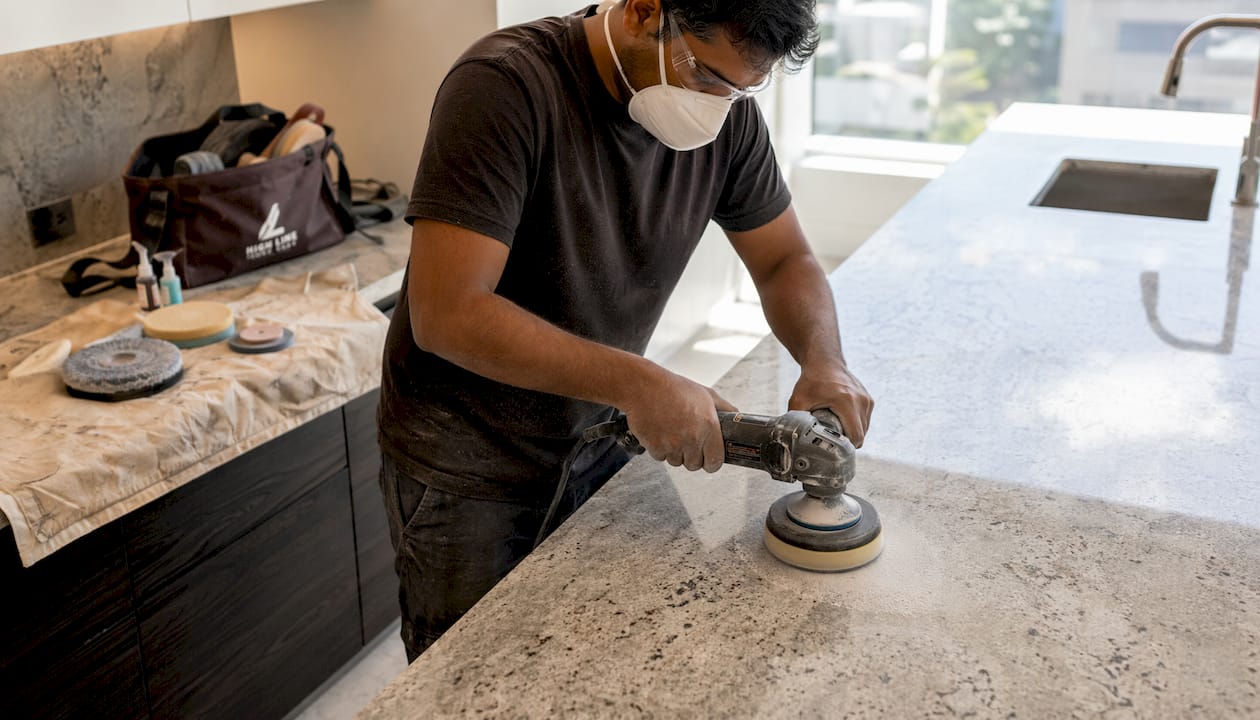
Appraisers also factor stone condition into their assessments. Installation quality, including seam visibility and fabrication precision, affects appraisal value significantly. A stone surface that was installed well but poorly maintained over time loses much of its original appraisal contribution. The impact of stone care on appraisal is cumulative: consistent maintenance preserves the surface’s contribution to value, while neglect erodes it year by year.
The stone maintenance benefits extend beyond aesthetics. Well-maintained surfaces resist staining, etching, and cracking longer than neglected ones. That durability translates directly into fewer repair costs before a sale and a stronger negotiating position with buyers.
Key factors that link stone care to market appeal:
- Buyer confidence: Clean, sealed, polished stone signals a move-in-ready home.
- Appraisal support: Maintained surfaces retain their original contribution to appraised value.
- Faster sales: Homes with premium stone in good condition spend less time on the market.
- Price premium: Well-kept stone in high-value markets supports a 3–5% price advantage.
- Reduced pre-sale costs: Proactive care avoids expensive last-minute restoration before listing.
What are the best stone care practices to sustain property value?
The foundation of effective stone care is routine cleaning with the right products. pH-neutral cleaners and soft cloths are the standard for all natural stone surfaces. Household abrasive cleaners, acidic solutions like vinegar, and harsh scrubbing pads cause irreversible surface damage. That damage reduces both the appearance and the appraised value of the stone.
Sealing is the second pillar of stone preservation. The water droplet test is a simple homeowner method to check whether resealing is needed: place a few drops of water on the surface and observe. If the water absorbs within a few minutes rather than beading up, the seal has degraded and the stone is vulnerable to staining. Resealing on a regular schedule maintains the protective barrier and extends the stone’s functional life.
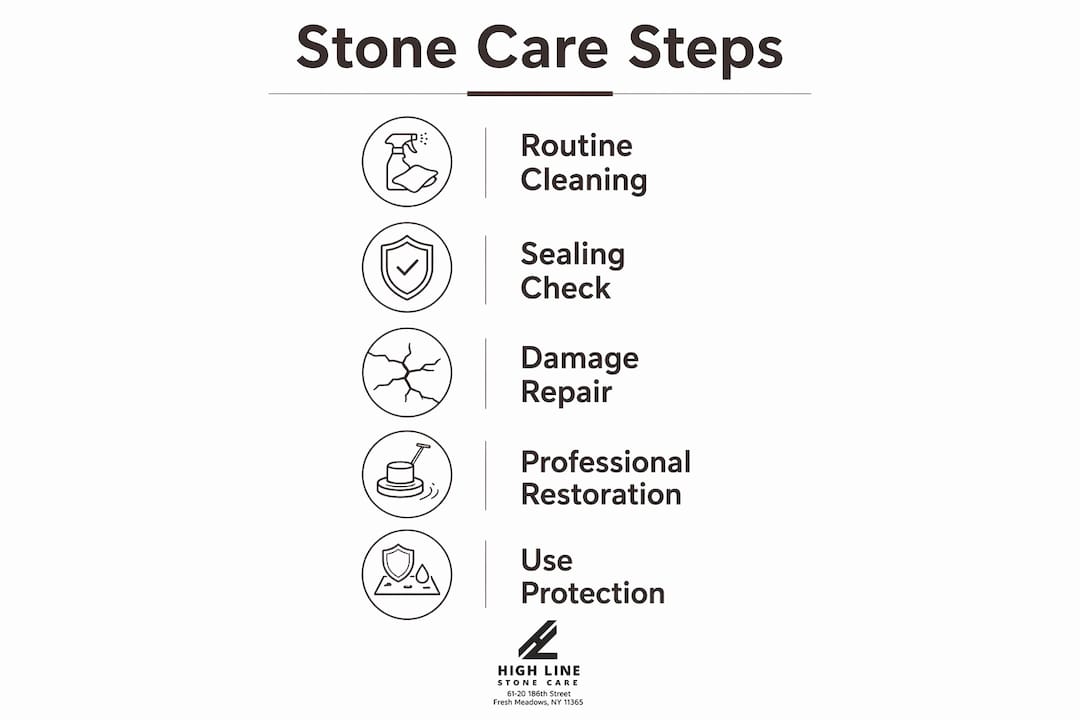
Pro Tip: Schedule the water droplet test every six months on high-traffic stone surfaces like kitchen countertops and bathroom floors. Catching a failing seal early costs far less than removing a deep stain or refinishing a damaged surface.
Professional polishing and restoration deliver results that DIY methods cannot replicate. Honing and polishing techniques remove surface scratches and revive stone’s appearance, restoring both durability and the elegant finish that buyers expect. For homeowners preparing to sell, a professional polish before listing is one of the highest-return investments available.
Common mistakes that reduce stone value:
- Using acidic or alkaline household cleaners on marble or limestone
- Skipping periodic resealing, leaving stone open to deep staining
- Ignoring minor chips or cracks until they spread
- Using steam mops on sealed stone, which can break down the sealer
- Applying wax-based products that build up and dull the surface over time
For stone countertop protection, the most effective daily habit is using cutting boards and trivets consistently. Direct contact with acidic foods and hot pans accelerates surface degradation faster than almost any other household factor.
How does professional stone restoration compare to replacement as an investment?
Professional restoration is the more cost-effective path in the vast majority of cases. Restoration extends stone life and maintains its luxury appearance at a fraction of replacement cost. Full stone replacement can run into tens of thousands of dollars when factoring in material, fabrication, and installation. Restoration addresses etching, staining, scratches, and dullness without removing the original stone.
The financial logic is straightforward. A restored marble countertop that looks new again contributes the same appraisal value as one that was replaced. The difference is the cost to achieve that result. Restoration preserves the original investment rather than writing it off.
| Consideration | Restoration | Replacement |
|---|---|---|
| Cost | Fraction of replacement | Tens of thousands of dollars |
| Disruption | Minimal, often same-day | Major, requires full removal |
| Appraisal outcome | Preserves original value | Resets value at current cost |
| Environmental impact | Low waste, no demolition | High material and labor waste |
| Longevity | Extends existing stone life | Starts new lifecycle |
Pro Tip: Before committing to replacement, get a professional assessment from a stone restoration specialist. Many surfaces that appear beyond repair respond well to honing, polishing, and resealing. The assessment itself is typically low-cost and can save thousands.
Replacement does make sense in specific situations: when stone has structural fractures that compromise safety, when the original installation quality was poor and visible seams reduce value, or when a property is being repositioned to a significantly higher market tier. Outside those scenarios, restoration delivers better returns.
The sustainability argument also favors restoration. Natural stone quarrying is resource-intensive. Extending the life of existing stone through professional care reduces environmental impact while protecting the homeowner’s financial investment.
Which stone types benefit most from proper care?
Natural stones vary significantly in how much they benefit from professional care and how sensitive they are to neglect. Granite and quartzite are dense, hard stones that resist staining and etching well. They respond strongly to periodic sealing and polishing, and well-maintained granite surfaces consistently support strong appraisal contributions in mid-to-high-value markets.
Marble requires a different level of attention. Marble is vulnerable to etching from acidic contact, and sealing alone does not prevent it. Etching is a chemical reaction between acid and the calcium in marble that dulls the surface. It requires physical protection through spill management and, when damage occurs, professional honing to restore the finish. For luxury buyers, pristine marble signals premium home care. For mid-range buyers, the maintenance demands of marble can be a deterrent, which affects resale dynamics.
Quartzite, often confused with quartz engineered stone, is a natural stone that combines marble’s visual appeal with granite’s density. It benefits significantly from proper sealing and is a high-ROI candidate for homeowners who want the look of marble with greater durability. Limestone and travertine are softer and more porous, making them highly sensitive to both staining and acid damage. These materials require the most consistent care to preserve their contribution to property value.
| Stone type | Sensitivity | Care priority | Value impact |
|---|---|---|---|
| Granite | Low | Periodic sealing, polishing | High and stable |
| Quartzite | Low to medium | Regular sealing | High, strong ROI |
| Marble | High (etching) | Spill management, honing | High in luxury markets |
| Limestone | High | Frequent sealing, gentle cleaning | Moderate, requires diligence |
| Travertine | High | Sealing, crack filling | Moderate, location-dependent |
In mid-range markets, engineered quartz may outperform marble in ROI because buyers at that price tier prioritize low maintenance over luxury aesthetics. Understanding the market segment a property targets helps homeowners decide where to focus their stone care investment for maximum return.
For stone flooring maintenance, the stone type determines both the cleaning method and the resealing frequency. Travertine floors in high-traffic areas may need resealing annually, while granite floors in lower-traffic spaces may hold their seal for two to three years.
Key Takeaways
Consistent stone care is the single most cost-effective strategy for preserving natural stone’s contribution to property appraisal and buyer appeal.
| Point | Details |
|---|---|
| Stone care drives appraisal value | Well-maintained stone supports a 3–5% price premium and faster sales in markets above $250,000. |
| pH-neutral cleaning prevents damage | Abrasive or acidic cleaners cause irreversible surface damage that reduces both appearance and appraised value. |
| Restoration beats replacement | Professional restoration revives etched or dull stone at a fraction of full replacement cost. |
| Stone type determines care strategy | Marble requires etching management; granite and quartzite reward periodic sealing with strong ROI. |
| Installation quality matters | Visible seams and poor fabrication reduce appraisal value regardless of how well the stone is maintained. |
What I’ve learned after years of working with stone surfaces
The most consistent pattern I observe is that homeowners underestimate how quickly stone condition shifts buyer perception. A single dull patch on a marble kitchen island can reframe an entire showing. Buyers do not see a maintenance issue. They see a question mark about what else in the home has been overlooked.
The homeowners who protect their property value most effectively treat stone care as a scheduled practice, not a reactive one. They reseal on a calendar, not when they notice a stain. They call a professional for polishing before a listing, not after a buyer raises concerns. That proactive approach costs less over time and produces a measurably better outcome at sale.
The other thing I would emphasize is the distinction between etching and staining on marble. Many homeowners seal their marble and believe it is fully protected. Sealing prevents staining from liquids penetrating the stone. It does not prevent etching, which is a surface reaction to acid. Wine, citrus, and even some cleaning products etch marble regardless of seal quality. Understanding that distinction changes how you manage the surface day to day and prevents the kind of damage that requires professional honing to correct.
For homeowners in luxury markets, the importance of stone preservation goes beyond resale. It is about maintaining the character and quality of the home you live in. Stone that is cared for properly ages with dignity. Stone that is neglected tells a story you do not want buyers reading.
— High
Highlinestonecare’s professional stone protection services
Protecting the value locked in your natural stone surfaces requires more than routine cleaning. Highlinestonecare specializes in advanced stone restoration and protection for homeowners and property investors who want lasting results.
The Opal Luxury Anti Acid Sealer provides permanent protection against etching and staining, with a single application designed to last a lifetime. For surfaces that have already suffered damage, Highlinestonecare’s stone restoration services bring dull, etched, or stained stone back to its original finish. Whether you are preparing a property for sale or protecting a long-term investment, Highlinestonecare delivers expert results backed by a satisfaction guarantee.
FAQ
How does stone care affect home resale value?
Well-maintained stone surfaces support a 3–5% price premium and faster sales in markets above $250,000. Neglected stone signals deferred maintenance and reduces buyer confidence, leading to lower offers.
What is the best way to clean natural stone at home?
Use pH-neutral cleaners and soft cloths on all natural stone surfaces. Avoid acidic products like vinegar and abrasive scrubbers, which cause irreversible surface damage.
Does sealing marble protect it from etching?
Sealing protects marble from staining but does not prevent etching. Etching is a chemical reaction between acid and the calcium in marble that requires spill management and, when damage occurs, professional honing to correct.
Is stone restoration worth it before selling a home?
Professional restoration is cost-effective compared to replacement and can revive dull or damaged stone at a fraction of the cost of new installation. For homeowners preparing to list, a professional polish and reseal is one of the highest-return pre-sale investments available.
Which natural stone adds the most value to a home?
Granite and quartzite offer the strongest and most stable value contribution due to their durability and low maintenance demands. Marble commands a premium in luxury markets but requires more diligent care to maintain that value.
Recommended
- Stone care terms explained: Expert guide for NYC homes
- Why Protect Stone Surfaces: A Homeowner’s Guide
- Why Invest in Stone Polishing: A Homeowner’s Guide
- Commercial Stone Maintenance: A Property Manager’s Guide