
Caesarstone is a brand of engineered quartz, not a separate material. Asking “Caesarstone vs. quartz” is like asking “Band-Aid vs. adhesive bandage.” Caesarstone sits within the engineered quartz category, which describes any composite surface made from roughly 90–94% natural quartz crystals bound with polymer resins and pigments. What sets Caesarstone apart is its history: founded in 1987 on Kibbutz Sdot Yam in Israel, it was the first company to commercialize engineered quartz countertops at scale. Every other brand in the category, including Cambria, Silestone, and MSI, followed the path Caesarstone opened.
Key distinctions to keep in mind:
- Quartz refers to the natural mineral, silicon dioxide, that forms the backbone of all engineered quartz surfaces.
- Engineered quartz is the manufactured composite product used for countertops, vanities, and wall cladding.
- Caesarstone is one specific manufacturer within that engineered quartz category, alongside Cambria, Silestone, and MSI.
- All engineered quartz shares the same fundamental composition; brand differences show up in design range, warranty terms, and quality control.
How Caesarstone and generic quartz are actually made
All engineered quartz surfaces follow the same basic recipe: ground quartz crystals mixed with polymer resin and pigments, compressed under vacuum and vibration, then cured into dense slabs. Caesarstone licensed Breton compaction technology from an Italian manufacturer in the 1980s and built the first large-scale production facility dedicated to this process. Today, Caesarstone operates manufacturing plants in Israel and Richmond Hill, Georgia, giving North American buyers shorter lead times on many colors.
The manufacturing steps are consistent across the industry:
- Quartz crystals are ground to a controlled particle size.
- The ground quartz is blended with resin binders and pigments.
- The mixture is compressed under intense vibration and vacuum pressure.
- Slabs are cured, calibrated to precise thickness, and polished.
Where brands diverge is in resin quality, calibration precision, and pigment formulation. Professional fabricators confirm that brand performance differences are minimal, with quartz-to-resin ratios nearly uniform across the industry. Caesarstone’s Georgia plant serves the US market with consistent slab calibration and strong quality control, which matters when you need to match surfaces across a large renovation.
Performance, maintenance, and what the 2024 changes mean for buyers
Caesarstone and generic engineered quartz perform similarly in everyday use. Both surfaces are non-porous and never require sealing, a clear advantage over marble and granite, which need periodic resealing to resist staining. Scratch and stain resistance are strong across all engineered quartz, driven by the high quartz content and dense resin binder.
Heat resistance is where every engineered quartz brand shares the same limitation. The polymer resin, not the quartz mineral itself, is what fails under sustained heat. Placing a hot pan directly on any quartz surface can discolor or crack the resin. Use trivets. That recommendation applies equally to Caesarstone and every generic option.
Expert insight: Choosing a premium quartz brand should focus on design exclusivity, pattern consistency, and warranty coverage. Expecting major functional advantages in hardness or stain resistance over budget quartz options is not realistic, because the manufacturing process and quartz content are comparable industry-wide.
One area where Caesarstone has moved ahead of most generic options is material safety. Following 2024 regulatory shifts around crystalline silica exposure, Caesarstone introduced its ICON collection, a crystalline silica-free product line. This reflects a broader industry evolution toward safer fabrication environments and is worth considering if material safety is a priority for your household.
Maintenance tips for any engineered quartz surface:
- Clean daily with mild soap and warm water.
- Avoid bleach-based or highly alkaline cleaners.
- Always use trivets or heat pads under hot cookware.
- Use a cutting board; micro-scratches can accumulate on polished finishes over time.
- Wipe spills promptly, though the non-porous surface gives you more time than marble would.
For guidance on protecting stone countertops long-term, Highlinestonecare offers detailed care resources for homeowners managing premium surfaces.
Aesthetic options and what brand reputation actually buys you
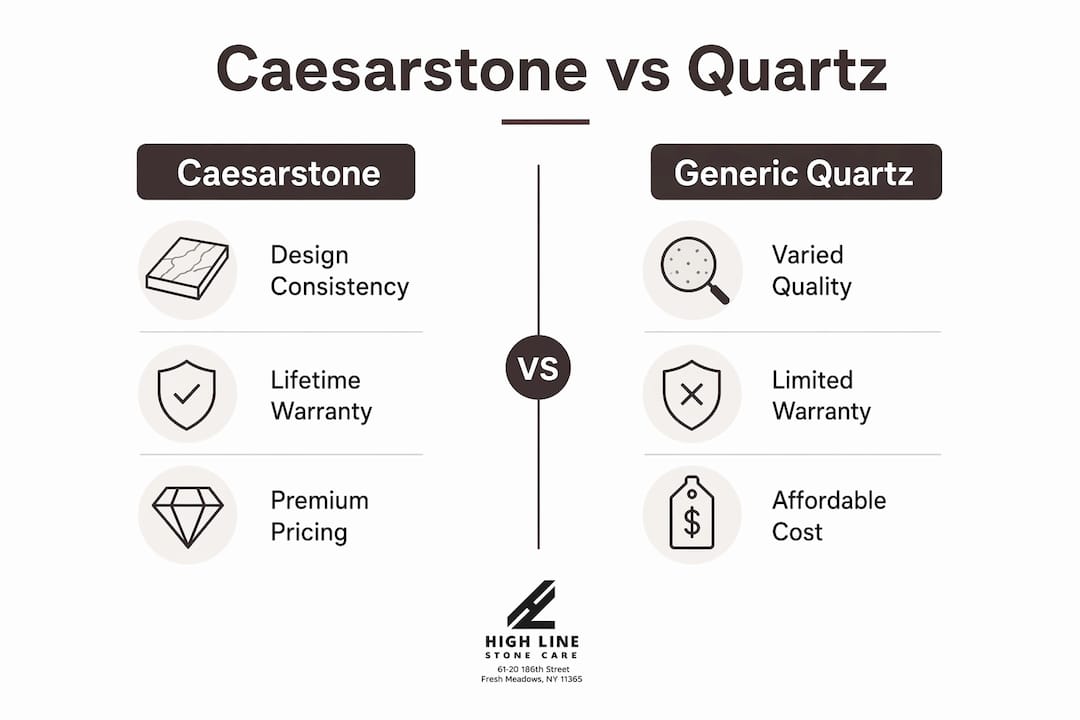
Design consistency is where Caesarstone earns its premium positioning. Caesarstone maintains consistent slab color and pattern across production runs, which matters when you are matching countertops across a kitchen island and perimeter, or replacing a damaged section years later. Generic quartz brands vary widely in this area; some offer excellent pattern repeatability, others do not.
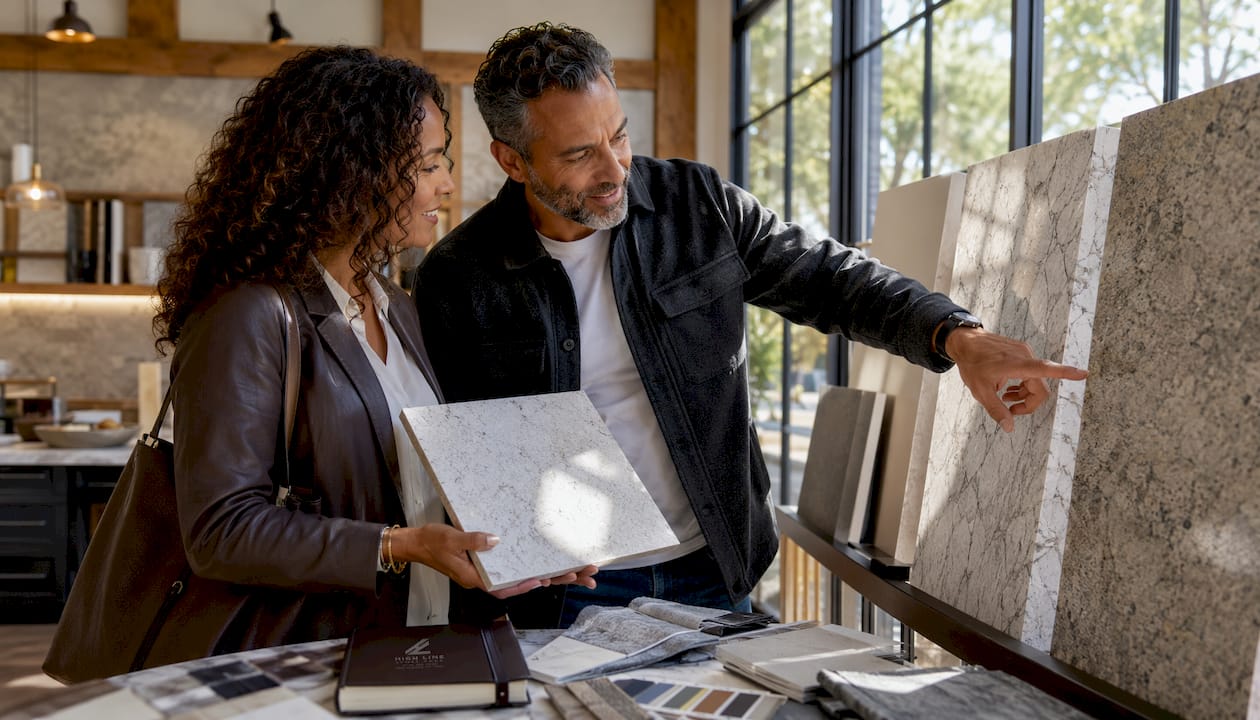
Caesarstone’s current collection spans over 50 designs, from clean solids and concrete-look finishes to refined marble-look patterns with realistic veining. The Supernatural and Classico lines appear frequently in high-end residential kitchens. Cambria leads the category for realistic natural stone replication, with patterns like Brittanicca widely regarded as among the most convincing in engineered quartz. Silestone offers a broader color library, with over 80 options and bold, dramatic veining patterns. MSI covers solid colors and standard marble looks at a more accessible price point.
One honest limitation applies to all engineered quartz: it reads as manufactured up close. The premium marble-look patterns have become convincing, but natural stone has a depth and translucency that engineered surfaces do not fully replicate. If authenticity matters to you, natural vs. engineered stone is worth reading before you decide.
Pricing and what you actually get for the premium
Caesarstone typically runs $60–$100 per square foot installed, placing it firmly in the premium tier alongside Silestone. Generic quartz options range from $40–$80 depending on quality and design complexity. Cambria sits above all of them, often reaching $85–$150 installed, reflecting American manufacturing costs and its pattern quality. MSI occupies the value position at roughly $45–$80.
What drives price more than brand is color and pattern complexity. A simple solid-white Caesarstone slab costs less than a dramatic veined design from the same brand. The premium you pay for Caesarstone over a mid-range generic option buys you design range, production consistency, and a limited lifetime residential warranty. Engineered quartz surfaces installed in the 1990s are still in service today, so the longevity argument for premium brands is real, though generic options from reputable manufacturers also perform well over decades of normal use.
Environmental impact and sustainability
Caesarstone holds GREENGUARD, NSF, and ISO 14001 certifications, reflecting verified standards for indoor air quality and environmental management. The shift to crystalline silica-free formulations in the ICON collection also reduces occupational health risks during fabrication. Silestone’s HybriQ manufacturing process uses recycled water, renewable energy, and incorporates recycled glass in some collections. Cambria’s American manufacturing reduces shipping distances for US buyers. Generic quartz sourced from overseas manufacturers varies considerably in environmental standards, so asking your supplier about certifications is worthwhile.
Availability and installation
Caesarstone is sold through authorized dealers, home centers, and stone fabricators across the US, with its Georgia plant supporting faster regional availability. Silestone and MSI slabs are stocked by most regional distributors. Cambria requires going through an authorized dealer, which can extend lead times. Installation for all engineered quartz follows standard stone fabrication practices. Caesarstone’s technical documentation notes that its surface strength can allow for thinner material use and fewer joints, which can simplify fabrication on complex layouts.
What homeowners report after living with these surfaces
Caesarstone consistently earns strong marks for long-term appearance retention and low maintenance. Homeowners who renovated in the late 1990s and early 2000s report surfaces still performing well with no material degradation, consistent with engineered quartz lasting 25 years or more under normal use. The most common complaints across all quartz brands involve heat damage from pots placed directly on the surface, confirming that trivet habits matter more than brand choice. MSI draws praise for value, while Cambria’s pattern quality earns consistent recognition from design-focused buyers. Silestone’s antimicrobial surface treatment appeals to households with health-conscious priorities.
How quartz compares to granite, marble, and other surfaces
Engineered quartz wins on maintenance and consistency. It loses on heat tolerance and natural character. Granite handles heat far better, tolerating temperatures that would damage quartz resin, and each slab carries unique natural variation. For homeowners who want that character without the maintenance burden, quartz vs. granite is worth a careful read.
Marble is the surface quartz most often tries to imitate. The marble-look quartz patterns have improved considerably, but real marble has a translucency and depth that engineered surfaces do not match. Marble also etches from acidic spills, wine, lemon juice, and coffee, leaving dull marks that require professional restoration. Highlinestonecare’s Opal Luxury Anti-Acid Sealer addresses exactly this vulnerability, providing lasting defense against the acid-related surface damage that makes marble ownership demanding for busy households.
| Surface | Installed cost/sq ft | Sealing required | Heat tolerance | Best for |
|---|---|---|---|---|
| Engineered quartz | $40–$150 | No | Moderate | Low maintenance, consistent look |
| Granite | $40–$150 | Yes, periodically | Excellent | Heat resistance, natural variation |
| Marble | $60–$100 | Yes, yearly | Good | Luxury aesthetics |
| Quartzite | $60–$100 | Yes, periodically | Excellent | Heat plus marble look |
| Porcelain/sintered | $40–$80 | No | Excellent | Outdoor use, UV resistance |
Key Takeaways
Caesarstone is a premium engineered quartz brand distinguished by design consistency, a lifetime residential warranty, and a pioneering manufacturing history, not by fundamentally superior material performance over other quality quartz options.
| Point | Details |
|---|---|
| Brand vs. category | Caesarstone is one brand within engineered quartz; all share roughly 90–94% quartz content. |
| No sealing needed | All engineered quartz is non-porous and never requires sealing, unlike marble or granite. |
| Heat is the shared limit | Polymer resin in every quartz brand can discolor under sustained heat; trivets are essential. |
| Premium price, real benefits | Caesarstone runs $60–$100/sq ft installed; the premium buys design range and a lifetime warranty. |
| 2024 safety evolution | Caesarstone’s ICON collection is crystalline silica-free, reflecting 2024 regulatory changes. |
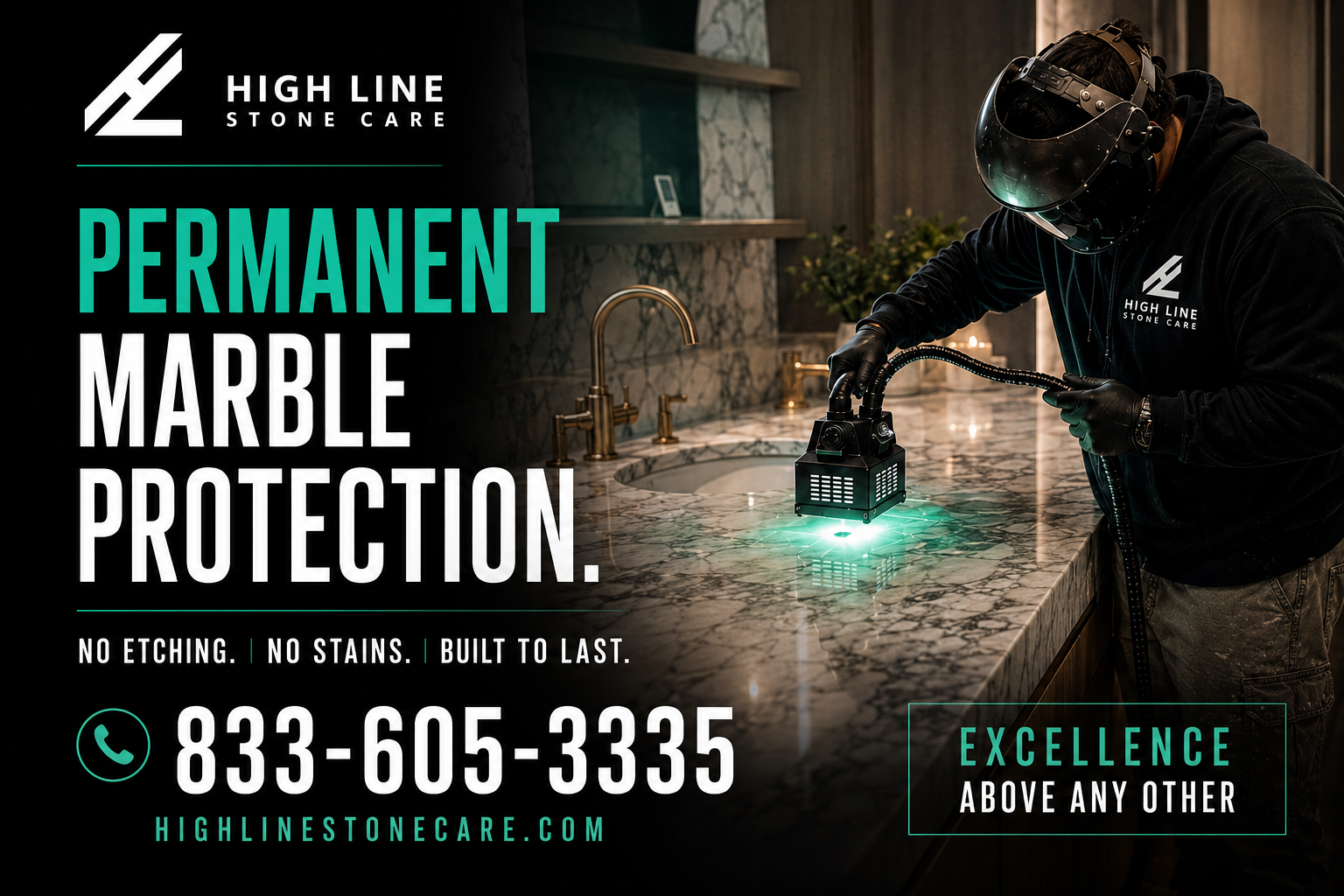
Natural stone surfaces like marble require a level of protection that engineered quartz simply does not. If your home features marble countertops, vanities, or floors, Highlinestonecare’s Opal Luxury protection service delivers permanent defense against etching and staining, preserving the surface’s appearance without repeated maintenance cycles.
Recommended
- Quartz vs. Granite Countertops: What Homeowners Must Know
- How to Polish Caesarstone Counters: The Real Answer
- Natural vs. Engineered Stone: What Homeowners Must Know