
Etching, staining, and mineral buildup are the most common stone problems in NYC properties, and each one requires a different fix. Marble, limestone, and travertine floors and countertops in New York City face a unique combination of threats: acidic household products, alkaline city water with a pH of 8–9, and building ventilation problems that trap moisture against stone surfaces. Homeowners and property managers who understand these specific risks can protect their investments before damage becomes permanent.
1. What are the most common stone problems in NYC?
The five most damaging stone surface issues in NYC are etching, staining, mineral scale buildup, chipping, and sealant failure. Each one has a distinct cause and a distinct solution. Treating a stain with an acid-based cleaner, for example, will etch the stone and compound the damage. Knowing which problem you are dealing with is the first step toward fixing it correctly.
NYC properties face a harder version of these problems than most other cities. Dense building construction limits ventilation, city water chemistry accelerates mineral deposits, and high-traffic stone floors take more mechanical abuse. The result is that stone repair issues in NYC tend to progress faster and require professional intervention sooner.
2. What is stone etching and why does it happen so often in NYC?
Etching is defined as acid-related surface damage to calcareous stones like marble and limestone. Acidic substances dissolve the microscopic calcium carbonate layer at the surface, leaving a dull, cloudy mark where the polish once was. The damage is chemical, not cosmetic, which means no amount of cleaning will reverse it.
The substances that cause etching are often things homeowners use every day without realizing the risk:
- Lemon juice and citrus-based cleaners
- Vinegar and vinegar-based “natural” cleaners
- Wine, sparkling water, and soda
- Some bathroom tile sprays and grout cleaners
- Tomato sauce and salad dressings
Products with a pH below 7 can etch marble and limestone in as little as 30 seconds. That speed matters in a kitchen or bathroom where spills happen fast. NYC homeowners often discover the damage only after wiping the spill, when a dull ring or patch has already formed near the sink or on a countertop.
Etching is irreversible by cleaning alone. Professional stone restoration requires mechanical honing and polishing to remove the damaged layer and restore the surface. Sealing the stone afterward protects against future staining but does not prevent etching from recurring if acidic products are used again.
Pro Tip: Check the pH of every cleaner before it touches your marble or limestone. Any product labeled “descaler,” “lime remover,” or “natural citrus cleaner” is almost certainly acidic enough to etch calcareous stone.
3. How staining occurs on natural stone in NYC homes
Staining and etching are two different problems. Staining occurs when liquids penetrate the pores of the stone and leave a darker discoloration behind. Etching changes the surface texture and finish. A stain looks darker than the surrounding stone. An etch mark looks lighter or duller.
Common staining agents in NYC kitchens and bathrooms include:
- Cooking oils and olive oil
- Coffee and tea
- Rust from metal cans or fixtures
- Dirt and grime tracked in from outside
- Makeup and personal care products on bathroom vanities
Porosity determines how quickly a stone stains. Marble and limestone are moderately porous. Unsealed or poorly sealed stone absorbs liquids within minutes. Sealing reduces this risk significantly, but sealing reduces, not eliminates, stain risk. Spills still need to be wiped up promptly.
NYC bathrooms present a specific staining challenge. Grout lines absorb moisture and dirt constantly, and the combination of frequent humidity and inadequate ventilation accelerates discoloration. When grout stains deeply, it can make the entire stone floor look neglected even if the stone itself is in good condition. Professional cleaning can address surface staining, but deep absorption may require restoration.
4. How NYC water chemistry and ventilation affect stone surfaces
NYC water carries a natural alkalinity of pH 8–9, which means it deposits minerals on stone surfaces over time. This is not a flaw in the water supply. It is simply the chemistry of the city’s water source. The problem arises when those minerals accumulate on bathroom tiles, shower walls, and countertops without being properly removed.
Poor building ventilation compounds the issue significantly. Old exhaust fans and inadequate venting trap moisture and mineral-laden air against stone surfaces. The minerals dry in place, filling grout pores and creating a white haze or chalky deposit on the stone. Many homeowners mistake this buildup for soap scum or mold and reach for bleach.
Bleach does not dissolve mineral scale. Harsh scrubbing with abrasive pads damages the stone surface and embeds debris deeper into pores. Hard water deposits in NYC bathrooms require pH-neutral or specifically formulated mineral removers, not standard household cleaners. Using the wrong product turns a cleaning problem into a restoration problem.
The visual signs of mineral buildup are distinct. White haze on polished marble, chalky gray deposits on grout lines, and a persistent dull film that returns after cleaning are all indicators of scale accumulation rather than staining. Addressing the ventilation source is as important as treating the stone surface. Without improved airflow, mineral deposits return within weeks of professional cleaning.
5. Mechanical damage and sealant failure on NYC stone surfaces
Chipping and scratching are the most common forms of physical damage to granite and marble in NYC homes. Sharp corners and edges chip more easily than bullnose or eased profiles. Kitchen countertops near the sink edge and bathroom vanity corners are the highest-risk areas. Dragging heavy pots, dropping utensils, or placing sharp objects directly on stone all accelerate surface wear.
Sealant failure is a separate but equally serious problem. A failing seal allows liquids to penetrate the stone rapidly, turning minor spills into permanent stains. The signs of seal failure include water that no longer beads on the surface, increased absorption of liquids, and new stains appearing in areas that were previously protected.
| Stone type | Recommended sealing interval in NYC | Consequence of delayed sealing |
|---|---|---|
| Marble | Every 6–12 months | Rapid staining, acid vulnerability increases |
| Granite | Every 1–3 years | Gradual stain absorption, dulling of finish |
| Limestone | Every 6–12 months | High porosity leads to deep staining quickly |
Sealing frequency varies significantly by stone type. Marble and limestone in NYC conditions need resealing every 6–12 months because of their higher porosity and exposure to moisture. Granite is more durable and tolerates longer intervals, but it is not immune to seal failure. Homeowners and property managers who track sealing dates avoid the costly restoration work that follows prolonged neglect.
Pro Tip: Test your seal annually by placing a few drops of water on the stone surface. If the water absorbs within a few minutes rather than beading, the seal has failed and resealing is overdue.
Calcareous stones like marble and limestone require a fundamentally different maintenance approach than siliceous stones like granite. Using the wrong cleaner on the wrong stone type is one of the most common and most preventable mistakes in NYC stone maintenance. Identifying your stone type before purchasing any cleaning product is not optional. It is the foundation of every correct maintenance decision.
Key Takeaways
Preventing stone damage in NYC requires knowing your stone type, using pH-appropriate cleaners, sealing on schedule, and addressing ventilation problems before mineral buildup takes hold.
| Point | Details |
|---|---|
| Etching requires restoration, not cleaning | Acid damage to marble and limestone is permanent and needs professional honing to reverse. |
| Sealing intervals differ by stone type | Marble needs resealing every 6–12 months; granite can go 1–3 years under NYC conditions. |
| NYC water chemistry accelerates mineral buildup | Alkaline water at pH 8–9 deposits minerals on stone, especially in poorly ventilated bathrooms. |
| Stone type determines safe cleaners | Granite tolerates mild acid; marble and limestone etch on contact with any pH-below-7 product. |
| Ventilation is a stone care factor | Poor exhaust airflow traps moisture and minerals against stone, causing persistent haze and staining. |
What I’ve learned from years of NYC stone care
Working with stone surfaces across Manhattan and the surrounding boroughs, the pattern I see most often is not dramatic damage from a single event. It is gradual, preventable deterioration from small, repeated mistakes. A homeowner uses a vinegar spray on their marble backsplash every week for a year. A property manager skips the resealing cycle twice. A bathroom exhaust fan fails and nobody replaces it for six months. Each decision seems minor. The cumulative result is a surface that requires full restoration instead of routine maintenance.
The insight that changes everything for most homeowners and property managers is this: identify your stone type before you buy a single cleaning product. Granite and marble look similar in many installations. Their chemistry is completely different. Treating marble like granite with an acidic cleaner produces visible etch damage within seconds. That mistake is made constantly in NYC condos and co-ops because the stone was never properly labeled at installation.
The second lesson is that professional evaluation is not a luxury. It is a cost-saving measure. A professional assessment every year catches seal failure, early-stage etching, and mineral buildup before each problem requires expensive restoration. The NYC stone care guide from Highlinestonecare outlines exactly what that evaluation covers and why the timing matters. Homeowners who invest in annual professional care spend far less over a decade than those who wait for visible damage.
The third lesson is about ventilation, and it surprises almost everyone. Most homeowners think of stone care as a surface problem. In NYC buildings, it is often an air quality problem. A bathroom with poor exhaust airflow will develop mineral deposits on stone regardless of how carefully the surface is cleaned. Fixing the fan is part of fixing the stone.
— High
Protecting your NYC stone surfaces with Highlinestonecare
NYC stone surfaces face a combination of threats that standard maintenance products are not designed to handle. Highlinestonecare specializes in stone restoration and protection for exactly these conditions, from acid-related etch damage on marble to mineral scale buildup in high-humidity bathrooms.
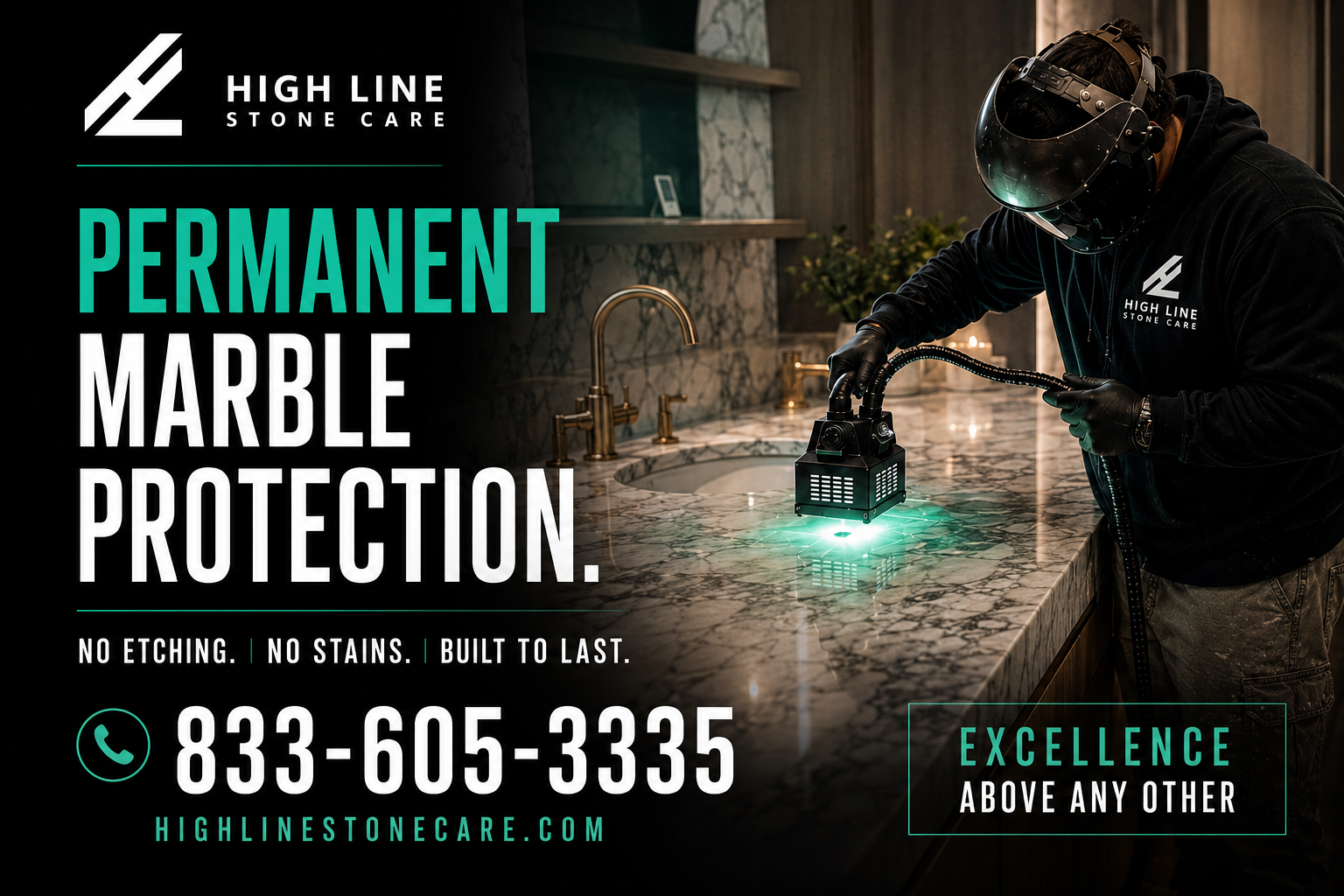
The Highlinestonecare Opal Luxury Anti Acid Sealer provides permanent protection against both etching and staining on calcareous stones, with a single application designed to last a lifetime. For surfaces that already show damage, Highlinestonecare’s professional restoration team uses mechanical honing and polishing to return stone to its original finish. Homeowners and property managers across Manhattan trust Highlinestonecare for scheduled maintenance, emergency restoration, and expert guidance on protecting stone from acid damage. Schedule a consultation to get a professional assessment of your stone surfaces before minor issues become major repairs.
FAQ
What causes etching on marble in NYC homes?
Etching is caused by acidic substances like lemon juice, vinegar, and some household cleaners reacting with the calcium carbonate in marble. Products with a pH below 7 can cause visible damage in as little as 30 seconds of contact.
How often should marble be sealed in NYC?
Marble in NYC conditions should be resealed every 6–12 months. High humidity, frequent cleaning, and alkaline water accelerate seal breakdown faster than in drier climates.
Can bleach remove hard water stains from stone?
Bleach does not dissolve mineral scale and can damage stone surfaces with repeated use. Hard water deposits in NYC bathrooms require pH-neutral mineral removers or professional treatment.
What is the difference between a stain and an etch mark on stone?
A stain appears darker than the surrounding stone and results from liquid absorption into the pores. An etch mark appears lighter or duller and results from acid dissolving the surface layer.
Does sealing prevent etching on marble?
Sealing protects marble against staining by reducing liquid absorption, but it does not prevent etching. Acid-related surface damage occurs at the chemical level and bypasses the sealer entirely.
Recommended
- Natural stone types for NYC homes: features, care, and selection
- Stone Surface Maintenance Tips NYC | Keep Your Stone Surfaces Pristine
- How to Preserve Stone Lobbies in NYC Buildings – Highline Stone Care