
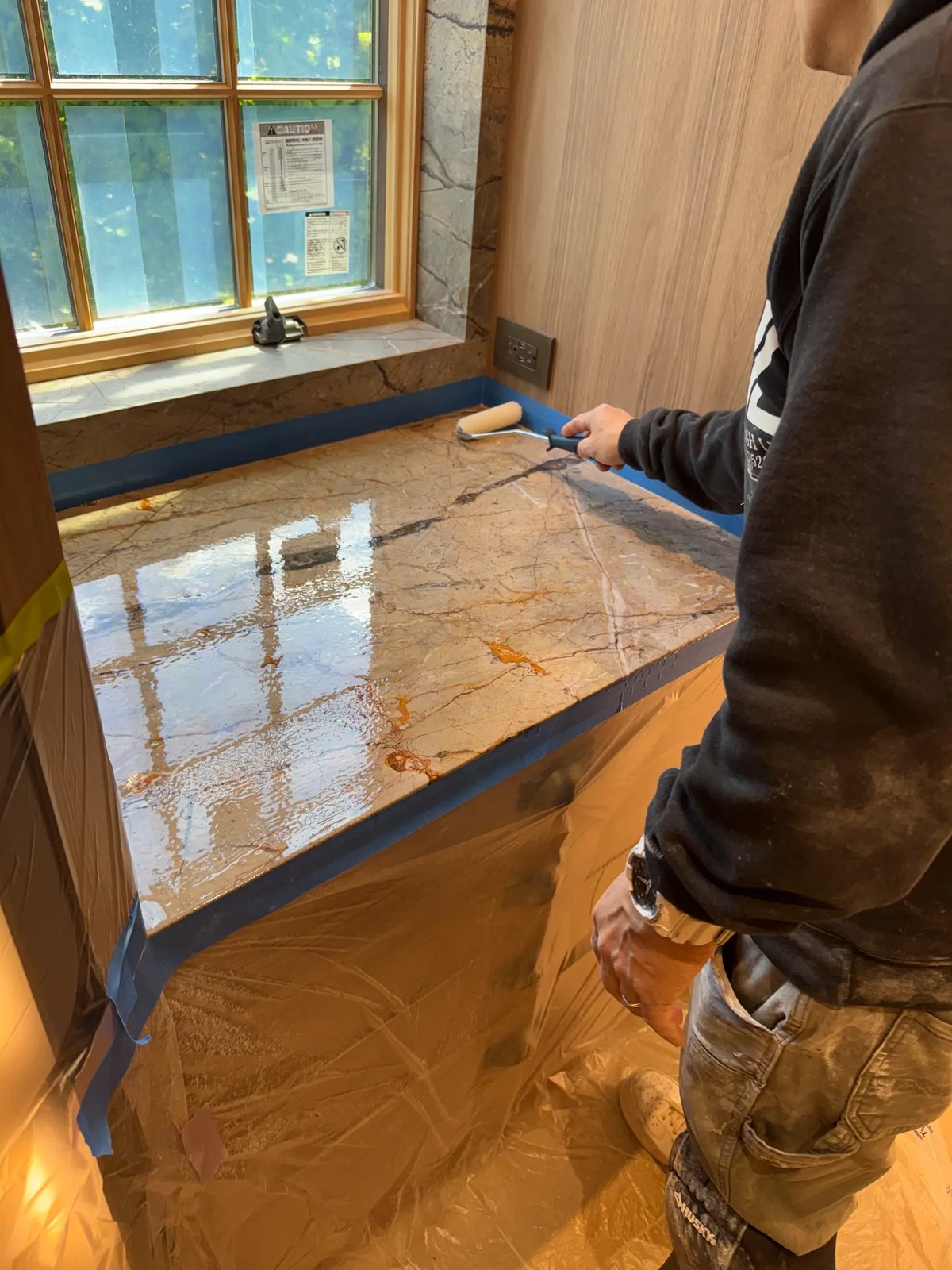
Why seal marble countertops?
Marble is a natural, porous stone. Small pores in the surface can allow liquids, oils, and other staining agents to penetrate if left unprotected. Separately, marble is sensitive to acidic substances (for example, citrus, wine, vinegar, and some cleaners), which can chemically alter the polished surface and leave dull spots known as etches. Sealing addresses the porosity-related staining risk but does not eliminate the stone’s sensitivity to acids.
What conventional sealers do — and what they don’t
Most commonly used sealers for marble are penetrating types. They soak into the stone’s pores to slow the absorption of water- and oil-based spills. Typical effects include:
- Reducing the likelihood that common spills will stain immediately
- Giving you more time to wipe or blot a spill before it soaks in
- Extending the period before a stain might set
Important limitations to understand:
- Conventional sealers do not prevent acid etching. Because etching is a chemical reaction with the marble itself, most penetrating sealers do not stop acidic substances from dulling or dissolving the polished surface.
- Sealers wear down over time. Cleaning, use, and exposure to water or heat reduce a sealer’s effectiveness, so periodic reapplication is typically needed.
How often should you reseal marble?
There isn’t a single schedule that fits every installation. Frequency depends on the surface’s use, cleaning habits, and the type of sealer used. Typical guidance many stone-care professionals offer:
- Kitchen countertops (higher-use areas): Often inspected every 12–24 months; higher-traffic kitchens may need resealing toward the shorter end of that range.
- Bathroom vanities (moderate use): Often checked and resealed every 18–36 months depending on exposure to water, toiletries, and cleaners.
- Low-traffic decorative surfaces: These can often go longer between applications—sometimes two to three years or more.
Use the water bead test to check a surface: place a few drops of water on a cleaned, dry area and wait 10–15 minutes. If the water beads, the sealer is likely still working. If it darkens the stone or is absorbed, resealing should be considered.
Specialty protection options (what to ask about)
Some specialty treatments and coatings are marketed to provide longer-lasting protection or to reduce the stone’s sensitivity to acids. These products differ in formulation and intended performance. If you are considering a specialty treatment, ask for clear, written information that explains:
- What specific performance the treatment is intended to change (stain resistance, acid resistance, gloss retention, etc.)
- How long the manufacturer or installer expects the treatment to last under typical use
- Any maintenance that will still be required
- Documentation or independent testing, and the specifics of any warranty or guarantee (if offered)
These treatments can alter routine maintenance needs, but it’s important to avoid absolute expectations; performance varies with use and the specific product chosen.
Signs your marble sealer may have failed
- Spills that leave stains more easily than before
- New dull or whitish spots after contact with mildly acidic substances
- A noticeably rougher or less reflective surface compared with its original finish
Basic maintenance calendar
Practical routines help extend the life of both the finish and the sealer:
- Daily: Wipe up spills promptly. Blot acidic spills rather than rubbing aggressively.
- Weekly: Clean with a pH-neutral stone cleaner designed for natural stone.
- Every 6–12 months: Check sealer condition with the water bead test.
- Every 1–3 years: Consider professional resealing or ask a stone-care professional for a recommendation based on observed wear.
- As needed: Professional polishing or restoration can address accumulated wear, etched areas, or deep stains; timing depends on use and condition.
If your marble hasn’t been sealed (or you don’t know)
- Have a stone-care professional evaluate the surface to identify existing etches, stains, or structural issues.
- If the surface shows damage, restoration (polishing or honing) is often recommended before applying a sealer—sealing over surface damage can lock the appearance in place.
- Apply sealer only to a clean, dry, and appropriately finished surface for the best results.
Service areas
For professional on-site assessments and written estimates, coverage includes:
- Manhattan (Upper West Side, Upper East Side, Midtown, Chelsea, Financial District)
- Queens (Fresh Meadows)
- Brooklyn (Coney Island)
- Nassau County (Great Neck, Lawrence, Five Towns)
- Westchester County
Request an on-site assessment or written estimate
If you’d like a clear recommendation for your specific countertops—sealer type, timing for reseal, or whether a specialty protection makes sense—request an on-site assessment and ask for a written estimate that explains the proposed scope, expected maintenance, and any warranty or performance information in writing.
FAQ
Will sealing prevent etching?
Most conventional penetrating sealers reduce staining risk but do not stop acid etching. If acid resistance is a priority, ask about specialty treatments and request written details about what those treatments are designed to do.
How can I remove etch marks or stains?
Minor etches can sometimes be polished out with the right techniques and products. Deeper etching or entrenched stains may require professional honing and polishing. A qualified stone-care professional can recommend the appropriate restoration steps after inspecting the surface.
Can I reseal marble myself?
Homeowners can apply many consumer sealers, but professional application is often recommended for more durable results and to ensure the correct product is selected for the stone and use conditions.
What should I look for in a written estimate?
Ask that the estimate explains the sealer or treatment being used, an expected maintenance schedule, any limitations of performance, and the exact terms of any warranty or guarantee in writing.
If you would like an on-site evaluation and a written estimate tailored to your marble countertops, request a visit from a local stone-care professional in your area.
Service Areas
Highline Stone Care serves residential and commercial clients across Manhattan, Queens, Brooklyn, Nassau County, and Westchester County. Confirmed coverage includes the Upper West Side, Upper East Side, Midtown, Chelsea, and the Financial District in Manhattan; Fresh Meadows in Queens; Coney Island in Brooklyn; and Great Neck, Lawrence, and the Five Towns in Nassau County. Contact the team to confirm availability for a specific project location.