
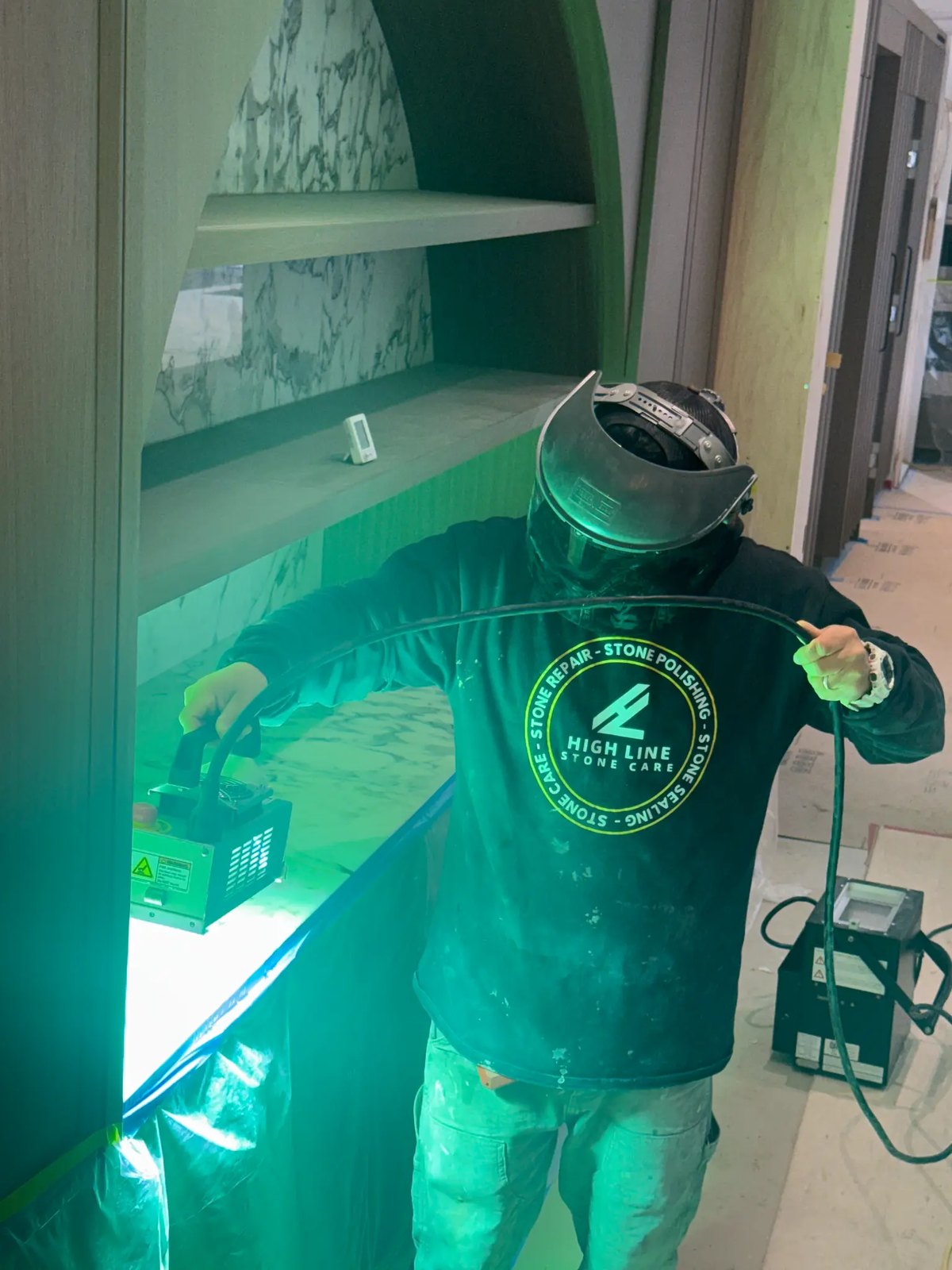
Stone care basics for New York City properties
New York City’s older buildings and renovated homes contain a wide variety of natural and manufactured stone — marble lobbies, granite countertops, terrazzo corridors, limestone facades, and travertine bathrooms are all common. Proper restoration and ongoing maintenance help preserve appearance and value, but approaches vary by stone type and by the extent of damage. This guide explains how to evaluate a stone restoration company in NYC and what to ask before you book an on-site assessment.
What to look for in a stone restoration contractor
- Appropriate restoration methods: For deep damage, grinding and progressive abrasive polishing are the industry approach for restoring many stone surfaces. Ask whether the company uses diamond abrasives or equivalent mechanical polishing systems for full restoration, and whether they rely on topical spray polishes for short-term cosmetic improvement only.
- Stone-specific experience: Different materials — marble, granite, limestone, travertine, and terrazzo — respond to different procedures, sealers, and repair materials. Look for technicians or crews who describe experience with the specific stone types you have.
- Clear, written estimates: A thorough written estimate should describe the scope of work (grinding, honing, polishing), whether sealing is included, what repairs are planned, and any expected follow-up maintenance. Ask for details about the number of polishing passes, testing procedures, and whether pieces will be matched or patched.
- Before-and-after documentation: Ask if they provide progress photos and clear records of work performed. This helps set expectations and documents the condition prior to and after restoration.
- Local references and examples: Look for verifiable project examples and customer feedback from NYC properties. Reviews and photos from local clients can give insight into results for similar job types.
Key services and how they differ
Understanding common services helps you match contractors to your needs.
- Marble restoration: Marble is softer and more vulnerable to etching and scratching. Restoration often involves removing a thin layer of surface material with abrasives to eliminate scratches and etches, then polishing and applying a suitable sealer if requested.
- Granite maintenance: Granite is generally harder; many granite surfaces benefit most from cleaning, polishing, and periodic sealing rather than aggressive grinding. A contractor should assess whether polishing alone will meet your goals.
- Terrazzo work: Terrazzo can be Portland cement or epoxy based; each system requires different techniques for grinding, patching, and polishing. Ask whether the crew has experience with the type installed in your building.
- Commercial and lobby projects: Larger common areas often require experience coordinating work around building schedules and access, and the use of equipment suited to larger floor expanses.
- Sealing and protective treatments: Conventional sealers can reduce staining and make routine cleaning easier; specialty protective treatments are also available that manufacturers may describe as longer-lasting. Request written details about the product type, expected maintenance, and any limitations. Avoid absolute promises; ask how the treatment performs with common household acids and cleaners.
Common homeowner and building-manager mistakes
- Using acidic cleaners: Household products like vinegar and some bathroom cleaners can etch marble and limestone. Use cleaners labeled safe for natural stone or follow the contractor’s maintenance recommendations.
- Aggressive bleaches and alkalines: Strong bleach or alkali-based cleaners can degrade some sealers and finishes. Confirm safe cleaning products before use.
- Delaying repairs: Surface damage left unattended can become more difficult to correct. Early evaluation and targeted restoration often preserve more of the original material and finish.
- Choosing solely on price: Very low bids may reflect limited scope, use of topical polishes instead of mechanical restoration, or omitted steps. Compare written scopes rather than only bottom-line cost.
Questions to ask before you hire
- What specific steps are included in the estimate (grind, hone, polish, patch, seal)? Request the number of abrasive passes or stages where applicable.
- Which stone types have you restored that are similar to mine? Can you share photos or references?
- Do you test small areas first to determine best approach and finish level?
- What sealer or protective treatment do you recommend, and can you provide written product details and maintenance guidance?
- Will the price include site protection, dust control, and clean-up? If not, what is excluded?
- Can you provide a written warranty or guarantee document for specific services, and what does it cover? (Ask for written details of any warranty or guarantee.)
FAQ
How often should stone be resealed?
Reseal frequency depends on stone type, use, and the sealer product. High-traffic floors and countertops used for food prep commonly need more frequent attention than decorative surfaces. Ask the contractor for a maintenance schedule tailored to your location and usage.
Will polishing remove etching from marble?
Minor etches and surface scratches can often be reduced or removed by mechanical polishing. Deep damage or heavy wear may require additional grinding and restoration. A visual inspection and small-scale test area are the best ways to set realistic expectations.
Which household cleaners are safe?
Use pH-neutral, stone-specific cleaners for routine maintenance. Avoid acidic (vinegar) and excessively alkaline cleaners unless a product is explicitly labeled safe for your stone type.
Service area
Available coverage includes:
- Manhattan: Upper West Side, Upper East Side, Midtown, Chelsea, Financial District
- Queens: Fresh Meadows
- Brooklyn: Coney Island
- Nassau County: Great Neck, Lawrence, Five Towns
- Westchester County
Next steps
If you’re considering stone restoration, request an on-site assessment and a written estimate so the contractor can evaluate conditions, demonstrate likely results, and outline a maintenance plan. A site visit makes it easier to compare scopes and choose the approach that fits your material and budget.
Service Areas
Highline Stone Care serves residential and commercial clients across Manhattan, Queens, Brooklyn, Nassau County, and Westchester County. Confirmed coverage includes the Upper West Side, Upper East Side, Midtown, Chelsea, and the Financial District in Manhattan; Fresh Meadows in Queens; Coney Island in Brooklyn; and Great Neck, Lawrence, and the Five Towns in Nassau County. Contact the team to confirm availability for a specific project location.