
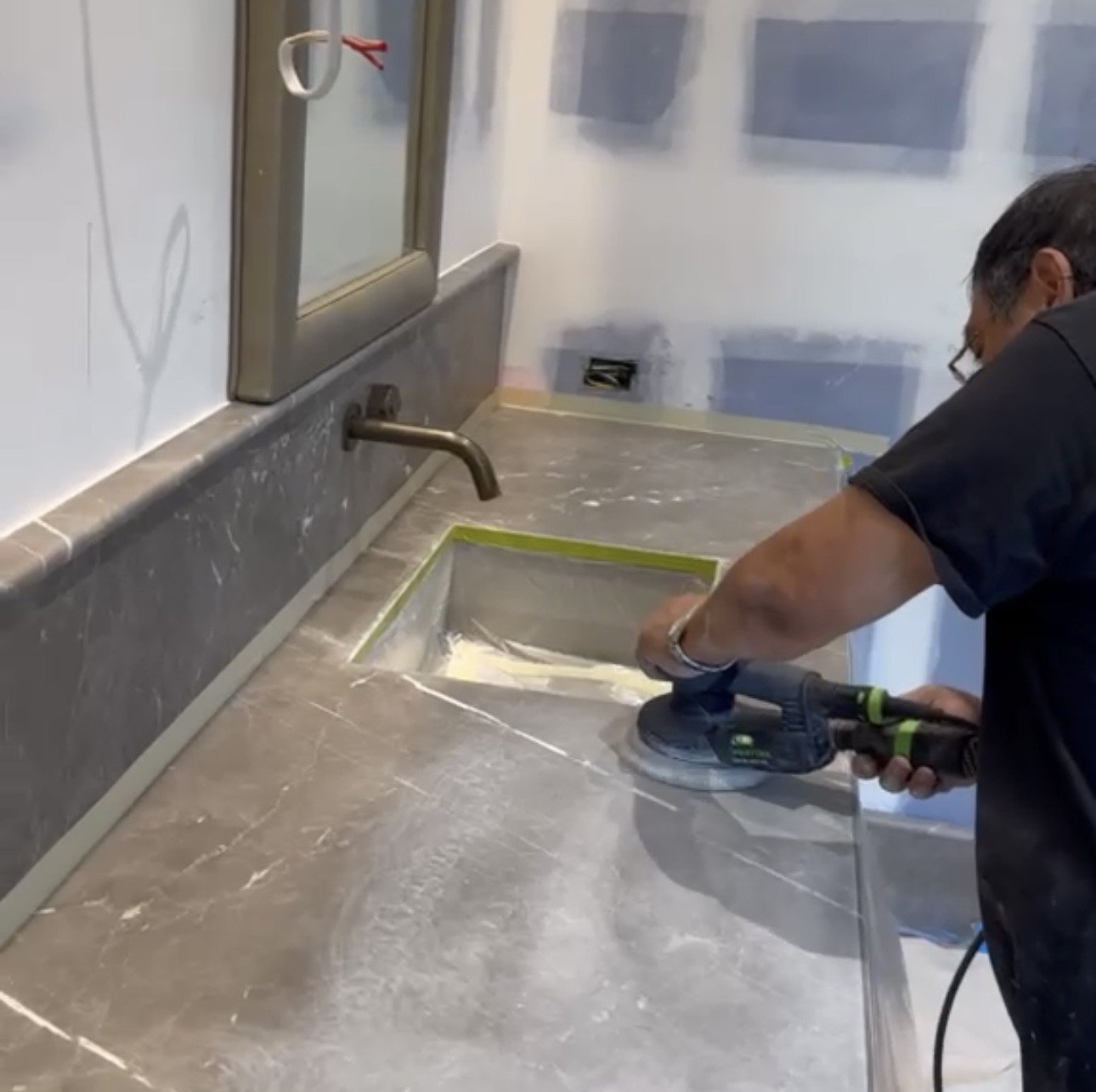
Etch marks are a common concern on polished marble countertops and floors. They look like dull, whitish or hazy spots and are often noticed where a glass sat, a citrus fruit was cut, or a cleaning product was used. This guide explains what etching is, what commonly causes it, how professionals typically address it, and practical steps you can take to reduce the chance of recurrence.
What is an etch mark?
Etching is a form of chemical surface damage. Marble is largely composed of calcium carbonate, which can react with acidic substances. When that reaction occurs at the polished surface it can remove or roughen a thin layer of material, producing a visibly dull or hazy area. Because the surface itself is altered, etching is different from a surface stain and usually requires mechanical restoration to fully correct.
Common causes
Anything acidic or corrosive contacting marble can cause etching. In kitchens and bathrooms this often includes:
- Lemon and other citrus juices
- Wine, vinegar, tomato-based sauces
- Soda, sparkling water and some beverages
- Certain cleaning products not formulated for natural stone
- Cosmetics or personal care products that contain acids
Length of contact matters: quicker cleanup generally limits penetration and reduces damage.
Can etch marks be removed?
In many cases, yes—restoration depends on how deep the etch is. Typical approaches used by stone care professionals include:
- Surface polishing: Very shallow etches that only affect the topmost polish can sometimes be improved by repolishing with fine abrasives or polishing compounds.
- Honing and progressive polishing: Moderate etches that change surface texture are usually addressed by removing a thin layer of the surface with progressively finer abrasives, then restoring the polish to match the surrounding area.
- Grinding and restoration: Deeper etches may require more aggressive abrasion to remove damaged material before honing and polishing. This is typically a professional service.
These methods are mechanical in nature. Some consumer products and DIY mixtures may temporarily mask shine differences, but they generally do not remove the damaged stone layer.
Conventional sealing vs. specialty protection
There are two different protective approaches to be aware of:
- Conventional penetrating sealers are commonly used to reduce staining by helping limit liquid penetration into pores. They are part of routine maintenance, but they do not make marble immune to etching from acids.
- Specialty surface treatments marketed to reduce acid susceptibility may offer additional resistance to etching in some cases. Results vary by product and stone type; ask for written details about what a treatment is intended to do and how it should be maintained. Avoid promises of permanent or absolute prevention.
How to prevent etch marks
- Respond quickly to spills: Blot acid spills immediately rather than wiping so you don’t spread the liquid across the surface.
- Use coasters, trivets and cutting boards: Keep glasses, citrus, and hot pans off the bare stone.
- Use pH-neutral cleaners: Clean marble with products labeled safe for natural stone. Avoid acidic or bleach-based cleaners.
- Gentle cleaning tools: Use soft cloths or non-abrasive pads. Abrasive scrubbing can dull the finish.
- Regular maintenance: Periodic professional inspection and maintenance can identify early wear and help maintain the finish.
When to call a professional
If an area looks noticeably different in texture or tone after a spill, or if household cleaning has not restored the surface, consider a professional assessment. A trained stone technician can examine the damage under raking light to determine depth and recommend an appropriate correction plan. If both etching and staining are present, they typically need to be addressed in the correct order to avoid trapping discoloration under new polish.
Service area
Services are available in the following coverage areas:
- Manhattan: Upper West Side, Upper East Side, Midtown, Chelsea, Financial District
- Queens: Fresh Meadows
- Brooklyn: Coney Island
- Nassau County: Great Neck, Lawrence, Five Towns
- Westchester County
Call to action
If you’re unsure whether a mark is an etch or a stain, or if a surface needs professional restoration, request an on-site assessment or a written estimate so you can review recommended options and any proposed protective treatments. Use the site contact form to arrange a visit or to ask for a written estimate.
FAQ
How can I tell if a spot is an etch or a stain?
Etches look dull and often feel slightly different to the touch because the surface has been altered. Stains typically change color without altering texture. Both can occur together; a professional assessment can help identify each issue.
Can I remove etch marks myself?
Light surface dulling can sometimes be improved with consumer polishes, but these approaches may only mask the issue. Mechanical restoration with controlled abrasives is the standard method for truly removing the damaged layer; that work is usually best handled by a professional to avoid uneven results.
Will sealing stop future etching?
Penetrating sealers help reduce staining but do not prevent acid etching. Some specialty surface treatments aim to reduce susceptibility to acids—ask for product details and maintenance requirements before proceeding.
What should I expect from an assessment?
A site visit typically includes an inspection of the affected area, discussion of visible damage and possible underlying staining, and a written recommendation for repair and any protective options. Request a written estimate so you can compare recommendations and costs.
If you would like an on-site assessment or written estimate, please use the website contact form to request an appointment.
Service Areas
Highline Stone Care serves residential and commercial clients across Manhattan, Queens, Brooklyn, Nassau County, and Westchester County. Confirmed coverage includes the Upper West Side, Upper East Side, Midtown, Chelsea, and the Financial District in Manhattan; Fresh Meadows in Queens; Coney Island in Brooklyn; and Great Neck, Lawrence, and the Five Towns in Nassau County. Contact the team to confirm availability for a specific project location.