
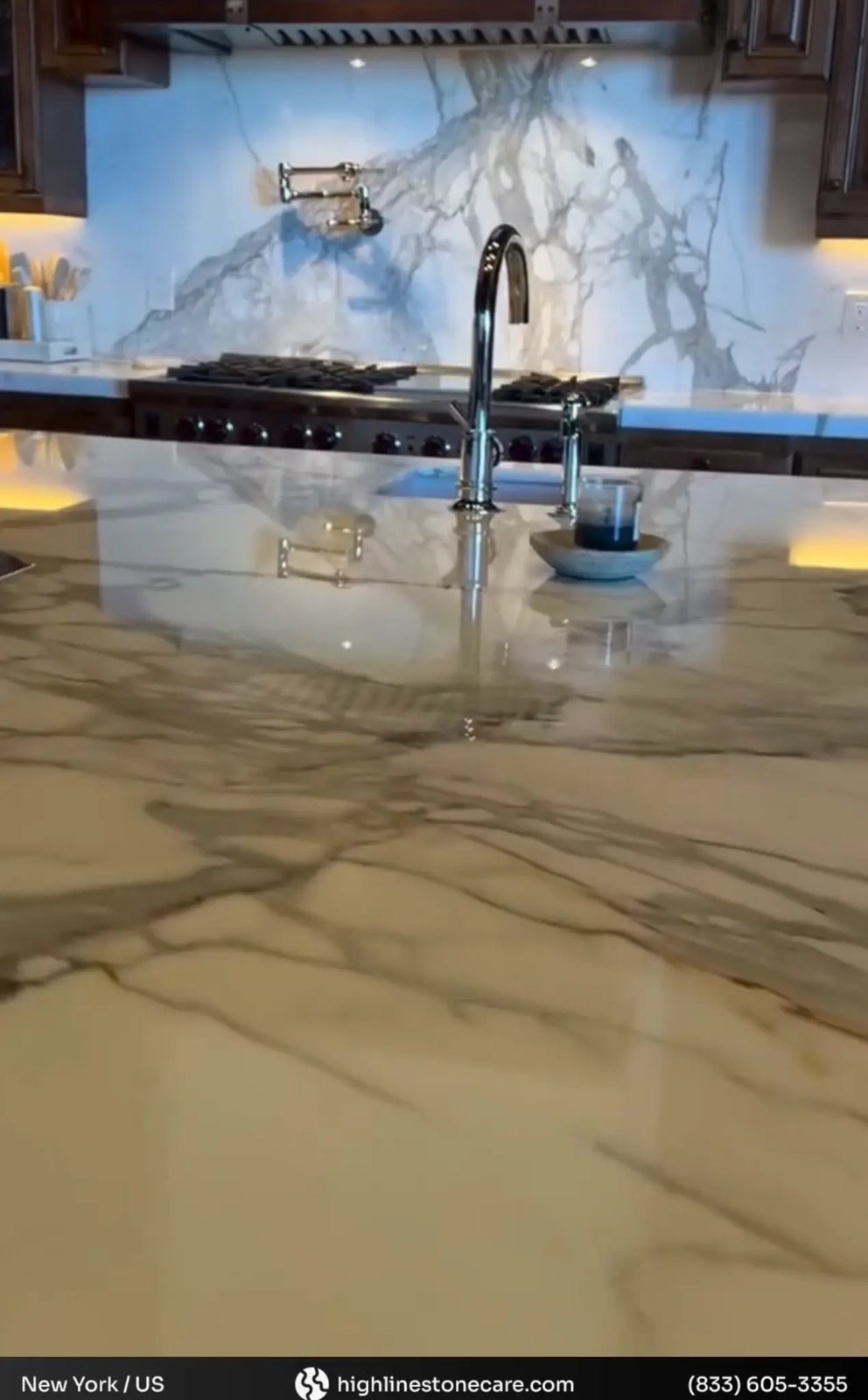
Protecting and Caring for Sealed Marble Countertops in New York City
Marble is a popular choice for kitchen and bathroom surfaces in New York City homes because of its beauty and natural variation. Proper care helps preserve that appearance and reduces the risk of stains, etching, and surface wear. This guide explains how maintenance differs depending on the type of sealer, what to use and avoid for day-to-day cleaning, how to respond to spills, when to consider resealing, and when to call a stone professional.
Two different maintenance approaches: conventional sealer vs. specialty protection
The maintenance required for marble countertops depends largely on the sealer applied to the stone.
Conventional penetrating sealers (common)
Penetrating sealers are widely used. They work by filling some of the stone’s pores to slow liquid absorption. With this type of sealer:
- Acidic spills (wine, citrus, vinegar, tomato sauces) can still etch the surface and should be cleaned up immediately.
- Cleaning should be done with pH-neutral, stone-safe products or mild soap and water.
- Resealing is typically recommended periodically—many homeowners reseal every 1–2 years in kitchen settings depending on use and testing.
- Etch marks (dull spots caused by acid) are a surface alteration and may require professional polishing to restore the original finish.
Optional specialty anti-acid sealers (marketed for enhanced resistance)
There are specialty sealers offered that are described as providing enhanced resistance to acid etching and extended protection. These products are different from standard penetrating sealers and may change routine maintenance (for example, allowing use of a broader range of cleaners). If you are considering or already have a specialty sealer applied:
- Ask the installer for written details about what the sealer protects against and any limitations.
- Follow the manufacturer’s care instructions and request demonstration or testing on a small area if you have questions.
- Understand that labels vary; avoid treating claims as absolute without documentation or testing.
Daily cleaning: safe products and those to avoid
For most sealed marble surfaces, simple regular care keeps the stone looking its best.
Safe cleaning options for sealed marble
- Warm water with a few drops of neutral dish soap; rinse and dry with a soft cloth.
- Stone-specific, pH-neutral spray cleaners sold by stone-care suppliers or hardware stores.
- Microfiber cloths and soft, non-abrasive sponges.
Products to avoid on standard-sealed marble
- Vinegar, lemon juice, or citrus-based cleaners (acidic and can etch).
- Undiluted bleach or strong alkaline/acid household cleaners unless the sealer manufacturer specifically approves them.
- Ammonia-based cleaners, Windex-style products, and abrasive powders.
- Baking soda or abrasive scrubs and “magic eraser” style pads that can dull the polish.
If a specialty sealer is installed, some cleaning options may be expanded; always confirm with the installer or product documentation.
Immediate spill response
How quickly you respond to a spill affects the outcome. For standard-sealed marble:
- Blot, don’t wipe—use a soft cloth to absorb the liquid so it doesn’t spread.
- Rinse the area with clean water to remove residue.
- Dry with a soft cloth to prevent water marks.
- Inspect for dull spots or discoloration; if you see changes, avoid aggressive home treatments and consider professional assessment.
Some acidic substances can etch quickly. When in doubt, treat the spill as potentially harmful and act rapidly.
Resealing: how to tell and what to do
For conventional penetrating sealers, periodic testing helps decide when to reseal. A common simple test is the water drop test: place a few drops of water on an inconspicuous area. If the drops bead, the sealer is likely functioning; if the water soaks in and the stone darkens, resealing may be needed. In busy kitchens, many homeowners find annual checks and resealing as-needed helps reduce staining risk. Follow sealer manufacturer guidance and keep written records of any treatments.
Stain and damage handling
- Oil-based stains (cooking oil, cosmetics): a poultice made for stone can help draw oil out. Use products and mixes recommended for stone and follow directions carefully.
- Organic stains (coffee, wine): some stains lift with appropriate cleaners or peroxide-based treatments used cautiously and tested first on a small area.
- Hard water mineral deposits: these can be challenging; professional care may be needed for safe removal without harming the finish.
- Etch marks: etching is a change to the stone’s surface, not a surface stain. Restoring the polish is typically a job for a stone restoration professional.
When to call a stone-care professional
Consider professional evaluation if you notice any of the following:
- Visible etch marks or dull areas that don’t respond to routine cleaning
- Scratches, chips, or fractures
- Persistent staining after careful cleaning or home poultice attempts
- Questions about changing from a conventional sealer to a specialty protection product
A professional can assess surface condition, advise on appropriate re-polishing or sealing options, and provide written details about proposed treatments and any guarantees.
Service Area
Service and assessments are offered in the following areas:
- Manhattan: Upper West Side, Upper East Side, Midtown, Chelsea, Financial District
- Queens: Fresh Meadows
- Brooklyn: Coney Island
- Nassau County: Great Neck, Lawrence, Five Towns
- Westchester County
Frequently Asked Questions
How can I tell if my countertop is sealed?
Use the water drop test: place a few drops of water on an inconspicuous spot. If the water beads and remains on the surface, the sealer is likely active. If it soaks in and darkens the stone, resealing may be needed.
Will sealing make marble scratch-proof or acid-proof?
No sealer makes marble completely scratch- or acid-proof. Conventional sealers reduce liquid penetration and staining but do not prevent etching from acids. Specialty anti-acid sealers aim to offer greater resistance, but you should review product information and care instructions before assuming full protection.
How often should I reseal?
Resealing frequency depends on the sealer type and countertop use. In kitchens with heavy use, many homeowners find testing annually and resealing as indicated by test results is a practical approach. Follow manufacturer guidance for any specific product.
Next steps
If you’d like an on-site assessment or a written estimate for cleaning, resealing, or restoration, request an on-site assessment or written estimate. Ask the provider to document the sealer type, recommended care steps, and any warranty or performance details in writing before work begins.
Service Areas
Highline Stone Care serves residential and commercial clients across Manhattan, Queens, Brooklyn, Nassau County, and Westchester County. Confirmed coverage includes the Upper West Side, Upper East Side, Midtown, Chelsea, and the Financial District in Manhattan; Fresh Meadows in Queens; Coney Island in Brooklyn; and Great Neck, Lawrence, and the Five Towns in Nassau County. Contact the team to confirm availability for a specific project location.