
For luxury stone surfaces in New York City, the most effective protection is Highlinestonecare’s Opal Premium Anti-Acid Sealer: a single-application system engineered to resist etching and staining on marble, granite, travertine, limestone, and terrazzo. Professional-grade sealers use higher active ingredient concentrations and better carrier systems than retail products, producing deeper penetration and longer-lasting protection than anything sold at a hardware store. Read on for NYC cost factors, typical timelines, and the exact questions to ask before you book.
Table of Contents
- Key takeaways for comparing professional stone care solutions
- Why professional protection outperforms retail stone care kits
- Highlinestonecare’s Opal service: what’s included and what to expect
- Useful sources and a protection-type comparison
- Key Takeaways
- The case for professional protection over retail kits
Key takeaways for comparing professional stone care solutions
- Longevity: AntiEtch-style coatings claim 10+ years of protection; traditional penetrating sealers typically require reapplication every 1–3 years.
- Acid resistance: Sealing reduces staining risk but does not prevent etching; two-layer systems pair a penetrating sealer with a thin surface film for added acid defense.
- Maintenance frequency: Two-layer and anti-etch formulas reduce maintenance demands in high-use NYC kitchens, lobbies, and terraces.
Pro Tip: Always request a small test area before full application. A reputable contractor will apply the sealer to an inconspicuous spot, let it cure, and show you the result before proceeding across the entire surface.
Why professional protection outperforms retail stone care kits
The distinction between professional and retail stone care is not simply a matter of strength. Professional products use different carrier systems that drive active ingredients deeper into the stone matrix, producing more consistent and durable results. A retail sealer is formulated for safe, easy consumer use; it depletes faster and rarely addresses the core vulnerability of calcite-based stones like marble and travertine.
That core vulnerability is etching. Etching is a chemical reaction between acid and calcium carbonate in the stone. No penetrating sealer alone prevents it. A lemon wedge left on an unsealed marble countertop leaves a dull patch; the same lemon on a sealed but unprotected surface can still etch. Two-layer systems address this by combining a penetrating sealer with a thin surface film that intercepts acidic contact before it reaches the stone. Highlinestonecare’s Opal Luxury Anti-Acid Sealer is built on this principle, and the distinction between penetrating sealers and topical surface treatments matters when choosing the right approach for countertops versus floors.
Trust signals worth verifying: satisfaction guarantee, certified technicians, documented before-and-after photos, and a written reapplication schedule. Highlinestonecare provides all of these as part of a standard NYC job.
Highlinestonecare’s Opal service: what’s included and what to expect
Highlinestonecare’s Opal service covers marble, granite, travertine, limestone, and terrazzo across residential and commercial NYC properties.
A typical job includes:
- On-site inspection and small-area product testing
- Surface preparation and minor repair or polishing as needed
- Application of the Opal Premium Anti-Acid penetrating and film system
- Curing period with documented timeline
- Before-and-after photography and QA inspection
- Written satisfaction guarantee and maintenance guidance
Cost varies by surface area, stone condition, and prep work required. NYC-specific maintenance considerations and recommended service schedules are documented in Highlinestonecare’s best-practices guide.
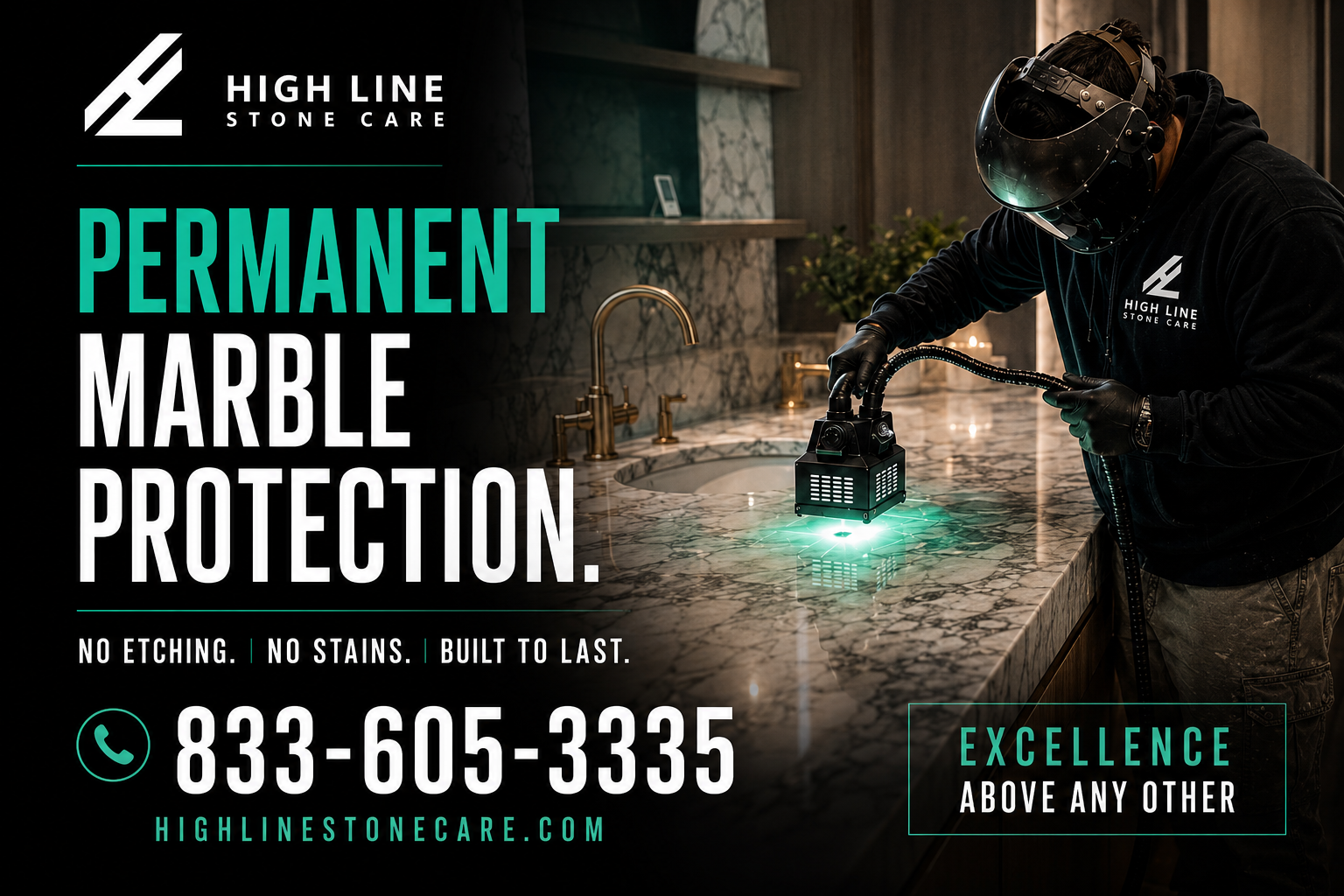
Request an on-site estimate and review the written scope before any work begins. Book through the Opal Luxury Anti-Acid Sealer page or call to schedule a site inspection.
Useful sources and a protection-type comparison
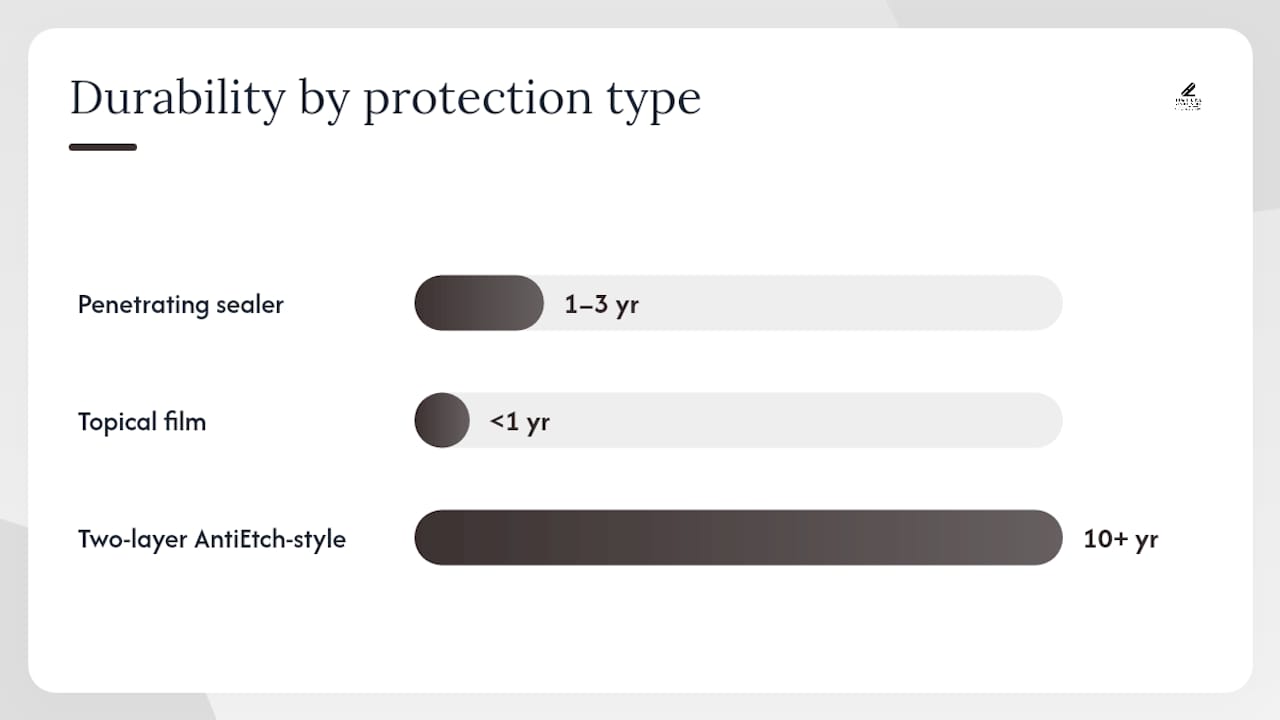
The following sources inform the technical claims in this article and support further reading on stone protection strategies for NYC properties.
| Protection type | Longevity | Acid/etch resistance | Penetration | Aesthetic effect | Maintenance frequency |
|---|---|---|---|---|---|
| Penetrating sealer | 1–3 years typical | Stain resistance only; no etch protection | Deep, into stone pores | Natural look preserved | Annual or biennial reapplication |
| Topical film | Varies; often under 1 year | Surface-level barrier; limited acid defense | Surface only | Adds sheen; may alter appearance | Frequent; wears with traffic |
| Two-layer AntiEtch-style | 10+ years claimed | Penetrating + film intercepts acid contact | Deep + surface | Enhanced, controlled sheen | Reduced; suited to high-use areas |
A sealer is not a shield against etching. Acids react with calcium carbonate in marble and travertine regardless of whether a penetrating sealer is present. Only a two-layer system with a surface film provides meaningful acid interception. For kitchens, bars, and high-traffic lobbies, advanced anti-etch formulas reduce maintenance demands and long-term restoration costs. Always confirm warranty terms and request a written reapplication schedule from your contractor.
This article provides general information about professional stone protection services. Confirm current product specifications, warranty terms, and service scope directly with your contractor before booking.
Key Takeaways
Professional-grade, two-layer anti-etch protection applied by a certified contractor delivers materially longer durability and acid resistance than any single-product retail sealer available to NYC homeowners.
| Point | Details |
|---|---|
| Etching vs. staining | Penetrating sealers prevent staining but do not stop acid etching; only a two-layer system addresses both. |
| Longevity gap | AntiEtch-style systems are reported by manufacturers to provide much longer protection than traditional penetrating sealers, which generally require reapplication within a few years. |
| Professional concentration | Professional sealers use higher active concentrations and better carrier systems, producing deeper, longer-lasting penetration. |
| Questions to ask | Request a satisfaction guarantee, before-and-after photos, on-site testing, and a written cure schedule before any job. |
| Highlinestonecare Opal | Highlinestonecare’s Opal Premium Anti-Acid Sealer is a single-application, long-duration system covering marble, granite, travertine, limestone, and terrazzo across NYC properties. |
The case for professional protection over retail kits
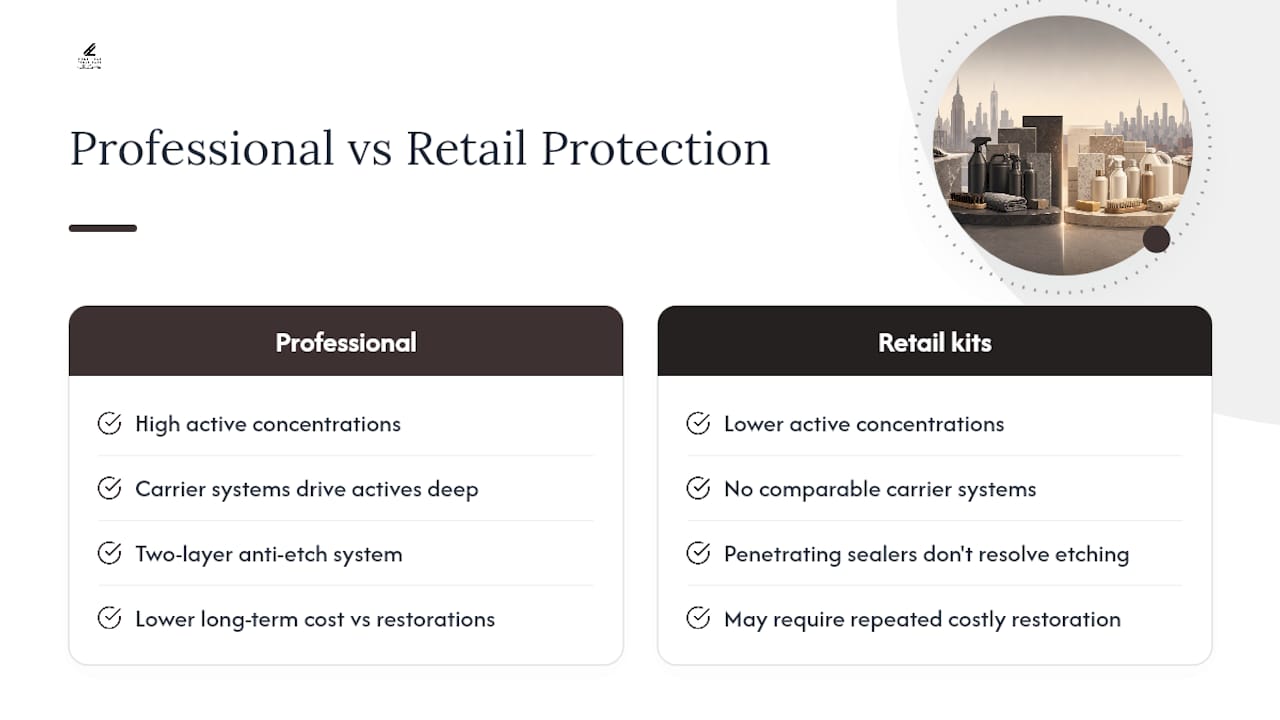
Most homeowners underestimate how different professional stone care is from what they can buy and apply themselves. The gap is not about effort or technique. It is about chemistry. Professional carrier systems drive active ingredients into stone at concentrations that consumer products cannot match, and two-layer anti-etch systems address a failure mode (etching) that no retail penetrating sealer resolves. For a marble kitchen countertop in a Manhattan apartment, or a travertine lobby floor in a luxury condo building, the cost of a professional application is almost always lower than the cost of repeated restoration after acid damage accumulates. The common stone care mistakes that lead to that damage are well-documented, and most of them trace back to the assumption that a retail sealer provides the same protection as a professionally applied, tested system. It does not.
Recommended
- Natural stone types for NYC homes: features, care, and selection
- Common Stone Problems in NYC: What Owners Must Know
- Stone care terms explained: Expert guide for NYC homes