
Marble countertops etched by a lemon wedge. Travertine floors dulled by years of foot traffic. Limestone bathroom walls stained from hard New York City water. These are not rare occurrences in upscale NYC homes and buildings. They are everyday realities, and the frustrating part is that most of this damage is completely preventable. With the right knowledge, the right products, and a consistent routine, you can protect your investment and keep every stone surface looking its best for years to come.
Table of Contents
- Assessing your stone surfaces: Types and risks
- Gathering your tools and products
- Step-by-step routine for cleaning, sealing, and protecting
- Troubleshooting and maintenance mistakes to avoid
- Verifying results and maintaining long-term beauty
- Hard-won lessons from real NYC stone care
- Get expert help for flawless stone surfaces
- Frequently asked questions
Key Takeaways
| Point | Details |
|---|---|
| Know your stone | Correct identification lets you avoid hidden risks and use the right protection method. |
| Use the right products | Penetrating sealer and etch resistant coatings are key for durability and stain resistance. |
| Routine matters | Consistent cleaning and sealing keep stone surfaces beautiful and safe from damage. |
| Avoid shortcuts | Common mistakes like using acidic cleaners or skipping sealers cause costly repairs. |
| Pros save money long-term | Expert assessments and maintenance prevent the need for expensive restoration. |
Assessing your stone surfaces: Types and risks
With the problem defined, it’s crucial to first understand the unique materials and risks involved before you touch a single cleaning product.
Natural stone is not one material. Marble, granite, limestone, travertine, and slate each behave differently under stress, moisture, and cleaning chemicals. Marble and limestone are calcium-based, which makes them highly reactive to acids. Granite is denser and more resistant to staining, but it still needs sealing. Travertine has natural pores that trap dirt and moisture if left unprotected. Slate is tough but can flake if treated with the wrong products.
As a Manhattan property owner, you also face unique environmental pressures. Urban pollutants, hard city water, and high-traffic use accelerate wear on stone surfaces far faster than in suburban settings. A surface that might last a decade without attention in a low-traffic home can show significant deterioration within two or three years in a busy NYC building.
Here are the most common vulnerabilities by stone type:
- Marble and limestone: Etching from acids (citrus, vinegar, wine, cleaning products), staining from oils and colored liquids, and surface scratching from grit tracked in from city streets
- Travertine: Moisture absorption into natural voids, staining, and surface erosion in high-traffic areas
- Granite: Staining from oils and dark liquids, though etching is rare
- Slate: Surface flaking, scratching, and staining if not sealed properly
Spotting existing damage early matters. Look for dull patches on polished marble (a sign of etching), dark spots near grout lines (moisture absorption), or white haze on sealed surfaces (a sign of failed sealer). Catching these issues early saves significant money compared to full expert stone restoration later.
| Stone type | Typical issues | Best protection method |
|---|---|---|
| Marble | Etching, staining, scratching | Penetrating sealer plus etch resistant coating |
| Limestone | Etching, moisture damage | Penetrating impregnator, etch protection treatment |
| Granite | Staining, minor scratching | Penetrating sealer, regular reapplication |
| Travertine | Void absorption, staining | Fill voids, penetrating sealer |
| Slate | Flaking, surface staining | Penetrating sealer, avoid abrasives |
It is worth noting that penetrating impregnators reduce water and oil absorption by 85 to 95% but do not prevent acid etching on marble or limestone. etch resistant coatings provide that additional layer of protection. This distinction is critical and often misunderstood.
Gathering your tools and products
After identifying your stone and trouble spots, you’re ready to gather the right products for the task.
Using the wrong cleaner is one of the most common and costly mistakes NYC homeowners make. Bleach, vinegar, and general-purpose bathroom sprays are all acidic or abrasive. On marble or limestone, a single application can etch the surface permanently. On granite, repeated use strips the sealer and leaves the stone vulnerable to staining.
Here is what you actually need:
- pH-neutral stone cleaner: Safe for all natural stone, removes daily grime without damaging the surface
- Microfiber cloths: Non-abrasive, highly absorbent, and effective at picking up fine particles without scratching
- Non-abrasive scrubbing pad: For tougher spots without scratching polished surfaces
- Stone-specific penetrating sealer: Designed to soak into the stone and repel water and oil
- etch resistant coating (for marble and limestone): Provides a reactive barrier against acid damage
- Stone-safe poultice: For drawing out deep stains from porous surfaces
The difference between sealers matters enormously. Topical sealers are unsuitable for countertops because they peel under heat and heavy traffic. Penetrating sealers absorb into the stone for a natural look and long-term durability. For kitchen countertops especially, a penetrating, food-safe sealer is the only appropriate choice.
| Product type | Best for | Avoid on |
|---|---|---|
| pH-neutral cleaner | All stone types | Nothing, safe universally |
| Penetrating sealer | All natural stone | Polished surfaces needing gloss |
| etch resistant coating | Marble, limestone | Granite, slate |
| Topical/wax sealer | Decorative pieces | Kitchen counters, high-traffic floors |
| Acidic cleaner | Nothing stone-related | All natural stone |
Pro Tip: In NYC, stone care supply stores in the Flatiron District and online retailers that ship same-day in Manhattan often carry concentrated pH-neutral cleaners. Buying concentrate and diluting it yourself cuts costs significantly over time. A single bottle of concentrate can last six months for a standard kitchen and bathroom routine.
For surfaces that need more than basic cleaning, consider professional stone cleaning before applying any new sealer. Sealing over dirt or residue locks the problem in rather than solving it. And when it’s time to seal, working with specialists in stone sealing services ensures the right product is matched to your specific stone.

Step-by-step routine for cleaning, sealing, and protecting
With tools at the ready, you can confidently move on to the actual maintenance process.
A consistent routine is what separates stone that ages beautifully from stone that deteriorates quickly. Here is a practical process for NYC homes and buildings:
- Daily cleaning: Wipe surfaces with a damp microfiber cloth and a few drops of pH-neutral cleaner. Do not let water pool, especially on marble or travertine. Dry the surface after cleaning.
- Weekly cleaning: Use a slightly more diluted pH-neutral cleaner solution for a thorough wipe-down. Pay attention to grout lines, edges near sinks, and areas around faucets where mineral deposits build up.
- Monthly inspection: Check for new dull spots, dark stains, or areas where water absorbs quickly. These are early warning signs that need prompt attention.
- Sealing schedule: Most residential stone surfaces need resealing every 12 to 18 months. High-traffic areas like kitchen counters may need it every 6 to 12 months. Apply sealer to a clean, dry surface, let it absorb for the time specified on the product label, then buff off the excess with a clean cloth.
- etch protection application (for marble and limestone): After sealing, apply an etch resistant coating according to the manufacturer’s instructions. This step is especially important in kitchens and bathrooms where acidic substances are common.
Warning: Kitchen and bathroom marble surfaces face constant acid exposure from citrus, coffee, wine, toothpaste, and common cleaning sprays. Standard sealers do not block acid reactions. Without an etch resistant coating, even a freshly sealed marble countertop can etch within days of use.
The distinction between protection types is important. Standard sealers prevent stains only, while etch resistant coatings block acid reactions for high-end kitchens where marble is exposed to daily acid contact. This is a critical upgrade for any marble kitchen in NYC.
Pro Tip: To test if your sealer is still working, place a few drops of water on the stone surface and wait five minutes. If the water beads up, the sealer is intact. If the water darkens the stone or absorbs in, it is time to reseal. Do this test quarterly in high-use areas.
For stone care services that go beyond routine maintenance, or for surfaces that need honing and polishing before resealing, professional help delivers results that DIY methods simply cannot match. For specialized surfaces like terrazzo or Jerusalem gold, specialty stone cleaning requires specific techniques and products.
Troubleshooting and maintenance mistakes to avoid
Once you’re comfortable with the proper routine, knowing how to troubleshoot and what to avoid is essential.
Even with the best intentions, mistakes happen. Recognizing the signs of damage early and knowing what not to do can save you thousands in restoration costs.
Signs of trouble to watch for:
- Dull or hazy patches on polished marble or limestone (etching from acid contact)
- Dark spots or rings that don’t wipe away (staining from oil or moisture penetration)
- Water absorbing into the surface instead of beading (failed or expired sealer)
- White powdery residue on stone (efflorescence from moisture moving through the stone)
Immediate damage control for spills: Blot, do not wipe. Wiping spreads the spill and drives it deeper into pores. Use a clean cloth to blot up as much liquid as possible, then clean the area with a pH-neutral cleaner immediately. For oil-based spills, a stone-safe poultice applied overnight can draw the stain out before it sets permanently.
Common mistakes that cause expensive damage:
- Using vinegar, lemon juice, or bleach to clean stone surfaces
- Letting water sit on marble or travertine after mopping or cleaning
- Skipping the sealer because the stone “looks fine”
- Over-waxing floors, which builds up a yellow residue and traps dirt
- Using steam cleaners on stone, which can force moisture into pores and loosen grout
- Placing hot pans directly on marble countertops
Penetrating impregnators reduce absorption by 85 to 95% but they will not stop acid etching. This is why so many homeowners feel confused when their “sealed” marble still gets dull spots. The sealer did its job. The etching happened because the stone needed an etch resistant coating as well.
When damage is already visible, DIY correction has limits. Deep etching, severe staining, or scratched polished surfaces require professional honing and polishing to restore. Manhattan stone restoration specialists have the equipment and compounds to remove damage and bring surfaces back to their original finish without causing further harm.
Pro Tip: Schedule a professional stone inspection once a year, even if everything looks fine. Professionals spot early-stage damage that is invisible to the untrained eye. Catching a small etch or failing sealer early costs a fraction of what a full restoration runs.
Verifying results and maintaining long-term beauty
Now that you’ve solved today’s issues and prevented common mistakes, it’s essential to maintain results for the long run.
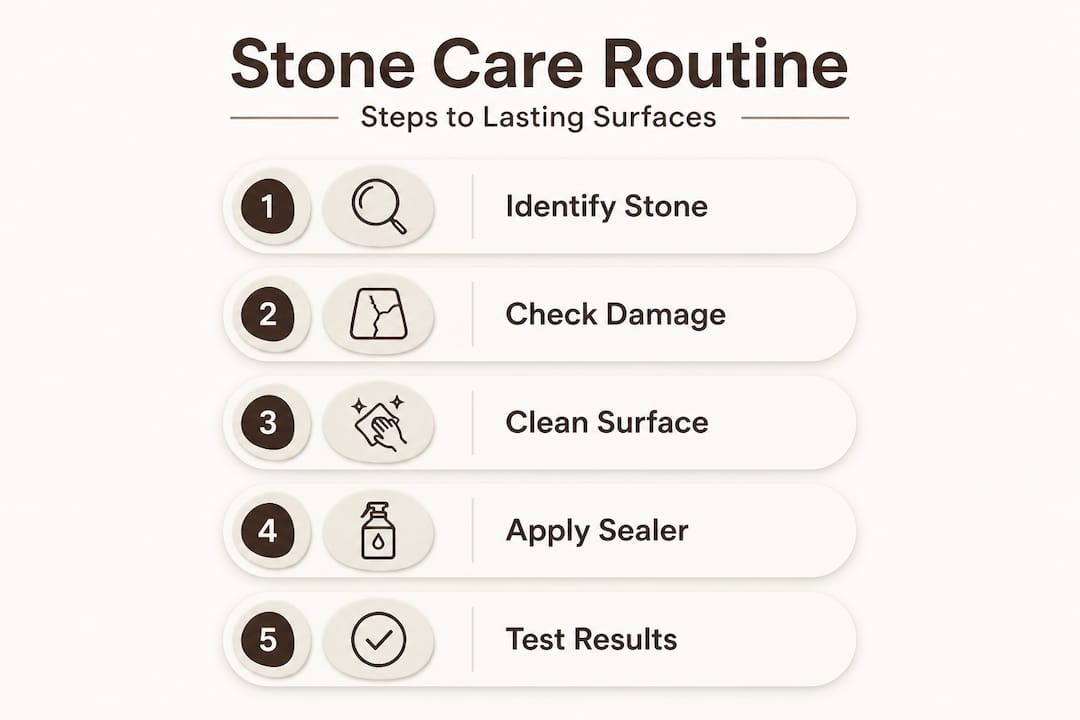
Checking your work is just as important as doing it. A few simple tests and a consistent schedule keep your stone surfaces in peak condition year after year.
The water droplet test is the fastest way to verify sealer performance. Drop a small amount of water on the surface. If it beads and sits on top, the sealer is working. If it absorbs or darkens the stone, resealing is overdue. Penetrating impregnators reduce absorption by 85 to 95% when properly applied, so a good sealer should produce clear, consistent beading.
| Surface area | Cleaning frequency | Resealing frequency |
|---|---|---|
| Kitchen countertops | Daily wipe, weekly deep clean | Every 6 to 12 months |
| Bathroom vanities | Daily wipe, weekly deep clean | Every 12 months |
| Stone floors (high traffic) | Daily sweep, weekly mop | Every 12 months |
| Stone floors (low traffic) | Weekly sweep and mop | Every 18 to 24 months |
| Outdoor stone surfaces | Monthly clean | Every 12 months |
Long-term maintenance musts:
- Keep a dedicated stone cleaner in every bathroom and the kitchen. Never substitute with general cleaners.
- Use stone-safe mats or coasters under glasses, vases, and appliances on stone countertops.
- Reseal on schedule, not just when damage appears. Prevention is always cheaper than repair.
- Address grout maintenance alongside stone care. Dirty or cracked grout accelerates moisture damage to surrounding stone.
- Work with trusted stone repair specialists for any restoration work rather than attempting DIY grinding or polishing.
Routine correction prevents major costs. A small etch treated promptly with a professional polish costs a fraction of a full countertop restoration. Consistency is the single most powerful tool you have.
Hard-won lessons from real NYC stone care
Stepping back, even detailed instructions can miss some lessons learned from years working with NYC’s most demanding stone surfaces.
The reality is that NYC stone care is not the same as stone care anywhere else. The city’s hard water leaves mineral deposits that accelerate sealer breakdown. Urban pollution settles into porous surfaces faster than in cleaner environments. High-rise buildings with forced-air heating dry out stone surfaces, making them more prone to cracking and absorption. These are factors that generic guides simply do not address.
One of the most common patterns we see is homeowners who follow instructions perfectly but still end up with damaged marble. The reason is almost always the same: they used a quality sealer but skipped the etch resistant coating. They protected against stains but left the surface exposed to the acid damage that is unavoidable in a working kitchen. This is not a failure of effort. It is a knowledge gap that costs real money.
Another pattern is the “I’ll get to it” approach to resealing. A sealer that was applied 18 months ago and never retested may have failed six months ago. Every day of unprotected stone exposure in a busy NYC home adds up. By the time visible damage appears, the repair cost is often five to ten times what a timely reseal would have cost.
The most valuable investment a property owner can make is a relationship with a reputable NYC stone professional. Not just for emergencies, but for annual checkups and honest assessments. Professionals who know your specific stone, your building’s conditions, and your usage patterns can give targeted advice that no general guide can replicate. Practical stone restoration advice from experienced specialists saves money over time and protects the value of your property.
DIY maintenance is absolutely worth doing. But knowing when to call in professional support is just as important as knowing how to clean and seal. The two approaches work best together.
Get expert help for flawless stone surfaces
If you want professional results with less stress, connect with trusted experts who know NYC stone intricacies.
Highline Stone Care works with homeowners and property managers across Manhattan, Westchester County, SoHo, Tribeca, and the Upper West Side to deliver tailored stone care solutions for every surface type. Whether your marble needs etch protection, your travertine floors need deep cleaning and resealing, or your limestone walls need professional restoration, our team brings the right products and expertise to every job.
As NYC stone restoration experts, we offer prompt service, free estimates, and a satisfaction guarantee on all work. From comprehensive stone care services to specialized stone sealing, every service is matched precisely to your stone type and condition. Contact Highline Stone Care today to schedule your free assessment and keep your surfaces looking exceptional for years to come. Excellence Above Any Other!!
Frequently asked questions
How do I know when to reseal my stone surface?
Conduct a water droplet test. If water darkens or absorbs into the stone within minutes rather than beading on the surface, it is time to reseal. Penetrating impregnators reduce absorption by 85 to 95% when working correctly, so clear beading is the standard to aim for.
What’s the difference between stain prevention and etch prevention?
Stain prevention blocks oils and water from penetrating the stone, while etch prevention protects against acid damage that causes dull spots. Standard sealers prevent stains only, while etch resistant coatings block acid reactions and are essential for marble in kitchens and bathrooms.
Are all stone sealers safe for kitchen countertops?
No. Only food-safe, penetrating sealers or specialty etch resistant coatings are appropriate for kitchen surfaces. Topical sealers are unsuitable for countertops because they peel under heat and heavy daily use.
What if my marble still gets dull spots after sealing?
Etching from acids can occur even on sealed marble because standard sealers do not block acid reactions. etch resistant coatings provide additional protection against this type of damage, and a professional can restore existing dull spots through honing and polishing.
Recommended
- Stone Cleaning Queens | Specialized Services – Highline Stone Care
- Stone Restoration NYC | Expert Stone Repair & Maintenance Services
Article generated by BabyLoveGrowth