
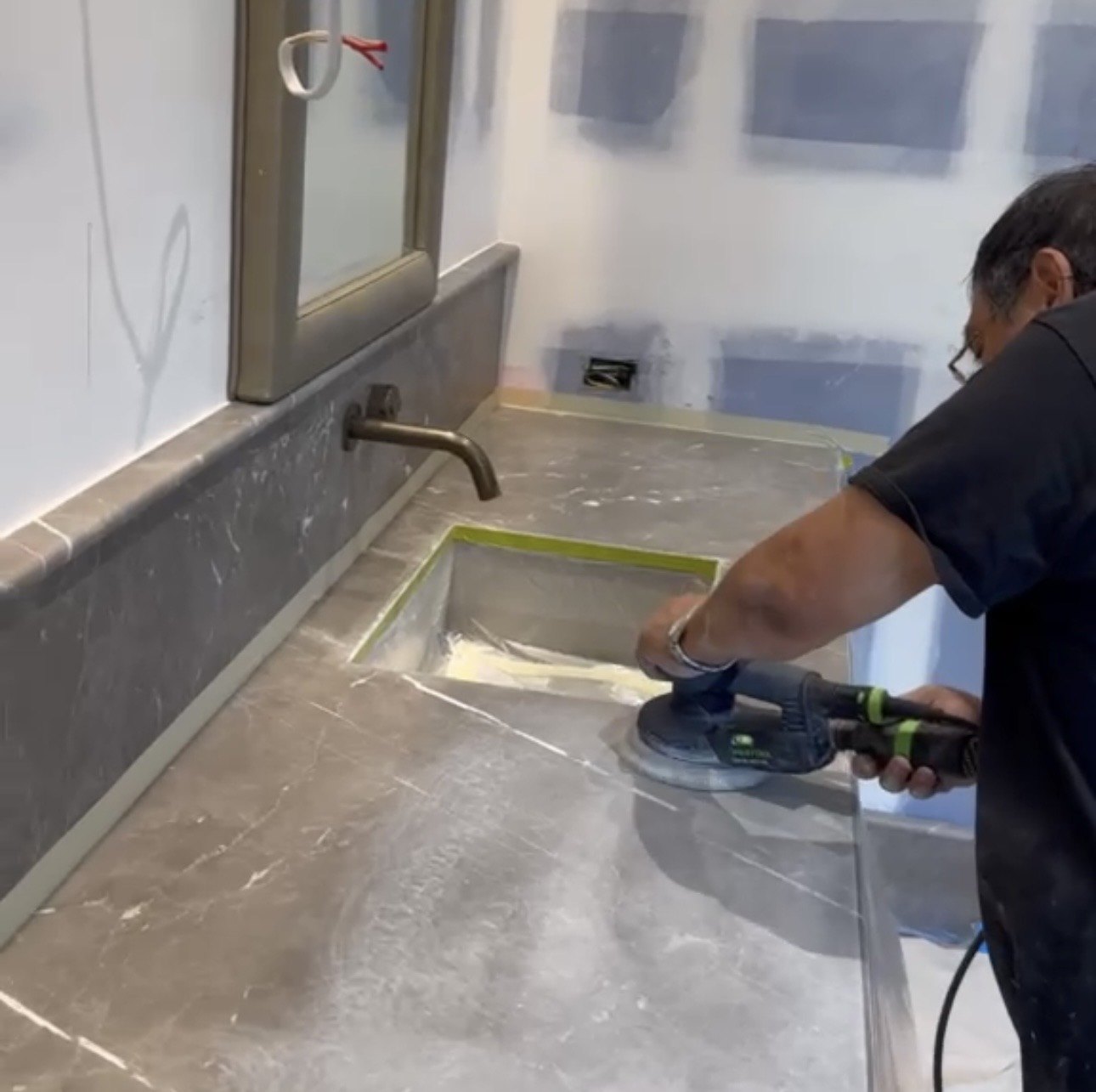
What to expect from stone polishing in NYC
Stone polishing restores the visual finish of natural stone such as marble, granite, and limestone. A trained technician uses a sequence of abrasives to reduce surface irregularities so light reflects more evenly, producing the glossy or satin look you associate with polished stone. Polishing can significantly improve appearance when the surface is in good condition, but it is not a universal fix for all types of damage.
Polishing vs. restoration: choosing the right service
Understanding the difference between polishing and full restoration helps you get the outcome you want and avoid unnecessary work:
- Polishing is appropriate when the stone is structurally sound and the main issue is loss of gloss, haze, or very fine surface scratches. The process focuses on refining the existing surface finish.
- Restoration is appropriate when the surface has visible etch marks, scratches, chips, uneven areas, or stains that have penetrated the stone. Restoration typically includes grinding or honing to remove deeper damage followed by polishing as a final step.
Polishing a stone that needs restoration can leave the surface shiny but still visibly damaged. Ask a technician to evaluate whether restoration is needed before polishing begins.
How professional stone polishing is done
Professional polishing often involves a graded sequence of abrasives that progressively smooth the stone at a microscopic level. Providers typically move from coarser to finer grits until the desired sheen is achieved. Proper technique, equipment, and an understanding of the stone type are important to prevent over-grinding or uneven results.
What to look for in a local stone polishing provider
When comparing companies or contractors in New York City, consider these practical factors:
- Method and equipment — Ask whether the provider uses mechanical abrasive systems (commonly diamond abrasives) rather than only topical liquid polishes. Mechanical abrasives physically refine the stone surface; topical products can temporarily increase shine but do not remove deeper imperfections.
- Process transparency — Request a written estimate and a clear description of the proposed process, including what steps are included (e.g., honing, polishing, sealing) and how many abrasive steps will be used.
- Examples of similar work — Ask to see photos or case descriptions of jobs on the same stone type and in comparable settings.
- Review sources — Look for independent, detailed reviews from previous clients rather than only short testimonials on the company website. Independent platforms often provide more context about the work performed.
- Sealing options — Discuss sealing after polishing. Sealing and polish are distinct: sealing is part of maintenance to reduce staining and can affect how the surface responds to cleaning and acids.
- Written details of any guarantees — If a provider offers a warranty or service agreement, ask for the terms in writing so you can compare coverage and exclusions.
Sealing and protective options
After polishing, many owners choose to have their stone sealed. Conventional sealers are designed to reduce liquid penetration and make routine cleaning easier. There are also specialty protection products that are marketed for additional resistance to acid etching or staining; these options vary in chemistry and performance. When evaluating protection options, ask for written details about expected benefits, maintenance requirements, and any limitations. Avoid absolute claims; performance depends on the product, the stone, and site conditions.
Costs and getting an accurate quote
Costs depend on stone type, surface condition, repair needs, finish requested, and project size. Polishing-only work is typically less extensive than restoration that includes etch or scratch removal. The most reliable way to understand cost is to request an on-site assessment and a written estimate that lists the scope of work, materials, and any additional charges.
Service areas
Providers serving the New York metro area often cover the following locations:
- Manhattan (Upper West Side, Upper East Side, Midtown, Chelsea, Financial District)
- Queens (Fresh Meadows)
- Brooklyn (Coney Island)
- Nassau County (Great Neck, Lawrence, Five Towns)
- Westchester County
How to prepare for a polishing or restoration visit
- Clear the work area of loose items and personal belongings.
- Ask whether any adjacent surfaces require protection during work.
- Request a timeline estimate for each stage of the work as part of the written quote.
- Confirm the cleaning and maintenance steps you should follow after the job is complete.
Frequently asked questions
Will polishing remove etch marks and deep scratches?
Polishing can reduce the appearance of very fine surface scratches and restore gloss, but deeper etch marks and scratches usually require restoration steps such as honing or grinding before polishing can achieve a uniform result. A site inspection will determine what is necessary.
How long will a polish last?
There is no single answer: longevity depends on stone type, foot or surface traffic, cleaning habits, exposure to acids, and whether an appropriate sealer or protection system is applied. Regular maintenance and careful cleaning help extend the visual quality of a polished surface.
Is sealing required after polishing?
Sealing is a maintenance choice that can reduce liquid penetration and simplify cleaning. It does not make stone impervious to damage. Discuss conventional sealers versus specialty protective treatments with your provider and ask for written information about expected performance and maintenance needs.
What questions should I ask before hiring?
Key questions include: what polishing method will be used, what steps are included in the written estimate, what type of sealer or protection is recommended, and can you see examples of comparable work. Also ask about insurance coverage and written details of any warranty or service agreement.
Next step
To get a reliable recommendation and cost estimate, request an on-site assessment and a written estimate that outlines the scope of work, materials, and protection options. A visual inspection is the most accurate way to determine whether polishing alone or a restoration approach is appropriate for your stone.
Service Areas
Highline Stone Care serves residential and commercial clients across Manhattan, Queens, Brooklyn, Nassau County, and Westchester County. Confirmed coverage includes the Upper West Side, Upper East Side, Midtown, Chelsea, and the Financial District in Manhattan; Fresh Meadows in Queens; Coney Island in Brooklyn; and Great Neck, Lawrence, and the Five Towns in Nassau County. Contact the team to confirm availability for a specific project location.