
Natural stone surfaces are classified by two criteria: geological origin and applied finish. Together, these two factors determine how a surface looks, how long it lasts, and how much care it demands. With granite, marble, and quartzite representing over 90% of the natural stone countertop market in the U.S., most homeowners and property managers will encounter these materials in nearly every renovation project. Stone surface types explained properly means understanding both the stone itself and the finish applied to it. Get either wrong, and you risk choosing a beautiful material that performs poorly in its environment.
What are the main stone surface types and geological categories?
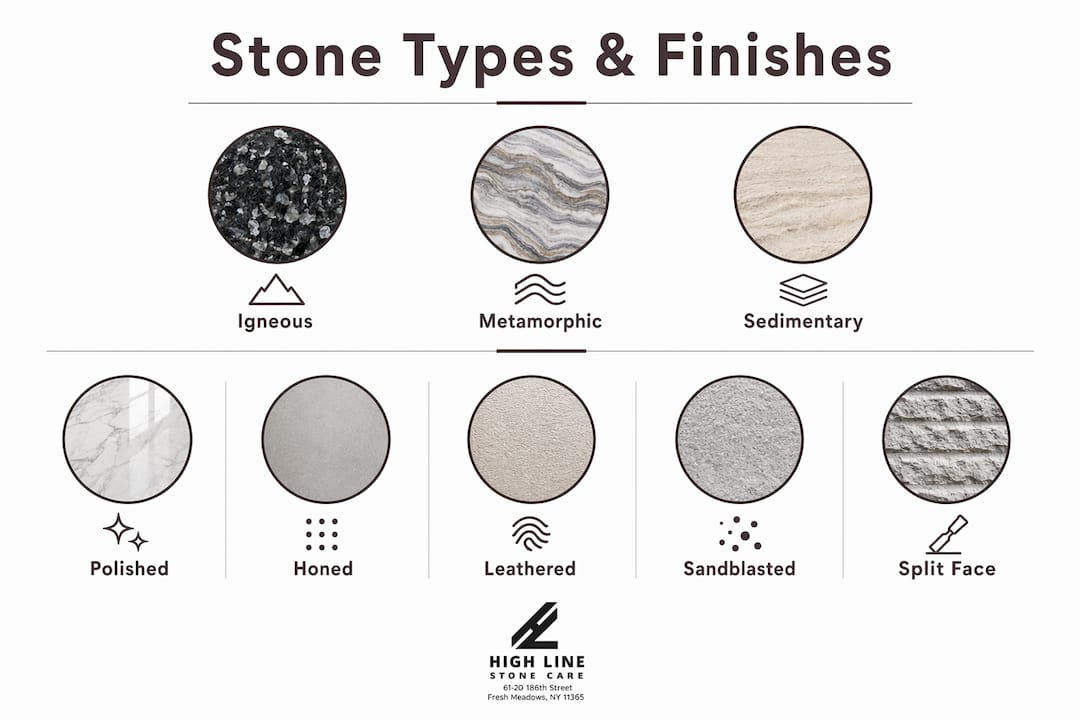
Natural stone falls into three geological categories: igneous, metamorphic, and sedimentary. Each category reflects how the stone formed underground, and that formation process directly shapes the stone’s hardness, porosity, and suitability for different uses.
Igneous stone: granite and its properties
Granite is the most widely used igneous stone in residential and commercial settings. It forms when magma cools slowly deep within the earth, producing a dense, interlocking crystal structure. That structure gives granite exceptional hardness and low porosity, making it one of the most durable countertop materials available. Granite resists scratches, tolerates heat well, and holds up under heavy daily use without significant surface degradation.
Metamorphic stone: marble and quartzite
Marble and quartzite are metamorphic stones, formed when existing rock is subjected to intense heat and pressure over geological time. Marble originates from limestone and carries a calcium carbonate composition that makes it reactive to acids. A drop of lemon juice or vinegar on an unsealed marble surface causes etching, a dull patch where the acid dissolves the calcium at the surface. Quartzite, by contrast, forms from sandstone and becomes one of the hardest natural stones available, often harder than granite, while retaining the elegant veining that many homeowners associate with marble.
Sedimentary stone: limestone, sandstone, and travertine
Sedimentary stones form from compressed organic material and mineral deposits over millions of years. Limestone, sandstone, and travertine all belong to this category. These stones tend to be softer and more porous than igneous or metamorphic options. Travertine, for example, forms near hot springs and contains natural voids that require filling before installation. Sedimentary stones offer warm, earthy aesthetics but demand more attentive sealing and cleaning routines to prevent staining and surface wear.
| Stone Type | Geological Category | Hardness | Porosity | Common Use |
|---|---|---|---|---|
| Granite | Igneous | High | Low | Countertops, flooring |
| Marble | Metamorphic | Medium | Medium-high | Bathrooms, feature walls |
| Quartzite | Metamorphic | Very high | Low | Countertops, high-traffic floors |
| Limestone | Sedimentary | Low-medium | High | Wall cladding, outdoor paving |
| Travertine | Sedimentary | Low-medium | Very high | Flooring, pool surrounds |
| Sandstone | Sedimentary | Low | High | Exterior cladding, garden paths |
How do different stone surface finishes alter aesthetics and performance?
The finish applied to a stone surface changes its appearance, texture, slip resistance, and stain behavior. Two slabs of the same marble can look and perform completely differently depending on the finish chosen. Understanding natural stone finishes is as important as choosing the stone type itself.
Polished finish
A polished finish is produced by grinding the stone surface up to 3,000+ grit, creating a mirror-like sheen that amplifies the stone’s color and veining. That high gloss makes polished marble or granite visually striking in bathrooms, foyers, and feature walls. The process partially closes the stone’s surface pores, which improves stain resistance compared to raw stone. However, polished surfaces show micro-abrasions easily, meaning scratches and dull patches become visible with regular use. Polished finishes carry a slip resistance rating of approximately R9, which limits their suitability for wet or high-traffic floor applications.
Honed finish
A honed finish stops the grinding process between 400 and 800 grit, producing a smooth, matte surface without the reflective sheen of a polished finish. Honed stone feels soft underfoot and reads as understated and elegant in design terms. The matte surface hides micro-abrasions better than a polished finish, making it a practical choice for floors and kitchen countertops that see daily wear. For projects with long lifecycles and heavy foot traffic, matte and honed finishes outperform polished surfaces in concealing scratches and surface wear over time.
Leathered and brushed finishes
Leathered finishes combine hand finishing and abrasive brushing techniques to create a surface that resists wear while offering a distinctive tactile experience. The result is a velvety, slightly textured surface with depth that neither polished nor honed finishes can replicate. For kitchen countertops specifically, leathered finishes hide fingerprints and everyday wear far better than polished alternatives. Brushed finishes follow a similar process but produce a slightly more uniform texture, often used on flooring and wall cladding where a consistent look is preferred.
Sandblasted and split face finishes
Sandblasted finishes use high-pressure abrasive blasting to create a rough, matte surface with strong slip resistance. Sandblasted stone reaches slip resistance ratings of up to R11, making it well suited for outdoor terraces, pool surrounds, and commercial walkways. Split face finishes are even rougher, exposing the natural fracture planes of the stone. Split face finishes are unsuitable for kitchen countertops but perform well as exterior cladding where texture and visual depth are priorities.
Pro Tip:Choose your finish before you choose your stone color. The same slab looks dramatically different in polished versus leathered form, and the finish will determine your daily maintenance routine far more than the stone type alone.
| Finish | Grit Level | Slip Rating | Best Use | Maintenance Level |
|---|---|---|---|---|
| Polished | 3,000+ | R9 | Bathrooms, feature walls | High |
| Honed | 400–800 | R10 | Floors, kitchen countertops | Medium |
| Leathered | Variable | R10–R11 | Kitchen countertops, bars | Low-medium |
| Brushed | Variable | R10 | Flooring, wall cladding | Medium |
| Sandblasted | Coarse | R11 | Outdoor paving, pool areas | Low |
| Split face | Raw | R12+ | Exterior cladding | Very low |
What are the maintenance considerations for different stone surface types?
Maintenance regimes are frequently overlooked during stone selection, yet appropriate sealing and care directly determine how long a stone surface retains its appearance. The stone type and finish together dictate how often sealing is needed and which cleaning methods are safe.
Marble requires professional sealing every 6–12 months due to its higher porosity and acid sensitivity. Granite, being denser and less porous, typically needs sealing every 1–3 years. That difference in sealing frequency translates directly into long-term maintenance costs and effort. Travertine and limestone, with their high porosity, often require sealing as frequently as marble and benefit from impregnating sealers that penetrate below the surface rather than sitting on top.
Finish type also affects how visible damage becomes over time. Polished marble shows etching and scratches clearly because the high-gloss surface amplifies any surface disruption. A honed or leathered finish on the same marble will conceal minor etching and daily wear far more effectively. For homeowners who want the elegance of marble without constant vigilance, a honed or leathered finish is the more forgiving choice.
Cleaning practices matter as much as sealing. Acidic cleaners, including many common household products, cause etching on marble and limestone regardless of sealing status. pH-neutral stone cleaners protect the surface and the sealer. Abrasive scrubbing pads scratch polished surfaces and should never be used on any finished stone. For guidance on protecting stone countertops from daily damage, a consistent routine of gentle cleaning and periodic professional inspection makes the biggest difference.
Pro Tip:Test your stone’s sealing status by placing a few drops of water on the surface. If the water beads up, the sealer is intact. If it absorbs within a few minutes, the stone needs resealing.
How to choose the right stone surface for your project
Choosing the right stone surface requires matching the stone’s properties and finish to the specific demands of the space. The following criteria provide a practical framework for that decision.
Assess traffic and use intensity. High-traffic floors need hard, low-porosity stones like granite or quartzite with honed or brushed finishes. Polished marble in a busy hallway will show wear within months.
Match porosity to moisture exposure. Bathrooms and kitchens expose stone to water and spills daily. Lower-porosity stones like granite and quartzite perform better in these environments. If marble is chosen for a bathroom, professional sealing with an acid-resistant product is non-negotiable.
Align finish with safety requirements. Outdoor areas and wet floors require finishes rated R11 or higher. Sandblasted and split face finishes provide the grip needed for pool surrounds and exterior terraces. Polished finishes belong indoors in dry, low-traffic areas.
Balance aesthetics with maintenance willingness. Polished marble is visually stunning but demands attentive care. Leathered granite offers a distinctive look with significantly less upkeep. Homeowners who prefer low-maintenance surfaces should prioritize harder stones with matte or leathered finishes.
Consider long-term lifecycle costs. A softer sedimentary stone installed in a high-traffic area will require more frequent restoration than a harder metamorphic or igneous option. Factor in professional stone restoration costs over a 10-year horizon when comparing materials.
Account for tactile and sensory experience. Leathered and brushed finishes create a unique tactile depth that polished surfaces cannot replicate. In living spaces where touch and ambiance matter, finish texture contributes meaningfully to the overall experience of the space.
Key takeaways
The most important decision in any stone surface project is matching geological type and finish to the specific demands of the environment, not choosing based on appearance alone.
| Point | Details |
|---|---|
| Geological type sets the baseline | Igneous stones like granite offer the highest durability; sedimentary stones need the most care. |
| Finish determines daily performance | Polished finishes show wear quickly; honed and leathered finishes hide scratches and fingerprints better. |
| Sealing frequency varies by stone | Marble needs sealing every 6–12 months; granite typically needs it every 1–3 years. |
| Slip resistance follows finish type | Polished surfaces rate R9; sandblasted surfaces reach R11, making finish a safety decision outdoors. |
| Maintenance shapes long-term value | Choosing the right stone without a care plan leads to premature deterioration and costly restoration. |
What I’ve learned after years of working with stone surfaces
The most common mistake I see homeowners make is choosing a stone for its appearance in a showroom and ignoring how it will perform in the actual space. Polished white marble looks extraordinary under showroom lighting. In a busy kitchen, that same surface shows every water ring, every acid etch, and every scratch within weeks of installation.
Finish choice matters more than most people realize. A leathered or honed finish on the same marble slab will age gracefully in a kitchen, hiding the minor damage that accumulates with daily use. The stone’s beauty remains intact because the finish does not amplify every imperfection the way a high-gloss polish does.
Sedimentary stones like travertine and limestone deserve more credit than they typically receive. They bring warmth and texture that harder stones cannot match. The trade-off is a more attentive maintenance routine, and that is a trade-off worth making if you go in with clear expectations and a proper sealing plan.
The detail that surprises most homeowners is how much the sealing decision affects long-term outcomes. A premium impregnating sealer applied correctly at installation, and refreshed on schedule, changes the entire maintenance picture. Surfaces that would otherwise etch or stain remain clean and elegant for years. Professional application matters here because coverage consistency and product selection are not straightforward decisions for non-specialists.
— High
Professional stone care that protects your investment
Choosing the right stone and finish is only half the equation. Long-term performance depends on professional-grade protection applied correctly from the start.
Highlinestonecare offers advanced stone sealing services and full stone polishing for marble, granite, quartzite, and other natural stone surfaces across New York City. For marble surfaces requiring permanent acid protection, the Opal Luxury Anti Acid Sealer provides lasting defense against etching and staining with a single professional application. Whether you are installing new stone or restoring an existing surface, Highlinestonecare’s team brings the expertise to protect your stone for the long term. Contact Highlinestonecare to schedule a consultation and keep your surfaces looking their best.
FAQ
What are the main types of natural stone surfaces?
Natural stone surfaces fall into three geological categories: igneous (granite), metamorphic (marble, quartzite), and sedimentary (limestone, sandstone, travertine). Each category has distinct hardness, porosity, and maintenance requirements.
Which stone surface finish is best for kitchens?
Leathered and honed finishes perform best in kitchens because they hide fingerprints, minor scratches, and everyday wear better than polished finishes. Polished surfaces show etching and micro-abrasions quickly in high-use environments.
How often does marble need to be sealed?
Marble typically requires professional sealing every 6–12 months due to its higher porosity and sensitivity to acids. Granite, being denser, usually needs sealing every 1–3 years.
What slip resistance rating should outdoor stone have?
Outdoor stone surfaces should carry a slip resistance rating of R11 or higher. Sandblasted finishes reach R11, while split face finishes exceed that, making both suitable for pool surrounds, terraces, and exterior walkways.
Is quartzite harder than granite?
Quartzite is often harder than granite, making it one of the most durable natural stone options available. It combines the visual elegance of marble-like veining with the performance characteristics of a very hard metamorphic stone.
Recommended
- Stone care terms explained: Expert guide for NYC homes
- NYC Stone Care Guide: Expert Steps for Long-Lasting Surfaces
- Different Stone Polishing Methods for Homeowners
- What Is Stone Surface Etching: A Homeowner’s Guide