
Marble stains are defined as permanent discoloration caused by pigmented or oily liquids penetrating the stone’s microscopic pores and depositing color beneath the surface. Unlike a smudge you can wipe away, these stains embed themselves inside the stone’s structure through a process called capillary action, where liquid is drawn inward by the porous microstructure. Understanding what causes marble stains is the first step toward protecting a surface that represents a significant investment in any home or property. The difference between a stain and a surface mark determines everything about how you respond, and most homeowners get this wrong.
What causes marble stains at the structural level
Marble is composed primarily of calcium carbonate, a mineral that forms the dense crystalline structure giving the stone its characteristic beauty. That same structure contains microscopic pores and connected channels that allow liquids to migrate inward. Permeability governs liquid migration, meaning not all pores are created equal. Some pores are isolated and trap liquid without spreading it, while connected pore networks allow a spill to travel deeper into the stone with every passing minute.
When a pigmented liquid enters those connected channels, the pigment molecules bond chemically with the calcite crystals lining the pore walls. This is why a red wine spill left on marble for even 20 minutes can leave a faint pink shadow that no surface cleaner will touch. The liquid evaporates, but the pigment stays behind, locked inside the stone. Oil-based substances behave similarly, coating pore walls with a hydrophobic film that traps further contamination and darkens the stone over time.
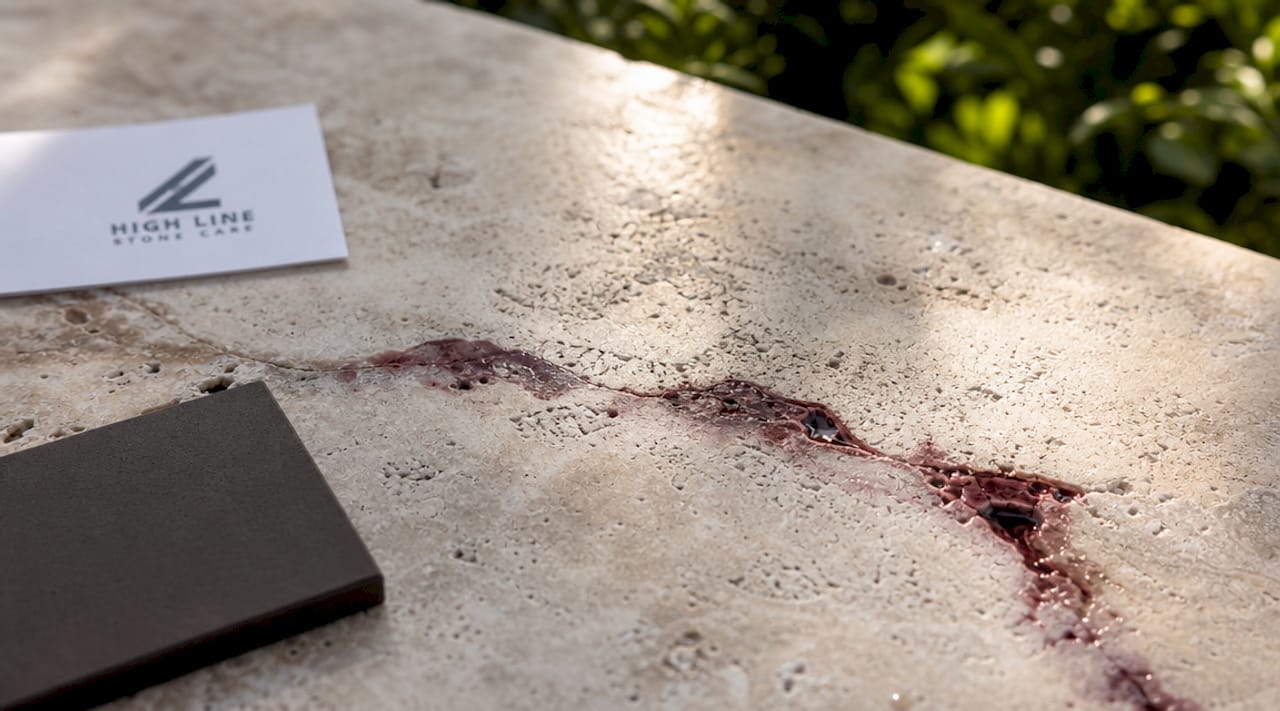
Pro Tip: Test your marble’s absorbency by placing a few drops of water on the surface. If the water soaks in within three to five minutes rather than beading up, your sealer has worn off and the stone is actively vulnerable to staining.
Key structural factors that determine staining risk include:
- Porosity: The percentage of void space within the stone. Higher porosity means more room for liquids to occupy.
- Permeability: How easily liquid moves between connected pores. High permeability accelerates stain depth.
- Surface finish: Polished marble has a denser, more closed surface than honed marble, which slows initial absorption.
- Sealer condition: A functioning impregnating sealer fills pore openings and slows capillary action without altering the stone’s appearance.
Common causes of marble stains in residential settings
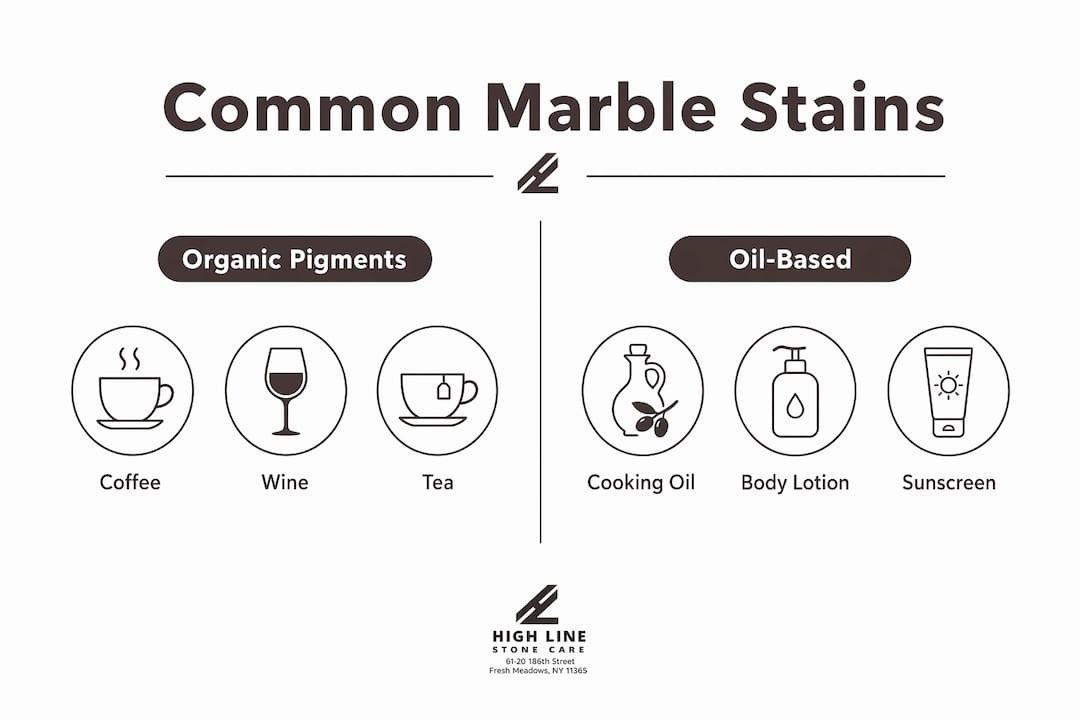
Common marble stains originate from four primary categories: organic pigmented liquids, oil-based substances, rust from metal contact, and mineral deposits from water. Each category behaves differently inside the stone and requires a different removal approach.
Organic pigmented liquids are the most frequent culprits in kitchens and dining areas. Coffee, red wine, tea, and fruit juices all carry tannins and anthocyanins, which are deeply colored organic compounds that bond readily with calcite. A coffee ring near the kitchen sink or a wine splash on a marble dining table are classic examples. The longer these liquids sit, the deeper the pigment migrates.
Oil-based substances are common in bathrooms and kitchens. Cooking oil, body lotion, sunscreen, and grease from food preparation leave a darkened, slightly greasy-looking patch that resists water-based cleaners entirely. These stains often appear as a gray or yellow-brown shadow and are particularly stubborn on honed marble, which absorbs liquids faster than polished surfaces.
Rust stains appear when metal objects sit on damp marble. A cast iron pan, a metal canister, or a steel wool pad left on a wet marble countertop will leach iron oxide into the stone, producing an orange or brown discoloration that penetrates deeply and requires specialized rust removers formulated for calcite-based stones.
The table below summarizes the most common stain types, their typical sources, and their visual characteristics:
| Stain type | Common sources | Visual appearance |
|---|---|---|
| Organic pigment | Coffee, wine, tea, juice | Pink, brown, or yellow tint |
| Oil-based | Cooking oil, lotion, grease | Dark gray or yellow-brown shadow |
| Rust | Metal objects on wet marble | Orange or reddish-brown mark |
| Mineral deposit | Hard water, tap water residue | White or chalky haze |
How are marble stains different from etching?
Etching is a chemical reaction between acidic substances and marble’s calcium carbonate surface. Acids dissolve the calcite crystals at the surface, leaving a dull, slightly rough patch where the stone’s polished finish once was. Etching is surface damage, not pigment deposition. This distinction matters enormously because the two problems require completely different solutions.
Many homeowners confuse the two, and the confusion leads to wasted effort and sometimes additional damage. A dull ring left by a lemon wedge or a glass of sparkling water is almost certainly etching, not a stain. Applying a poultice or stain remover to an etch mark will accomplish nothing. Conversely, scrubbing a deep oil stain with an acidic cleaner in an attempt to “cut through” the grease will etch the surrounding surface while leaving the stain untouched.
Key distinctions between stains and etching:
- Stains are caused by pigments or oils penetrating below the surface. They appear as a color change and are not affected by light angle.
- Etching is caused by acid dissolving the surface calcite. It appears as a dull or matte patch and is most visible when light rakes across the surface at a low angle.
- Sealers protect against stains by slowing liquid absorption. They offer no protection against etching because acid reacts with the calcite regardless of whether pores are sealed.
- Etching requires mechanical restoration such as polishing or honing to restore the surface. Stains require chemical extraction through poultice treatments or professional cleaning.
Understanding this difference also explains why many marble owners mistakenly blame their sealer when they see dull marks appear. The sealer did not fail. The acid simply bypassed it entirely.
How to prevent marble stains with the right maintenance habits
Proper sealing and regular maintenance are the most effective tools for reducing staining risk on marble surfaces. Prevention is far less costly than restoration, and a consistent routine protects both the stone’s appearance and its long-term value.
Follow these steps to build a prevention routine that works:
- Seal marble surfaces with a penetrating impregnating sealer. Standard sealers require reapplication every 6 to 12 months. The sealer fills pore openings and slows capillary absorption, buying you time to clean a spill before it becomes a stain. Highlinestonecare’s Opal Luxury Anti-Acid Permanent Sealer is designed to provide lasting protection without the need for frequent reapplication.
- Clean spills immediately. Blot the spill with a clean cloth rather than wiping, which spreads the liquid. The faster you act, the shallower the penetration.
- Use only pH-neutral cleaners. Acidic cleaners such as vinegar, lemon-based products, and many commercial bathroom sprays will etch marble on contact. Alkaline cleaners above pH 10 can also damage the surface over time. Stick to products specifically labeled safe for natural stone.
- Place cutting boards, coasters, and trivets on marble work surfaces. Direct contact between acidic foods, hot pans, and marble is one of the most preventable causes of damage in residential kitchens.
- Consider your finish choice carefully. Honed marble stains easier than polished marble due to its more open surface structure. If you have honed marble in a high-use area, increase your sealing frequency and be especially vigilant about spill cleanup.
Pro Tip: In bathrooms, the most overlooked staining risk is body lotion and hair products. Apply these products away from marble surfaces and rinse the stone with clean water after any contact. Oil-based residues from personal care products are among the hardest stains to remove once set.
Sealing is best understood as a delay mechanism rather than a permanent barrier. Sealers slow absorption and extend the window for cleanup, but they do not make marble stain-proof. Timely action after a spill remains the single most important preventive step a homeowner can take.
What are the most effective marble stain removal methods?
Every stain type requires a specific removal method, and using the wrong approach can worsen the stain or cause etching. The standard professional technique for treating stained marble surfaces is a poultice, which is an absorbent paste applied over the stain that draws pigment or oil back out of the pores as it dries.
Removal approaches by stain type:
- Organic stains (coffee, wine, tea): Apply an enzyme-based poultice or a hydrogen peroxide paste mixed with a neutral powder such as diatomaceous earth. Cover with plastic wrap, tape the edges, and leave for 24 to 48 hours. The poultice draws the pigment upward as it dries.
- Oil stains: Use a solvent-based poultice or a mixture of baking soda and acetone. Oil stains often require two or three applications before the shadow fully lifts.
- Rust stains: Use a rust remover specifically formulated for calcite-based stone. Standard rust removers contain acids that will etch marble. Products from stone care specialists are pH-adjusted to remove iron oxide without attacking the calcite.
- Mineral deposits: Treat with a stone-safe descaler or a diluted solution of a neutral stone cleaner. Never use vinegar or citric acid-based descalers on marble.
The table below outlines treatment options and their limitations:
| Stain type | Recommended treatment | Key limitation |
|---|---|---|
| Organic pigment | Enzyme or hydrogen peroxide poultice | May require multiple applications |
| Oil-based | Solvent or baking soda poultice | Deep stains may need professional extraction |
| Rust | Stone-safe rust remover | Standard rust removers cause etching |
| Mineral deposit | Stone-safe descaler | Acidic descalers damage calcite surface |
When household poultice treatments fail after two or three attempts, the stain has likely penetrated beyond the depth that surface extraction can reach. At that point, professional marble restoration services are the appropriate next step. Professionals use deeper extraction methods, specialized chemical formulations, and mechanical polishing to address stains that DIY methods cannot resolve. Attempting to force results with stronger household chemicals at this stage risks etching the surface and compounding the damage.
Key takeaways
Marble stains result from pigmented or oily liquids penetrating the stone’s pore network and bonding chemically with calcite, making prompt cleanup and proper sealing the most effective defenses available to homeowners.
| Point | Details |
|---|---|
| Stains vs. etching | Stains are pigment below the surface; etching is acid damage to the surface itself. |
| Porosity drives risk | Connected pore networks allow liquids to migrate deeper, worsening stain severity over time. |
| Sealing buys time | Impregnating sealers slow absorption but require reapplication every 6 to 12 months. |
| Finish affects susceptibility | Honed marble absorbs liquids faster than polished marble and stains more readily. |
| Match treatment to stain type | Organic, oil, rust, and mineral stains each require different removal products and methods. |
Why most marble stain problems are preventable with the right knowledge
After working with marble surfaces across hundreds of residential and commercial properties in New York City and New Jersey, the pattern I see most consistently is this: the damage was avoidable. Not because homeowners are careless, but because they were never told the right information at the start.
The most common mistake is treating marble like a sealed, impervious surface once a sealer has been applied. Homeowners apply a sealer once, feel reassured, and then stop thinking about it. Two years later, the sealer has worn down, and a single bottle of olive oil left on a wet countertop leaves a stain that requires professional extraction. The sealer was never meant to last indefinitely. It was meant to be maintained.
The second most common mistake is confusing etching for staining and then applying the wrong treatment. I have seen clients spend weeks trying to poultice out a mark that was actually an etch, growing increasingly frustrated when nothing worked. Once you understand that etching is surface dissolution and not pigment penetration, the correct response becomes obvious: mechanical restoration, not chemical extraction.
Marble rewards owners who understand its nature. It is a living stone in the sense that it responds to its environment, absorbs what it contacts, and shows the history of how it has been treated. That is part of its character. With the right marble maintenance routine and realistic expectations, marble surfaces can remain elegant for decades. The goal is not to make marble invincible. The goal is to stay ahead of the risks with consistent, informed care.
— High
Protect your marble surfaces with expert care from Highlinestonecare
Highlinestonecare provides advanced stone restoration and protection services for homeowners and property managers across New York City and New Jersey. Whether you are dealing with a set-in organic stain, an oil shadow that poultice treatments have not resolved, or a surface that has lost its finish to years of etching, the team at Highlinestonecare delivers professional assessment and lasting results. Their signature Opal Luxury Anti-Acid Permanent Sealer offers protection that standard sealers cannot match, addressing both stain and etch risk in a single application. For professional marble restoration or a customized maintenance plan, contact Highlinestonecare to schedule a consultation. You can also explore stone sealing services designed to extend the life of your marble investment.
FAQ
What causes marble stains that won’t come out?
Stains that resist surface cleaning have penetrated deep into marble’s connected pore network, where pigment or oil has bonded chemically with the calcite. These require a poultice treatment or professional extraction rather than standard wiping or scrubbing.
Is every dark mark on marble a stain?
Not all dark marks are stains. Dull or matte patches are typically etching caused by acid contact with the calcite surface, not pigment penetration. Etching appears as dull spots and is unaffected by stain removal products.
How often should marble be sealed to prevent staining?
Standard penetrating sealers require reapplication every 6 to 12 months depending on use and traffic. Sealers slow liquid absorption but do not eliminate staining risk, so prompt spill cleanup remains necessary regardless of sealer condition.
Does polished marble stain less than honed marble?
Yes. Polished marble has a denser, more closed surface that slows initial liquid absorption compared to honed marble. However, both finishes require sealing and regular maintenance to minimize staining risk in high-use areas.
Can I remove a rust stain from marble at home?
Rust stains require a rust remover specifically formulated for calcite-based stone. Standard rust removers contain acids that will etch marble. If a stone-safe product does not resolve the stain after two applications, professional marble stain removal is the recommended next step.