
Granite stain removal is defined as the process of extracting absorbed substances from granite’s porous surface using stain-specific chemical agents. Knowing how to remove stains from granite correctly matters because granite is porous, and stain removal is a chemistry problem, not just surface cleaning. The wrong product can set a stain deeper or cause permanent surface damage. The professional poultice method is the industry standard for deep stain extraction, and it works by drawing absorbed material out of granite’s pores through controlled evaporation. This guide covers stain identification, the poultice technique, daily maintenance, and when to call a professional.
How to remove stains from granite: start by identifying the stain type
Correct stain identification is the most critical factor for successful removal. Granite being porous means that different substances penetrate at different rates and respond to different chemical agents. Applying the wrong cleaner does not just fail. It can bond the stain further into the stone or cause etching.
The six major stain categories found on granite surfaces are:
- Oil-based stains: Cooking oil, grease, butter, and cosmetics leave dark, greasy marks that spread outward from the source. These require an alkaline degreaser in the poultice mixture.
- Organic stains: Coffee, tea, wine, fruit juice, and food leave brownish or pinkish discoloration. Hydrogen peroxide is the correct chemical agent for these.
- Metal stains: Iron or rust from cans, pots, or metal fixtures leave orange or brown rings. These need a reducing agent formulated for rust removal.
- Biological stains: Mold, mildew, and algae appear as dark or greenish patches, often near sinks or in humid areas. Diluted hydrogen peroxide addresses these effectively.
- Ink stains: Pen marks or dye leave sharp-edged discoloration. Acetone or mineral spirits work for most ink types, depending on the ink base.
- Etching: This is not a stain. Etching is surface chemical damage caused by acids like lemon juice or vinegar and appears as dull, matte spots on polished granite. It cannot be cleaned away and requires professional polishing.
Identifying the source of the mark tells you which chemical to use. A dark, spreading patch near the stove is almost certainly oil-based. A ring near the sink from a coffee mug is organic. Getting this step right saves time and protects your stone.
What is the professional poultice method for deep stain removal?
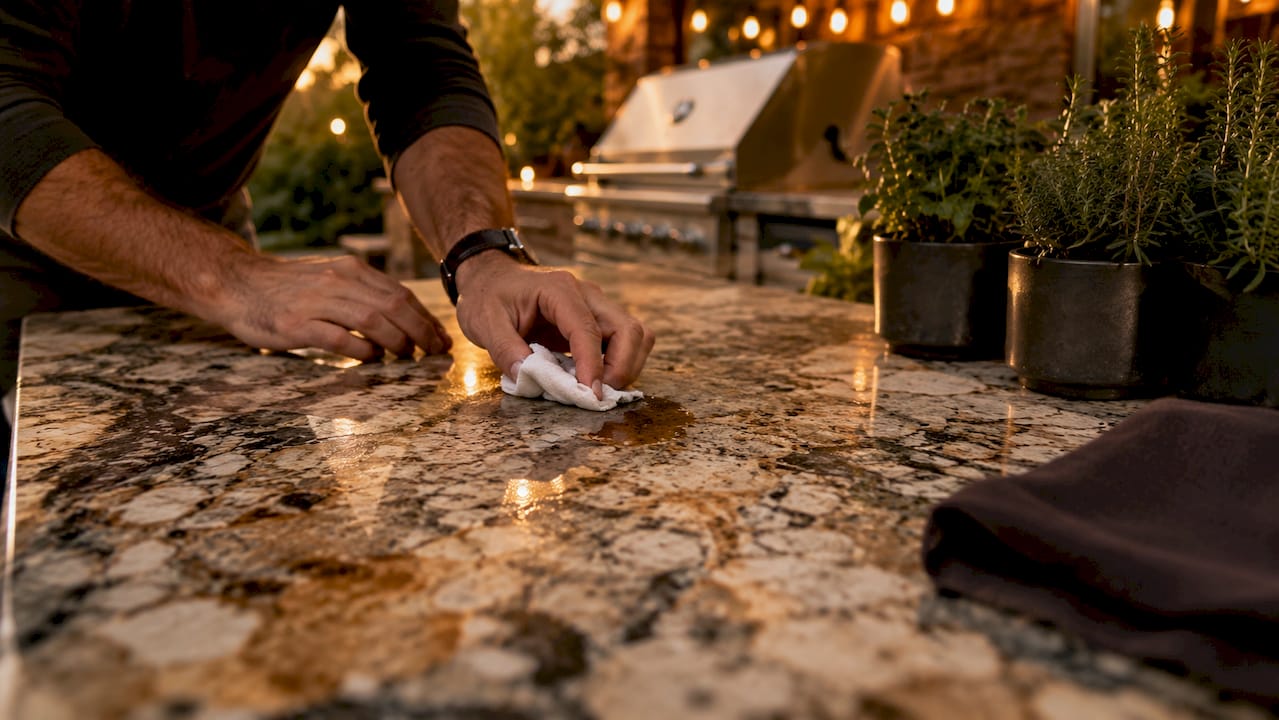
The poultice method is the professional standard for removing deep, set-in stains from granite. It uses a paste of absorbent powder and a stain-specific chemical agent to draw the absorbed substance back out of the stone’s pores. Physical scrubbing cannot reach deep stains. The poultice does the work through chemistry and controlled evaporation.
Choosing the right ingredients
The absorbent base is typically diatomaceous earth, kaolin clay, or unbleached flour. The chemical agent must match the stain type. Alkaline degreasers work for oil-based stains, hydrogen peroxide addresses organic and biological stains, and reducing agents handle rust. Using the wrong agent can fail or worsen stain extraction. Mix the powder and chemical agent to a peanut butter consistency. The paste should be thick enough to hold its shape without running.
Step-by-step application
- Clean the surface. Wipe the stained area with warm water and a soft cloth to remove surface debris. Let it dry completely.
- Apply the poultice. Spread the paste over the stain at least 1/4 inch thick, extending about 1 inch beyond the stain’s edges.
- Cover with plastic wrap. Tape the edges down with painter’s tape to seal the poultice against the stone.
- Puncture the plastic. Make small holes in the plastic wrap to allow slow, controlled evaporation. This is the key step. Controlled evaporation through small holes creates capillary action that pulls the stain out of the pores.
- Wait 24–48 hours. Do not disturb the poultice. Removing it early reduces extraction power significantly.
- Remove the poultice. Once fully dry, lift the plastic and scrape the dried paste away gently with a plastic scraper. Never use metal tools.
- Rinse and assess. Wipe the area with clean water and a soft cloth. Let it dry fully before evaluating the result.
Pro Tip: If the poultice is still damp after 24 hours, leave it in place. The drying process is the extraction mechanism. Removing it wet stops the process before it finishes.
The table below shows the correct chemical agent for each stain type:
| Stain type | Chemical agent |
|---|---|
| Oil-based (grease, cooking oil) | Alkaline degreaser |
| Organic (coffee, wine, food) | Hydrogen peroxide (12%) |
| Rust or metal | Reducing agent (rust remover) |
| Biological (mold, mildew) | Diluted hydrogen peroxide |
| Ink or dye | Acetone or mineral spirits |
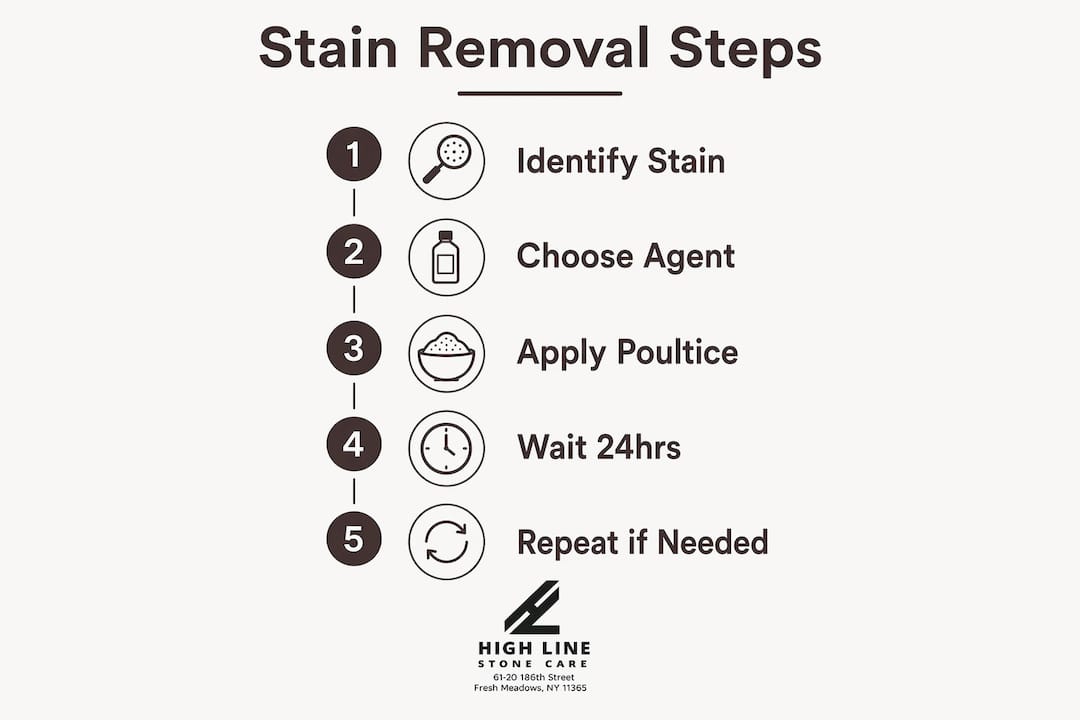
Some deep or old stains need up to five poultice cycles. Patience is not optional here. Early removal of the plastic reduces stain extraction power and extends the total treatment time.
What daily cleaning practices protect granite from staining?
Routine care is the most effective way to prevent stains from forming in the first place. Granite’s porous structure means that spills left on the surface for even a short time can begin to penetrate. A consistent daily routine protects both the stone and its sealer.
Cleaners to avoid:
- Bleach: Breaks down granite sealers and causes long-term surface degradation.
- Vinegar and lemon juice: Acidic and cause immediate etching on polished surfaces.
- Ammonia-based cleaners: Degrade sealers and dull the stone’s finish over time.
- Abrasive scrubbers: Scratch the surface and remove the protective sealer layer.
Only warm water and a pH-neutral stone cleaner or mild dish soap are recommended for daily granite maintenance. pH-neutral cleaners do not react with the stone’s minerals or break down the sealer. This preserves the surface’s protective barrier and its polished appearance.
Wipe spills immediately using a soft cloth or paper towel. Blot rather than wipe outward. Wiping spreads the liquid and increases the surface area that can absorb it. For sticky residue, dampen a cloth with warm water and let it sit on the spot for 30 seconds before blotting.
Daily cleaning with mild, pH-neutral cleaners preserves granite sealers and prevents stain penetration, extending the surface’s life. Sealer integrity is the single most important factor in stain prevention. A properly sealed granite surface resists most common household stains. Professional resealing is recommended every one to three years depending on use and traffic, and Highlinestonecare’s stone sealing services address this for homeowners and property managers across New York City.
Pro Tip: Test your granite’s sealer by placing a few drops of water on the surface. If the water beads up, the sealer is intact. If it absorbs within a few minutes, the surface needs resealing.
How do you troubleshoot common mistakes in granite stain removal?
The most common mistake homeowners make is treating etching as a stain. Etching is irreversible surface chemical damage caused by acids that dulls granite’s polished look. No amount of cleaning removes it. Professional re-polishing is the only solution. If you see a dull, matte patch where a lemon or vinegar spill occurred, stop cleaning and contact a stone care professional.
Other common mistakes include:
- Using the wrong chemical agent: Applying an acidic cleaner to an organic stain, for example, can etch the surface while leaving the stain untouched.
- Aggressive scrubbing: Physical force does not extract deep stains. It scratches the surface and removes the sealer. The chemistry of the poultice does the work, and physical force can harm the granite finish.
- Skipping the test patch: Always apply any new cleaner or poultice mixture to a small, hidden area first. Wait 24 hours before treating the visible stain.
- Removing the poultice too early: Impatience is the most common reason poultice treatments fail.
Persistent stains that show no improvement after two poultice applications signal the need for professional intervention. Further DIY attempts risk damaging the granite finish and can worsen conditions permanently. Knowing when to stop is as important as knowing how to start.
Protecting the stone’s finish during treatment means using only plastic scrapers, soft cloths, and non-abrasive tools. For homeowners managing multiple stone surfaces, the granite countertop repair guide from Highlinestonecare covers additional repair scenarios beyond stain removal.
Key Takeaways
Successful granite stain removal requires correct stain identification, the right chemical agent, and patient poultice application, with consistent daily maintenance to prevent future damage.
| Point | Details |
|---|---|
| Identify the stain type first | Oil, organic, rust, and biological stains each require a different chemical agent in the poultice. |
| Use the poultice method for deep stains | Apply a thick paste, seal with plastic, and allow 24–48 hours of controlled drying for full extraction. |
| Match chemical to stain | Alkaline degreasers handle oil; hydrogen peroxide handles organic stains; reducing agents handle rust. |
| Avoid acidic and harsh cleaners | Bleach, vinegar, and ammonia damage sealers and cause permanent etching on granite surfaces. |
| Know when to call a professional | No improvement after two poultice cycles means the stain needs professional stone care intervention. |
What working with granite has taught me about patience and prevention
The single biggest mistake I see homeowners make is reaching for the nearest household cleaner the moment a stain appears. Granite looks tough. It is tough. But its porous structure means that the wrong cleaner can cause more damage in 60 seconds than the original spill did in an hour.
The poultice method feels slow because it is slow. That is the point. The chemistry needs time to work, and the evaporation process needs to complete fully. Homeowners who lift the plastic after 12 hours and see no change assume the method failed. It did not fail. It was interrupted. I have seen stains that looked permanent come out completely after a third poultice cycle applied with full patience.
Prevention, though, is where the real value is. A well-sealed granite surface is dramatically easier to maintain. Most of the stain calls I see involve surfaces that have not been professionally sealed in years. The sealer is the first line of defense, and when it fails, the stone absorbs everything. Protecting natural stone from stains starts with the sealer, not the cleaning routine.
Old, deep stains are a different situation. If a stain has been sitting in granite for months, two poultice cycles may not be enough. That is not a failure of the method. It is a signal that the stone needs professional attention. Managing that expectation early saves homeowners from damaging their surfaces with repeated aggressive attempts.
— High
How Highlinestonecare supports granite care and long-term protection
Granite surfaces in high-use kitchens and commercial properties face constant exposure to spills, acids, and daily wear. Highlinestonecare provides professional granite restoration and stone sealing services designed for homeowners and property managers who want lasting results without the guesswork of repeated DIY treatments.
The Opal Luxury Anti Acid Sealer, available through Highlinestonecare, offers permanent protection against staining and acid damage in a single application. Unlike standard sealers that require annual reapplication, this product is formulated for longevity and aesthetic preservation. For homeowners and property managers in New York City managing premium stone surfaces, Highlinestonecare’s expert team delivers professional-grade results backed by a satisfaction guarantee.
FAQ
What is the best method for removing deep stains from granite?
The poultice method is the professional standard for deep stain removal. It uses an absorbent paste mixed with a stain-specific chemical agent, applied under plastic wrap for 24–48 hours to draw the stain out of the stone’s pores.
Can I use vinegar to clean stains from granite?
Vinegar is acidic and causes immediate etching on granite surfaces. Use only pH-neutral stone cleaners or mild dish soap with warm water for safe daily cleaning.
What is the difference between a stain and etching on granite?
A stain is an absorbed substance inside the stone’s pores. Etching is surface chemical damage from acids that dulls the polished finish. Etching cannot be cleaned away and requires professional re-polishing.
How many times should I apply a poultice before calling a professional?
Apply the poultice no more than twice. If no improvement appears after two full cycles, further DIY treatment risks permanent damage to the granite finish and professional care is needed.
How do I prevent stains on granite countertops?
Wipe spills immediately, use only pH-neutral cleaners, and maintain a quality sealer. Professional resealing every one to three years keeps the stone’s protective barrier intact and prevents most common household stains from penetrating.
Recommended
- Granite Countertop Repair: A Homeowner’s 2026 Guide
- What Causes Marble Stains: a Homeowner’s Guide
- Ways to Protect Stone Countertops: A Homeowner’s Guide
- Granite Countertop Restoration | High Line Stone Care