
Cleaning bluestone is defined as the removal of dirt, organic matter, stains, and biological growth using mild, stone-safe detergents and proper tools that protect the stone’s natural texture and color. Bluestone is a dense, calcium-bearing sedimentary stone prized for patios, walkways, and pool surrounds. It holds up well outdoors, but it reacts poorly to acidic cleaners and high-pressure washing. Knowing how to clean bluestone correctly keeps the surface looking sharp and prevents the kind of damage that requires professional restoration. This guide covers every stage, from choosing the right tools to sealing for lasting protection.
What tools and cleaners do you need for bluestone care?
The right supplies make the difference between a clean patio and a damaged one. Gather everything before you start so the process stays controlled and consistent.
Required tools:
- Soft-bristle brush or scrub brush (nylon, not wire)
- Garden hose with an adjustable nozzle
- Plastic bucket
- Rubber gloves and eye protection
- Soft, lint-free cloths for drying or spot work
- Plastic scraper for removing stuck debris
Recommended cleaners:
- A pH-neutral stone-safe cleaner mixed with warm water. A few drops of gentle dish soap in a bucket of warm water works for routine cleaning.
- Oxygenated bleach solution for algae and moss (not chlorine bleach)
- A dedicated efflorescence cleaner for white mineral deposits
- A stone-safe rust remover for iron staining
Acidic products cause permanent damage to bluestone. Vinegar and citrus cleaners etch the calcium-bearing surface, leaving dull white patches that no amount of scrubbing will reverse. Bleach strips color and weakens the stone over time. Stick to products labeled “stone safe” or “pH neutral.”
Pro Tip: Before applying any new cleaner to the full surface, spot test on a small area and let it dry completely. This reveals any adverse reaction before it spreads across your patio.
How to clean bluestone patios step by step
Proper sequence prevents streaking and residue. Skipping steps, especially the initial rinse, causes cleaner to dry too fast and leave cloudy spots on the surface.
-
Clear the surface. Remove furniture, planters, and any loose items. Sweep or leaf-blow all loose debris, grit, and leaves. Grit left on the surface acts like sandpaper under a scrub brush.
-
Rinse thoroughly. Wet the entire surface with a garden hose before applying any cleaner. Wetting the stone first prevents the cleaning solution from absorbing too quickly and drying unevenly.
-
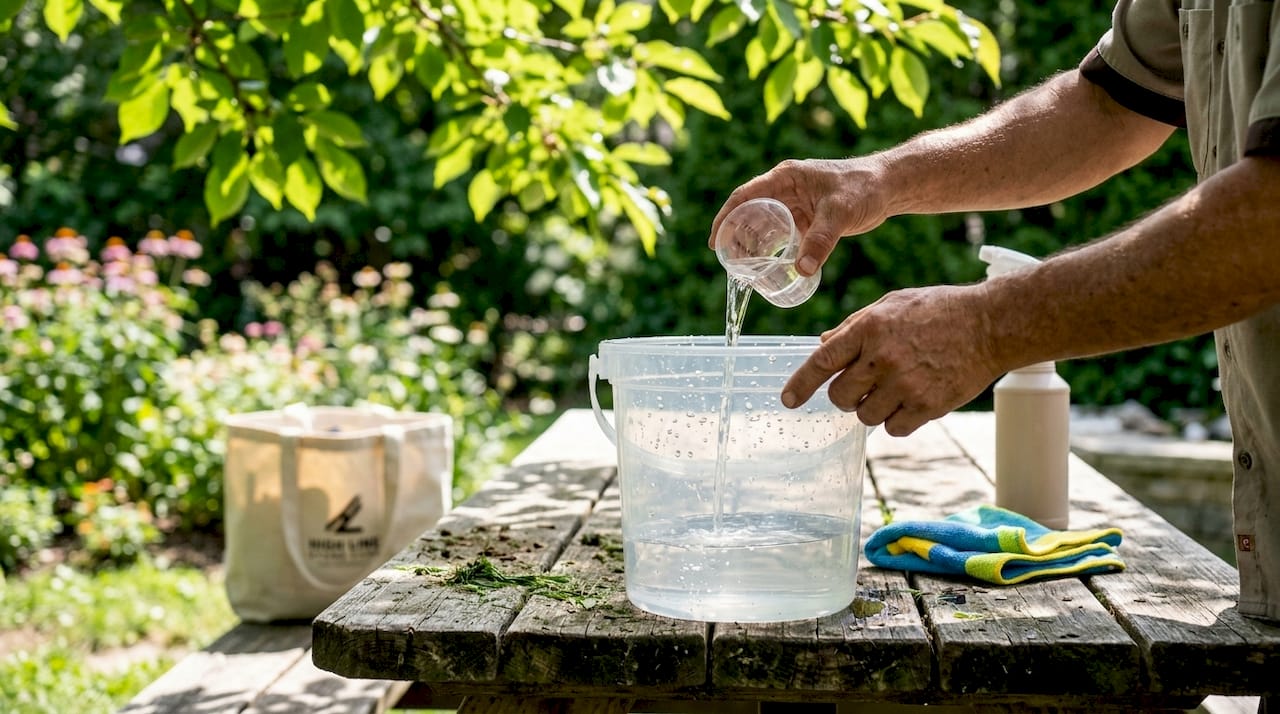
Mix your cleaning solution. Combine a pH-neutral stone cleaner or a few drops of gentle dish soap with warm water in your bucket. Do not use hot water, which can open the stone’s pores and push contaminants deeper.
-
Apply and scrub. Pour or brush the solution evenly across a manageable section. Scrub gently with a soft-bristle brush using circular strokes. Work in sections of roughly 4–6 square feet to keep the solution from drying mid-scrub.
-
Let it dwell briefly. Allow the cleaner to sit for 2–3 minutes. Do not let it dry on the surface.
-
Rinse completely. Flush the section with clean water from the hose, working the rinse water away from the stone and off the surface. Repeat for each section.
-
Inspect and repeat if needed. Walk the surface after it dries and identify any remaining spots. Targeted re-cleaning is more effective than scrubbing the whole surface again.
Pro Tip: Clean bluestone in the early morning or on a cloudy day. Direct sun dries the cleaning solution before you can rinse it, leaving behind a hazy residue that is harder to remove than the original dirt.
For homeowners managing multiple stone surfaces, Highlinestonecare’s residential stone cleaning tips cover safe methods across a range of natural stone types.
How do you remove stains and biological growth from bluestone?
Different stains require different treatments. Using the wrong product on the wrong stain makes the problem worse, not better.
Algae and moss:
Algae and moss thrive in shaded, damp areas and spread quickly across bluestone. Treat with an oxygenated bleach or oxygen-based biocidal cleaner, applied with a soft brush and left to dwell for the time specified on the product label. Rinse thoroughly. Mechanical scrubbing alone is not enough. Biocidal treatment prevents recurrence by killing the organism at the root level. Scrubbing without a biocide embeds spores deeper into the stone and leads to faster regrowth.
Rust stains:
Rust appears as orange or brown streaks, usually near metal furniture legs or iron fixtures. Use a stone-safe rust remover formulated for natural stone. Apply it directly to the stain, let it dwell per the label instructions, then rinse. Never use a general rust remover from a hardware store. Products designed for metal surfaces contain acids that etch bluestone.
Oil and grease:
Oil stains from grills, cooking, or motor vehicles require a poultice treatment. Mix an absorbent powder (such as diatomaceous earth or talc) with a degreasing stone cleaner into a thick paste. Spread the paste over the stain, cover it with plastic wrap, and tape the edges. Leave it for 24–48 hours. The poultice draws the oil out of the stone as it dries. Remove the dried paste and rinse the area clean.
Efflorescence:
Efflorescence is mineral salts crystallizing at the surface as moisture migrates up through the stone. It appears as a white haze or powdery film. A dedicated efflorescence cleaner removes the surface deposit, but the problem returns unless you fix the underlying drainage issue. Pressure washing redistributes the salts rather than eliminating them. Correct slope, pooling, and drainage first, then treat with the appropriate cleaner.
Avoiding common errors is as important as knowing the right treatments. Highlinestonecare’s guide on stone care mistakes covers the most frequent missteps homeowners make with natural stone surfaces.
When and how should you pressure wash bluestone?
Pressure washing is useful for large surfaces and heavy buildup, but only when done correctly. The wrong settings strip mortar from joints, chip the stone face, and accelerate surface erosion.
Safe pressure washing practices:
- Use a pressure washer set below 1,000 PSI. Higher pressure chips the stone surface and damages the joints between pavers.
- Fit a fan-tip nozzle and maintain a 12–18 inch distance from the surface. A narrow-stream nozzle concentrates force and cuts into the stone.
- Use long, sweeping strokes in one consistent direction. Stopping in one spot concentrates pressure and creates uneven wear.
- Always sweep and rinse the surface before pressure washing. Grit dragged under pressure acts as an abrasive and scratches the stone.
- Apply a cleaning solution first, let it dwell, then use the pressure washer to rinse. This reduces the pressure needed and protects the stone.
Pressure washing is not a substitute for targeted stain treatment. It removes surface dirt effectively, but it cannot lift oil stains, treat biological growth, or resolve efflorescence. Use it as a final rinse step, not a primary cleaning method.
How do you seal and maintain bluestone for the long term?
Sealing is the single most effective step for reducing future cleaning effort. A properly sealed surface repels water, resists staining, and slows biological growth.
Choosing the right sealer:
- A breathable penetrating impregnating sealer absorbs into the stone and protects from within without forming a surface film. This type allows moisture vapor to escape, preventing trapped water from causing spalling or freeze-thaw damage.
- Avoid topical or glossy sealers. They form a film on the surface that peels, traps moisture, and requires stripping before reapplication.
- Apply sealer only when the stone is fully clean and dry. Sealing over moisture or residue locks in the problem.
- Reapply every 2–4 years, depending on foot traffic and weather exposure. High-traffic areas and surfaces in freeze-thaw climates need more frequent attention.
Ongoing maintenance habits:
- Sweep or blow the surface weekly to remove grit and organic debris before they break down and stain.
- Clean up spills immediately. Oil, wine, and organic matter stain faster on unsealed or aging-sealed stone.
- Trim back overhanging plants and shrubs. Shade and leaf litter accelerate biological growth.
- Check drainage around the patio annually. Water pooling under or around bluestone is the primary driver of efflorescence and joint deterioration.
Pro Tip: After sealing, test the surface by dropping a few drops of water on it. If the water beads up, the sealer is working. If it absorbs within 30 seconds, the stone needs resealing sooner than the standard schedule.
For a deeper look at protecting natural stone from stains, Highlinestonecare covers sealing strategies suited to outdoor stone in a range of exposure conditions.
Key Takeaways
Effective bluestone care requires pH-neutral cleaners, proper sequencing, targeted stain treatments, and a breathable penetrating sealer applied every 2–4 years.
| Point | Details |
|---|---|
| Use pH-neutral cleaners only | Acidic products like vinegar permanently etch calcium-bearing bluestone surfaces. |
| Follow the correct cleaning sequence | Sweep, wet, apply cleaner, scrub, and rinse thoroughly to prevent streaking and residue. |
| Match treatment to stain type | Algae needs biocidal treatment; efflorescence needs drainage correction before cleaner use. |
| Pressure wash at low settings | Stay below 1,000 PSI with a fan-tip nozzle held 12–18 inches from the surface. |
| Seal with a penetrating impregnating sealer | Reapply every 2–4 years to maintain stain resistance and reduce cleaning frequency. |
What I have learned from years of working with bluestone
The most common mistake I see homeowners make is reaching for the strongest cleaner available when the surface looks bad. The instinct makes sense. A dirty patio looks like it needs aggressive treatment. But bluestone punishes that approach. Acidic cleaners, wire brushes, and high-pressure washing all cause damage that is far more expensive to fix than the original stain.
The second mistake is treating biological growth as a surface problem. Algae and moss are symptoms of a moisture and drainage issue. Scrubbing them off without addressing shade, pooling water, or drainage slope means they return within a season. The fix is rarely just a cleaning product.
What actually works is patience and sequence. Wet the stone before you clean it. Use the mildest product that gets the job done. Let the cleaner dwell instead of scrubbing harder. Rinse completely. Then seal the surface while it is clean and dry. That sequence, repeated consistently, keeps bluestone looking its best for decades.
Property managers overseeing multiple outdoor surfaces should build a cleaning schedule tied to the seasons. A thorough clean in spring removes winter debris and biological growth. A light clean in fall clears leaf tannins before they stain over winter. Sealing every few years, timed after the spring clean, keeps the protection layer active. That rhythm is far less work than reactive restoration.
— High
Professional sealing and restoration for bluestone surfaces
Highlinestonecare offers advanced stone protection services for homeowners and property managers who want lasting results beyond routine DIY cleaning.
The Opal Luxury Anti Acid Sealer provides breathable, penetrating protection against staining and acid-related surface damage. It is designed for natural stone surfaces, including bluestone patios and walkways, and is applied by trained technicians who assess the stone’s condition before treatment. For surfaces that have already sustained etching, discoloration, or biological damage, Highlinestonecare’s bluestone restoration services restore the surface before sealing, so protection is applied to a sound, clean base. Professional application removes the guesswork from sealer selection and coverage, and the results last significantly longer than consumer-grade products applied without surface preparation.
FAQ
What is the safest cleaner for bluestone?
A pH-neutral stone-safe detergent mixed with warm water is the safest option for routine cleaning. Avoid vinegar, citrus cleaners, and bleach, as these etch or discolor the stone surface.
How often should bluestone be sealed?
A breathable penetrating impregnating sealer should be reapplied every 2–4 years, depending on foot traffic and weather exposure. Test the surface with water drops annually; if water absorbs quickly, reseal sooner.
Can you pressure wash bluestone?
Yes, but only at low pressure, below 1,000 PSI, with a fan-tip nozzle held 12–18 inches from the surface. High pressure chips the stone and damages mortar joints.
What causes white haze on bluestone?
White haze is efflorescence, which is mineral salts crystallizing at the surface as moisture migrates through the stone. Fixing drainage and slope issues is required before cleaning with a dedicated efflorescence remover.
How do you remove algae from a bluestone patio?
Apply an oxygenated bleach or oxygen-based biocidal cleaner, scrub gently, and rinse thoroughly. Mechanical scrubbing alone embeds spores deeper and causes faster regrowth; biocidal treatment is required for lasting results.
Recommended
- Common Stone Care Mistakes Homeowners Must Avoid
- Residential Stone Cleaning Tips for Every Home
- Bluestone Restoration & Care NYC – Highline Stone Care
- Ways to Protect Stone Countertops: A Homeowner’s Guide