
Ways to protect stone countertops combine four disciplines: penetrating sealers to slow liquid absorption, pH-neutral daily cleaning to preserve the sealer, physical barriers like trivets and cutting boards to prevent heat and scratch damage, and immediate spill response to stop stains before they set. Natural stone surfaces, including marble, granite, and travertine, are porous materials that react chemically to acids and absorb pigmented liquids faster than most homeowners expect. Understanding each layer of protection, and how they work together, is what separates a countertop that stays pristine for decades from one that shows rings, dull patches, and discoloration within a year.
1. Apply a penetrating sealer as your first line of defense
A penetrating sealer, also called an impregnating sealer, deposits protective chemistry deep inside the stone’s pores rather than sitting on the surface. Impregnating sealers slow liquid absorption, giving you time to clean a spill before it stains. Think of it as a rain jacket for your countertop. It slows the clock, but it does not make the surface stain-proof or etch-resistant.
One critical distinction: penetrating sealers do not prevent acid etching on carbonate-based stones like marble and travertine. Etching is a chemical reaction between acid and calcium in the stone. A sealed marble countertop will still etch if lemon juice or vinegar sits on it. Sealing addresses staining risk. Etching is a separate problem that requires a different solution.
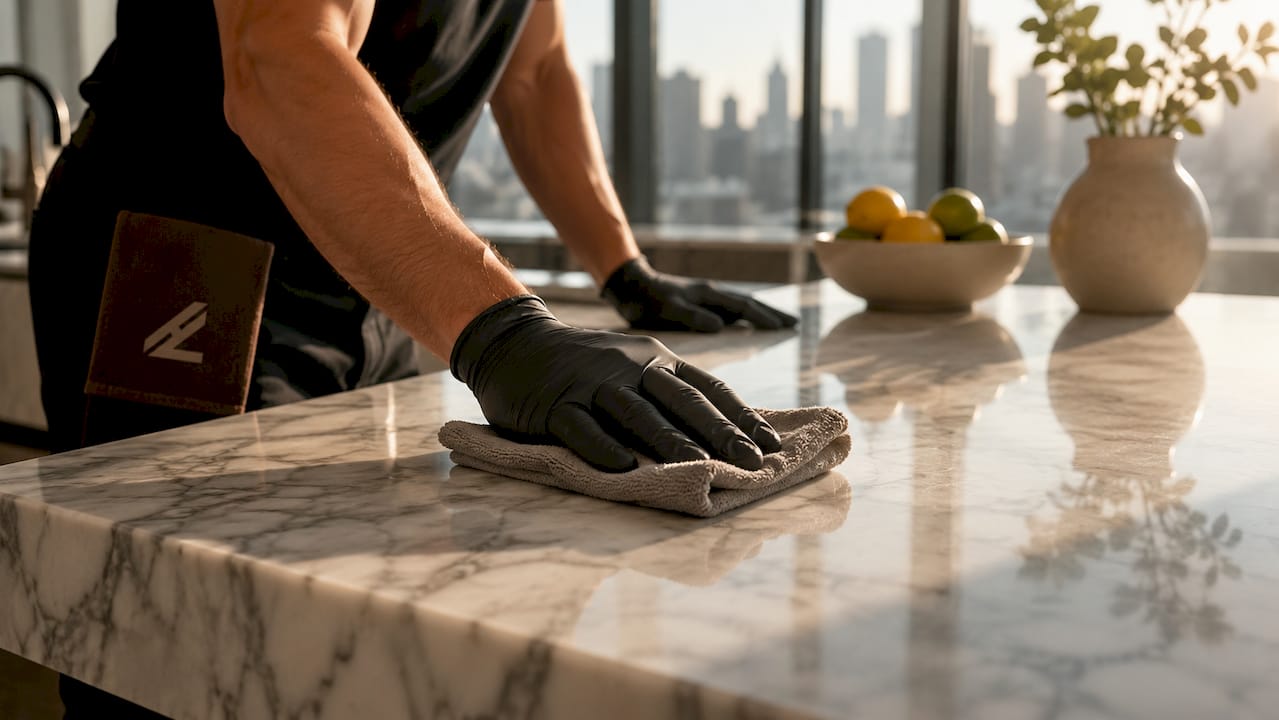
Proper application matters as much as the product itself. Sealer application requires a clean, dry surface that is free of residue. Any moisture or cleaning product left on the stone blocks the sealer from penetrating effectively. New installations should cure for 7–14 days before sealing for best results. After applying, buff off any excess sealer before it dries to avoid a hazy or streaked finish.
Pro Tip: Topical films and waxes sit on the surface rather than penetrating the stone. They can peel, yellow, or require stripping over time. For kitchen countertops, a penetrating impregnating sealer is the preferred choice for lasting protection.
2. Use the water-bead test to know when to reseal
Resealing on a fixed calendar schedule is less reliable than testing the stone directly. The water-bead test is the standard method: place a few drops of water on the countertop and wait five minutes. If the water beads or sheets off, the sealer is still active. If the water absorbs into the stone and darkens it, resealing is overdue.
Different stones absorb at different rates, so resealing intervals vary. Granite in a low-traffic kitchen may need resealing every two to three years. Travertine countertops are especially porous and typically require resealing every one to three years depending on use. Marble falls between those two, with most professionals recommending an annual check using the water-bead test.
Run the test in multiple spots, including near the sink and around the stove. Those areas see the most water and heat exposure and tend to lose sealer protection faster than the center of the counter.
3. Clean with pH-neutral soap and warm water daily
Safe daily cleaning uses warm water and a pH-neutral mild dish soap applied with a soft microfiber cloth. After wiping, dry the surface completely to prevent water spots, especially on darker stones where mineral deposits show clearly. This routine takes under two minutes and preserves both the sealer and the stone’s finish.
The products to avoid are just as important as the ones to use. Harsh chemicals strip sealers and damage stone surfaces over time. Specifically, avoid:
- Vinegar and lemon-based cleaners: Both are acidic and will etch marble and travertine on contact.
- Bleach and ammonia: These degrade sealers and can dull polished surfaces.
- Scouring powders and abrasive pads: Physical abrasion scratches the stone and removes the polished finish.
- Multi-surface sprays: Many contain citric acid or other pH-altering ingredients not listed prominently on the label.
Harsh chemical use strips sealers, causes dulling, and damages stone surfaces over time. The damage is cumulative. A single use of vinegar may not ruin a sealed granite countertop, but repeated use over months will visibly degrade the surface.
Pro Tip: For dried food or sticky residue, soak the area with warm water for a few minutes to soften it, then gently lift with a plastic scraper. Never use a metal blade or abrasive pad, even on granite.
4. Place trivets, coasters, and cutting boards on every use
Physical protection is the single most important daily care habit for maintaining stone countertops. The habit costs nothing beyond a few inexpensive accessories, yet it prevents the most common types of damage homeowners report.
- Trivets and hot pads: Hot cookware placed directly on stone can damage the sealer and, in some cases, cause thermal shock that cracks or discolors the stone. Always place a trivet or silicone hot pad under pots, pans, and electric appliances like air fryers and coffee makers.
- Coasters: A glass of water left on an unsealed or lightly sealed marble countertop leaves a ring near the sink or on the island within days. Coasters prevent that water ring from forming in the first place.
- Cutting boards: Cutting directly on stone scratches the surface and dulls the finish over time. A cutting board protects both the stone and your knife edges.
- Avoid heavy or abrasive items: Cast iron cookware, ceramic pots with rough bases, and heavy appliances dragged across the surface all cause micro-scratches that accumulate into visible dullness.
The goal is to create a layer of separation between the stone and anything that generates heat, moisture, or friction.
5. Blot spills immediately instead of wiping them
Blotting a spill rather than wiping it is one of the highest-impact habits in stone countertop care. Wiping spreads pigmented liquids like red wine, coffee, and turmeric across a larger surface area, pushing them deeper into the pores. Blotting lifts the liquid straight up, containing the damage to the original contact point.
The response steps after a spill are straightforward:
- Blot immediately. Use a clean cloth or paper towel. Press down firmly and lift straight up. Repeat with a fresh section of cloth until no more liquid transfers.
- Identify the liquid. Tannin-based liquids like coffee and red wine stain through pigment absorption. Acidic liquids like citrus juice, vinegar, and wine also etch carbonate stones chemically. Each requires awareness of the risk involved.
- Clean the area. After blotting, wipe the spot with warm water and a drop of pH-neutral dish soap. Dry it completely.
- Check for etching. On marble or travertine, run your finger over the area. A dull, slightly rough patch where the spill landed indicates etching. Etching is not a stain. It is surface damage that requires professional polishing to restore.
- Monitor the area. Check the spot over the next 24 hours. If a stain develops after drying, a poultice treatment may draw it out before it sets permanently.
Tannin and dye liquids like coffee and red wine stain more easily when allowed to dwell. Speed is the variable you control.
6. Understand the difference between staining and etching
Staining and etching are two distinct types of damage, and confusing them leads to the wrong treatment. A stain is a discoloration caused by a pigmented or oily liquid absorbing into the stone’s pores. An etch is a chemical reaction that removes the polished surface of carbonate stones like marble and travertine, leaving a dull, slightly rough patch.
Sealers reduce staining risk by slowing absorption. They do not prevent etching. Acidic spills like lemon, vinegar, or wine cause permanent etching on marble and travertine even when the stone is fully sealed. This is the most common misconception homeowners hold about stone care. A sealed marble countertop is not protected from a splash of lemon juice left sitting for ten minutes.
Granite and quartzite are silicate-based stones and do not etch from acids. Marble, travertine, and limestone are carbonate-based and will etch. Knowing your stone type determines how aggressively you need to manage acidic spills.
7. Tailor your protection routine to your specific stone type
Not all stone countertops need the same care schedule. Granite is dense and relatively forgiving. Marble is elegant but reactive to acids. Travertine is porous and requires the most frequent resealing attention. Matching your protection routine to the stone you have produces better results than applying a generic approach.
For granite, the water-bead test every 12 months is sufficient for most kitchens. Focus on protecting granite surfaces from oily spills like cooking grease, which can penetrate even well-sealed stone over time. For marble, the priority shifts to acid management. Keep citrus, vinegar, and wine away from the surface, and consider a professional-grade anti-etch treatment for high-use areas. For travertine, reseal more frequently and fill any pits or holes in the surface before sealing, as those voids collect liquid and accelerate staining.
Pro Tip: If you are unsure of your stone type, a few drops of vinegar on an inconspicuous spot will tell you quickly. Fizzing or bubbling confirms a carbonate stone that etches. No reaction indicates a silicate stone like granite.
8. Know when to call a professional
DIY maintenance handles the majority of stone countertop care. Professional intervention becomes necessary when the surface shows etching, deep stains that poultice treatments have not resolved, chips, cracks, or a loss of polish that cleaning cannot restore. Attempting to re-polish etched marble with household products typically causes more damage than it fixes.
A professional stone care service can re-hone and re-polish etched marble, apply commercial-grade penetrating sealers with deeper penetration than retail products, and treat deep stains with targeted chemistry. For homeowners in New York City, Highlinestonecare offers stone sealing and restoration services that address both staining and etching damage. Scheduling a professional assessment once a year alongside your DIY maintenance routine keeps the surface in its best condition long-term.
Key takeaways
Protecting stone countertops requires a combination of penetrating sealers, pH-neutral cleaning, physical barriers, and immediate spill response, with the routine adjusted to the specific stone type.
| Point | Details |
|---|---|
| Seal with a penetrating impregnator | Apply to a clean, dry surface and reseal when the water-bead test shows absorption within five minutes. |
| Clean with pH-neutral soap only | Avoid vinegar, bleach, ammonia, and abrasive pads, which strip sealers and dull stone finishes. |
| Use trivets, coasters, and cutting boards | Physical barriers prevent heat damage, water rings, and surface scratches on every use. |
| Blot spills, never wipe | Blotting contains pigmented liquids and reduces staining risk compared to spreading them across the surface. |
| Know your stone’s acid sensitivity | Marble and travertine etch from acids even when sealed; granite and quartzite do not. |
What working with stone countertops has taught me about realistic expectations
The single biggest gap between homeowners who are happy with their stone countertops and those who are frustrated is expectation management. Most people believe that sealing their countertop makes it bulletproof. It does not. Sealing buys time. It slows the clock on a spill. What you do in the next few minutes after a spill determines whether you get a stain or a clean surface.
The second thing I have seen repeatedly is homeowners using the wrong cleaners for years without realizing it. A spray bottle of a popular multi-surface cleaner sitting next to the sink, used every day, quietly strips the sealer and dulls the finish over months. By the time the surface looks visibly tired, the damage is cumulative and significant. Switching to a simple pH-neutral dish soap costs nothing and preserves years of surface life.
The third lesson is that etching and staining are not the same problem, and they do not have the same solution. I have seen homeowners scrub an etch mark with baking soda and water for twenty minutes, convinced they can clean it off. An etch is not dirt. It is physical surface damage. It requires re-polishing, not cleaning. Recognizing the difference early saves a lot of effort and prevents additional damage from aggressive scrubbing.
For marble and travertine specifically, the acid-related surface damage risk is real and ongoing. No amount of sealing eliminates it entirely. The practical answer is a combination of behavioral habits, the right sealer, and, for high-use surfaces, a professional-grade anti-etch treatment that goes beyond what standard impregnating sealers provide.
— High
Professional stone protection from Highlinestonecare
Stone countertops in active kitchens face daily exposure to heat, acids, and pigmented liquids. DIY maintenance handles routine care, but professional-grade protection addresses what standard retail sealers cannot.
Highlinestonecare specializes in advanced stone protection for homeowners and property managers across New York City. The Opal Luxury Anti-Acid Sealer provides permanent protection against both staining and etching, a level of defense that standard penetrating sealers do not offer. A single professional application is designed to last a lifetime, eliminating the need for annual resealing. For surfaces that already show etching, dullness, or deep staining, Highlinestonecare’s marble restoration services restore the original finish and prepare the surface for long-term protection. Contact Highlinestonecare to schedule an assessment and get a maintenance plan built for your specific stone.
FAQ
What is the best sealer for stone countertops?
A penetrating impregnating sealer is the best choice for kitchen countertops. It deposits protection inside the stone’s pores rather than sitting on the surface, which prevents peeling and yellowing over time.
How often should I reseal my stone countertop?
Use the water-bead test to determine when resealing is needed. If water absorbs into the stone within five minutes, the sealer has worn down and resealing is required. Travertine typically needs resealing every one to three years; granite may go two to three years between applications.
Does sealing prevent etching on marble?
No. Penetrating sealers slow liquid absorption and reduce staining risk, but they do not prevent acid etching on marble or travertine. Acidic spills like lemon juice, vinegar, and wine will still etch the surface even when it is fully sealed.
How do I protect travertine countertops from stains?
Seal travertine regularly using the water-bead test to monitor sealer performance, blot spills immediately, and keep acidic liquids away from the surface. Travertine is especially porous, so it requires more frequent resealing attention than granite.
What should I use to clean stone countertops daily?
Warm water and a pH-neutral mild dish soap applied with a soft microfiber cloth is the correct daily cleaning method. Dry the surface after cleaning to prevent water spots and mineral deposits.
Recommended
- Best Practices for Stone Protection: A Homeowner’s Guide
- How to Protect Natural Stone from Stains Effectively
- Granite Countertop Repair: A Homeowner’s 2026 Guide
- NYC Stone Care Guide: Expert Steps for Long-Lasting Surfaces