
Stone surface etching is defined as a chemical reaction where acidic substances dissolve a microscopic layer of calcium-based natural stone, leaving behind dull, hazy, or cloudy marks on the surface. This is not a stain. The acid physically alters the stone’s finish at a molecular level, and no amount of cleaning will reverse it. Marble, limestone, travertine, and onyx are all vulnerable. For homeowners and property managers caring for high-end natural stone, understanding what etching is, how it differs from staining, and what it takes to repair it is the foundation of any sound preservation plan.
What is stone surface etching and why does it happen?
Stone surface etching is a chemical reaction between an acid and calcium carbonate, the primary mineral in marble, limestone, travertine, and onyx. When an acid contacts the stone surface, it reacts with the calcium carbonate and produces carbon dioxide gas while dissolving a thin layer of the finish. The result is a dull patch, a ring near the sink, or a cloudy film where the surface once had a polished sheen.
The most common acidic triggers are everyday household substances. Lemon juice, vinegar, wine, tomato sauce, and many acidic cleaning products all carry enough acidity to start this reaction on contact. Even a brief exposure can initiate etching. Longer contact times and lower pH levels intensify the damage, eating deeper into the stone’s surface layer.
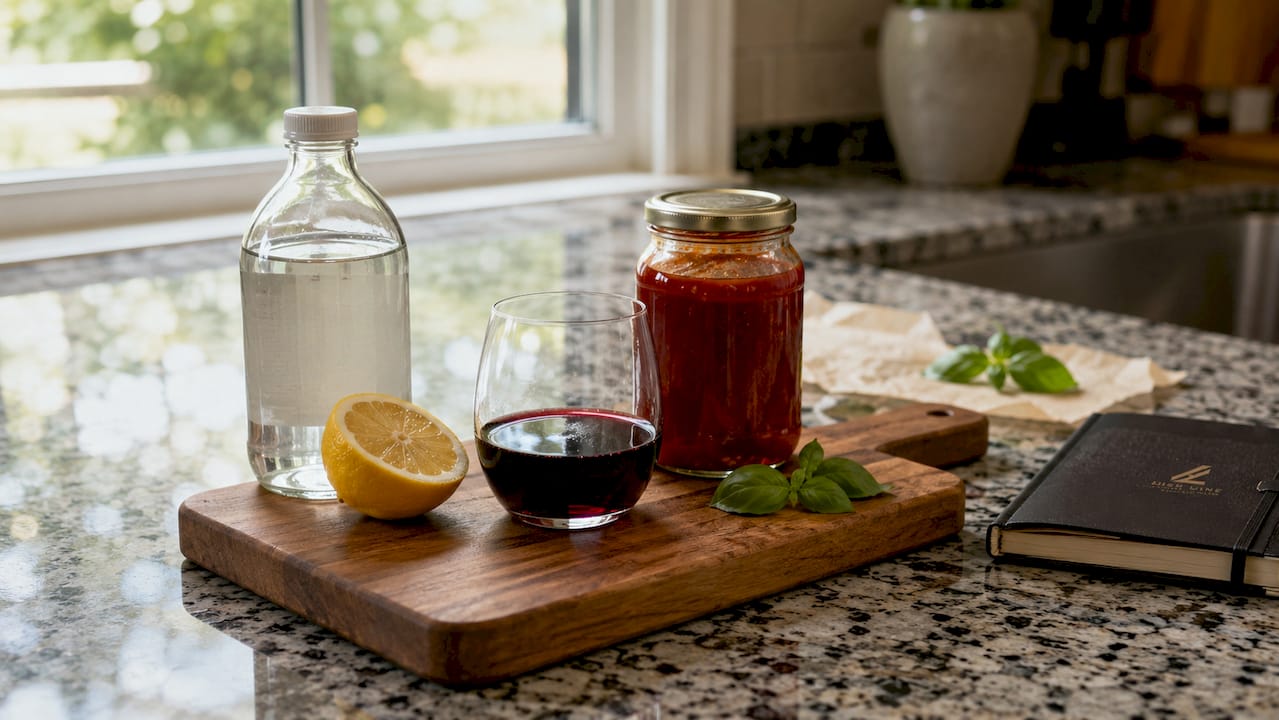
Harder stones like granite contain very little calcium carbonate and resist acid reactions well. Softer calcium-based stones have no such defense. A drop of lemon juice left on a polished marble countertop for 30 seconds can produce a visible etch mark. That is how fast and unforgiving this chemistry is.
Pro Tip: Run your fingertip across a suspicious spot. If it feels slightly rough or matte compared to the surrounding surface, you are likely dealing with etching, not a stain.
Which stone types are most at risk?
The stones most vulnerable to etching share one trait: high calcium carbonate content. Marble tops the list, followed closely by limestone, travertine, and onyx. Polished finishes on these stones show etch marks most dramatically because the contrast between the glossy surface and the dull damaged area is immediately visible. Honed or matte finishes still etch, but the marks are less obvious to the eye.
Granite, quartzite, and engineered quartz surfaces are far more resistant. Granite’s silicate mineral structure does not react with most household acids. Quartzite, often confused with marble, varies widely in calcium content, so professional identification matters before assuming a stone is acid-safe.
What is the difference between stone etching and staining?
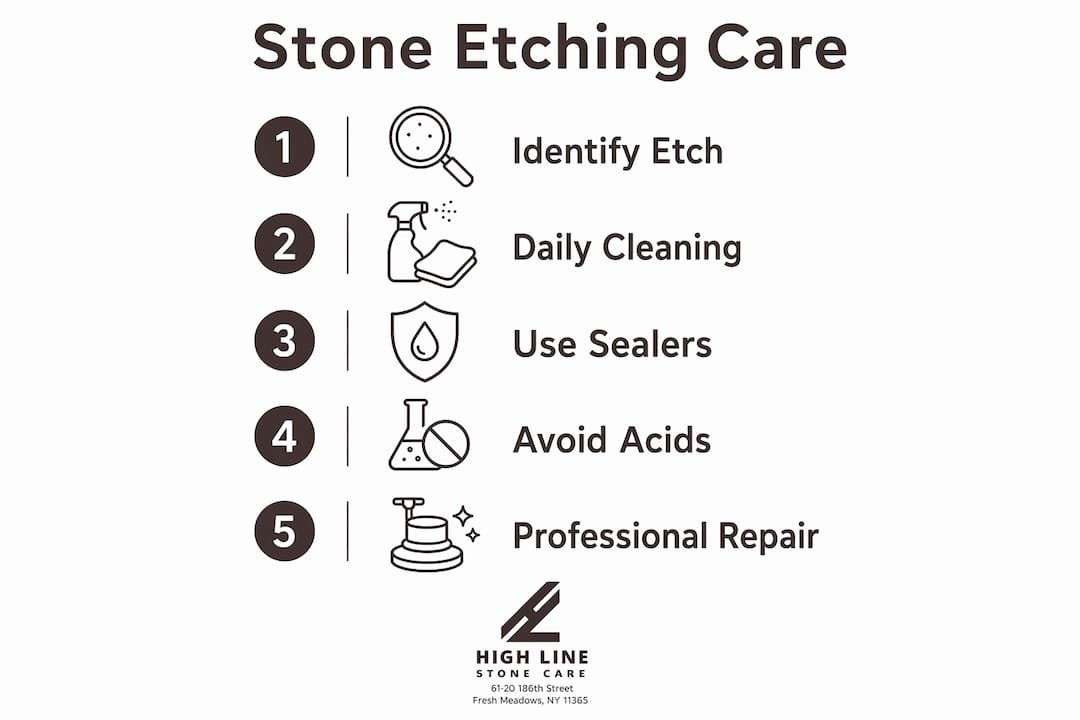
Etching and staining are two distinct types of surface damage, and treating one as the other leads to wasted effort and continued deterioration. Etching is surface damage caused by acid dissolving the stone’s finish. Staining is pigment or liquid absorption into the stone’s pores, darkening or discoloring the surface without altering its texture.
The visual and tactile differences are clear once you know what to look for:
- Etching leaves lighter or dull spots with a rough or matte texture where the polish has been removed.
- Staining leaves darker spots or discoloration, but the surface texture remains smooth to the touch.
- Etching cannot be wiped away. It requires mechanical restoration.
- Staining can often be drawn out with poultices or cleaning agents that lift absorbed pigment.
- Sealers reduce stain absorption by blocking the stone’s pores. They do not prevent etching because acid reacts at the surface before any sealer can intervene.
The quick diagnostic test is touch. A rough or matte patch points to etching. A smooth but discolored area points to a stain. Getting this diagnosis right determines the entire treatment path.
| Feature | Etching | Staining |
|---|---|---|
| Cause | Acid dissolves calcium carbonate | Pigment absorbed into stone pores |
| Appearance | Dull, lighter, or hazy spot | Darker or discolored area |
| Texture change | Yes, surface feels rough or matte | No, surface texture stays smooth |
| Sealer prevention | No, sealers do not stop etching | Yes, sealers reduce stain absorption |
| Repair method | Mechanical honing and polishing | Poultice or chemical extraction |
How can stone surface etching be prevented in daily care?
Prevention is the most cost-effective approach to managing etching on natural stone. Avoidance of acid contact through pH-neutral cleaning and immediate spill neutralization is more effective than relying solely on sealers. The following practices form the core of a sound daily care protocol.
- Use pH-neutral cleaners only. Avoid vinegar, citrus-based sprays, bleach, and any cleaner with a pH below 7. These products are common in households and commercial settings, yet they cause cumulative micro-etching on marble and limestone with every use.
- Wipe spills immediately. The longer an acidic substance sits on the surface, the deeper the reaction penetrates. Blot the spill with a clean cloth rather than wiping, which can spread the acid across a larger area.
- Use coasters, trivets, and cutting boards. Wine glasses, citrus fruits, and tomato-based foods are among the most frequent culprits. Physical barriers between these items and the stone surface eliminate the risk entirely.
- Avoid acidic cleaning products on stone floors and countertops. Property managers overseeing buildings with marble lobbies or limestone flooring should audit their cleaning supply inventory. Repeated use of acidic agents like vinegar or citric acid causes cumulative micro-etching that gradually produces a hazy, worn appearance across large surface areas.
- Train housekeeping and maintenance staff. Staff who clean stone surfaces daily are the first line of defense. A brief training session on pH-neutral products and spill response protocols prevents the kind of slow, cumulative damage that is expensive to reverse.
Pro Tip: Post a laminated card near stone surfaces in commercial properties listing approved cleaners and prohibited substances. Simple visual reminders reduce accidental acid exposure significantly.
Sealers play a supporting role in stone preservation, but their limits must be understood. A quality impregnating sealer penetrates the stone and reduces porosity, which helps prevent stains. It does not form a barrier that stops acid from reaching the calcium carbonate at the surface. Relying on a sealer as the sole protection against etching leaves stone surfaces exposed to the very damage they need guarding against.
What are professional methods to repair etched stone surfaces?
Etching cannot be removed by cleaning. Standard cleaners do not reverse etching damage on calcium carbonate stones because the surface has been physically altered, not merely contaminated. Restoring an etched surface requires mechanical removal of the damaged layer, followed by polishing to rebuild the finish.
The professional restoration process follows a staged sequence:
- Assessment. A technician evaluates the depth and extent of etching to determine the starting grit and the number of passes required.
- Diamond honing. Honing is the critical first step. Diamond-abrasive pads physically grind away the damaged microscopic layer of stone. The process starts with a coarser grit to remove the etch, then progresses through finer grits to eliminate the scratches left by each previous pass.
- Grit progression. Professional honing uses successively finer grit pads in a sequence such as 200, 400, 800, 1500, and 3000. Each stage removes the marks left by the previous one, gradually refining the surface.
- Polishing. Once honing is complete, polishing compounds and buffing pads restore the surface sheen. The goal is to match the original finish, whether that is a high gloss or a honed matte.
- Sealing. After restoration, applying a quality sealer protects the freshly exposed stone from stain absorption going forward.
| Stage | Method | Purpose |
|---|---|---|
| 1. Assessment | Visual and tactile inspection | Determine etch depth and restoration scope |
| 2. Coarse honing | Diamond pads, 200–400 grit | Remove the chemically damaged surface layer |
| 3. Fine honing | Diamond pads, 800–1500 grit | Eliminate scratches from coarser passes |
| 4. Polishing | Buffing compounds, 3000 grit | Restore surface sheen and gloss |
| 5. Sealing | Impregnating sealer application | Protect restored surface from future staining |
Light surface etching on polished marble can sometimes be addressed with a marble polishing powder, which works through mild abrasion. Moderate to severe etching, large affected areas, or damage on floors requires professional equipment and expertise. Attempting aggressive DIY honing without proper training risks uneven removal, creating visible low spots or swirl marks that are harder to fix than the original etch.
Pro Tip: For marble countertop restoration, always test any abrasive product on an inconspicuous area first. Marble varies in hardness and porosity, and what works on one slab may not suit another.
The cumulative damage most property managers miss
After years of working with natural stone surfaces across residential and commercial properties, the pattern that stands out most is not the dramatic single spill. It is the slow, invisible accumulation of micro-etching from daily habits that no one notices until the stone looks permanently dull.
A marble lobby floor cleaned every morning with a vinegar-based product does not look damaged after one week. After six months, the surface has a flat, lifeless appearance that no amount of buffing will fully correct without professional honing. The same applies to a kitchen countertop wiped down daily with a citrus spray. Each pass removes a fraction of the finish. The damage is real from day one. It just takes time to become visible.
The uncomfortable truth is that most etching damage in high-end properties is self-inflicted through cleaning routines. The stone itself is not fragile. It is the chemistry being applied to it that causes the problem. Switching to pH-neutral stone care products and training staff properly costs almost nothing compared to a full restoration project.
Realistic expectations matter too. Professional honing and polishing can restore a surface to near-original condition in most cases. But stone that has been repeatedly etched over years may show subtle variations in finish that are difficult to eliminate entirely. Prevention is not just the cheaper option. It is the one that keeps the stone looking the way it was designed to look.
— High
Protecting your stone surfaces with Highlinestonecare
Etching damage is reversible in most cases, but the restoration process requires the right expertise and equipment.
Highlinestonecare provides professional diamond honing and polishing services for marble, limestone, travertine, and onyx surfaces across New York City. For property managers and homeowners who want lasting protection rather than repeated restoration cycles, the Opal Luxury Anti Acid Sealer offers a premium solution designed to guard calcium-based stone against acid-related surface damage. Highlinestonecare’s team assesses each surface individually and recommends a tailored protection plan built around the stone type, finish, and use environment. The goal is a surface that stays pristine, not one that cycles through damage and repair.
FAQ
What is stone surface etching?
Stone surface etching is a chemical reaction between acids and calcium carbonate in natural stone that dissolves a microscopic layer of the surface finish, leaving dull or hazy marks. It is physical damage to the stone, not a stain.
Can a sealer prevent etching on marble?
Sealers reduce stain absorption but do not prevent etching. Acid reacts at the surface level before an impregnating sealer can stop it, so etching occurs regardless of sealer coverage.
How do I tell etching apart from a stain?
Run your finger across the affected area. Etching feels rough or matte and often appears lighter than the surrounding stone. A stain feels smooth but looks darker or discolored.
Can etching be repaired at home?
Light etching on polished marble can sometimes be reduced with a marble polishing powder. Moderate to severe etching requires professional honing and polishing with diamond-abrasive pads to remove the damaged layer properly.
Which stones are most vulnerable to etching?
Marble, limestone, travertine, and onyx are the most vulnerable because of their high calcium carbonate content. Granite and most engineered quartz surfaces resist acid reactions and do not etch under normal household conditions.
Key Takeaways
Stone surface etching is acid-caused chemical damage to calcium-based stone that requires mechanical restoration, not cleaning, to repair.
| Point | Details |
|---|---|
| Etching is chemical damage | Acids dissolve calcium carbonate in marble and limestone, permanently altering the surface finish. |
| Etching differs from staining | Etching feels rough and looks dull; staining feels smooth and looks darker. Repair methods differ completely. |
| Sealers do not stop etching | Impregnating sealers block stain absorption but cannot prevent acid from reacting at the stone surface. |
| Prevention beats restoration | pH-neutral cleaners, immediate spill response, and staff training prevent cumulative micro-etching more effectively than any sealer. |
| Professional repair is staged | Diamond honing through grit progressions from 200 to 3000, followed by polishing, is the standard method for restoring etched stone. |
Recommended
- Ways to Protect Stone Countertops: A Homeowner’s Guide
- Stone care terms explained: Expert guide for NYC homes
- Best Practices for Stone Protection: A Homeowner’s Guide
- NYC Stone Care Guide: Expert Steps for Long-Lasting Surfaces