
Stone polishing is a mechanical refinement process that restores, strengthens, and protects natural stone surfaces using diamond abrasives. For homeowners and property managers, understanding why invest in stone polishing means recognizing it as far more than a cosmetic upgrade. Polished marble, granite, and limestone floors resist moisture, clean faster, and last significantly longer than untreated stone. The process removes surface scratches, seals microscopic pores, and delivers a high-gloss finish that elevates any interior. When paired with professional sealing, polishing protects your restoration investment for years.
Why invest in stone polishing: the process explained
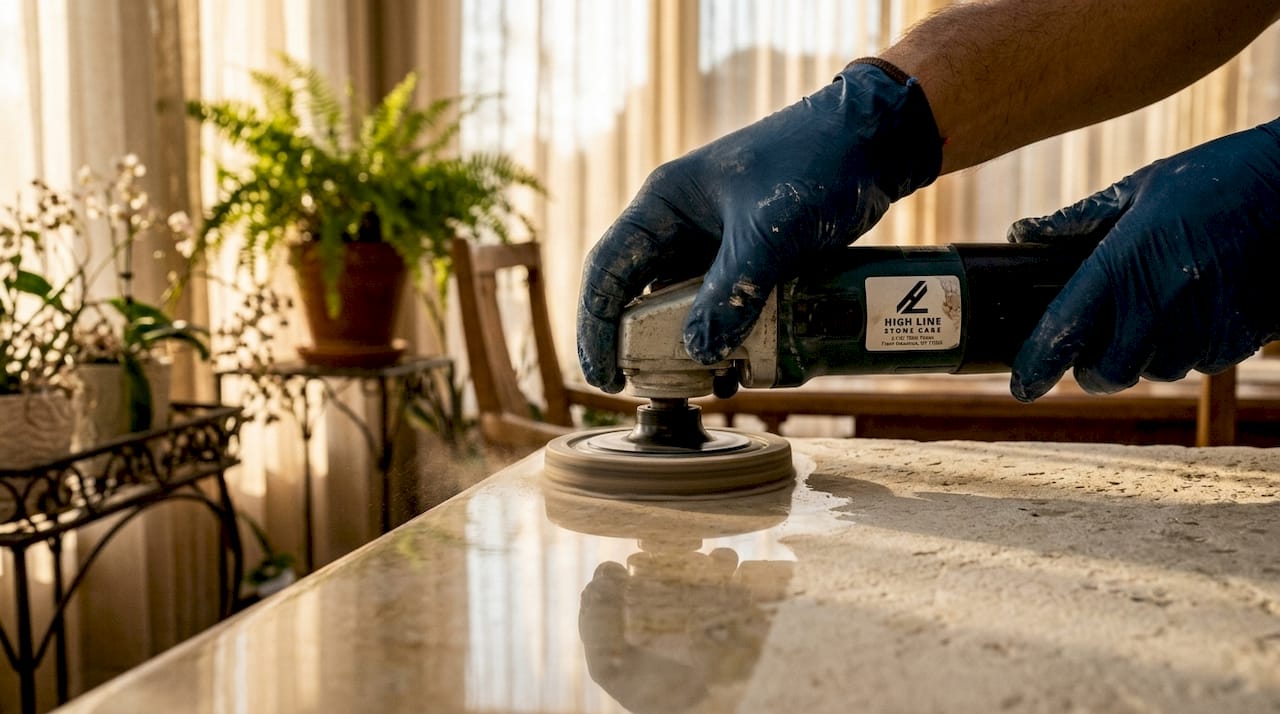
Stone polishing is not surface cleaning or waxing. It is a mechanical refinement process that physically reshapes the stone surface at a microscopic level using progressively finer diamond abrasives.
The process follows a precise sequence:
- Grinding (coarse stage): Diamond pads at approximately 30–50 grit remove deep scratches, lippage, and surface damage. This stage levels the stone and prepares it for refinement.
- Honing (mid stage): Grits from 100 to 800 smooth the surface further, eliminating the coarse marks left by grinding and creating a uniform, matte finish.
- Polishing (fine stage): Pads at 1,500 to 3,000+ grit restore high-gloss reflective surfaces on marble and natural stone, producing the mirror-like finish most homeowners recognize.
- Sealing: An impregnating sealer fills the pores opened during polishing to lock in the finish and resist stains.
Each step builds directly on the last. Skipping grit steps risks dull swirls or uneven reflection that no amount of buffing will correct. This is why the process demands professional equipment and trained hands, not a rental machine and a weekend afternoon.
The structural benefit is equally significant. Polishing reduces micro-pores across the stone surface, which enhances stain and moisture resistance beyond what any topical product achieves. A polished surface is physically denser at the top layer, making it harder for oils, water, and cleaning chemicals to penetrate.
Pro Tip: Ask your stone care professional to show you the grit progression they plan to use before work begins. A reputable technician will have a clear sequence and will not skip stages to save time.
What are the key benefits of professional stone polishing?
The benefits of stone polishing extend well beyond appearance. Homeowners and property managers who invest in professional polishing gain measurable advantages in durability, maintenance effort, and long-term cost control.
- Stain and moisture resistance: Polishing reduces surface porosity, making stone significantly harder to stain. Spilled coffee, wine, or cooking oil sits on the surface longer before penetrating, giving you time to wipe it away cleanly.
- Faster, easier cleaning: A smooth, polished surface has fewer micro-grooves where dirt and bacteria accumulate. Daily maintenance requires less effort and fewer cleaning products.
- Extended stone lifespan: Regular polishing extends the restoration cycle homeowners pay for, reducing the frequency of costly full restorations.
- Restored visual appeal: A high-gloss finish returns marble and granite to their original depth of color and light reflection, which directly affects the perceived quality of any interior space.
- Protection of prior restoration investment: If you have already paid for grinding or crack repair, polishing seals and protects that work from premature wear.
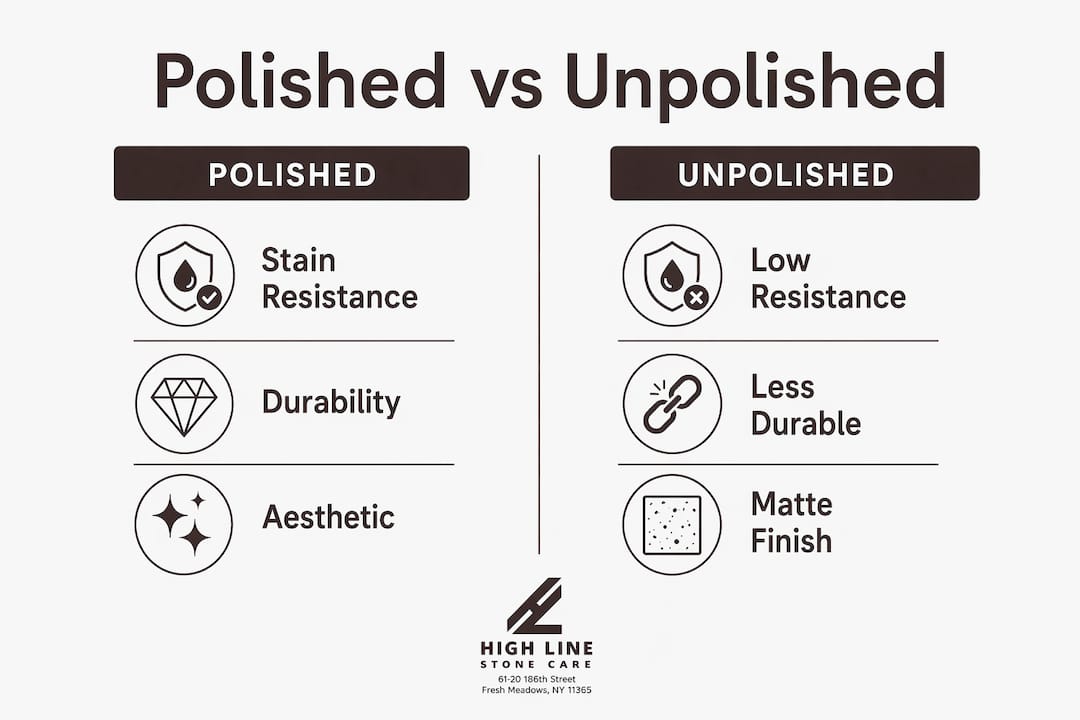
The table below compares polished and unpolished stone across key performance factors:
| Factor | Polished stone | Unpolished stone |
|---|---|---|
| Stain resistance | High (reduced porosity) | Low to moderate |
| Ease of cleaning | Easy, fewer products needed | More effort, more product use |
| Visual appearance | High-gloss, reflective | Matte, dull over time |
| Moisture penetration | Significantly reduced | Higher risk |
| Maintenance frequency | Lower with proper sealing | Higher |
Proper maintenance between professional visits matters as much as the polishing itself. Using pH-neutral cleaners, avoiding acidic products like vinegar or lemon-based sprays, and placing felt pads under furniture legs all preserve the polished finish between service appointments.
What maintenance and safety considerations apply after polishing?
Post-polishing care determines how long the results last. Two areas require immediate attention: sealing timing and slip resistance management.
Freshly polished stone opens pores and must be sealed within 24 hours to prevent rapid staining from oils or water-based substances. Polishing physically opens the stone’s surface structure. Without sealing, a glass of water left on a newly polished marble countertop can leave a permanent ring within hours.
Sealing involves applying an impregnating sealer, allowing it to penetrate for 10–15 minutes, then wiping the excess and applying additional coats as needed. Curing times vary before the surface can handle water exposure or heavy foot traffic. Homeowners should not rush this step.
Key post-polishing care practices include:
- Seal within 24 hours of polishing completion, without exception.
- Use pH-neutral cleaners only. Acidic or alkaline products degrade the sealer and attack the stone surface.
- Monitor sealing effectiveness using a water bead test. When water no longer beads on the surface, resealing intervals should be based on this performance test, not a fixed calendar schedule.
- Understand sealing limits. Sealing protects against stains and moisture but does not prevent etching. Etching is a chemical reaction between acid and calcium in marble. It requires mechanical re-polishing to repair, not more sealer.
Slip resistance is the safety consideration most homeowners overlook. Mirror-polished marble and granite floors have a wet floor DCOF (Dynamic Coefficient of Friction) of approximately 0.20–0.36, which falls below the ANSI safety threshold of 0.42. In wet areas like bathrooms, kitchens, and building lobbies, this creates a genuine slip hazard.
Pro Tip: In wet or high-traffic entry areas, ask your technician to stop the grit progression at 800 or 1,200 rather than going to a full mirror finish. You retain most of the aesthetic benefit while staying above the ANSI slip resistance threshold.
Place absorbent mats at entry points and wet zones. Ensure adequate drainage in bathrooms. For households with young children or elderly residents, a honed finish rather than a full mirror polish may be the safer and equally attractive choice.
How does stone polishing compare to other stone surface treatments?
Homeowners often confuse mechanical polishing with topical polish products, waxing, or honing. Each approach produces a different result and serves a different purpose.
| Treatment | Method | Finish | Stain resistance | Slip resistance | Durability |
|---|---|---|---|---|---|
| Mechanical polishing | Diamond abrasive pads | High gloss, mirror | High (reduced porosity) | Lower in wet areas | Long-lasting |
| Honing | Diamond pads to ~400 grit | Matte or satin | Moderate | Higher | Good |
| Topical polish/wax | Surface coating only | Temporary shine | Low (surface only) | Variable | Short-term |
| Texturing | Mechanical surface roughening | Non-reflective | Moderate | Highest | Good |
Topical polish products and waxes coat the surface rather than refining it. They wear off quickly under foot traffic and require frequent reapplication. They do not reduce porosity or provide structural protection. Mechanical polishing, by contrast, physically changes the stone surface and delivers lasting results.
Honing is the middle ground. It uses diamond abrasives but stops before the high-gloss stage, leaving a smooth matte or satin finish. Honed stone has better slip resistance than mirror-polished stone and suits bathrooms, kitchens, and commercial entries well. The trade-off is a less reflective appearance and slightly higher susceptibility to visible staining. Grit level selection can be tailored to balance slip resistance compliance with the desired visual result, which is a conversation worth having with your stone care professional before work begins.
What is the cost-benefit outlook of stone polishing?
Stone polishing is a protective investment, not a luxury expense. The financial case rests on one clear principle: regular polishing costs far less than infrequent full restoration.
Consider the cost structure:
- Professional polishing for a marble floor typically requires 1–2 days depending on area size and surface condition, covering grinding, honing, polishing, and sealing with professional diamond equipment.
- DIY polishing attempts carry a significant financial risk. Inappropriate DIY polishing can cause uneven patches and damage that is costly to fix, often requiring professional grinding to correct.
- Periodic polishing outperforms aggressive infrequent restoration both financially and in surface quality. A surface maintained with regular polishing cycles retains its integrity longer and requires less aggressive intervention over time.
- Restoration costs for severely neglected stone, including deep grinding to remove etching, scratches, and staining, run substantially higher than the cost of maintaining a polished surface on a consistent schedule.
- Property value: Polished stone floors and countertops in kitchens and bathrooms are a recognized quality signal in residential and commercial real estate. The value of polished stone shows up directly in how a property presents to buyers, tenants, and guests.
The economic rationale is straightforward. Protecting a surface that has already been restored costs a fraction of restoring it again from a damaged state. Polishing is the mechanism that makes that protection real and lasting.
Key Takeaways
Stone polishing is a mechanical investment that reduces porosity, extends stone lifespan, and protects prior restoration costs, making it the most cost-effective approach to long-term stone surface care.
| Point | Details |
|---|---|
| Polishing is structural, not cosmetic | Diamond abrasives physically reduce surface porosity, improving stain and moisture resistance. |
| Seal within 24 hours | Freshly polished stone must be sealed immediately to prevent rapid staining from oils and water. |
| Sealing does not prevent etching | Acid damage on marble requires mechanical re-polishing to repair, not additional sealer. |
| Slip resistance requires planning | Mirror-polished floors fall below ANSI safety thresholds in wet areas; adjust grit level accordingly. |
| Regular polishing beats infrequent restoration | Consistent polishing cycles cost less and preserve stone better than waiting for severe damage. |
What I have learned from years of stone polishing work
The most common mistake homeowners make is treating polishing as a one-time fix rather than part of an ongoing care plan. A single professional polish looks extraordinary. Without the right follow-up, that finish degrades faster than it should, and the next restoration costs more.
The second mistake is underestimating the DIY risk. Rental machines do not replicate the controlled pressure and grit progression of professional equipment. I have seen beautiful marble floors left with swirl patterns and dull patches because a homeowner skipped grit stages or applied too much pressure. Correcting that damage requires starting the grinding process over, which adds significant cost and time.
Slip resistance is the conversation that rarely happens before polishing begins. Homeowners ask for the highest possible gloss without considering where that floor sits in the home. A mirror finish in a dry living room is a reasonable choice. The same finish in a bathroom or building lobby is a liability. The right professional will raise this before picking up a diamond pad.
Finally, the sealing step is not optional or deferrable. Polishing opens the stone. Sealing closes it. Treating those two steps as a single appointment, not two separate decisions, is the standard that protects your investment.
— High
Highlinestonecare’s professional stone polishing services
Highlinestonecare brings advanced stone restoration and polishing expertise to homeowners and property managers across New York City and the surrounding area. Whether you are maintaining marble floors in a Manhattan residence or managing stone surfaces across a commercial property, the team delivers professional results backed by a satisfaction guarantee.
Highlinestonecare’s process covers the full polishing sequence, from grinding and honing through to final sealing, using professional diamond equipment calibrated for each stone type and condition. For surfaces requiring maximum protection, the Opal Luxury Anti Acid Sealer provides permanent defense against etching and staining, going well beyond what standard impregnating sealers offer. Contact Highlinestonecare for a professional assessment and a stone care plan built around your property’s specific needs. Visit Highlinestonecare’s stone polishing services to learn more.
FAQ
What does stone polishing actually do to the surface?
Stone polishing uses diamond abrasives in a precise grit sequence to physically smooth the stone surface at a microscopic level, reducing porosity and restoring a high-gloss finish. The result is a denser, more stain-resistant surface that is easier to clean and maintain.
How soon after polishing should stone be sealed?
Stone should be sealed within 24 hours of polishing. Polishing opens surface pores, and unsealed stone is highly vulnerable to rapid staining from oils and water-based substances during that window.
Does sealing prevent etching on marble?
Sealing does not prevent etching. Etching is a chemical reaction between acid and the calcium in marble that damages the surface itself. Only mechanical re-polishing removes etch marks once they form.
Is polished stone safe for wet areas like bathrooms?
Mirror-polished stone has a wet DCOF of approximately 0.20–0.36, which falls below the ANSI safety threshold of 0.42. Homeowners should use mats, ensure drainage, or choose a honed finish for wet areas to manage slip risk effectively.
How often should stone floors be professionally polished?
Repolishing frequency depends on traffic, use, and how well the surface is maintained between visits. Rather than following a fixed schedule, homeowners should monitor sealing effectiveness with a water bead test and schedule polishing when the finish shows visible wear or reduced water repellency.
Recommended
- Different Stone Polishing Methods for Homeowners
- The Role of Polishing in Stone Care for Homeowners
- Why Invest in Premium Stone Care: A Smart Guide
- Stone Polishing NYC | Countertop & Floor Polishing Services