
Stone surfaces require pH-neutral cleaners and gentle tools to stay beautiful and intact. This is the single most important principle behind effective residential stone cleaning tips. Marble, granite, limestone, and travertine each react differently to household products, and the wrong cleaner causes permanent etching or staining. Stone cleaning is straightforward when pH neutrality is maintained and spills are handled promptly. The right routine protects your investment and keeps surfaces looking elegant for years.
1. What are the best residential stone cleaning tips for choosing products?
The safest cleaners for natural stone are pH-neutral formulas specifically labeled as stone-safe. Acidic products like vinegar and lemon juice cause permanent etching on calcium-based stones such as marble and limestone. Alkaline products like bleach and ammonia strip sealers and dull finishes over time. Avoid acidic cleaners entirely on any stone surface, regardless of how mild they seem.
Mild dish soap diluted in warm water works for occasional cleaning, but not all dish soaps are safe. Chelating agents in some detergents can damage stone finishes over repeated use. That means a product labeled “gentle” for dishes may still degrade your marble countertop with regular application. Always choose a formula explicitly marked safe for natural stone.
- Use pH-neutral stone cleaners or properly diluted mild dish soap without chelating agents
- Avoid vinegar, lemon juice, bleach, ammonia, and general-purpose bathroom sprays
- Never use grout cleaners or tile cleaners on stone surfaces unless labeled stone-safe
- Select cleaners free of abrasive particles or harsh surfactants
Pro Tip: Read the ingredient list on any dish soap before using it on stone. If it lists EDTA or citric acid, set it aside and reach for a dedicated stone cleaner instead.
2. Which tools protect stone surfaces during cleaning?
Microfiber cloths and soft-bristle brooms are the correct tools for cleaning natural stone. They lift grit and debris without scratching the surface. Plastic wheels and beater bars on vacuum cleaners cause permanent micro-scratches on marble and other soft stones. That kind of damage is cumulative and irreversible.
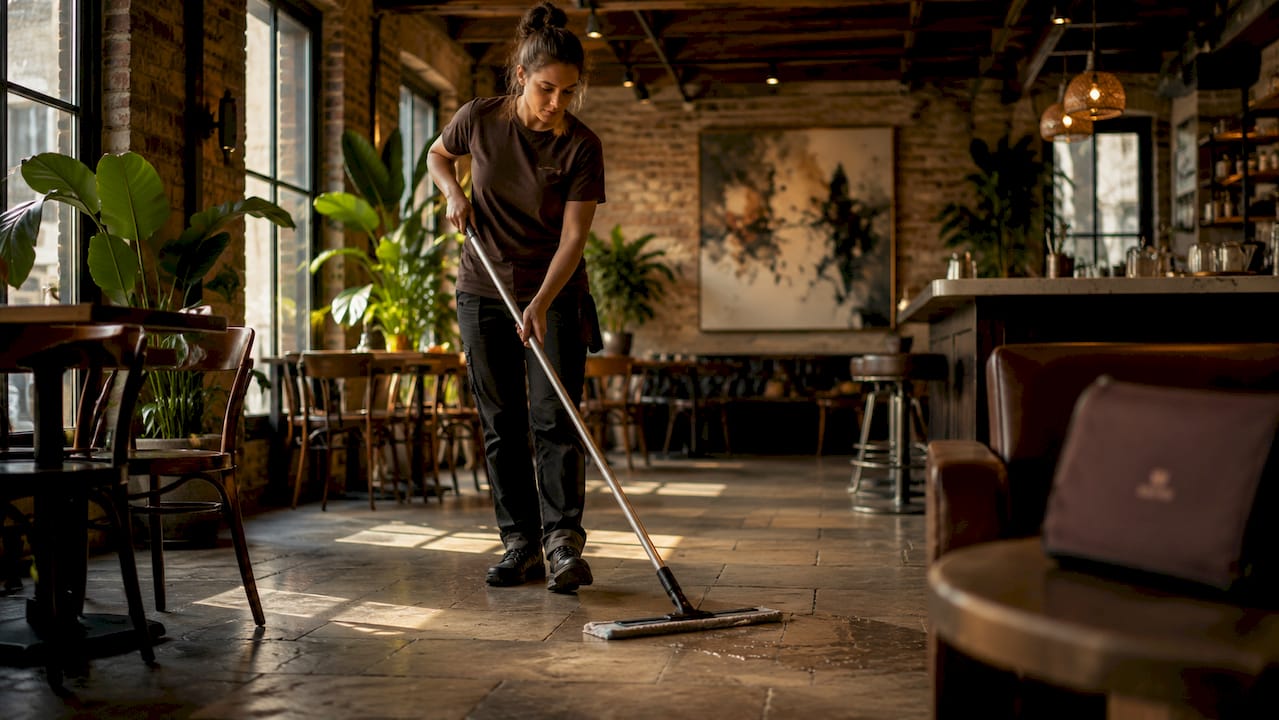
Dust mops with microfiber heads are the best daily tool for stone floors. They trap fine particles that act like sandpaper underfoot. A soft-bristle brush works well for grout lines and textured surfaces. Avoid steel wool, abrasive scrub pads, and stiff-bristle brushes on any polished or honed stone finish.
For wet cleaning, use a flat-head mop with a microfiber pad. Wring it out thoroughly before contact with the floor. A soaking wet mop pushes moisture into grout joints and under the stone, which causes long-term problems.
3. How to perform routine maintenance on stone floors and surfaces
Daily dry dust mopping removes the fine grit that scratches stone with every footstep. This single habit does more to preserve a polished finish than any cleaning product. High-traffic areas like entryways and kitchens benefit most from this practice.
Weekly damp mopping with a stone-safe cleaner handles the deeper surface cleaning. Use a damp mop rather than a soaking wet one to prevent moisture from penetrating grout lines and causing efflorescence or loosening. After mopping, buff the surface dry with a clean microfiber towel. This step prevents mineral deposits, especially in homes with hard water.
- Dry dust mop or sweep daily to remove grit and debris
- Damp mop weekly with a pH-neutral stone cleaner
- Buff dry immediately after wet cleaning to prevent water spots
- Wipe spills the moment they occur, blotting rather than wiping to avoid spreading
- Place floor mats at entryways and felt pads under furniture legs to reduce scratching
Pro Tip: Keep a dedicated microfiber cloth near your kitchen stone countertop. Blotting a coffee or citrus spill within 30 seconds prevents the etching that takes professional restoration to fix.
Spill management is one of the most critical tips for stone care. Acidic spills left on porous stone absorb quickly and cause permanent dulling. Blot the spill with a clean cloth rather than wiping it across the surface. Then clean the area with a stone-safe cleaner and dry it completely.
4. Stone-specific care: what changes by material and location
Different stone types require different levels of care. Understanding those differences prevents costly mistakes.
| Stone Type | Hardness (Mohs Scale) | Acid Sensitivity | Resealing Frequency |
|---|---|---|---|
| Marble | 3–4 | Very high | Every 6 months (wet areas) |
| Limestone | 3–4 | Very high | Every 6 months (wet areas) |
| Travertine | 3–4 | High | Every 6 months (wet areas) |
| Granite | 6–7 | Low | Every 1–3 years |
Granite ranks 6–7 on the Mohs scale, making it far more resistant to scratching than marble. However, granite kitchen islands can crack or break under heavy weight on unsupported overhangs. Chemical resistance does not mean physical invulnerability.
Marble and limestone require the strictest acid avoidance. Even a drop of orange juice left on a marble countertop for a few minutes creates a dull patch where the surface loses its elegant appearance. Bathroom marble vanities face constant exposure to soap, toothpaste, and water. Protecting a marble bathroom vanity requires frequent drying and resealing every six months.
Outdoor stone surfaces face a different set of challenges. Moss, algae, and environmental grime accumulate on patios and steps. High pressure washing risks outweigh the benefits for natural stone. Forced water penetrates joints, damages sealers, and accelerates deterioration. Soft washing with low pressure and a stone-safe cleaner removes organic buildup without that risk.
5. Advanced strategies to extend the life of your stone surfaces
Sealing is the most effective long-term protection for natural stone. A quality impregnating sealer penetrates the stone’s pores and reduces its ability to absorb liquids. Resealing frequency depends on use and environment. Wet areas like showers and kitchen countertops need resealing every six months. Lower-traffic surfaces like a living room floor can go one to three years between applications.
Choosing the right sealer matters as much as applying it on schedule. Polishing and sealing choices vary by stone type. Applying the wrong product accelerates wear and reduces the surface’s aesthetic quality. Always match the sealer to the specific stone and its finish, whether polished, honed, or brushed.
Advanced home stone maintenance tips include:
- Use biodegradable, stone-safe algaecides or oxygen bleach for organic stains on outdoor stone
- Never use steel wool, abrasive pads, or harsh scrubbing tools on any polished surface
- Apply poultice treatments for deep oil or organic stains rather than scrubbing
- Seal stone before grouting and reseal after any grout cleaning project
- Test any new cleaner on a small, hidden area before full application
Protecting natural stone from stains requires consistent sealing combined with prompt spill response. No sealer makes stone completely stain-proof. It buys time for cleanup before absorption occurs.
Key takeaways
Consistent use of pH-neutral cleaners, proper tools, and a regular sealing schedule is the most effective approach to maintaining natural stone surfaces at home.
| Point | Details |
|---|---|
| Use pH-neutral cleaners only | Acidic and alkaline products cause permanent etching and sealer damage on stone. |
| Dry mop daily, damp mop weekly | Removing grit daily prevents micro-scratches; weekly wet cleaning maintains surface hygiene. |
| Reseal on schedule | Wet areas need resealing every 6 months; lower-traffic surfaces every 1–3 years. |
| Match care to stone type | Marble and limestone need stricter acid avoidance than granite due to lower Mohs hardness. |
| Blot spills immediately | Prompt blotting prevents acidic liquids from absorbing and etching porous stone surfaces. |
What I’ve learned from years of working with stone
The most common mistake homeowners make is treating all stone the same way. A granite countertop and a marble floor look similar, but they behave very differently under the same cleaner. Granite tolerates more. Marble does not forgive.
The second mistake is reactive cleaning. Homeowners often ignore routine maintenance until a dull patch or stain appears. By that point, the damage is done and professional restoration is the only fix. A five-minute daily dust mop and a weekly damp mop prevent the kind of deterioration that costs hundreds of dollars to reverse.
pH neutrality is not a complicated concept, but it gets ignored constantly. People reach for the same spray they use on tile or glass and apply it to marble without a second thought. That single habit is responsible for most of the etching damage I see on residential surfaces.
The value of periodic professional assessment is real. Even well-maintained stone benefits from a professional eye every year or two. A trained technician spots early sealer failure, micro-scratching patterns, and areas where moisture is penetrating before those issues become visible damage. Consistent home care and professional oversight together produce the best long-term results.
— High
Highlinestonecare’s stone protection services for homeowners
Stone surfaces in New York City and New Jersey face demanding conditions, from hard water and humidity to heavy daily use. Highlinestonecare offers advanced stone restoration and maintenance services designed specifically for residential properties. The team works with marble, granite, limestone, travertine, and other natural stone materials.
For homeowners seeking lasting protection against etching and staining, Highlinestonecare’s Opal Luxury Anti Acid Sealer provides permanent defense for delicate stone surfaces. A single professional application protects marble and other calcium-based stones from acid-related surface damage without altering their appearance. Contact Highlinestonecare for a personalized consultation and a treatment plan tailored to your stone surfaces.
FAQ
What cleaners are safe for natural stone surfaces?
pH-neutral cleaners specifically labeled as stone-safe are the correct choice. Avoid vinegar, lemon juice, bleach, ammonia, and any detergent containing chelating agents like EDTA or citric acid.
How often should stone floors be sealed?
Stone surfaces in wet areas like showers and kitchen countertops need resealing every six months. Lower-traffic surfaces in living areas can go one to three years between applications.
Can you use a regular vacuum on stone floors?
Standard vacuum cleaners with plastic wheels or beater bars cause permanent micro-scratches on soft stones like marble. Use a microfiber dust mop instead for daily cleaning.
What should you do when an acidic liquid spills on marble?
Blot the spill immediately with a clean cloth rather than wiping it across the surface. Then clean the area with a stone-safe cleaner and dry it completely to prevent etching and staining.
Is pressure washing safe for outdoor natural stone?
High-pressure washing forces water into joints and damages sealers on natural stone. Soft washing with low pressure and a stone-safe cleaner is the safer method for outdoor stone surfaces.
Recommended
- Stone Cleaning Queens | Specialized Services – Highline Stone Care
- Stone Flooring Maintenance Tips for Homeowners
- Commercial Stone Maintenance: A Property Manager’s Guide
- Stone Cleaning NYC | Eco-Friendly Stone Floor & Countertop Cleaning Services