
Commercial stone maintenance is defined as the ongoing, systematic care of natural stone surfaces in commercial environments to preserve their appearance, structural integrity, and long-term value. It covers daily cleaning, grit control, chemical exposure management, scheduled sealing, and periodic professional restoration. For property managers overseeing marble lobbies, granite corridors, or limestone reception areas, this is not optional upkeep. It is a core facility management responsibility. Most visible stone problems stem from aftercare failures, not installation defects, which means the quality of your maintenance program directly determines how long your stone investment lasts.
What is commercial stone maintenance and why does it matter?
Commercial stone maintenance is the industry term for a structured program of cleaning, sealing, abrasion control, and restoration applied to natural stone surfaces in high-traffic commercial settings. It differs from residential care in scale, frequency, and the operational complexity of occupied buildings. A polished marble lobby in a Manhattan office tower faces foot traffic, grit ingress, chemical spills, and daily cleaning cycles that a home countertop never encounters.
The core purpose is prevention. Effective maintenance starts with compatible daily chemistry and planned restorations before damage becomes irreversible. Once etching or deep scratching sets in, cleaning alone cannot fix it. That distinction matters because many property managers treat stone care as a cleaning task when it is actually a multi-layered preservation program.
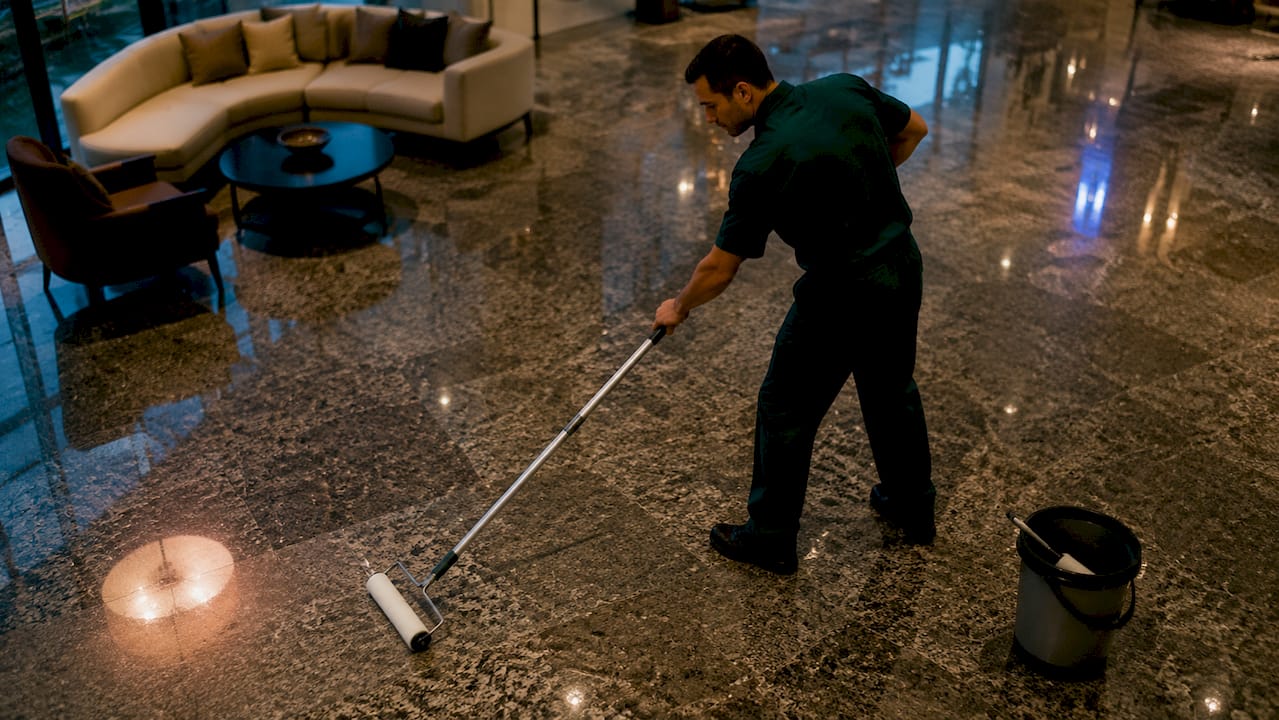
Key tools in any commercial stone care program include pH-neutral stone cleaners, impregnating sealers such as PROSOCO’s Sure Klean, microfiber dust mops, quality entrance matting, and mechanical restoration equipment for diamond polishing. Each serves a specific role. Together, they form a defense against the two primary threats to commercial stone: abrasive grit and chemical exposure.
What are the key components of an effective commercial stone maintenance program?
A well-designed program addresses stone surfaces at three levels: daily operational care, scheduled protective treatments, and periodic professional restoration. Skipping any one level accelerates deterioration at the others.
Daily operational care is the foundation. It includes:
- Installing quality entrance mats at every building entry point to capture abrasive grit before it reaches stone floors
- Daily dust mopping with microfiber tools to remove dry particulate that causes micro-scratches
- Wet mopping with pH-neutral, stone-compatible cleaners to lift surface soiling without degrading sealers
- Spot cleaning spills immediately, particularly acidic substances like coffee, citrus, or cleaning agents that etch marble and limestone
Scheduled protective treatments add a second layer. Impregnating sealers penetrate the stone’s pores and block moisture and stain absorption. Sealing requires reapplication every 1–3 years depending on traffic volume and stone porosity. High-use areas like lobbies and restrooms may need resealing more frequently.
Professional restoration is the corrective layer. Diamond polishing and mechanical refinishing reverse surface wear, scratches, and etching that no cleaning product can address. Commercial contracts often require two coordinated workstreams: routine cleaning and mechanical surface management, because one alone is insufficient to preserve finish.
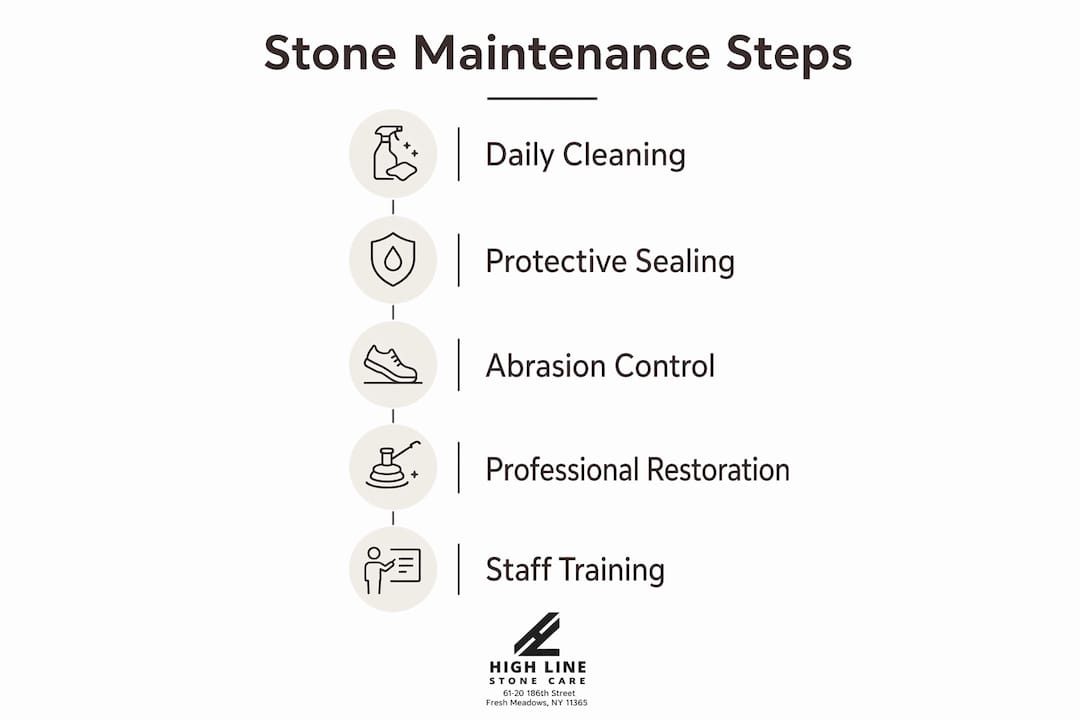
Written protocols and staff training complete the program. Without documented procedures and approved product lists, janitorial teams default to whatever cleaner is available, often with damaging results.
Pro Tip: Create a one-page product reference sheet listing approved cleaners, dilution ratios, and prohibited substances. Post it in every janitorial closet that services stone surfaces.
Why is controlling grit and chemical exposure vital for stone surfaces?
Grit tracked in from outside is the primary cause of polished stone floor scratching and finish degradation. This is a counterintuitive finding for many property managers who focus on visible dirt. Outside grit is the principal maintenance challenge in commercial polished stone, not the soiling you can see. Fine abrasive particles act like sandpaper underfoot, grinding away the polished surface with every step.
The practical response follows a clear sequence:
- Install high-quality entrance matting at all building entry points to capture grit at the source
- Dust mop daily with microfiber to remove particles that bypass the mats
- Wet mop with a pH-neutral stone cleaner to lift residual soiling without chemical damage
- Inspect stone surfaces weekly for early signs of dulling or micro-scratching
- Schedule professional assessment quarterly in very high-traffic zones
Chemical exposure compounds the problem. Harsh disinfectants, alkaline degreasers, and acidic cleaners break down sealers and etch sensitive stones like marble and limestone. Commercial environments such as healthcare facilities see higher chemical exposure, which necessitates more frequent sealing and stricter product controls. A sealer that performs well in a corporate lobby may fail within months in a hospital corridor.
Failure to control these two factors results in accelerated surface wear, permanent dullness, and restoration costs that far exceed what a prevention program would have cost.
Pro Tip: Develop a sealing schedule based on actual chemical exposure frequency and traffic count, not a generic annual calendar. A busy healthcare corridor may need resealing every six months.
How do sealing and restoration practices complement daily stone maintenance?
Sealing is a maintenance cycle, not a one-time event. Protective sealer systems are chemistry and substrate specific; using incompatible cleaners or skipping scheduled resealing compromises stone protection and appearance. Property managers who treat the initial sealing as permanent protection consistently face premature staining and etching.
The table below shows how sealing type, frequency, and application environment interact in a commercial setting.
| Sealing type | Typical frequency | Primary benefit | Best application environment |
|---|---|---|---|
| Impregnating sealer (e.g., PROSOCO Sure Klean) | Every 1–3 years | Blocks moisture and stain absorption | Lobbies, corridors, reception areas |
| Penetrating sealer (e.g., Stain-Proof Premium) | Every 1–2 years | Deep pore protection against oil and water | Restrooms, food service areas |
| Topical coating | Every 6–12 months | Surface gloss enhancement | Lower-traffic decorative surfaces |
| Enhanced anti-acid sealer | Extended cycle per manufacturer | Acid and etch resistance | Marble, limestone in high-chemical environments |
Restoration fills the gap that sealing and cleaning cannot close. Diamond polishing and refinishing reverse wear, scratches, and etching by mechanically removing a thin layer of damaged stone and re-establishing the original finish. This process requires professional equipment and expertise. Attempting mechanical restoration without proper training risks irreversible damage.
The most effective commercial stone care programs coordinate all three layers:
- Daily cleaning maintains surface hygiene and removes abrasive particles
- Periodic sealing protects the stone from moisture, stains, and chemical penetration
- Scheduled restoration corrects accumulated wear before it becomes structural damage
Coordination means planning restoration cycles around building operations to minimize tenant disruption, a factor that operational design of stone maintenance must account for in occupied commercial buildings.
What are common pitfalls in commercial stone maintenance?
The most damaging mistakes in commercial stone care are predictable and preventable. Property managers who understand them can avoid costly repairs.
- Using incompatible cleaners. Acidic or harsh alkaline products degrade sealers and etch marble and limestone. A single mopping session with the wrong product can undo months of sealing protection.
- Ignoring grit ingress. Grit embedded in a polished finish requires diamond polishing to restore, not cleaning. Prevention through matting and daily dust mopping is far less expensive than restoration.
- Skipping resealing schedules. Sealers degrade over time. Skipping reapplication leaves stone exposed to staining and chemical damage that compounds with each passing month.
- Relying on cleaning to fix surface damage. Etching, deep scratches, and staining are physical and chemical damage. No cleaner reverses them. Restoration is the only solution.
- Lack of written protocols. Without documented procedures, janitorial teams use whatever products are available. Inconsistent practices and incompatible product use are among the leading causes of accelerated stone deterioration.
- No staff training. Facility teams need clear instructions on approved products, dilution ratios, and prohibited substances before they touch stone surfaces.
Pro Tip: When onboarding a new janitorial contractor, conduct a stone-specific orientation session. Provide a written list of approved products and a clear escalation path for spills or damage events.
What practical steps can property managers take to build a maintenance program?
A sustainable commercial stone maintenance program requires structure from day one. The following steps give property managers a clear path to implementation.
- Document a maintenance protocol. Write out daily, weekly, monthly, and annual tasks. Assign responsibility for each task and specify the approved products and tools.
- Supply compatible cleaning products. Specify pH-neutral, stone-safe cleaners for all janitorial teams. Remove incompatible products from service areas where stone is present.
- Install entrance matting. Place high-quality mats at every building entry point. Replace or clean mats regularly so they continue to capture grit effectively.
- Schedule daily dust mopping. Use microfiber dust mops every day in stone-floored areas. This single step prevents more surface damage than any other routine measure.
- Plan sealing inspections. Conduct a water-bead test on sealed surfaces every six months. If water no longer beads, resealing is due. Follow manufacturer timelines for products like PROSOCO’s Sure Klean.
- Contract professional restoration. Schedule mechanical polishing and refinishing with a qualified stone care provider on a planned cycle, not only after visible damage appears.
- Train facility staff. Hold product orientation sessions when new staff join and when cleaning products change. Provide written compatibility sheets for reference.
- Engage a professional stone care consultant. For complex properties or high-value stone installations, a specialist can assess surface condition, recommend products, and design a program tailored to your specific stone types and traffic patterns.
Key Takeaways
Effective commercial stone maintenance requires daily grit control, scheduled sealing, and periodic professional restoration working together as a single coordinated program.
| Point | Details |
|---|---|
| Prevention outperforms remediation | Entrance mats and daily microfiber dust mopping prevent micro-scratches that cleaning cannot reverse. |
| Sealing is a cycle, not a one-time event | Impregnating sealers require reapplication every 1–3 years based on traffic and stone porosity. |
| Restoration corrects what cleaning cannot | Diamond polishing reverses etching, scratches, and wear that accumulate beyond cleaning’s reach. |
| Incompatible products cause most damage | Acidic or alkaline cleaners degrade sealers and etch marble and limestone; pH-neutral products are non-negotiable. |
| Written protocols protect your investment | Documented procedures and staff training prevent inconsistent practices that accelerate stone deterioration. |
The case for treating stone maintenance as a facility management priority
Property managers often inherit stone surfaces without inheriting a maintenance program. That gap is where most damage originates. In my experience working with commercial properties across New York City, the buildings with the best-looking stone floors are rarely the ones with the most expensive stone. They are the ones with the most consistent programs.
The uncomfortable truth is that maintenance alone cannot reverse damage, and restoration without proper maintenance leads to quicker degradation after each refinishing cycle. Neither workstream succeeds in isolation. A marble lobby that receives professional diamond polishing every two years but gets mopped daily with an acidic cleaner will deteriorate faster than a lobby with average stone and a disciplined pH-neutral cleaning routine.
Operational realities matter too. Tenant disruption, safety during wet floor operations, and janitorial access windows all shape what a realistic program looks like. The best programs I have seen are built around the building’s actual schedule, not an idealized maintenance calendar. Flexibility and documentation together make the difference between a program that gets followed and one that gets abandoned after the first scheduling conflict.
The investment in quality sealers, proper training, and professional restoration pays back in reduced repair costs, extended stone life, and a property appearance that supports your brand and tenant retention. Stone surfaces are a significant capital asset. Managing them with the same rigor you apply to mechanical systems is not excessive. It is responsible facility management.
— High
Professional stone care services from Highlinestonecare
Property managers who want expert support for their commercial stone care programs can rely on Highlinestonecare for the full range of services: cleaning, sealing, polishing, and restoration.
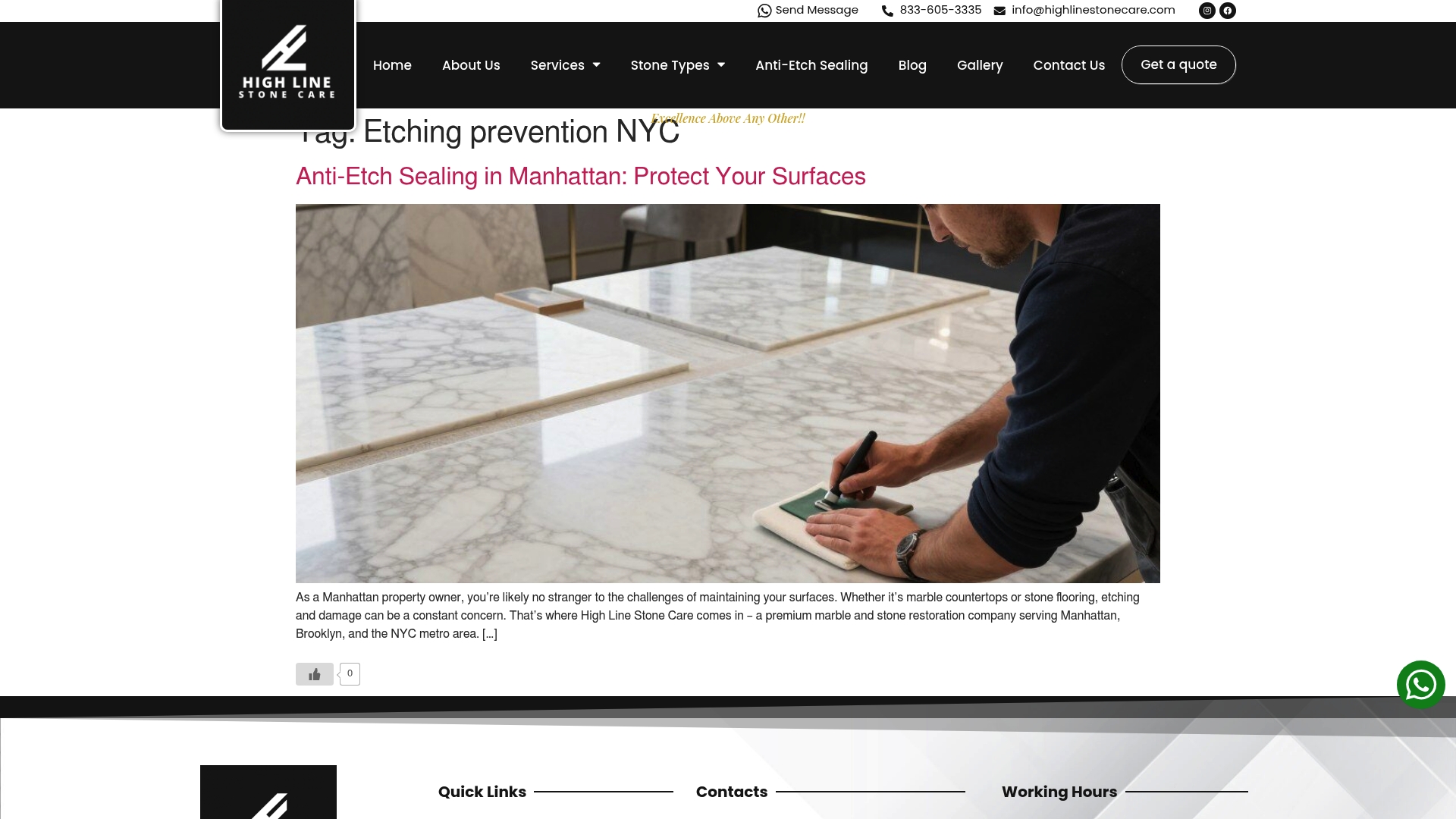
Highlinestonecare’s Opal Luxury Anti-Acid Sealer provides permanent protection against etching and staining, making it particularly well suited for marble and limestone surfaces in high-chemical or high-traffic commercial environments. For properties requiring mechanical restoration, Highlinestonecare’s stone restoration services cover diamond polishing, refinishing, and surface repair for lobbies, corridors, and reception areas across New York City. Contact Highlinestonecare directly for a site-specific consultation and a maintenance program designed around your property’s stone types, traffic patterns, and operational schedule.
FAQ
What is commercial stone maintenance?
Commercial stone maintenance is the ongoing program of cleaning, sealing, grit control, and professional restoration applied to natural stone surfaces in commercial buildings. It preserves appearance and extends surface life in high-traffic environments.
How often should commercial stone floors be sealed?
Most commercial stone floors require resealing every 1–3 years, depending on traffic volume, stone porosity, and chemical exposure. High-use or chemically intensive areas such as healthcare corridors may need resealing every six months.
Can cleaning fix etching or scratches on stone?
Cleaning cannot reverse etching, deep scratches, or staining. These are physical and chemical damage that require professional diamond polishing and mechanical refinishing to correct.
Why is grit the biggest threat to polished stone floors?
Abrasive grit tracked in from outside acts like sandpaper on polished stone surfaces, grinding away the finish with every footstep. Once embedded in the finish, grit damage requires diamond polishing to restore, not cleaning.
What products should property managers avoid on stone surfaces?
Acidic cleaners, harsh alkaline degreasers, and bleach-based disinfectants degrade sealers and etch sensitive stones like marble and limestone. pH-neutral, stone-compatible cleaners are the only safe choice for routine commercial stone care.
Recommended
- Why Invest in Premium Stone Care: A Smart Guide
- Stone Flooring Maintenance Tips for Homeowners
- Natural Stone Protection Manhattan NY: Expert Guide
- NYC Stone Care Guide: Expert Steps for Long-Lasting Surfaces