
Protecting stone surfaces is defined as the practice of sealing, cleaning, and maintaining natural stone to prevent staining, etching, and structural wear. Marble, limestone, travertine, and granite are porous materials. That porosity means liquids, oils, and acidic substances penetrate the surface if left unaddressed. Protecting natural stone is not optional for homeowners who want to preserve both the appearance and the value of their investment. Highlinestonecare works with property owners across New York City who discover too late that a single unsealed surface can sustain irreversible damage from something as ordinary as a lemon wedge or a glass of wine.
Why protect stone surfaces: understanding the real risks
Stone surfaces face four categories of damage, and each one operates differently.
- Staining from absorption. Natural stone is porous. Oils, wine, coffee, and even water can absorb into the surface and leave permanent discoloration if not wiped away promptly. The darker the stone, the more visible the stain.
- Chemical etching from acids. Marble and limestone are calcium-carbonate stones. When acidic substances like citrus juice, vinegar, or certain cleaning products contact the surface, a chemical reaction dissolves the calcium. The result is a dull patch or ring that no amount of cleaning removes. Quality impregnating sealers prevent liquid stains but do not stop this chemical etching on contact.
- Physical wear from daily use. Foot traffic, dragged objects, and abrasive cleaning tools scratch and dull polished surfaces over time. High-traffic areas like kitchen floors and lobby entrances show this wear fastest.
- Environmental deterioration for outdoor stone. Outdoor installations face rainwater, freeze-thaw cycles, organic matter, and UV exposure. Outdoor stone protection reduces absorption of rainwater, oils, and organic matter, making cleaning easier and extending surface longevity.
- Irreversible damage from delayed sealing. Factory-polished stone is rarely pre-sealed. Lack of sealing immediately post-install leads to early irreversible staining from construction residues and everyday use before a homeowner even moves in.
The distinction between staining and etching matters because they require different solutions. A sealer addresses staining. Etching requires either a specialized anti-acid treatment or professional restoration after the fact.
How do sealers work and which type best protects stone?
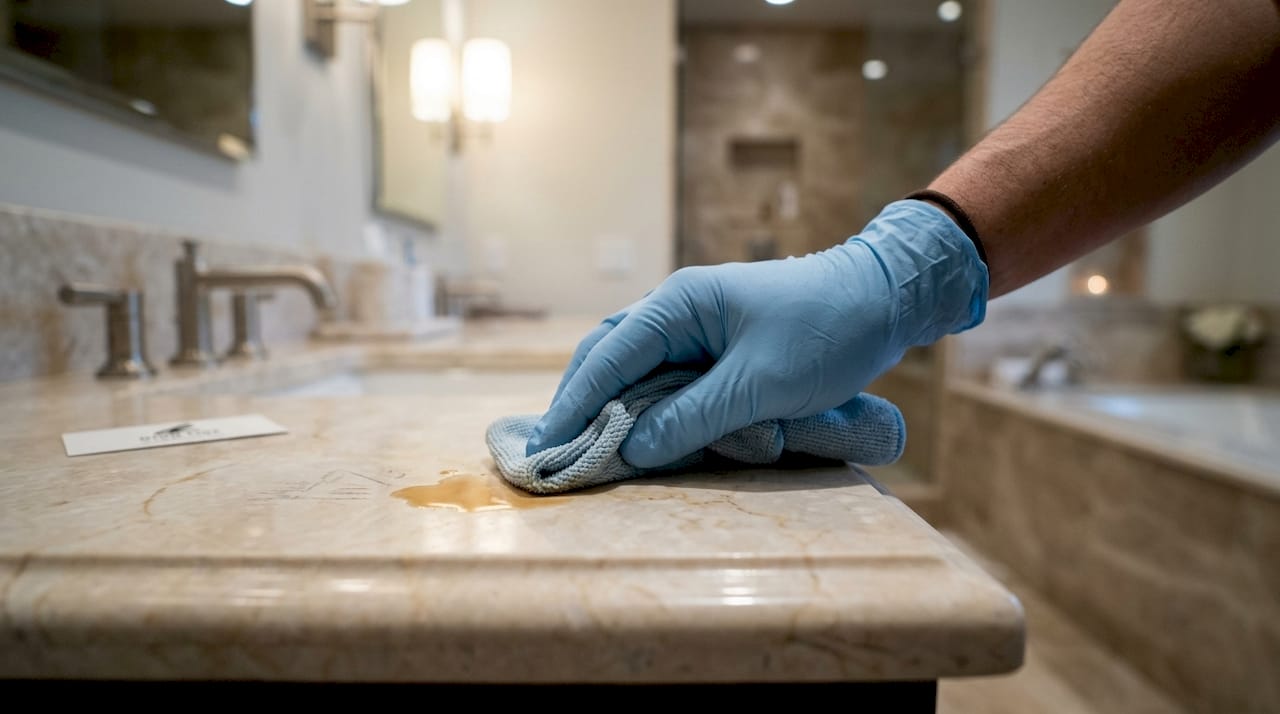
Sealers reduce porosity so that liquids sit on the surface long enough to be wiped away. They do not create an impermeable shell. Sealers only slow absorption and do not make stone waterproof. Liquids will eventually penetrate if not cleaned promptly. That window of protection is the entire point.
Two sealer types dominate the market, and they perform very differently.
| Sealer type | How it works | Effect on appearance | Durability |
|---|---|---|---|
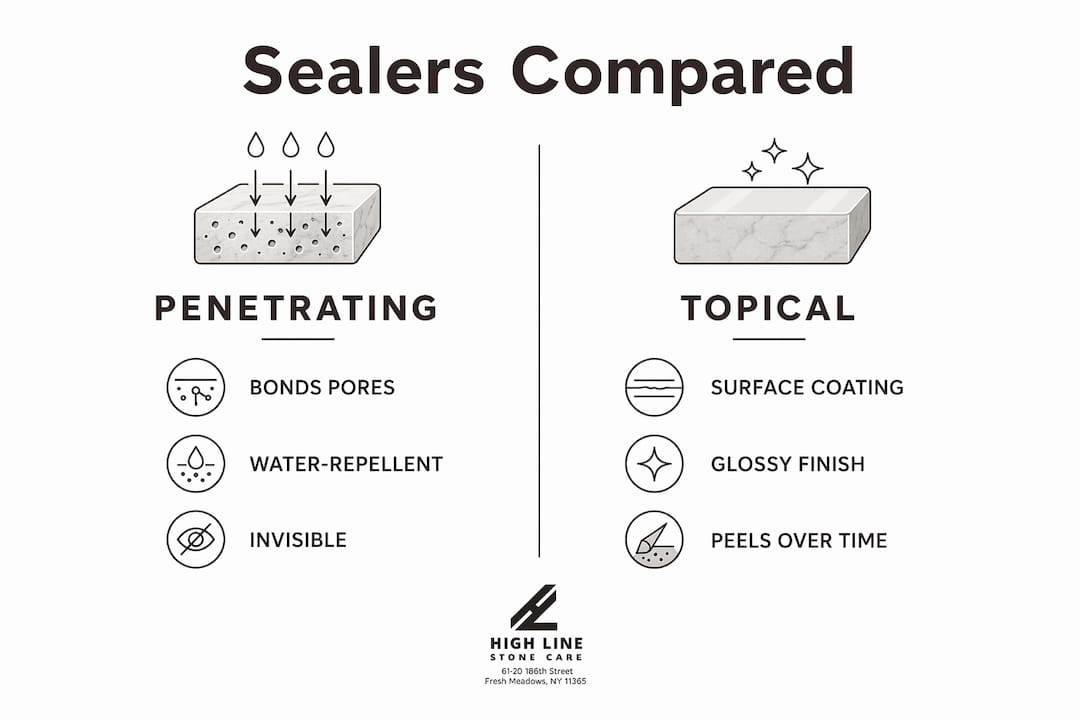
| Penetrating (impregnating) | Bonds inside stone pores | Preserves natural finish | Long-lasting, does not peel |
| Topical coating | Sits on surface as a film | Can alter sheen, yellow over time | Degrades, requires stripping |
Penetrating sealers bond within stone pores without altering appearance, unlike topical coatings that peel and yellow over time. For marble, limestone, and travertine in residential kitchens and bathrooms, a penetrating impregnating sealer is the correct choice. Topical coatings are occasionally used on low-traffic decorative surfaces but are generally not recommended for high-end natural stone installations.
Penetrating sealers create a water-repellent barrier inside pores without changing surface appearance. That quality is critical for maintaining the aesthetic that made the stone worth installing in the first place.
One important limitation: no standard sealer prevents etching on calcium-carbonate stones. Etching is a chemical reaction, not a penetration event. Highlinestonecare’s Opal Luxury Anti Acid Permanent Sealer addresses this gap directly, offering acid-resistant surface protection that standard sealers cannot provide.
Pro Tip:Apply sealer immediately after installation, before the stone sees any household use. Factory-polished stone arrives unsealed, and even a single spill during the first week can cause permanent staining that no future sealing will reverse.
What maintenance steps keep stone surfaces protected long-term?
Sealing is the foundation, but ongoing maintenance determines whether that protection holds. A consistent care routine prevents the gradual breakdown that leads to costly restoration.
1. Run the water-bead test annually.
Drop a few tablespoons of water onto the stone surface and wait 10 minutes. If water darkens the stone within that window, the sealer has degraded and resealing is needed. This test costs nothing and takes two minutes.
2. Reseal on a schedule based on stone type.
Limestone requires resealing every 6–12 months for kitchen applications due to its higher porosity. Denser stones like granite may hold a seal for two to three years. Marble in bathrooms typically falls between those two extremes. Knowing your stone type is not optional. It determines your entire maintenance schedule.
3. Use only stone-safe cleaning products.
Acidic or abrasive cleaners strip sealers and damage stone surfaces directly. Avoid vinegar, lemon-based sprays, bleach, ammonia, and abrasive powders. Use a pH-neutral stone cleaner instead. For daily maintenance, warm water and a soft cloth are sufficient on sealed surfaces.
4. Clean spills immediately.
A sealed surface gives you time, not immunity. Wine, citrus juice, tomato sauce, and coffee should be blotted (not wiped) within minutes. Wiping spreads the liquid; blotting lifts it. For protecting natural stone from stains, speed is the most effective tool.
5. Adjust care for outdoor stone.
Outdoor stone needs sealers rated for external use. These products resist UV degradation and handle freeze-thaw stress. Resealing frequency increases for outdoor surfaces because weather exposure accelerates sealer breakdown. Inspect outdoor stone each spring and fall.
6. Protect high-traffic areas with physical barriers.
Felt pads under furniture, trivets under hot cookware, and cutting boards on stone countertops all reduce mechanical wear. No sealer compensates for a cast iron pan dragged across a polished marble countertop.
Pro Tip:For stone flooring in high-traffic areas, place absorbent mats at entry points. Grit tracked in from outside acts like sandpaper under foot traffic and dulls the surface finish faster than any chemical damage.
How does stone protection affect home value and long-term costs?
Well-maintained stone surfaces are a financial asset, not just an aesthetic one. The cost of prevention is a fraction of the cost of restoration or replacement.
- Buyer perception at resale. Stone surface condition significantly impacts property resale value. Visible staining or etching signals neglect to buyers and can reduce perceived home quality. A marble kitchen with dull, etched countertops reads as a liability, not a luxury feature.
- Restoration costs vs. maintenance costs. Professional stone restoration for a heavily etched marble countertop runs significantly higher than annual sealing and routine cleaning. Preventing damage is always cheaper than reversing it.
- Extended surface lifespan. Properly sealed and maintained stone resists the gradual porosity increase that accelerates deterioration. A surface that might need replacement in 15 years without care can last a generation with consistent maintenance.
- Reduced cleaning labor over time. Sealed stone repels stains and resists grime buildup. Homeowners and property managers spend less time and money on cleaning when surfaces are properly protected.
- Preserved aesthetic value. The visual appeal of natural stone, its veining, depth, and polish, is what justifies its cost. Etching and staining destroy that appearance permanently without professional intervention. Protecting it from day one preserves the investment.
For property managers overseeing multiple units or commercial spaces, the math scales quickly. A property manager’s stone care guide outlines how consistent maintenance protocols reduce per-unit restoration costs across a portfolio.
Key Takeaways
Protecting stone surfaces requires sealing against stains, using acid-safe products, and maintaining a consistent care routine to preserve appearance and property value.
| Point | Details |
|---|---|
| Sealers slow, not stop, damage | Penetrating sealers reduce absorption but cannot prevent acid etching on marble or limestone. |
| Stone type dictates resealing frequency | Limestone needs resealing every 6–12 months; denser stones like granite hold longer. |
| Water-bead test guides timing | If water darkens stone within 10 minutes, the sealer has failed and resealing is due. |
| Wrong cleaners destroy protection | Vinegar, bleach, and ammonia strip sealers and etch calcium-carbonate stone directly. |
| Protected stone holds resale value | Visible staining and etching reduce buyer confidence and lower perceived property quality. |
What I’ve learned from years of watching homeowners get this wrong
The most common mistake is not skipping sealing altogether. It is sealing once and assuming the job is done permanently. Homeowners install beautiful marble, seal it on day one, and then use the same lemon-scented spray cleaner for the next three years. The sealer breaks down quietly. The etching builds up gradually. By the time the surface looks dull, the damage is already deep.
The second mistake is confusing a sealed surface with a protected one. Sealing addresses porosity. It does not address the chemical vulnerability of calcium-carbonate stone to acids. That distinction is the reason standard sealers fail marble and limestone owners. They seal the stone, feel confident, and then watch a wine ring etch through the finish anyway. The sealer did its job. The acid did something the sealer was never designed to stop.
The third mistake is waiting for visible damage before acting. Stone deterioration is cumulative. Each unsealed spill, each acidic cleaner, each abrasive wipe adds to a total that eventually crosses a threshold. At that point, the only options are professional restoration or replacement. Neither is inexpensive.
Proactive maintenance, the right sealer for the stone type, pH-neutral cleaners, and annual water-bead tests are not complicated. They are just consistent. The homeowners and property managers who get the best results are not the ones with the most expensive stone. They are the ones who treat maintenance as a routine, not a reaction.
— High
Advanced stone protection from Highlinestonecare
Standard sealers protect against stains. They do not protect against etching. For homeowners and property managers with marble, limestone, or travertine surfaces, that gap is where most damage occurs.
Highlinestonecare’s Opal Luxury Anti Acid Permanent Sealer is designed specifically to address both threats. A single professional application provides lasting protection against staining and acid-related etching, preserving the surface’s original finish without altering its appearance. For New York City properties where natural stone is a defining feature, Highlinestonecare offers stone sealing and restoration services tailored to residential and commercial needs. Contact Highlinestonecare to schedule a professional assessment and protect your stone surfaces before damage requires restoration.
FAQ
What does protecting stone surfaces actually mean?
Protecting stone surfaces means sealing the stone to reduce porosity, using appropriate cleaning products, and maintaining a routine that prevents staining, etching, and physical wear. It is an ongoing practice, not a one-time treatment.
Does sealing stone prevent etching from acids?
Standard penetrating sealers prevent liquid stains but do not stop chemical etching on calcium-carbonate stones like marble and limestone. Etching requires a specialized anti-acid treatment, such as Highlinestonecare’s Opal Luxury Anti Acid Permanent Sealer.
How often should stone surfaces be resealed?
Resealing frequency depends on the stone type and its use. Limestone in kitchen applications needs resealing every 6–12 months due to high porosity. Denser stones like granite may hold a seal for two to three years. The water-bead test is the most reliable way to determine when resealing is needed.
What cleaners are safe for natural stone?
pH-neutral stone cleaners are safe for natural stone. Avoid vinegar, lemon-based sprays, bleach, ammonia, and abrasive powders. These products strip sealers and cause direct surface damage on calcium-carbonate stones.
Does stone condition affect property resale value?
Stone surface condition directly influences buyer perception and property valuation. Visible staining or etching signals poor maintenance and can reduce a buyer’s confidence in the overall quality of the home.
Recommended
- Ways to Protect Stone Countertops: A Homeowner’s Guide
- Best Practices for Stone Protection: A Homeowner’s Guide
- What Is Stone Surface Etching: A Homeowner’s Guide
- Residential Stone Cleaning Tips for Every Home