
Common stone care mistakes are specific actions and oversights that cause irreversible physical or chemical damage to natural stone surfaces, reducing their appearance and lifespan. Marble, limestone, travertine, and granite each require a tailored maintenance approach. Using the wrong cleaner, the wrong tool, or skipping a sealing schedule can permanently dull or stain a surface that cost thousands of dollars to install. Highlinestonecare works with homeowners and property managers across New York City who have learned this lesson the hard way. The guidance below covers the most frequent stone maintenance errors and how to avoid every one of them.
1. Common stone care mistakes with chemical cleaners
The most damaging stone maintenance errors involve the wrong cleaning products. Cleaning solutions with a pH below 5–6 trigger a chemical reaction that dissolves the calcium carbonate in marble, limestone, and travertine. The result is etching: a dull, rough patch where the polished surface used to be.
Everyday household products are the most common offenders:
- Vinegar and lemon juice are acidic and etch calcium-based stones on contact.
- Bleach and ammonia-based cleaners are too alkaline and degrade stone sealers over time.
- Dish soap leaves a residue haze on polished surfaces that dulls appearance with repeated use.
- Multi-surface sprays are rarely pH-neutral and are not formulated for stone.
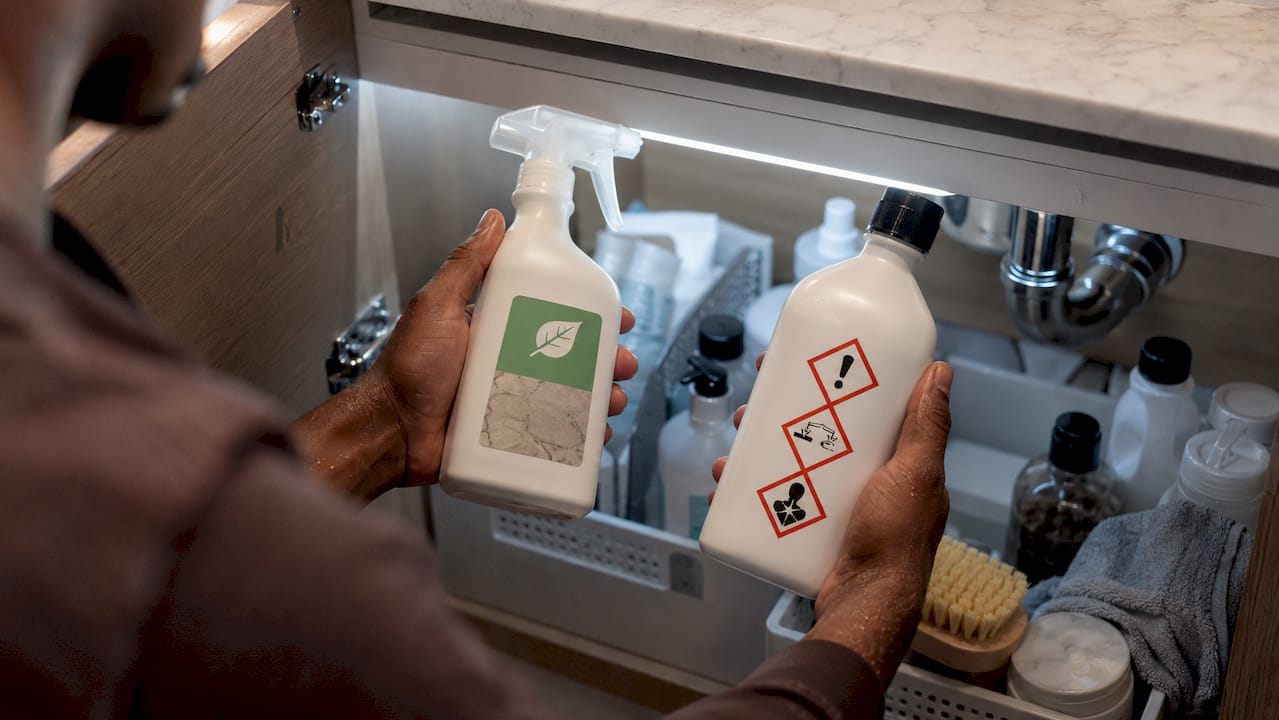
The correct approach is a pH-neutral cleaner specifically labeled safe for natural stone. Products like stone-specific spray cleaners from professional suppliers meet this standard. For marble and limestone, acid-resistant surface protection adds a critical barrier between the stone and any accidental chemical contact.
Pro Tip: Label every cleaning product under your sink with a simple “stone safe” or “not stone safe” tag. It takes two minutes and prevents a costly mistake by anyone cleaning your home.
2. Abrasive tools and mechanical damage
Mechanical damage is the second major category of stone care errors. Abrasive brushes and steel wool create thousands of micro-scratches across a polished surface. Those scratches accumulate fast. Gloss levels can drop from 85+ to 40–50 within months of regular abrasive cleaning. That loss of shine is not cosmetic. It signals structural surface degradation.
The following tools cause mechanical damage to polished stone:
- Steel wool and scouring pads scratch even harder stones like granite.
- Stiff-bristle brushes grind grit into the surface rather than lifting it.
- Steam mops apply heat above 100°C to cold stone, causing thermal shock that leads to micro-cracking and spalling, particularly on marble and limestone.
- Rough mop heads trap grit and act like sandpaper across the floor.
Safe alternatives include microfiber mop heads, soft-bristle brushes, and gentle wringing techniques. For polished countertops, a soft cotton cloth is the right tool. Homeowners who want to restore lost gloss should review stone polishing methods before attempting any DIY work.
Pro Tip: Always use a dedicated stone mop that never touches tile grout or bathroom floors. Cross-contamination carries grit and cleaning residue that damages stone on the next use.
3. Skipping dry cleaning before wet mopping
80% of floor soil is dry particulate. That fact changes how stone floors should be cleaned. When you mop without first removing dust, sand, and grit, you push abrasive particles across the surface in a thin film of water. The result is liquid sandpaper grinding into the stone with every stroke.
Dust mopping or vacuuming before any wet cleaning is not optional for stone floors. It is the first step in every professional cleaning protocol. A soft-bristle vacuum attachment or a dry microfiber dust mop removes the particulate layer safely. Only after that step should any wet cleaner touch the surface.
This mistake is especially damaging in high-traffic entryways and kitchens, where sand and grit track in constantly. Property managers overseeing lobbies or common areas with stone flooring should build this two-step sequence into every cleaning shift.
4. Sealing over dirty or wet surfaces
Sealing is one of the most important best practices for stone care, but it is also one of the most frequently done wrong. Sealing over dirt, moisture, or old sealer residue traps those contaminants beneath the new sealer layer. The surface develops a cloudy, blotchy, or sticky appearance that is difficult to correct without stripping the sealer entirely.
Proper sealing requires three steps before the sealer is ever applied:
- Clean the surface thoroughly with a pH-neutral stone cleaner.
- Allow the surface to dry completely. Moisture trapped under sealer causes haze and adhesion failure.
- Remove any old sealer residue with an appropriate stone-safe stripper.
Natural stone sealing requires re-application every 1–3 years depending on stone type, traffic level, and moisture exposure. High-traffic floors and wet areas like bathrooms need attention at the shorter end of that range. A simple water bead test checks sealer integrity: pour a few drops of water on the surface. If it absorbs rather than beads, the sealer needs renewal. Highlinestonecare’s stone sealing services include surface preparation as part of every application.
5. Neglecting a sealing schedule entirely
Skipping sealer re-application is one of the most common stone care errors among homeowners who assume stone is maintenance-free. Unsealed or under-sealed stone absorbs moisture, oils, and contaminants through its pores. Ignoring visible damage allows moisture and contaminants to penetrate deeper over time, making restoration significantly more expensive than prevention.
A proactive sealing schedule is straightforward to maintain:
- Mark the re-sealing date on a calendar at the time of each application.
- Check high-use areas like kitchen counters and bathroom floors every six months with the water bead test.
- Prioritize wet areas and surfaces near sinks, which face the most exposure.
Proactive sealing and regular maintenance schedules dramatically reduce long-term stone damage and the need for professional restoration calls. Property managers handling multiple units benefit from a written maintenance log that tracks each surface’s sealing history. For guidance on building a full program, Highlinestonecare’s property manager’s guide covers surface assessment and scheduling in detail.
6. Confusing etching with staining
Etching and staining are fundamentally different types of damage, and treating one as the other makes the problem worse. Etching is chemical damage to the stone’s crystal lattice caused by acid contact. It appears as a dull, rough area and cannot be removed by cleaning. Staining is contamination absorbed into the stone’s pores. It appears as a discolored patch and may respond to a poultice treatment.
Homeowners who scrub an etched surface harder compound the damage. The scrubbing does not remove the etch. It adds mechanical abrasion to chemical damage, requiring more extensive professional restoration. Understanding stone surface etching before attempting any repair is the correct first step.
Etching requires mechanical re-polishing by a professional. Stains may be drawn out with a poultice made from an absorbent material and a cleaning agent appropriate for the stain type. Applying the wrong treatment wastes time and can worsen the condition of the surface.
7. Reactive care instead of preventive maintenance
Waiting until damage is visible before acting is one of the most expensive stone maintenance errors a homeowner can make. By the time a stain, etch, or crack is obvious, the damage has already progressed beyond the surface layer. Reactive restoration costs more than proactive maintenance in every case.
A successful stone maintenance program treats cleaning, sealing, and tool choices as a unified system. Failing at one point creates failure at others. A homeowner who uses the right cleaner but the wrong mop, or seals on schedule but skips surface preparation, still ends up with a damaged surface.
Signs that professional help is needed include:
- Dull patches that do not respond to cleaning.
- Persistent discoloration after stain removal attempts.
- Visible cracks, chips, or surface spalling.
- Cloudy or sticky areas after a recent DIY sealing attempt.
Addressing these signs early limits the scope of restoration. Delaying turns a polishing job into a full resurfacing project.
8. Practical daily habits that prevent stone damage
Stone damage prevention starts with daily habits, not annual restoration projects. Spills are the most immediate threat. Acid-containing liquids like wine, coffee, citrus juice, and vinegar begin etching marble within minutes of contact. Blot spills immediately with a clean, dry cloth. Do not wipe, which spreads the liquid across a larger area.
Physical protection reduces wear significantly:
- Coasters under glasses and bottles near sinks and counters.
- Trivets under hot cookware on stone countertops.
- Felt pads under furniture legs on stone floors.
- Entry mats at all exterior doors to trap grit before it reaches stone floors.
Choose cleaners and tools deliberately. A pH-neutral stone cleaner, a soft microfiber cloth, and a dedicated stone mop cover most routine care needs. For countertops, protecting stone from stains requires both the right sealer and consistent daily habits. High-traffic or wet areas need more frequent attention, including more regular sealer checks and immediate spill response.
Pro Tip: Keep a small spray bottle of pH-neutral stone cleaner and a microfiber cloth in every room with stone surfaces. Immediate response is always better than scheduled cleaning after damage has set.
Key takeaways
Avoiding common stone care mistakes requires treating cleaning, sealing, and tool selection as a connected system, not a series of isolated tasks.
| Point | Details |
|---|---|
| Use pH-neutral cleaners only | Acidic or alkaline products etch and degrade calcium-based stones on contact. |
| Remove dry grit before mopping | Skipping this step turns wet cleaning into an abrasive process that dulls stone. |
| Seal on a 1–3 year schedule | Re-apply sealer based on stone type, traffic, and moisture exposure to prevent penetration. |
| Know the difference between etching and staining | Each requires a different treatment; applying the wrong one compounds the damage. |
| Act before damage is visible | Proactive maintenance costs far less than reactive restoration in every case. |
What I’ve learned from years of watching stone surfaces fail
The pattern I see most often is not ignorance. Homeowners and property managers generally want to do the right thing. The problem is that stone care advice online is inconsistent, and the consequences of a wrong choice are not obvious until weeks or months later.
The single most damaging habit I encounter is using vinegar as a “natural” cleaner on marble. It feels safe because it is natural. It is not safe for stone. A single cleaning session with vinegar can etch a polished marble countertop in a way that requires professional re-polishing to correct. That repair costs far more than a bottle of pH-neutral stone cleaner.
The second pattern is sealing without preparation. Homeowners buy a quality sealer, apply it to a surface that was not fully cleaned or dried, and end up with a hazy, blotchy finish that looks worse than before. The sealer itself was not the problem. The preparation was.
What actually works is a simple, consistent system: the right cleaner, the right tools, dry cleaning before wet cleaning, and a sealing schedule that matches the stone type and usage level. That system, applied consistently, keeps stone surfaces looking the way they did on installation day. When the damage has already happened, professional restoration is the correct path. Attempting to fix etching or deep staining with DIY methods almost always makes the problem harder and more expensive to resolve.
— High
Highlinestonecare’s approach to stone surface protection
Stone surfaces represent a significant investment in any home or property. Highlinestonecare provides professional cleaning, sealing, and restoration services designed to prevent the damage described throughout this article before it starts.
For homeowners dealing with etching, staining, or dull surfaces, Highlinestonecare’s marble restoration services address damage at every level, from light re-polishing to full surface resurfacing. For lasting protection against acid-related damage, the Opal Luxury Anti Acid Sealer provides permanent defense against etching and staining with a single professional application. Contact Highlinestonecare to schedule a surface assessment and get a maintenance plan built for your specific stone type and usage.
FAQ
What cleaners are safe for natural stone?
pH-neutral cleaners specifically labeled for natural stone are safe. Avoid vinegar, lemon juice, bleach, ammonia, and standard multi-surface sprays, as these cause etching or sealer degradation.
How often should natural stone be resealed?
Natural stone generally requires resealing every 1–3 years. High-traffic areas and wet surfaces like bathroom floors need attention more frequently, closer to the one-year mark.
What is the difference between etching and staining on stone?
Etching is chemical damage to the stone’s surface caused by acid contact and requires mechanical re-polishing. Staining is contamination absorbed into the stone’s pores and may respond to a poultice treatment.
Can I use a steam mop on stone floors?
Steam mops are not safe for marble or limestone. The high heat causes thermal shock that leads to micro-cracking and surface spalling, which is irreversible without professional restoration.
When should I call a professional for stone care?
Call a professional when you see dull patches that do not respond to cleaning, persistent stains, visible cracks or spalling, or a cloudy finish after a DIY sealing attempt.
Recommended
- Ways to Protect Stone Countertops: A Homeowner’s Guide
- Best Practices for Stone Protection: A Homeowner’s Guide
- Stone Flooring Maintenance Tips for Homeowners
- Why Invest in Premium Stone Care: A Smart Guide